Does a hot tub before bed help you sleep?
Does a hot tub before bed help you sleep? Learn how the drop in body temperature after a soak aids sleep, the best timing and temperature, and what to avoid.
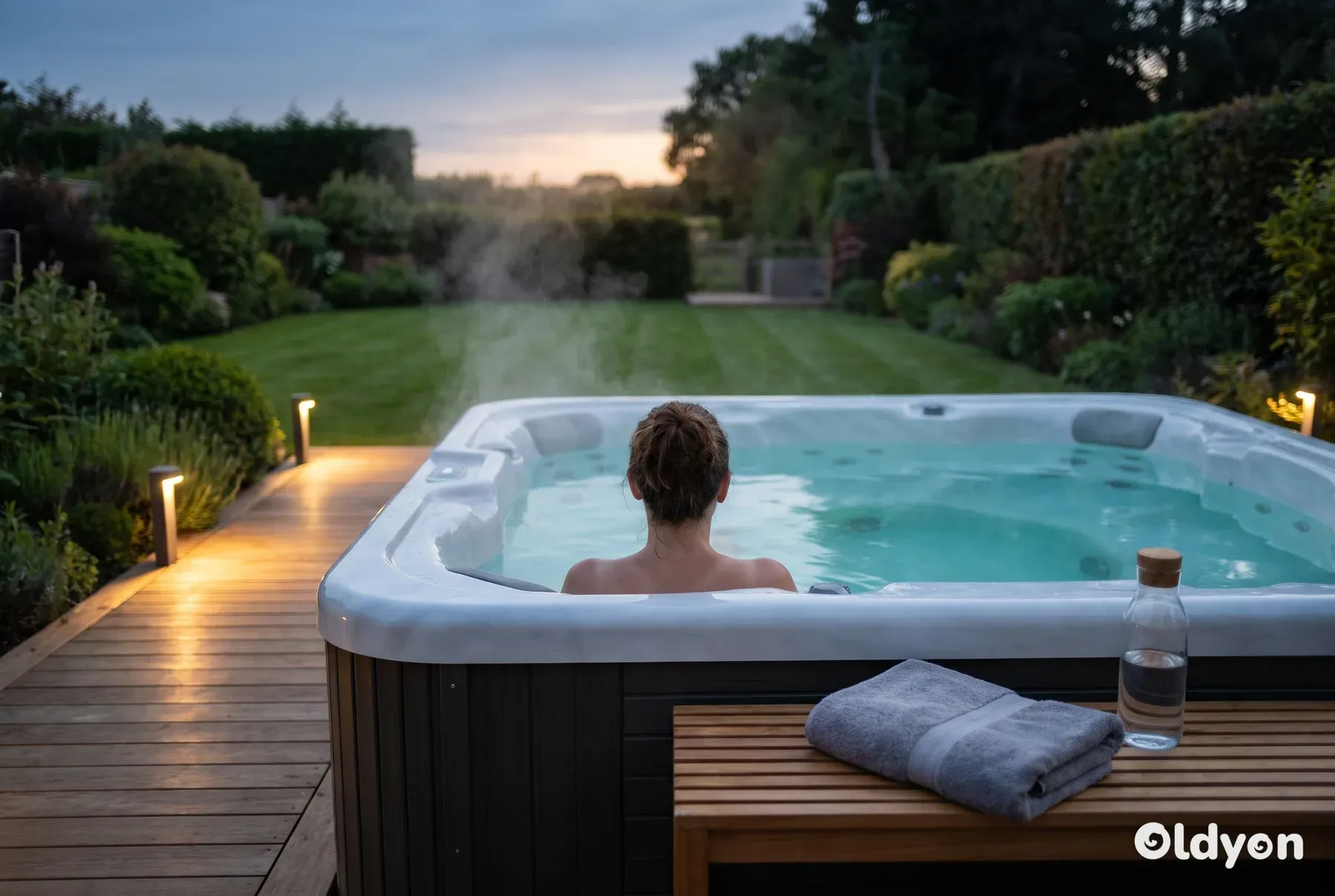
A hot tub before bed can help many people fall asleep more easily. The warm water raises your body temperature, and the drop that follows as you cool down is one of the signals your body uses to prepare for sleep. Good timing, a moderate water temperature and avoiding alcohol make the biggest difference.
This guide explains how that cooling effect works, how long before bed to soak, which water temperature suits an evening session, and how to keep late-night soaks safe and quiet. It focuses on sleep. For the wider picture, see our guide to hot tub health benefits and what the evidence shows.
This article is general information, not medical advice.
Why can a hot tub before bed help you sleep?
Your body temperature follows a daily rhythm. In the evening, your core temperature starts to fall, and this gradual cooling is closely linked to feeling sleepy. In the early morning it begins to rise again, which helps you wake up.
The change involved is small. Falling asleep goes with a drop in core body temperature of roughly 0.5-1°C (about 1-2°F). The cooling after a soak only needs to support this modest natural fall, not create a large chill.
The cooling effect after a soak
When you sit in warm water, the blood vessels near your skin widen so your body can move heat around. This is especially noticeable in your hands and feet. When you get out, those widened vessels let heat escape quickly into the cooler air, so your core temperature falls faster than it would on its own.
That faster drop appears to support the natural evening fall in body temperature. Research reviews of warm baths and showers taken before bed suggest this cooling can help people fall asleep a little sooner and feel that they slept better. A hot tub works in a similar way, as long as you leave enough time to cool down before bed.
The effect is useful but modest. A pooled research review found that a warm bath or shower taken 1-2 hours before bed cut the time taken to fall asleep by about 10 minutes on average. That matters most if you usually lie awake for half an hour or more, and less if you already fall asleep quickly.
Relaxation and a calm routine
The cooling effect is not the only reason a soak can help. Warm water and gentle jets ease tight muscles, and a quiet soak is a clear way to separate the working day from bedtime. A relaxing routine repeated each evening is one of the habits recommended in the NHS Every Mind Matters advice on sleep.
Warm-water immersion also shifts your nervous system towards its calming 'rest and digest' mode, and it may lower the stress hormone cortisol. For many people this means a quieter mind and fewer racing thoughts by the time they go to bed.
Part of this calming effect starts in your skin. Heat sensors in the skin send signals to your brain, and the brain responds by turning down the 'fight or flight' side of your nervous system. This is one way a warm soak helps you feel calmer.
Lower cortisol matters for more than one night's sleep. When cortisol stays high for long periods, it can disrupt sleep, put strain on the heart and blood vessels, and weaken immune function. Bringing it down with a regular soak supports both sleep and wider health.
Timing may affect how much cortisol falls. In the limited studies available, evening soaks taken between about 6 pm and 9 pm showed the strongest cortisol-lowering effect. This is another reason to soak in the evening, and it fits well with finishing 1 to 2 hours before bed.
Regular warm-water soaking has also been linked to improved heart rate variability. This is the natural variation in time between heartbeats, and higher values are a measurable sign that the calming side of the nervous system is more active and that the body recovers from stress more easily.
The water itself adds to the physical sense of relaxation. It presses gently on your body from all sides, and its buoyancy takes most of your body weight off your joints. This lets muscles that hold you up all day finally let go.
Water pressure on the submerged parts of your body also pushes blood from your arms and legs back towards your heart. This gentle circulation effect adds to the overall feeling of relaxation during a soak.
The deeper you sit, the more weight the water carries. With the water up to your neck, buoyancy takes roughly 90% of your body weight off your joints. At chest depth the figure is lower, but still well over half, which is enough for your muscles and joints to relax fully during an evening soak.
If you use your hot tub to ease aches or stiffness, our guide to hydrotherapy at home with your hot tub explains how to set up the jets. For sleep, soft jets or no jets at all are usually more restful than a strong massage.
Easing aches and stiff joints before bed
Heat increases blood flow to sore muscles. This helps carry away waste products from hard-working muscles, such as lactate, and can speed recovery from aches that might otherwise keep you awake.
For muscle recovery after exercise, the pattern used in research is a soak of about 15-20 minutes at roughly 39-40°C, repeated after each workout. If you also want better sleep, keep the water nearer the lower 37-39°C range and finish 1 to 2 hours before bed, so the extra warmth has time to fade.
Warm-water therapy has been shown in trials to reduce pain and improve function in people with knee and hip osteoarthritis, with results similar to land-based exercise therapy. If joint pain often disturbs your sleep, an evening soak may help you get comfortable in bed.
People with inflammatory arthritis, such as psoriatic arthritis, may find warm-water soaking a useful supportive therapy for joint stiffness. It does not replace specialist treatment, so keep to the plan agreed with your rheumatology team.
For psoriatic arthritis, the combined heat, buoyancy and water pressure of a soak can also improve the range of motion in stiff joints. It can ease the muscle tension that tends to make flares worse, which may help you settle more comfortably at bedtime.
During a psoriasis skin flare, chlorinated water may irritate plaques. Keeping chlorine at the lower end of the range, or using a saltwater system, and soaking at around 38-39°C may suit your skin better.
What a soak will not do
A hot tub is not a treatment for insomnia or any other sleep disorder. If you regularly struggle to fall asleep or stay asleep for several weeks, or you feel very tired during the day, speak to your GP. The NHS page on insomnia explains common causes and when to get help.
How long before bed should you use a hot tub?
Timing matters more than most people expect. If you go straight from the water into bed, your body is still warm and busy getting rid of heat. Many people then feel hot and restless rather than sleepy.
Most guidance on warm baths and sleep points to finishing about 1 to 2 hours before you plan to sleep. This gives your body time to lose the extra heat, so you reach that cooler, drowsy state at about the time you get into bed.
When you finish your soak | What tends to happen | Good for sleep? |
|---|---|---|
Less than 30 minutes before bed | Body still warm, you may feel hot and restless | Often too late |
30 to 60 minutes before bed | Cooling under way, some warmth remains | Can work, especially with cooler water |
1 to 2 hours before bed | Cooling mostly complete by bedtime | Usually the best window |
3 hours or more before bed | Relaxing, but the cooling effect has faded | Less useful for sleep |
Everyone is different, so treat this as a starting point. Try finishing your soak about 90 minutes before bed for a week. If you still feel too warm at bedtime, soak a little earlier. If the drowsy feeling has worn off, soak a little later.
Avoid soaking straight after a large meal. Digestion and hot water both increase blood flow to different parts of the body, and many people feel uncomfortable or light-headed if they combine them. Leave at least an hour after a main meal.
What water temperature is best for an evening soak?
For sleep, you want the water warm enough to raise your body temperature, but not so hot that you overheat. Many people find 37-39°C (99-102°F) comfortable for an evening soak. Do not go above 40°C (104°F), which is the widely accepted upper limit for healthy adults.
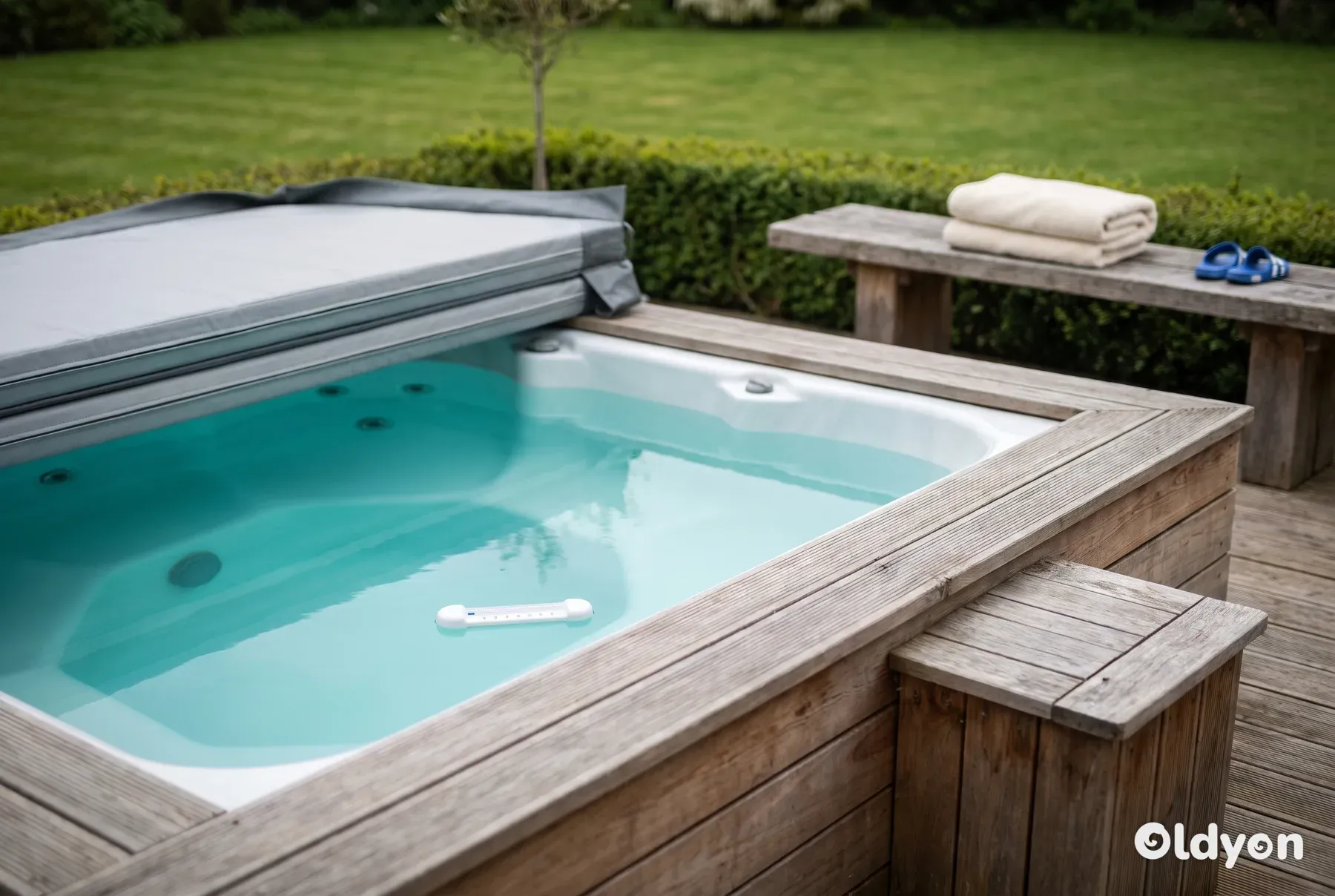
Check the water now and then with a separate floating thermometer. A hot tub's display can be inaccurate, and the 40°C limit only protects you if the reading is correct. If the two readings differ by more than a degree, trust the thermometer and adjust the setting.
Very hot water can leave your heart rate raised and your skin flushed long after you get out. This works against the calm, cooling effect you are looking for. A slightly lower temperature also lets you soak comfortably without feeling light-headed.
Overheating is more serious than feeling uncomfortable. If the early signs are ignored and your core body temperature keeps climbing towards 40°C (104°F), symptoms can progress from dizziness and nausea to heat exhaustion and then heat stroke. Heat stroke is a medical emergency, so call 999 or your local emergency number.
On cold winter evenings, the air helps you cool down quickly afterwards, so you may not need the water as hot as you think. Our guide to the ideal hot tub temperature for every season explains how to adjust your settings through the year.
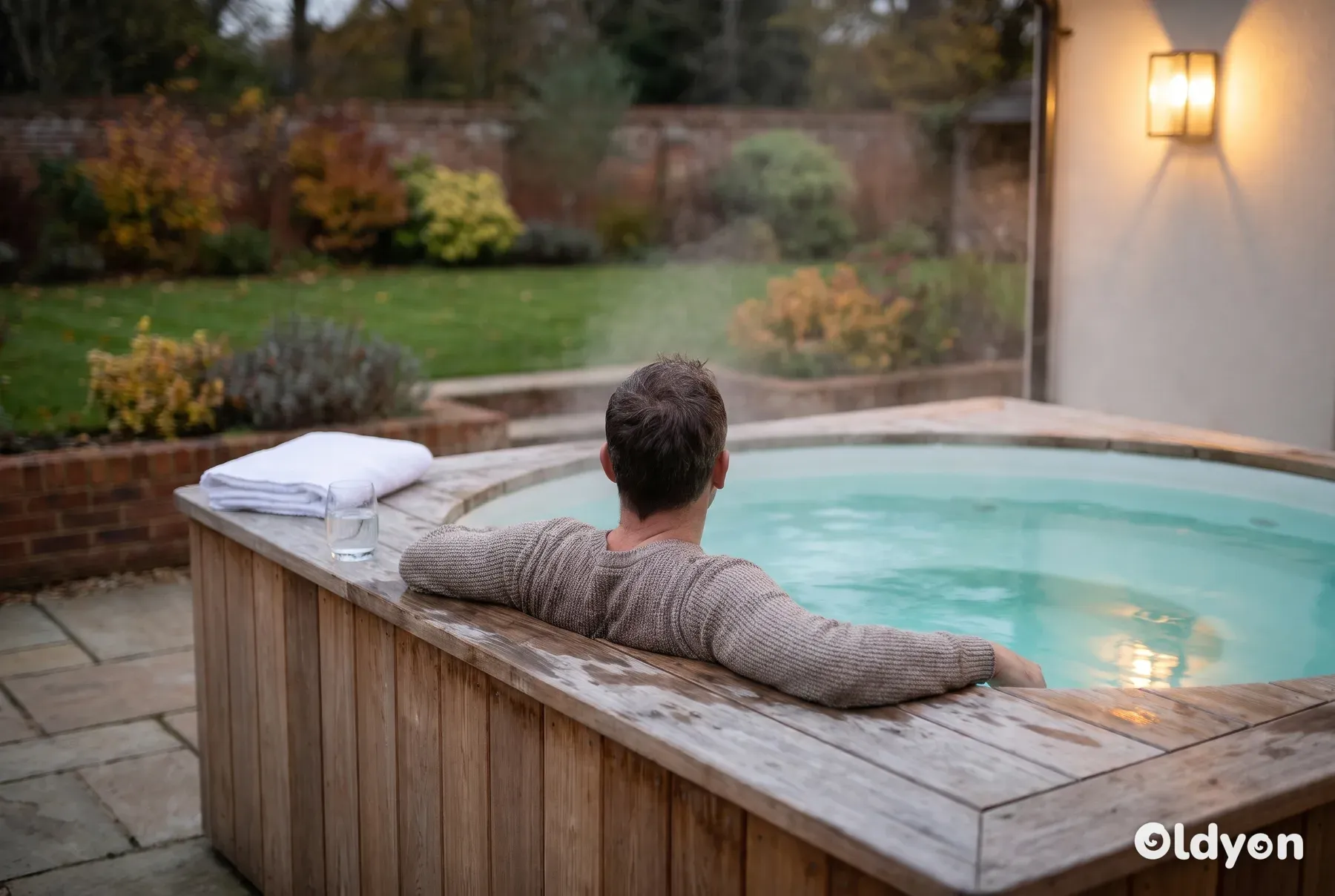
Winter soaking can feel especially relaxing. The contrast between cold air and warm water may strengthen your body's calming nervous-system response and the circulation effect, which makes a winter evening soak a good fit for a bedtime routine.
In winter, cold air on your head and shoulders while the rest of your body sits in warm water makes your body work harder to hold its core temperature steady. This raises the energy you use and strengthens the widening of your blood vessels, which is another reason winter soaks can feel especially effective. Keep to the usual time limits, because the warm water still heats your core.
How long to stay in
For most healthy adults, around 15-20 minutes is enough for an evening soak at the upper end of the temperature range. Longer sessions at higher temperatures raise the risk of overheating and dehydration without adding much benefit for sleep. If the water is cooler, you can usually stay in a little longer.
Manufacturers and health bodies give slightly different time limits, so check your hot tub manual. For more detail, read our guide on how long you should stay in a hot tub.
Get out straight away if you feel dizzy, sick, light-headed, very hot or unusually sleepy. Stand up slowly and hold the handrail, because your blood pressure can drop when you leave hot water.
Why should you avoid alcohol in a late-night hot tub?
A glass of wine in the hot tub may seem like a natural way to relax, but alcohol and hot water are a poor combination, especially at night. Both widen your blood vessels and can lower your blood pressure. Together, they raise the risk of dizziness and fainting when you stand up.
Alcohol also makes overheating harder to notice. It dulls the warning signs your body gives you, so you may stay in too long without realising you are getting too hot or dehydrated.
Alcohol and sleep quality
Alcohol can make you feel drowsy at first, but it tends to disturb sleep later in the night. You may wake more often, need the toilet, or feel unrested in the morning. The NHS alcohol advice pages explain the wider health effects and the low-risk drinking guidelines.
A soak, alcohol and a tired body together also increase the risk of dozing off in the water, which is dangerous. Our guide to falling asleep in a hot tub and why it is dangerous explains the risks and how to avoid them.
What to drink instead
Plain water is the best choice. Keep a plastic or metal bottle by the tub, never glass, and take small sips during and after your soak. Avoid coffee, tea, cola and energy drinks in the evening, because caffeine can keep you awake for several hours.
You sweat in a hot tub without noticing it, because the surrounding water hides the feeling. This means you can become dehydrated even in a short soak. Drinking a glass of water shortly before you get in helps.
Try not to drink a large amount just before bed, or you may wake up needing the toilet. A few small glasses spread across the evening is usually enough to replace what you lose in warm water.
How do you keep a night-time soak quiet for your neighbours?
Gardens are close together in many parts of the UK and Europe, and sound travels further on a still night. Voices, music and the hum of pumps can disturb neighbours who are trying to sleep. Noise complaints can quickly damage your relationship with the people next door.
Repeated noise can also become a legal matter. In the UK, local councils can investigate noise that counts as a statutory nuisance. Other countries have their own rules, and some set official quiet hours at night, so check what applies where you live.
- Keep voices low and avoid music late in the evening, especially if your neighbours' bedrooms face your garden.
- Turn the jets and air blower down or off. A still, quiet soak is better for sleep anyway.
- Check when your filtration cycles run. If a pump starts at midnight close to a neighbour's window, change the schedule to run during the day. Your manual explains how.
- Use soft, low lighting pointed down and away from other houses, rather than bright floodlights.
- Lower the cover gently. A cover that is dropped or slammed shut is loud at night.
- Ask your neighbours whether they have noticed any noise. A friendly conversation early on is easier than a formal complaint later.
If your pump or blower has become noticeably louder than usual, it may have a fault. Switch off at the isolator and ask a qualified hot tub technician to check it, rather than running it late at night.
A simple evening soak routine for better sleep
A routine works best when it is simple and repeated on regular evenings. These steps bring together the timing, temperature and safety points above.
- Test the water earlier in the evening. Aim for free chlorine or bromine at 3-5 ppm and pH at 7.2-7.6. If you add chemicals, follow the label for how long to wait before using the hot tub.
- Set the water to 37-39°C a few hours ahead, so it is ready when you are.
- Dim the lights indoors and put screens away before you go outside. Take a towel, a robe and a bottle of water with you.
- Plan to finish your soak 1 to 2 hours before bed, and soak for about 15-20 minutes with gentle jets or none.
- While you soak, breathe slowly and deeply. Breathe in through your nose for a count of four and out for a count of six, and repeat for a few minutes to strengthen the wind-down effect.
- Get out slowly, holding the handrail. Sit down for a moment if you feel light-headed.
- Take a quick lukewarm shower to rinse sanitiser from your skin and hair. Lukewarm water helps the cooling effect continue, while a hot shower would undo it.
- Put the cover back on and fasten the safety clips or locks.
- Keep the time before bed calm. Read, stretch gently or listen to quiet audio, and go to bed when you start to feel sleepy.
You do not need to soak every night for this to help. Two or three regular evenings a week can still give you a reliable wind-down routine, and the rest of your bedtime habits matter just as much.
To see whether the routine is working, keep a simple sleep diary for about two weeks of evening soaks. Note the time you finished soaking, the water temperature, roughly how long it took to fall asleep and how rested you felt in the morning. This shows you whether to adjust the timing or temperature.
Keeping the water clean when you soak most nights
Sanitiser breaks down faster in hot water and after heavy use. If you soak most evenings, test the water at least two or three times a week, not just once.
Chlorine also breaks down quickly in direct sunlight. If your hot tub sits uncovered in the sun during the day, test the water more often and keep the cover on whenever you are not using it.
Poorly maintained water can cause hot tub folliculitis, an itchy, bumpy rash caused by Pseudomonas bacteria. It can also harbour Legionella bacteria, which cause Legionnaires' disease, a serious lung infection. Keeping sanitiser at the correct level is the main protection against both.
- Keep free chlorine or bromine at 3-5 ppm, pH at 7.2-7.6 and total alkalinity at 80-120 ppm.
- Shock the water regularly, often weekly for frequent users, or as your manual advises.
- Drain, clean and refill the hot tub about every 3-4 months, or as the manufacturer recommends.
- Rinse or clean the filter as your manual advises, because heavy use clogs it faster.
Body oils, sunscreen and cosmetics build up as a greasy film on the water and clog the filter, especially with nightly use. Showering before you get in reduces this load. If a film still forms, a dedicated spa enzyme treatment is more reliable than folk fixes such as floating tennis balls in the water.
Floating tennis balls are an unreliable way to remove body oils and sunscreen from the water. They may also release dye or rubber residue into it, which adds to the load on your filter and sanitiser, so it is better to leave them out.
If you have sensitive or eczema-prone skin and soak most nights, a well-run saltwater (salt chlorinator) system may feel gentler. It produces sanitiser steadily at lower peak levels instead of in large doses. It still needs regular testing and balancing.
Saltwater systems also tend to cause less eye irritation and give the water a softer feel. Their advantage is gentler chemistry, not mineral therapy. The salt level is low compared with natural mineral springs, and the system's job is simply to produce chlorine.
A salt chlorinator can also lower your ongoing chemical costs compared with dosing chlorine by hand, because it makes sanitiser from the salt already in the water. The system itself is an upfront cost, and the cell needs replacing after some years, so check the manufacturer's guidance.
Making it safe to soak after dark
- Light the path between the house and the hot tub so you can see steps and uneven ground.
- Use non-slip steps and a sturdy handrail, as wet feet and darkness increase the risk of falls.
- Avoid soaking alone if you are very tired or have taken anything that makes you drowsy. If you do soak alone, tell someone in the house.
- Keep the cover locked when the tub is not in use, so children cannot get in unsupervised.
- Keep phones, speakers and any mains-powered devices well away from the water.
Other health benefits of regular soaking
Better sleep is not the only reason people soak regularly. Research on warm-water bathing and passive heat points to several other possible benefits. Many studies are small or observational, so treat these as helpful extras, not a replacement for exercise or prescribed treatment.
Heart and blood vessels
In people with mild to moderate high blood pressure, regular warm soaking is associated with lower blood pressure. If you take blood pressure medicine, check with your GP first, because hot water and medicine can lower your blood pressure together.
For healthy adults, regular warm soaking within sensible time and temperature limits is not bad for the heart. The cardiac concern applies mainly to people with specific heart conditions. If you have one, get medical clearance from your GP or heart specialist before you start soaking.
Water pressure on your body increases the amount of blood your heart pumps with each beat, but your heart rate rises less than it would during exercise. This is why a soak can suit people whose heart or lungs limit how much exercise they can do, with their doctor's agreement.
A large Japanese study that followed around 30,000 adults for about 20 years found that people who took a hot bath every day had about 28% lower risk of cardiovascular disease and 26% lower risk of stroke than those who bathed twice a week or less. It was an observational study, so it shows an association, not proof that bathing caused the difference.
Several weeks of regular passive heat therapy, around six to eight weeks in published studies, has been shown to reduce arterial stiffness and improve endothelial function. Endothelial function means how well the lining of your blood vessels controls blood flow. Both are markers of cardiovascular ageing.
If heart health is your goal, the pattern used in this research is warm soaks of about 20-30 minutes at 38-39°C, 4-5 times a week. That is slightly longer than the evening sleep soak, so finish earlier in the evening on those days and check with your GP if you have a heart condition.
Blood sugar, metabolism and calories
Insulin is the hormone that moves sugar from your blood into your cells. Insulin resistance means your cells respond poorly to it, and it is an early step towards type 2 diabetes and metabolic syndrome. That is why any improvement in insulin sensitivity matters.
Repeated passive heat exposure appears to improve insulin sensitivity and blood sugar control. Part of the reason may be a rise in heat shock proteins in muscle. In sedentary adults, some studies report effects similar to moderate exercise, but the research is still at an early stage.
Heat shock proteins may also help in a second way. When repeated passive heating raises them, they appear to help muscle take up glucose from the blood without needing insulin. This is a separate route to better blood sugar control from improved insulin sensitivity, and it is also supported mainly by early research.
Passive heating may also improve inflammatory markers in the blood that are linked to metabolic syndrome. This is a separate effect from the change in insulin sensitivity, and the evidence for it is also at an early stage.
Studies on blood sugar and metabolism generally use longer, hotter soaks of about 30-45 minutes at 39-40°C, 3-4 times a week. Higher temperatures seem to give a stronger heat shock protein response. This is more than an evening sleep routine needs, and it is only suitable for healthy adults, so speak to your GP before trying it.
If you try these longer, hotter soaks of 20-45 minutes for heart or blood sugar benefits, a morning or afternoon session is a better fit than the evening. This keeps the extra heat well clear of the cooling window before bed. You can still keep a shorter, cooler evening soak for sleep on other days.
A soak roughly 90 minutes after a meal may help your body regulate blood glucose after eating. This also fits the advice above to wait at least an hour after a main meal. If you have diabetes, monitor your glucose and take medical advice before using soaking in this way.
You burn extra calories in a soak because your body works to control its core temperature. As it tries to cool itself, your heart rate and metabolic rate rise, and that extra work uses energy.
An hour-long soak at about 40°C burns roughly 140 calories, about the same as a half-hour walk. A study at Loughborough University also found that a hot bath produced an anti-inflammatory response similar to an hour of cycling. This is a modest extra, not a replacement for exercise, and an hour is much longer than the 15-20 minutes advised for an evening soak at that temperature.
This passive calorie burn can be a useful option for people with limited mobility, restrictions after surgery or chronic fatigue, who cannot exercise much. Where possible, combine it with a gentle walking programme, and follow any advice from your medical team.
Lower cortisol from regular soaking may also help with stress-related weight gain. Cortisol that stays high for long periods encourages the body to store fat around the abdomen, so bringing stress hormones down may support weight management alongside diet and activity.
In longer soaks aimed at calorie burn, take a break to drink about every 20 minutes. Aim for roughly 500 ml (about 17 fl oz) of water spread before and during the soak, to replace the sweat you lose without noticing.
Prostate and urinary health
Warm, sitz-style soaking of the pelvic area has been studied for chronic non-bacterial prostatitis. In one study, symptom scores fell by about 30% over 8 weeks, probably because of better blood flow in the pelvis. The evidence is preliminary, and men with prostate cancer should ask their specialist before using any heat therapy.
Observational research in Japan found that men who bathed in hot water daily reported fewer lower urinary tract symptoms than men who bathed rarely. This shows an association, not proof that bathing caused it. Possible reasons include better pelvic circulation and lower activity in the 'fight or flight' side of the nervous system.
Skin
Better circulation during a soak brings more oxygen and nutrients to your skin, and regular warm-water bathing is linked with better skin elasticity and tone. In mild psoriasis, warm water, good hydration and lower stress hormones may reduce how often flares occur, provided the water is not over-chlorinated.
For your skin, keep soaks short, around 15-20 minutes, at the lower end of the temperature range. Long, hot soaks strip natural oils and can leave skin dry and tight.
A suitable pattern for skin benefits is about 3-4 soaks a week, each around 15 minutes at 38-39°C. Follow each soak with a brief shower in fresh water to rinse sanitiser from your skin, then moisturise if your skin feels dry.
Hot tub or sauna for sleep and health?
A sauna runs far hotter than a hot tub, at about 71-93°C (160-200°F) of dry heat. Saunas also have a larger body of cardiovascular research behind them. A hot tub is gentler, and it adds water pressure and buoyancy, which a sauna cannot offer.
Much of that sauna evidence comes from large Finnish research. Men who used a sauna 4-7 times a week had about 50% lower risk of fatal cardiovascular disease than men who used one once a week. This is still observational, but its size and length are why the sauna evidence is considered stronger than the evidence for hot tubs.
Research on repeated sauna bathing has also found reduced arterial stiffness and improved function of the blood-vessel lining (endothelial function). These are the same markers that improve with regular warm soaking, but the sauna's much higher heat is thought to produce the change faster than a hot tub does.
This makes a hot tub a better fit for many older adults, and for people with joint pain, heat sensitivity or breathing problems. Very hot, dry air can be hard to tolerate if any of these apply to you.
A hot tub is also easier to get in and out of than a sauna, especially with steps and a handrail, and it runs at a much lower temperature. This makes it the more suitable choice if you have limited mobility or reduced heat tolerance.
For sleep, a hot tub has a clear practical advantage: its temperature is easier to control. You can set the water to a precise degree and time your soak, so the cooling effect before bed is easier to tune to your own routine.
Both lower stress hormones and calm the nervous system, but in different ways. A sauna gives a short, intense stress response followed by relaxation. A hot tub gives a gentler, more sustained relaxation, which anxious people may find easier.
Both also trigger the release of endorphins, the body's natural feel-good chemicals, and the production of heat shock proteins. These proteins help cells protect and repair themselves under stress, which supports cellular resilience.
For metabolic effects and passive calorie burn, a hot tub and a sauna are broadly comparable. Both heat your body passively, which raises your heart rate and the energy you use, so either can serve that goal. Choose the one you find easier to use regularly.
Sweating in a sauna does not meaningfully 'detox' your body. Your liver and kidneys do that job, and sweat is mainly water with some sodium and trace minerals. Whichever you use, replace lost fluid with water afterwards.
For sore muscles, a hot tub has a practical edge, because you can aim the jets at specific areas. A sauna, on the other hand, usually costs less to run and needs no water chemistry upkeep.
Running costs are worth weighing before you decide. A hot tub needs electricity to keep the water hot, regular sanitiser and balancing chemicals, and replacement filters, and these add up over a year. A sauna uses power only when it is on and has no water to treat.
If you have access to both, you can alternate. Use the sauna for cardiovascular intensity and a good sweat, and the hot tub for recovery, joint support and your evening wind-down before bed.
Who should take extra care with evening soaks?
Hot water puts extra demand on your heart and circulation. Most healthy adults can soak safely within sensible limits, but some people should get advice first or follow stricter limits.
- If you are pregnant, speak to your midwife before using a hot tub, because overheating during pregnancy can be harmful, especially in the early weeks.
- In pregnancy, the safest approach is to avoid hot tubs completely in the first trimester. Later in pregnancy, only take brief, cooler soaks, below about 38°C (100°F), and only with guidance from your midwife or doctor.
- If you have a heart condition, high or low blood pressure, or a history of fainting, speak to your GP before using a hot tub.
- If you have kidney disease, a pacemaker or other implanted heart device, or have had heatstroke in the past, get medical advice before using a hot tub.
- If you have diabetes, ask your GP or diabetes team for advice. Heat can affect blood sugar, and reduced feeling in the feet can make it harder to sense when water is too hot.
- If you have diabetes and soak in the evening, check your blood sugar before and after each session. Heat can change glucose levels, and a low reading that develops while you sleep is a particular risk, so treat a low result before you go to bed.
- If you take medicines that cause drowsiness or affect blood pressure, such as some sleeping tablets, sedatives, antihistamines or blood pressure medicines, ask your pharmacist whether hot water is safe for you.
- Sedatives, sleep aids and alcohol all weaken your body's ability to control its temperature and make you less alert, which sharply raises the risk of drowning in a hot tub. Do not soak after taking any of them.
- If you take blood-thinning medicines (anticoagulants), check with your GP or pharmacist before using a hot tub regularly. Hot water widens blood vessels and increases circulation, which may intensify their effects.
- If you have an open wound, a cut or an active skin infection, stay out of the hot tub until it has healed.
- If you are going through the menopause and have hot flushes or night sweats, keep to the lower end of the range, around 37-38°C, so the soak does not trigger extra flushing at night.
- During perimenopause and menopause, raised cortisol can make hot flushes more frequent and disturb sleep. A calming evening soak at the lower end of the temperature range may help, but avoid hotter water, which tends to trigger more flushing.
- Older adults and anyone recovering from illness may tolerate heat less well, so use cooler water and shorter sessions.
- Children under 5 should not use a hot tub, because they cannot control their body temperature well enough.
- Older children need lower temperatures, shorter soaks and constant adult supervision. Late-night soaks are not a good idea for young children who are already tired.
If you live with fibromyalgia or inflammatory arthritis, or you are recovering from surgery, supervised clinical hydrotherapy may suit you better than a home hot tub. These sessions take place in a pool run by physiotherapists, where the water temperature is precisely controlled. Ask your GP or specialist whether a referral is possible.
Do not take sleeping tablets or any other sedating medicine before or during a soak. If you use them, take them as prescribed after you are out of the water, dry and ready for bed.
A hot tub should only ever be used alongside any treatment you have been prescribed. Never stop or cut down prescribed medicines, including sleep medicines, because you are soaking instead. If you want to change your treatment, talk to your GP first.
When to stop and get help
Leave the water and cool down if you notice any of these signs:
- Dizziness or feeling faint
- Nausea or a headache
- A racing or irregular heartbeat
- Numbness or tingling in your hands or feet
- Confusion or difficulty concentrating
- Feeling unusually drowsy or struggling to keep your eyes open
- Shortness of breath or chest pain
Sit somewhere cool, sip water and rest. If symptoms do not settle, contact NHS 111 or your local health service for advice. For chest pain, collapse or serious breathing problems, call 999 or your local emergency number straight away.
Summary: getting the most from a hot tub before bed
A hot tub before bed can support better sleep mainly through the cooling that happens after you get out. Warm water draws heat to your skin, and as that heat escapes, your core temperature falls, which matches the natural signal your body uses to start sleep.
To get the benefit, finish soaking about 1 to 2 hours before bed, keep the water at 37-39°C and never above 40°C, and limit sessions to around 15-20 minutes. Drink water rather than alcohol, keep noise low for your neighbours, and stop if you feel unwell. If poor sleep continues for weeks, speak to your GP.
Frequently asked questions
Is it better to use a hot tub in the morning or the evening?
It depends on your goal. An evening soak, finished 1 to 2 hours before bed, suits sleep because of the cooling that follows. A brief morning soak, roughly 6-9 am at a moderate temperature, can ease stiffness and give a mild energy lift. It is thought to adjust, not suppress, the natural morning cortisol rise that helps you feel alert, and some people need less caffeine afterwards. For sleep, the evening is usually better.
Should I shower after using the hot tub at night?
Yes, a quick lukewarm shower is a good idea. It rinses chlorine or bromine from your skin and hair, which can reduce dryness and irritation overnight. Keep the shower lukewarm rather than hot, so you do not undo the cooling effect that helps you feel sleepy. Use a gentle soap and moisturise if your skin feels dry.
Will a cold plunge or cold shower after the hot tub help me sleep?
Probably not. A sudden cold shock makes many people feel alert, which is the opposite of what you want before bed. It also places extra strain on the heart, so anyone with a heart or blood pressure condition should avoid it. A lukewarm shower and a calm hour in a cool room let your body cool down more gently.
Is it safe to use a hot tub every night before bed?
For most healthy adults, a short nightly soak at or below 40°C for 15-20 minutes, with water to drink, is fine. Many people find 4-5 soaks a week ideal. Daily soaks at maximum temperature or for 45 minutes or more raise the risk of dehydration and overheating. Test the water more often with daily use. If you have a heart condition, are pregnant or take regular medicines, check with your GP, midwife or pharmacist first.
What if I still feel too hot when I get into bed?
Try finishing your soak earlier or lowering the water temperature by a degree or two. Keep your bedroom cool and well aired, use lighter bedding, and wear loose, breathable nightwear. A lukewarm shower after the soak also helps. If you regularly feel hot at night even without using the hot tub, mention it to your GP.
Can a hot tub help me sleep if aches and pains keep me awake?
Warm water can ease muscle tension and stiffness, making it easier to get comfortable in bed. With chronic joint pain, most people can soak up to daily for relief. After exercise, aim gentle jets at the muscles you worked, but avoid strong massage just before sleep. For a fresh injury, use cold for the first 48 hours, then soak. If aches regularly stop you sleeping, ask your GP or a physiotherapist.
Should I use the hot tub before or after an evening workout?
Soak after your workout, not before it. Soaking first raises your core temperature and heart rate, which can reduce performance and add strain on your heart. Ideally get in within 30-60 minutes of finishing, once your breathing and heart rate have settled, and drink water first. After a very hard session or a strained muscle, use cold such as a cold pack for the first 24-48 hours instead. Still aim to finish 1 to 2 hours before you plan to sleep.
Can a hot tub help with period pain at bedtime?
It may help. Warm-water immersion relaxes the muscles of the womb and can ease period cramps, and the NHS lists warmth such as a warm bath as a self-help measure for period pain. Studies of heat therapy found it eased mild to moderate period pain about as well as ibuprofen, mainly by increasing pelvic blood flow and reducing muscle spasm. Use a tampon or menstrual cup in shared water. If pain is severe or getting worse, speak to your GP.
Filed under