How long should you stay in a hot tub?
How long should you stay in a hot tub? Safe soak times by temperature, the signs it is time to get out, and advice for children, pregnancy and medication.
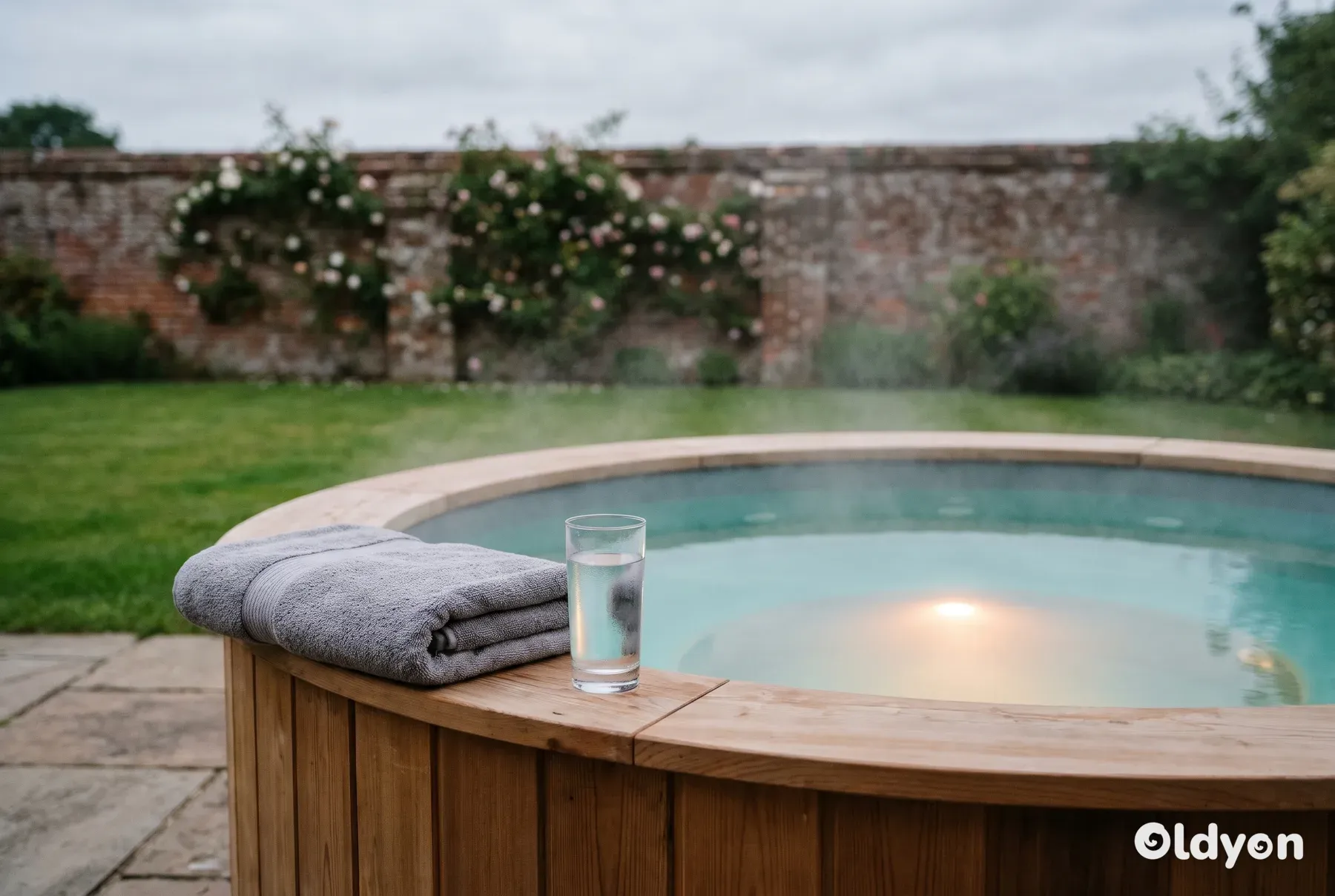
For most healthy adults, the answer to how long should you stay in a hot tub is about 15-20 minutes at the maximum recommended temperature of 40°C (104°F). At a cooler 37-38°C you can usually stay longer, as long as you feel well, drink water and take short breaks out of the water.
Those times are a starting point, not a fixed rule. Children, pregnant women, older adults and anyone taking certain medicines need shorter, cooler soaks, and your body will tell you when it has had enough if you know which signs to look for.
This article is general information, not medical advice.
How long should you stay in a hot tub at each temperature?
The hotter the water, the faster your body warms up, so the safe time shrinks as the temperature rises. Most manufacturers and safety bodies set 40°C as the upper limit for home hot tubs. Many owners find 37-38°C more comfortable for long evening soaks, and there is more on choosing a setting in our guide to the ideal hot tub temperature for every season.
The table below shows typical guidance for healthy adults. Different manufacturers give slightly different figures, so check the manual that came with your hot tub and treat these as upper limits rather than targets.
Water temperature | Suggested session for healthy adults | Comment |
|---|---|---|
40°C (104°F) | 15-20 minutes | Maximum recommended temperature |
39°C (102.2°F) | 20-30 minutes | Popular in winter, still very warm |
38°C (100.4°F) | 30-45 minutes | Comfortable for most people |
37°C (98.6°F) | 45-60 minutes | Close to body temperature, take breaks |
35-36°C (95-96.8°F) | Longer, with breaks | Suits hot summer days and children |
Why is there a 15-20 minute rule at 40°C?
At 40°C the water is warmer than your body, so heat flows into you instead of out. Normally you cool down by sweating, but sweat cannot evaporate when you are sitting in water, so your core temperature slowly climbs.
After about 15-20 minutes at this temperature, many people start to feel light-headed or drained. The time limit gives your body a margin before that happens. It is a guide for healthy adults, and you should get out sooner if you feel unwell at any point.
What does hot water do to your body?
Warm water makes your blood vessels widen so your body can move heat to the skin. This is why your skin turns pink and your muscles feel looser. It also means your blood pressure can drop and your heart beats a little faster to keep blood moving.
You also lose fluid. Your head and shoulders sweat even though the rest of you is under water, and you may not notice it happening. Our article on whether you sweat in a hot tub explains this in more detail.
For a healthy person these effects are mild and pass quickly once you cool down. They become a problem when the soak is too long or too hot, when you are already dehydrated, or when a medical condition or medicine affects your heart, blood pressure or ability to control your temperature.
What are the signs it is time to get out?
Your body gives clear warnings before overheating becomes serious. If you notice any of the following, get out of the water slowly, sit somewhere cool and drink some water.
- Feeling dizzy, light-headed or faint
- A headache or a feeling of pressure in your head
- Feeling sick or very thirsty
- A racing or pounding heartbeat
- Very red, hot skin, especially on your face
- Feeling unusually sleepy, weak or confused
- Muscle cramps
Overheating usually builds in stages. Mild heat stress brings tiredness and flushed skin. Heat exhaustion adds nausea and weakness. Severe hyperthermia, when your core temperature rises above about 40°C, is a medical emergency.
Stand up slowly when you leave the hot tub. Your blood pressure can drop when you rise from hot water, which can make you dizzy and cause a fall on wet steps. Use the handrail and sit down at once if you feel faint.
Cool down gradually once you are out. Do not jump into a cold pool or a cold plunge straight from the hot water, because your blood pressure needs a few minutes to stabilise after the heat.
Most people recover within a few minutes. If symptoms such as confusion, a very high temperature, fainting or a fast heartbeat do not settle after 30 minutes of cooling down, follow the NHS advice on heat exhaustion and heatstroke and call 999 in an emergency.
Chest pain, difficulty breathing or confusion that does not pass, during or after a soak, needs emergency medical care straight away. Call 999 in the UK or 112 elsewhere in Europe, and do not wait to see if it settles.
Sleepiness deserves special attention. Warm water is relaxing, and dozing off in a hot tub can lead to overheating or worse. Read why falling asleep in a hot tub is dangerous and never soak alone when you are very tired.
Is 2 hours too long in a hot tub?
At 40°C, yes. Two hours without a break at full temperature is far beyond the usual guidance and greatly raises the risk of overheating and dehydration. At 37°C or below, a long social evening can be fine, as long as you get out regularly and drink water.
The key is to break a long evening into several shorter soaks. Your core temperature drops back to normal during each break, which resets the clock.
As a guide, with the water at about 38°C (100.4°F) and regular breaks, a total of 45-60 minutes spread over several short intervals is reasonable for a healthy adult. Treat that as the total time in the water across the evening, not one continuous soak.
How to enjoy a longer session safely
- Lower the water temperature to 37-38°C a few hours before you plan to soak, so the water has time to settle.
- Put a large glass or bottle of water within reach of the tub before you get in.
- Drink a full glass of water just before you get in, so you start the soak well hydrated instead of relying only on sips once you are already warm.
- Set a timer on a phone kept safely away from the water, using the time from the table above for your temperature.
- When the timer goes off, get out slowly and sit somewhere cool for 5-10 minutes with a towel or robe.
- Drink some water during each break, even if you do not feel thirsty.
- Get back in only if you feel completely well, and stop for the night at the first warning sign.
If you keep the water at 39-40°C, a workable pattern is a break of about 5 minutes out of the water every 15-20 minutes. During a break you can also rinse off under a lukewarm shower, which helps your body shed heat faster.
Sitting higher in the water also helps. Raising your shoulders and chest above the surface lets more heat escape, which slows how quickly you warm up.
How long can children stay in a hot tub?
Children heat up faster than adults because they have a smaller body and a larger skin area for their size. They also tend not to notice or mention when they feel too hot. Because of this, their soaks need to be cooler and shorter.
A common approach is to lower the water to around 37°C or below for children and limit sessions to about 10-15 minutes, with an adult watching at all times. Many manufacturers advise that very young children, often those under five, should not use a hot tub at all. Check your manual, as advice varies.
For children aged 5 to 12, a more cautious guideline is 5-10 minutes in water no hotter than 37°C (98.6°F), under direct adult supervision the whole time. Get them out sooner if they look flushed or say they feel hot.
Children should never be in water at adult temperatures of 39-40°C (102-104°F). At those settings the water is unsafe for a child for any length of time, so lower the temperature well before they get in and check it with a thermometer.
- Make sure they can sit with their head and shoulders well above the water
- Keep them away from drains and suction fittings, and tie back long hair
- Do not let them put their head under the water
- Never leave a child alone in or near a hot tub, even for a moment
- Fit and lock the cover whenever the tub is not in use
Our full guide to hot tub temperature for children and safe soak times covers different ages in more detail.
Is it safe to use a hot tub when pregnant?
The NHS advises that pregnant women avoid getting too hot, and recommends caution with hot tubs, saunas and steam rooms because they can raise your body temperature. A high core temperature is a particular concern in the early weeks of pregnancy.
For this reason, pregnant women are generally advised to avoid hot tubs completely in the first trimester. A raised core temperature at this stage has been linked to a higher risk of neural tube defects, which are abnormalities of the baby's brain and spine.
Pregnancy can also make you feel faint more easily, because your blood pressure tends to be lower. If you are pregnant or trying to get pregnant, speak to your midwife or GP before using a hot tub. The NHS pregnancy guide is a reliable place to start.
If your midwife or GP is happy for you to soak, the usual sensible precautions are cooler water, short sessions and sitting so your chest stays above the surface. Get out at once if you feel hot, dizzy or unwell.
After the first trimester, if your doctor or midwife approves hot tub use, keep each soak to about 10 minutes in water no hotter than 38°C (100.4°F). Get out straight away if you feel flushed or overheated.
If you are breastfeeding, speak to your doctor before using a hot tub, especially if you are taking any medicines or are not yet fully recovered from the birth.
Do medicines or health conditions change how long you can soak?
Yes. Some conditions and medicines affect your heart, your blood pressure or your body's ability to cope with heat. In these cases the general time limits may be too long, and you should get personal advice first.
High or low blood pressure and heart conditions
Hot water widens your blood vessels and lowers your blood pressure, and your heart has to work a little harder. If you have high or low blood pressure, heart disease, or a history of fainting, ask your GP whether hot tub use is safe for you and what temperature and time they suggest.
In people with heart disease, hot water can occasionally trigger an irregular heartbeat or, rarely, a cardiac event. People with well-controlled high blood pressure may be able to soak, but if your blood pressure is not under control or you have had a heart attack, ask your cardiologist or GP first.
If you are cleared to soak, sessions of about 10 minutes are often advised. Get out at once if you feel any chest discomfort or shortness of breath.
Medicines that can affect you in hot water
Medicines that lower blood pressure, cause drowsiness or affect your heart rate can make you more likely to feel faint or fall asleep in warm water. This can include some blood pressure tablets, sleeping tablets, some antidepressants and some antihistamines. Your pharmacist can check your medicines with you quickly and for free.
Diuretics (water tablets) and beta-blockers can also weaken your body's normal response to heat, for example by reducing your fluid levels or limiting how much your heart rate can rise. If you take either, ask a pharmacist before you soak.
Alcohol
Alcohol and hot water both lower blood pressure and both cause dehydration, so together they increase the risk of fainting, overheating and drowning. Avoid alcohol before and during a soak. If you do have a drink, keep the session short and cool, and never soak alone.
Alcohol also dulls your ability to sense that you are overheating. You may not notice the usual warning signs, such as dizziness or a pounding heart, until the problem is more serious.
Older adults
As we get older, our bodies often control temperature less efficiently and we may feel thirst less. Older adults generally do well with water at 37-38°C, sessions at the shorter end of the table, a sturdy handrail and non-slip steps. Speak to your GP first if you have any long-term health condition.
Adults over 65 are often advised to keep soaks to about 10-15 minutes at 38°C or below. Older people sense heat building up less well and are more likely to have a heart condition, so a shorter, cooler soak gives a better safety margin. Older adults should never soak alone.
Is it safe to use a hot tub every day?
For most healthy adults, a daily soak within the usual time limits is fine. Many people use their hot tub every evening to relax or ease stiff muscles after exercise. The guidance on session length applies to each soak, so daily use simply means following it every time.
Regular users should pay extra attention to drinking water and to keeping the water clean, because more bathers mean more work for the sanitiser. Our guide on how often you can use a hot tub covers daily use and water care together.
If you use your hot tub every day, test the water at least twice a week. Frequent bathing uses up sanitiser faster, so levels can drop out of range between tests.
If you use your hot tub after sport, give your body time to cool down first. Getting into hot water straight after hard exercise, when you are already warm and low on fluid, adds to the strain. A drink of water and a proper rest beforehand is a sensible habit.
After exercise, wait at least 30 minutes before you get into the hot tub. Your core temperature is still raised from the workout, and hot water on top of that warms you up faster than usual.
For recovery after sport, a soak of 15-20 minutes at about 38-39°C is a commonly recommended pattern. Going beyond 20 minutes adds heat fatigue that starts to outweigh the benefit to your muscles.
Athletes are usually already short of fluid after training. Drink well before a recovery soak and again afterwards to replace what you lost in both the session and the hot water.
Can poor water quality affect how long you should soak?
Session length is mostly about heat, but the longer you sit in the water, the more contact your skin has with it. If the sanitiser level is too low, bacteria can grow and cause an itchy, bumpy skin rash, sometimes called hot tub rash or hot tub folliculitis. Breathing in mist from badly kept water can also, rarely, cause lung infections.
Hot tub folliculitis is caused by the bacterium Pseudomonas aeruginosa, which thrives when the pH or sanitiser level is out of range. The rash typically appears 12-48 hours after soaking, often on the back, the torso and the areas covered by swimwear.
Long soaks in poorly balanced water also increase your skin's exposure to chlorine by-products. An itchy back after a soak can therefore point to a chemical imbalance rather than the heat. If it keeps happening, test the water before you change anything else.
Keeping the water balanced protects you on every soak. Widely accepted ranges for home hot tubs are below. Test the water regularly, and always follow your hot tub manufacturer and chemical supplier instructions.
- Free chlorine: 3-5 ppm, or bromine: 3-5 ppm
- pH: 7.2-7.6
- Total alkalinity: 80-120 ppm
- Calcium hardness: 150-250 ppm
Warm water that is not properly treated can also allow Legionella bacteria to grow. The HSE guidance on legionella explains the risk, and regular testing, cleaning filters and changing the water as your manual advises keep it very low.
How long can you leave a hot tub empty?
An empty hot tub is generally fine for about 5-7 days in mild weather. The main risks are sun damage to the shell if it is left uncovered, and frost cracking pipes or fittings in cold weather. Switch the tub off at the isolator before draining, and check your manual for its own guidance.
- Keep the cover on while the tub is empty, to protect the shell from sun and debris
- Do not leave the tub empty if temperatures are forecast to drop below 0°C (32°F), because water left in the pipework can freeze and crack it
- Never leave a hot tub empty and uncovered for more than about a week without completing the winterising steps below, whatever the season
Using a short empty spell for maintenance
- Take out the filters and inspect them for damage, then clean or replace them.
- Wipe the shell with a non-abrasive cleaner suitable for hot tubs.
- Check each jet for limescale build-up and clean any that look blocked.
- Refill, rebalance the water and switch the power back on.
Long-term storage and winter closure
If the tub will stand empty for longer, or through a winter, it needs winterising so no water is left to freeze. Follow your manual, as the steps vary between models.
- Switch off at the isolator and drain the tub completely.
- Blow out the plumbing lines with a wet/dry vacuum to remove water trapped in the pipes.
- Drain the heater and the pump, using the drain plugs your manual shows.
- Add non-toxic hot tub antifreeze to any water that cannot be removed from the system.
- Dry the shell and fit the cover securely.
Common mistakes that make a soak less safe
- Keeping the water at 40°C for long social evenings instead of lowering it
- Not drinking any water before or during a soak
- Starting a soak already dehydrated, for example after exercise, in summer heat or after a lot of caffeine
- Drinking alcohol in the hot tub
- Soaking alone when tired, or late at night
- Ignoring early signs such as a mild headache or dizziness
- Standing up quickly and climbing out without using the handrail
- Letting children set their own time in the water
- Assuming that because you feel fine at 10 minutes, you will feel fine at 60
Speak to your GP before using a hot tub if you are pregnant, have a heart condition, high or low blood pressure, diabetes, epilepsy, a weakened immune system or a recent illness or surgery, or if you take regular medicines. Ask a pharmacist if you are unsure whether a medicine is affected by heat.
See your GP first, too, if you have had a stroke, have a condition that affects your circulation or nerve sensation (which can stop you feeling how hot the water is), or have any open wounds.
Summary: how long to soak safely
At 40°C, most healthy adults should limit a soak to 15-20 minutes. At 37-38°C you can stay longer, with regular breaks and plenty of water. Get out slowly at the first sign of dizziness, headache, nausea or sleepiness.
Children need cooler water, shorter sessions and constant supervision. If you are pregnant, have a health condition or take regular medicines, ask your midwife, GP or pharmacist before you soak, and keep your water balanced so every session is a clean one.
Frequently asked questions
What happens if you stay in a hot tub for 4 hours?
Four hours without breaks would very likely leave you overheated and dehydrated, with faintness, nausea and exhaustion, and in serious cases heatstroke, an electrolyte imbalance or strain on your organs. Get emergency help if serious symptoms appear. Your skin would also wrinkle and may become irritated. Four continuous hours is unsafe for a healthy adult even at lower temperatures, so always split a long evening into short soaks at 37°C or below.
Should you shower after using a hot tub?
A quick shower afterwards is a good habit. It rinses sanitiser and anything else in the water off your skin, which can help if you are prone to dry or itchy skin. Showering before you get in is just as useful, because it removes sweat, lotions and cosmetics that use up sanitiser and cloud the water.
Is it better to use a hot tub before or after a meal?
Many people feel more comfortable waiting an hour or so after a large meal. Digestion draws blood to your stomach while hot water draws it to your skin, and some people feel light-headed or sleepy when both happen at once. A light snack beforehand is usually fine, and it is worth having some water ready.
Can you use a hot tub with a cold or a fever?
It is best to wait until you feel better. A fever already raises your body temperature, and hot water adds to it, which increases the risk of feeling faint or overheating. You may also be more dehydrated than usual. If you have a minor cold with no fever, keep the session cool and short, and stop if you feel worse.
Why do I feel tired after a hot tub?
Feeling pleasantly relaxed is normal, because warm water eases tense muscles and lowers your blood pressure slightly. Feeling very drained, heavy or dizzy usually means you stayed in too long, the water was too hot or you did not drink enough. Next time, try a cooler temperature, a shorter soak and a glass of water before and after.
Does the outside temperature change how long you should stay in?
It can. On a cold winter evening your head and shoulders lose heat to the air, so many people feel comfortable for a little longer. On a hot summer day the air adds to the heat load, so you will warm up faster. In summer, lower the water temperature and shorten your sessions, and drink more water.
Why do people put tennis balls in a hot tub?
Two or three clean tennis balls floating in the water absorb some of the body oils, lotions and cosmetics that bathers leave behind. This keeps the water clearer and eases the load on the sanitiser. They do not replace filter cleaning or regular testing. Replace them every few months, once they look saturated or discoloured.
What are the downsides of owning a hot tub?
The main downsides are health risks from overuse, such as dehydration, overheating, skin infections and strain on the heart, which sensible session lengths largely avoid. You also take on regular water maintenance: testing, adding chemicals, cleaning filters and changing the water. Finally, there are running costs for electricity and chemicals, which vary with the size of the tub, its insulation and local energy prices.
Filed under