Hot tub health benefits and what the evidence shows
Hot tub health benefits explained: what the evidence shows for muscles, joints, sleep, stress and circulation, plus who should check with a GP first.
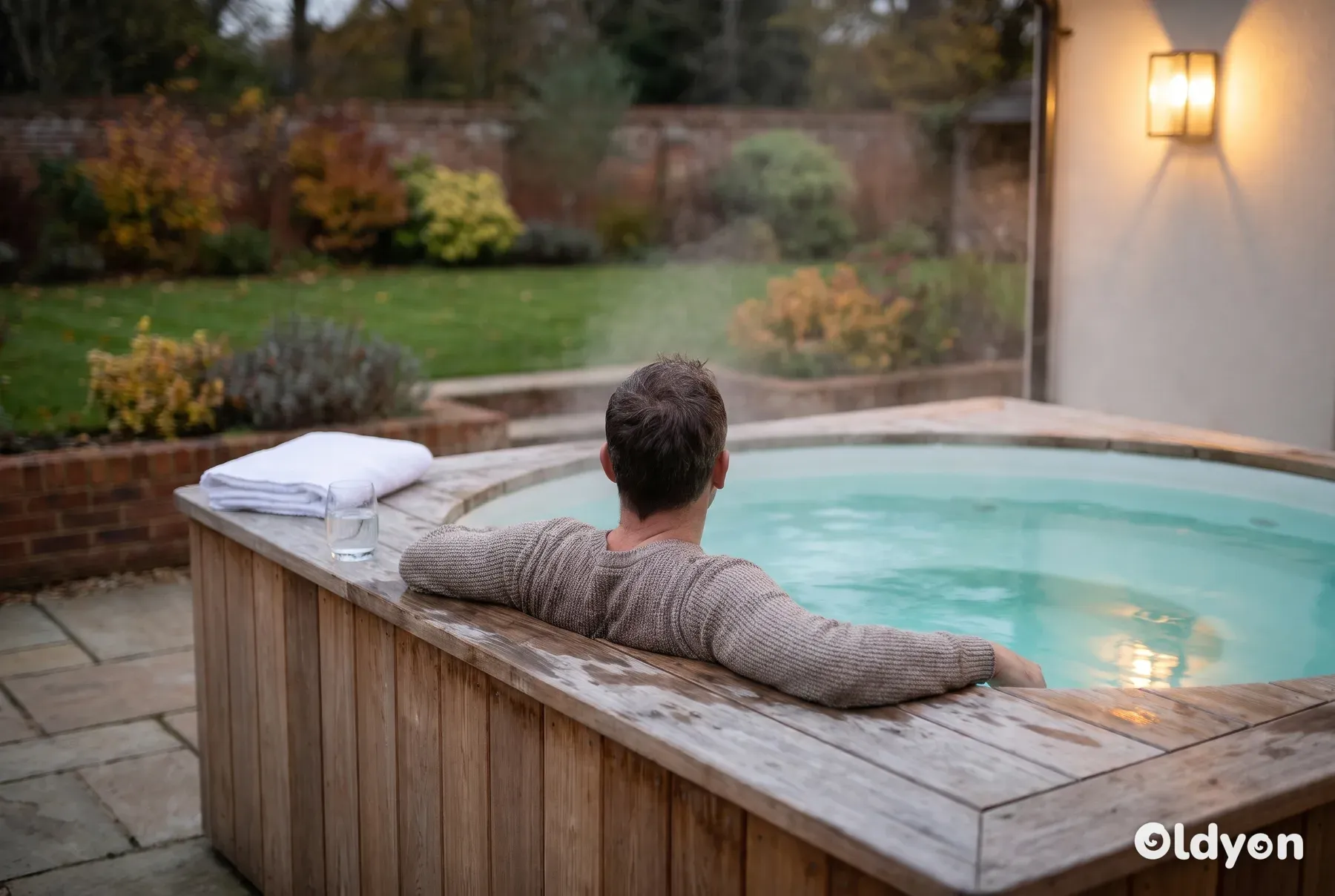
The honest answer is that hot tub health benefits are real but modest. Warm water reliably eases muscle tension, can relieve stiff joints for a few hours and helps many people relax and fall asleep. Claims about weight loss, detox and curing conditions are not supported. Heart and circulation findings are promising but mostly come from observational studies.
This guide goes through each area and separates what the research supports from what brochures claim. It also explains how to soak so that you get the benefits safely, and who should speak to a GP before getting in.
This article is general information, not medical advice.
What happens to your body in hot water?
When you sit in water at 37-40°C (99-104°F), your core temperature rises slowly. Blood vessels near the skin widen to release heat, blood pressure tends to fall a little, and your heart rate rises. The overall effect is a little like very gentle exercise.
Water also supports you. When you sit in water up to your neck, buoyancy takes away roughly 90% of your body weight, which is why moving stiff joints feels so much easier. The pressure of the water around your body also helps blood return to the heart, and jets add a massage effect on top of this.
Because more blood returns to the heart, the heart pumps more blood with each beat. It can do this without the heart rate climbing as sharply as it does during exercise. This is part of the reason a soak feels like gentle exercise even though you are sitting still.
Almost every benefit and almost every risk of a hot tub comes from these same changes. Wider blood vessels help muscles relax, but they can also make you dizzy when you stand up. Keep that link in mind as you read the rest of this guide.
Which hot tub health benefits have good evidence?
The table below summarises where the research stands. A stronger rating means consistent findings across several studies or long use in clinical practice. A weaker rating means small studies, mixed results or mostly theory.
Claimed benefit | Strength of evidence | What it means for you |
|---|---|---|
Muscle relaxation | Stronger | Eases tension and soreness for a few hours |
Joint stiffness | Moderate | Short-term comfort, not a treatment for the disease |
Falling asleep | Moderate | A soak 1-2 hours before bed may help |
Stress and mood | Moderate | Most people feel calmer; long-term effects unclear |
Heart and circulation | Promising, mostly observational | Links found, cause not proven |
Blood sugar | Weak | Small studies only |
Weight loss | Very weak | Extra calories burned are small |
Detox | None | Your liver and kidneys do this, not sweat |
The sections below explain each of these areas in plain terms, including what the findings mean in day-to-day use.
Does a hot tub help sore muscles and stiff joints?
Muscles
Heat is one of the oldest and most widely accepted ways to ease muscle tension. Warmth increases blood flow to muscles and makes soft tissue more flexible. That is why a soak feels so good after gardening, a long drive or a hard workout.
To get the most from the massage effect, position yourself so that the jets press on the area that is sore, such as your lower back, shoulders or hamstrings. Most tubs have seats with jets aimed at different parts of the body, so try a few positions.
For recovery after exercise, the picture is more mixed. Heat helps you feel looser, but there is limited research on whether it speeds up actual muscle repair. A warm soak later the same day or the next day is a sensible approach.
If your main goal is to calm inflammation straight after a very hard training session, cold water immersion, such as a cold plunge or an ice bath, suits that better than heat in the first 24-48 hours. In that case, keep the hot tub for later, once the first day or two have passed.
Avoid a hot soak just before hard exercise. A raised core temperature and heart rate can reduce your performance and add strain during the workout, so save the hot tub for afterwards.
If a muscle or joint is newly injured, swollen or bruised, wait before using the hot tub. The NHS advice on sprains and strains is to avoid heat for the first few days, because heat can increase swelling. Instead, the NHS advises an ice pack wrapped in a towel for up to 20 minutes every 2-3 hours during those first few days.
Joints and back pain
Warm water therapy is widely used by physiotherapists for arthritis and back pain. Buoyancy lets you move stiff joints with less load, and warmth eases the pain that makes movement difficult.
Studies generally find short-term improvements in pain and stiffness, particularly in osteoarthritis. The effect is greater comfort and easier movement, not a change in the disease itself. Our guide on whether a hot tub can help arthritis covers this in more detail.
Reviews of warm-water exercise for knee and hip osteoarthritis have found improvements in pain and function similar to those from exercise on land. This is useful if land exercise hurts too much to start with, because the water lets you build movement more gently.
The benefit is not limited to osteoarthritis. Warm-water therapy and buoyancy can also ease joint pain and stiffness in rheumatoid arthritis. If you have rheumatoid or another inflammatory arthritis, follow your rheumatology team's advice, particularly during a flare when joints are hot and swollen.
Back pain follows a similar pattern. Most back pain guidance recommends staying active, and warm water can make gentle movement easier. See how a hot tub can help lower back pain for a practical routine.
You will get more from the water if you move in it rather than just sit. Slow movements of the shoulders, hips, knees and ankles work well. Hydrotherapy at home with your hot tub explains simple exercises and how to use the jets.
If you have psoriatic arthritis or fibromyalgia, or you are recovering from surgery, ask your GP or specialist about hydrotherapy. A session in a hydrotherapy pool led by a physiotherapist, which the NHS can refer you to, gives more controlled treatment than a home hot tub.
Can a hot tub improve your sleep?
There is reasonable evidence here. Several studies of warm baths and showers have found that warming the body 1 to 2 hours before bed helps many people fall asleep faster. The likely reason is the drop in core temperature afterwards, which is one of the signals the body uses to prepare for sleep.
A review that pooled these warm bath and shower studies found that warming up 1-2 hours before bed shortened the time it took to fall asleep by about 10 minutes on average. Around 90 minutes before bed appeared to work best.
The same review found that people also rated their overall sleep quality as better. So the benefit was not only about falling asleep sooner, but also about how good the night's sleep felt.
Timing matters more than temperature. If you get out of a hot tub and go straight to bed, you may still be too warm to fall asleep. Finish your soak, let your body cool down, drink a glass of water and then go to bed.
For a soak aimed at sleep, a moderate temperature of about 38-39°C (100-102°F) for around 15-20 minutes is enough. Hotter water does not help you sleep better, and it can leave some people feeling too stimulated to settle afterwards.
To find out whether an evening soak helps you, try it consistently for about two weeks. Keep a simple note of how quickly you fall asleep and how rested you feel in the morning, then compare it with nights when you did not soak.
An evening soak on 3-5 nights a week is usually enough to notice an effect on sleep. Soaking every night is also fine for most healthy adults, as long as sessions stay moderate.
Never let yourself get drowsy in the water, because falling asleep in a hot tub is dangerous. Our article on using a hot tub before bed explains good timing in more detail.
Does a hot tub reduce stress?
Most people say a soak helps them relax, and small studies of warm water immersion support this, with people reporting less stress and tension afterwards. Warmth, quiet, the feeling of weightlessness and a break from phones all play a part.
Warmth on the skin is thought to shift the nervous system towards its 'rest and digest' mode and away from the 'fight or flight' response. This is one likely reason a soak feels calming, although the effect has not been measured well in home hot tubs.
You can strengthen the relaxing effect with slow, deep breathing during the soak. Keep the lighting dim and leave phones and other screens indoors.
Claims that hot tubs control stress hormones or treat anxiety go further than the evidence. Studies that measured stress hormones have been small, and their results are mixed. Treat a soak as a good relaxation habit, not as a treatment.
If you are dealing with ongoing low mood, anxiety or poor sleep, a hot tub can be part of a calming routine, but please speak to your GP as well. The NHS also offers free self-help advice through Every Mind Matters.
What does the research say about heart health and circulation?
This is the area where marketing usually goes furthest. Heat does cause short-term changes in the body that look like light exercise. Your heart rate rises, your blood vessels widen and your blood pressure falls slightly while you are in the water.
Long-term studies from Japan on regular hot bathing, and from Finland on sauna use, have linked frequent heat bathing with lower rates of heart disease and stroke. These are observational studies. They show a link but cannot prove that bathing caused it, because people who bathe often may also differ in other ways.
The Japanese study, published in the journal Heart, followed about 30,000 adults for around 20 years. Daily hot bathing was linked with about a 28% lower risk of cardiovascular disease and a 26% lower risk of stroke, compared with bathing twice a week or less.
A Finnish study of middle-aged men found that using a sauna 4-7 times a week was linked with about a 50% lower risk of dying from cardiovascular disease than using one once a week. This study was also observational, so the same caution applies.
Small experimental studies of regular heat exposure have shown improvements in how blood vessels work over several weeks. These results are encouraging, but the studies involved small groups under supervision, sometimes at temperatures and times that you should not copy at home.
In some of these studies, several weeks of regular passive heating (around six weeks or more) reduced arterial stiffness, which is a marker of blood vessel ageing. They also found that the inner lining of the blood vessels became better at controlling blood flow. The groups were small, so larger studies are still needed.
The same effects carry a risk. A fall in blood pressure can cause dizziness or fainting when you stand up, and the extra work for the heart matters if you have heart disease. If you have high or low blood pressure, read whether a hot tub is safe with high blood pressure and speak to your GP first.
Can a hot tub help with weight loss, blood sugar or skin?
Calories and weight
Sitting in hot water raises your heart rate and burns slightly more energy than sitting on a sofa. The difference is small and far less than a brisk walk. A hot tub will not cause meaningful weight loss on its own.
A Loughborough University study found that an hour in a bath at 40°C burned about 140 calories, roughly the same as a 30-minute walk. However, participants were supervised, and an hour is far longer than home guidance allows, so do not copy it in your hot tub.
For people who cannot exercise much because of injury, illness or limited mobility, warm water can be a gentle way to raise the heart rate slightly and stay comfortable. It does not replace activity, but it can sit alongside whatever movement you are able to do.
Blood sugar
A few small studies have suggested that regular warm water immersion may help blood sugar control in people with type 2 diabetes. These studies are too small to draw firm conclusions from. Do not change any diabetes treatment because of hot tub use.
In the same Loughborough study, the hot bath lowered peak blood sugar after a meal by around 10%. Researchers think repeated heat exposure may help partly by raising heat shock proteins in muscle, which can improve how muscle takes up glucose. This is still being studied.
The Loughborough researchers also measured an anti-inflammatory response after the hot bath that was broadly similar to the one seen after an hour of cycling. This was a small, supervised study, so it is an interesting early finding rather than proof that soaking reduces inflammation in everyday life.
If you have diabetes, take extra care in hot water. Reduced feeling in the feet can make it hard to notice when water is too hot, and heat can make injected insulin absorb faster than usual, which raises the risk of a low blood sugar.
Until you know how hot water affects you, check your blood sugar before and after each soak.
Skin and the idea of detox
Sweating does not remove toxins in any useful amount; your liver and kidneys do that job. Warm water can make skin look flushed for a while, but chlorine and bromine can dry skin and irritate eczema. If your skin is sensitive, shower and moisturise after soaking.
Poorly kept water is a real health risk. Hot tub folliculitis, an itchy rash of red spots, is usually caused by the bacterium Pseudomonas aeruginosa, which grows when sanitiser runs low. Keep free chlorine at 3-5 ppm or bromine at 3-5 ppm, and pH at 7.2-7.6. Test at least two or three times a week, and before use if the tub has been standing.
- Sanitiser breaks down faster in warm water, in direct sunlight and after several people have used the tub, so levels can fall quickly after a busy session. Test again afterwards.
- Shock-dose the water about once a week, or after heavy use, to break down contaminants that normal sanitiser levels do not clear.
- Drain, clean and refill the tub about every three months, or sooner with heavy use. Check your manual for its recommended interval.
Hot tubs can also spread Legionella bacteria in the fine spray from jets if the water and pipework are not looked after. Breathing in this spray can cause Legionnaires' disease, a serious lung infection (a type of pneumonia). The HSE guidance on spa pools is written for businesses, but its core advice on disinfection, filter cleaning and regular draining also applies at home.
Hot tub or sauna: which is better for your health?
Both are forms of heat therapy, and much of the long-term heart research actually comes from sauna use. The main differences are how heat reaches your body and what the water adds.
- Heat: a sauna uses hot, dry air at about 70-100°C (158-212°F), compared with 37-40°C in a hot tub, so sauna sessions tend to be short. Water passes heat to your body faster than air does, so a hot tub warms you quickly at a lower temperature.
- Support: only water gives you buoyancy, which makes a hot tub better suited to stiff joints and gentle movement.
- Water pressure: only a hot tub surrounds you with gentle, even water pressure that helps blood return to the heart. A sauna cannot do this.
- Massage: hot tub jets give a massage effect that a sauna cannot.
- Sweat: you sweat more in a sauna, but sweat is mainly water, salt and small amounts of minerals. Heavier sweating does not mean extra detox.
- Evidence: there are more large long-term studies on sauna bathing than on hot tubs.
- Hygiene: a sauna has no water chemistry to manage, while a hot tub needs regular testing and cleaning.
- Running costs: a sauna generally costs less to run over the long term, because it needs no water heating, chemicals or filter replacements.
The milder, moist heat of a hot tub may suit people who find a sauna's very hot, dry air uncomfortable. This can include some people with breathing problems and people who feel anxious in intense heat.
Because of the lower temperature and the support of the water pressure, a hot tub is generally the milder of the two for older adults and for people with limited exercise tolerance. It still puts some extra work on the heart, so the GP advice later in this guide applies.
For better sleep, a hot tub is generally the better choice of the two. The moderate water temperature makes it easier to control how much you warm up and how quickly you cool down afterwards, and that cool-down is what helps you fall asleep.
If you want joint relief and the chance to move gently, a hot tub suits you better. If you mainly enjoy heat and want less upkeep, a sauna may suit you. The same health cautions about heat apply to both.
If you have access to both, you can use them for different goals. For example, use a sauna for heat sessions and a hot tub for joint comfort, recovery and winding down before bed. Do not go straight from one to the other without cooling down and drinking water in between.
How should you soak to get the benefits safely?
Most of the benefits come from moderate warmth and regular use. The hottest water and the longest soak do not give you more benefit, but they do increase the risk.
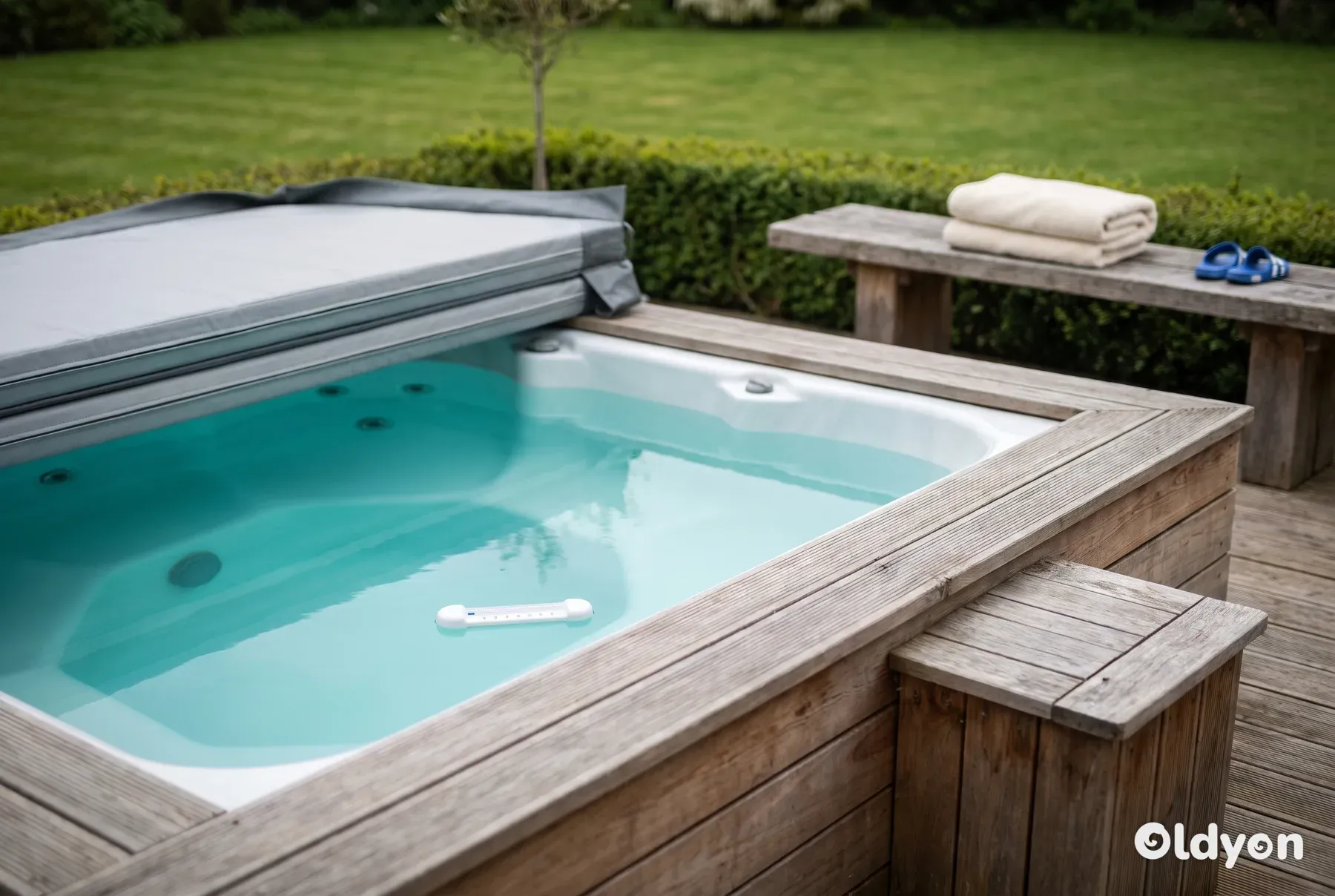
- Check that the water is no hotter than 40°C. Many people find 37-38°C (99-100°F) more comfortable for a longer soak. From time to time, check the reading with a separate floating thermometer, because the control panel can be inaccurate.
- Test the water and make sure the sanitiser and pH levels are in range before anyone gets in.
- Drink about 500 ml (a large glass or a small bottle) of water before you start, and avoid alcohol before and during your soak. You lose sweat without noticing it, because the water hides the feeling, so keep a drink within reach during longer soaks.
- Keep your first few sessions to 10-15 minutes. Common guidance for healthy adults is around 15-20 minutes at 40°C, but manufacturers' advice varies, so check your manual.
- If you start to feel warm, sit higher so that your chest is out of the water, or sit on the edge for a few minutes.
- Get out slowly. Stand up in stages and use the handrail, because blood pressure can drop as you stand.
- Cool down gradually, drink more water and rest for a few minutes before doing anything demanding.
Get out straight away and cool down if you feel dizzy, light-headed, sick or confused, or if you notice a pounding or irregular heartbeat, a headache, numbness or tingling in your hands or feet, or sudden unusual tiredness. Do not drive until you feel normal. If you have chest pain, difficulty breathing or symptoms that do not settle quickly, call 999 in the UK or 112 elsewhere in Europe.
These warning signs matter because overheating gets worse if you ignore it. If your core temperature keeps climbing towards about 40°C, early dizziness and nausea can progress to heat stroke, which is a medical emergency. Signs include confusion, hot dry or flushed skin, fast breathing, fainting or a seizure. Help the person out of the water, cool them down and call 999 or 112. The NHS guide to heat exhaustion and heatstroke explains what to do while you wait.
A hot tub can ease symptoms but never replaces treatment. Do not stop or reduce any prescribed medicine for high blood pressure, arthritis, sleep or any other condition because you soak regularly. Speak to your GP if you want to review your treatment.
Regular soaks a few times a week matter more than one long session. Daily use is fine for most healthy adults, as long as sessions stay moderate and the water is well looked after.
The table below gives a starting point for common goals. Stay at the lower end of the time range until you know how your body responds, and never go above 40°C.
Goal | When to soak | Temperature | Session length |
|---|---|---|---|
Sleep | Evening, about 90 minutes before bed | 38-39°C | 15-20 minutes |
Winding down | Early evening or after work | 37-38°C | 15-20 minutes |
Sore muscles | Later the same day or the day after exercise | 38-40°C | 10-20 minutes |
Stiff joints | Morning, soon after waking | 37-38°C | 10-15 minutes |
Morning or evening?
Neither time is better overall. An evening soak 1-2 hours before bed suits people who want help falling asleep. A short morning soak can suit people with arthritis, who often feel stiffest when they wake up.
Some people also find that a short, moderate morning soak helps them feel more awake and loosened up before the day starts. Keep it brief and not too hot, so that you feel refreshed rather than drowsy.
Who should check with a GP before using a hot tub?
For most healthy adults, a hot tub used sensibly is low risk. Some people should speak to a GP, pharmacist or midwife first, because heat and lower blood pressure can affect them more strongly.
- Pregnant women: NHS pregnancy guidance advises avoiding hot tubs and saunas because of the risk of overheating, particularly in early pregnancy. Speak to your midwife.
- People with heart disease, angina, heart rhythm problems, or a past heart attack or stroke.
- People with a pacemaker or implanted defibrillator, who should get clearance from their cardiology team.
- People with high or low blood pressure, or a history of fainting.
- People with diabetes, especially with reduced feeling in the feet.
- People with kidney disease.
- People who have had heat stroke or heat exhaustion in the past.
- People with epilepsy, because a seizure in water is dangerous. Never soak alone.
- People with multiple sclerosis or other conditions where heat makes symptoms worse.
- Anyone recovering from surgery, or with open wounds or a skin infection.
- Anyone with a fever or diarrhoea. Wait until 48 hours after diarrhoea has stopped.
- Older adults, and anyone who is frail or has balance problems.
- Men who are trying to conceive, because heat can temporarily reduce sperm quality.
- Men having treatment for prostate cancer, who should ask their oncology team before using heat therapy such as a hot tub.
Medicines and alcohol
Some medicines change how your body handles heat or blood pressure. Ask your pharmacist before soaking if you take medicines for blood pressure or the heart (including beta blockers and water tablets), blood thinners (anticoagulants), sedatives, sleeping tablets, some antidepressants, some antihistamines or insulin.
Blood pressure medicines add to the widening of blood vessels that hot water already causes. Together they can cause a sudden drop in blood pressure and fainting, often as you stand up to get out. Sedatives and sleeping tablets dull your body's response to heat and make you drowsy, which raises the risk of drowning.
Alcohol and recreational drugs add to the effects of heat. They increase the risk of fainting and drowning, so keep them out of the hot tub altogether.
Children
Children overheat faster than adults. Widely followed public health guidance says children under 5 should not use hot tubs at all, because they cannot control their body temperature well.
For older children, use a lower temperature and shorter sessions, and supervise them at all times. Manufacturers' advice on age and temperature differs, so check your manual. Many advise against hot tub use for very young children.
Summary: what the evidence shows
A hot tub reliably helps with relaxation and muscle tension, gives short-term relief to stiff joints and back pain, and may help you fall asleep if you time it well. Heart and circulation findings are promising but not proven.
Claims about weight loss, detox and curing illness do not stand up. Keep the water at 40°C or below, keep sessions moderate and the chemistry in range, and speak to your GP first if any of the conditions above apply to you.
Frequently asked questions
Is a hot tub good for psoriatic arthritis?
Warm water can ease the joint stiffness of psoriatic arthritis for a few hours, as it does with other types of arthritis. A cooler soak of around 37-38°C is gentler on inflamed skin and joints. Sanitiser can irritate psoriasis patches, so keep the chemistry in range, shower afterwards and moisturise. During a skin flare, a saltwater system or sanitiser kept at the lower end of its safe range may irritate plaques less. Long-term care is usually led by a rheumatology team, so with broken or very inflamed skin, ask them, your GP or dermatologist before soaking.
Can a hot tub help an enlarged prostate?
There is no good evidence that a hot tub treats an enlarged prostate or prostatitis. Warmth may make pelvic discomfort feel easier for some men, but it does not shrink the prostate. For chronic (non-bacterial) prostatitis, warm baths are a commonly suggested self-care measure for pelvic pain and urinary discomfort, used alongside medical treatment. Symptoms such as needing to pass urine often, a weak flow or blood in the urine should always be checked by a GP, as they have several possible causes.
Why do people put tennis balls in a hot tub?
Some owners float a tennis ball to soak up oils from skin, lotions and hair products. The fibres absorb a little oil, but the effect is small, the ball can shed fluff into the filter and it can release dye or rubber residue into the water. A spa enzyme treatment designed to break down oils is more reliable. Showering before you get in, cleaning the filter regularly and keeping sanitiser in range work best of all.
Is a saltwater hot tub healthier?
A saltwater hot tub still uses chlorine. The salt system makes chlorine from salt dissolved in the water, so the sanitiser that keeps the water safe is the same. Many people find the water feels softer and gentler on their skin. Because the system makes its own chlorine, you usually buy and add less sanitiser yourself, which can lower ongoing chemical costs. You still need to test regularly and keep free chlorine and pH in the normal ranges.
Does the salt in a saltwater hot tub have health benefits?
No. The salt level in a saltwater hot tub is far too low to give any mineral or spa-spring therapy benefit. It is there only so the system can make chlorine. The one real advantage is that the water often feels gentler, and some users also find it less irritating to their eyes. Health benefits still come from the warmth, buoyancy and jets, not from the salt.
Is it safe to use a hot tub in winter?
Yes, for most healthy adults. Cold air on your head and shoulders can make a soak feel comfortable for longer, so it is easier to overheat without noticing. Stick to your usual session length. Take care on icy steps and paths, keep a robe and non-slip footwear close by, and cool down gradually once you are indoors.
Can I use a hot tub during my period or the menopause?
Yes, you can use a hot tub during your period with a tampon or menstrual cup, and some women find warmth eases cramps. During the menopause, heat can trigger hot flushes and night sweats for some women. If that happens, try a cooler temperature and a shorter soak, and speak to your GP if symptoms are troubling you.
Filed under