Falling asleep in a hot tub and why it is dangerous
Falling asleep in a hot tub can lead to overheating and drowning. Learn the warning signs, why alcohol raises the risk, and simple safeguards that work.
Falling asleep in a hot tub is dangerous for two main reasons. Your body keeps absorbing heat while you sleep, so your core temperature can climb to the point of heat exhaustion or heatstroke, and a sleeping person can slip under the water and drown. Alcohol, late nights and soaking alone make both risks much higher.
The good news is that both risks are easy to manage once you understand them. A few simple habits, such as setting a timer, keeping the water at a sensible temperature and never using the tub on your own, make an accidental doze far less likely and far less serious if it does happen.
This article is general information, not medical advice.
Why is falling asleep in a hot tub dangerous?
Warm water, soft lights and the steady sound of the pump are relaxing, and that is the whole point of a soak. The problem is that the same things can make you drowsy, especially at the end of a long day. Once you are asleep, you stop noticing the signals your body sends when it is getting too hot or too tired.
Awake, you would feel uncomfortable, shift position or climb out. Asleep, none of that happens. The heat keeps building, your muscles stay relaxed and your head can drift lower in the water. Each of the risks below is manageable on its own, but sleep removes the natural warning system that keeps you safe.
The jets make this worse. They keep massaging and stimulating your body, which hides the discomfort, such as rising heat or aching, that would normally wake you. A bath slowly cools and becomes less pleasant, which gives you a natural reason to get out. A hot tub stays warm and comfortable well past the point where it is safe.
Buoyancy adds to the effect. The water takes the weight off your muscles, so the ones that normally hold you upright can fully relax. Together with the heat and the jets, that light, supported feeling makes it very easy to drift off.
If you have dozed off in a hot tub before and woken up fine, that does not show it is safe. Whether you wake in time depends largely on timing and luck, such as how your head was resting and how long you slept. Each time it happens adds to the risk rather than proving there is none.
Waking up dizzy, confused or with a pounding head after a doze is a near miss, not proof that you were fine. It means your body was already struggling with the heat. Treat it as a warning sign, get out slowly and do not get back in that day.
Overheating (hyperthermia)
Normal body temperature is around 37°C (98.6°F). Hot tub water is usually set close to the widely accepted maximum of 40°C (104°F), which means your body cannot lose heat to the water. Instead, it gains heat for as long as you stay in.
On dry land, you cool down by sweating. In a hot tub, most of your skin is underwater, so sweating does very little. If you sleep for a long time, your core temperature can rise towards the range where heat exhaustion and heatstroke become possible. Heatstroke is a medical emergency.
As a rough guide, in water at 40°C your core temperature rises by about 0.5°C (about 1°F) every 5 minutes. That means about 15 minutes can take it from a normal 37°C to around 38.5°C to 39°C (101°F to 102°F). The exact rate varies from person to person.
In a 40°C tub, core temperature can reach heatstroke levels within about 20 to 30 minutes, especially in people who heat up quickly. That is well within the time someone might stay asleep, so even a short doze can be enough to cause serious harm.
The rise happens in stages, and the early ones feel pleasant. These core temperatures are approximate:
- About 38°C (100.4°F): you simply feel warm and relaxed. This is a false sense of safety, because your body is already gaining heat.
- About 38.5°C to 39°C (101°F to 102°F): you sweat more, your heart rate rises and you start to feel tired.
- About 39.5°C to 40°C (103°F to 104°F): heat exhaustion starts, with headache, nausea, weakness and dizziness.
- Above about 40.5°C (105°F): heatstroke sets in, and the body can no longer control its own temperature.
Heatstroke typically occurs once core body temperature reaches about 40°C (104°F) or higher. Heat exhaustion, with nausea, weakness and confusion, begins a little below that. Because the water around you may already be at 40°C, a long sleep can take your body into that range.
Heatstroke is a medical emergency because it can damage organs such as the brain, heart, kidneys and liver, as well as causing confusion and loss of consciousness. In a hot tub, losing consciousness also means losing control of your head above the water.
Drowning
When you fall asleep sitting up, your neck and shoulder muscles relax and your head tends to drop forward or to the side. In a hot tub, that can put your mouth and nose into the water. Lounger seats are a particular risk, because your body can float slightly and slide down without you noticing.
A typical hot tub is only about 90 cm to 1.2 m (3 to 4 feet) deep, which can make it feel much safer than a pool. That shallow depth gives no protection. Drowning can happen in only about 5 cm (2 inches) of water, so if a sleeping person's face drops into the water, the depth of the tub makes no difference.
Drowning is often quiet. There may be no splashing or shouting, especially if the person is drowsy, has been drinking or has fainted from the heat. That is why someone else being nearby matters so much, and why they need to actually be watching rather than simply being in the house.
Long hair adds a smaller extra risk. If you drift near a suction fitting, loose hair can be drawn towards it. Modern hot tubs have covers on their suction fittings designed to prevent this, so check yours are fitted and undamaged, and tie long hair up before you get in.
Strain on your heart and blood pressure
Heat makes your blood vessels widen so your body can move warm blood to the skin. To keep up, your heart beats faster, and your blood pressure can fall. For most healthy adults this is fine for a normal soak, but the longer you stay in, the harder your heart is working.
Your heart also has to pump harder with each beat, not just faster, to keep enough blood reaching your brain and other organs. Awake, you would notice a pounding heartbeat and get out. Asleep, that extra workload carries on unchecked for as long as you stay in the water.
During hot water immersion, blood pressure can fall by around 10 to 20 mmHg. That is enough to cause dizziness or fainting in people who are susceptible, such as those who already have low blood pressure or take medicines that lower it.
When your blood vessels widen, blood collects in your skin and limbs and less of it reaches your brain. This can cause dizziness and then fainting or a microsleep, which is a few seconds of sleep that you may not notice. Either one can let your head slip under the water.
Low blood pressure is also why people can feel light-headed or faint when they stand up after a long soak. If you have been asleep and wake suddenly, the temptation is to stand up quickly, which is exactly the moment a fall is most likely.
Dehydration
You still lose fluid in a hot tub, even if you do not feel sweaty, because the parts of you above the water are sweating and you are breathing warm, moist air. In water at 40°C, a noticeable amount of fluid can be lost through sweating within just 15 to 20 minutes. A long, unplanned sleep means a long time without a drink.
Sweat also carries away electrolytes, the salts your body needs, such as sodium and potassium. Losing too much of them can cause muscle cramps, confusion and a fast heartbeat, and in severe cases loss of consciousness.
Dehydration lowers your blood pressure and makes your movements less coordinated. That adds to the risk of fainting and drowning, and it makes it harder to climb out of the tub safely when you do wake up.
Dehydration makes overheating more likely and can leave you with a headache, tiredness or muscle cramps afterwards. If you often feel sore or drained after a soak, our guide on why your body aches after a hot tub explains the common causes.
How does alcohol make it worse?
Alcohol is the single biggest factor that turns a relaxing soak into a risky one. It makes you sleepy, slows your reactions and makes it harder to notice that you are getting too hot. It also affects your judgement, so you are more likely to stay in longer than you planned.
Alcohol also dulls the brain's arousal response, which is the automatic alert that would normally wake you suddenly when something is wrong. This means a person who has been drinking is more likely to fall asleep in the first place and less likely to wake before their head goes under the water.
Alcohol also widens your blood vessels, just as heat does. Combining the two can lower your blood pressure further and make dizziness and fainting more likely, both in the water and when you climb out. On top of that, alcohol makes you pass more urine, which adds to dehydration.
The safest choice is not to drink before or during a soak. If you do have a drink, keep it to a small amount, drink water alongside it, keep the session short and make sure someone sober is with you. The NHS has clear guidance on alcohol and its effects if you want to understand the risks in more detail.
Never use a hot tub alone after drinking alcohol or taking anything that makes you drowsy. If you have had more than a small drink, skip the soak and go to bed instead.
Why are late-night soaks riskier?
Late at night you are already tired, the garden is dark and quiet, and other people in the house may have gone to bed. That combination makes it easier to drift off and less likely that anyone will notice if something goes wrong.
Serious sleep deprivation is more dangerous than ordinary tiredness. After a run of short nights, a night shift or a very long day, the brain's automatic wake-up response becomes blunted. A badly sleep-deprived person is more likely to fall into a deep sleep in the tub and less likely to wake before their head goes under the water.
A warm soak before bed can genuinely help some people feel ready for sleep, because your body temperature drops after you get out. The key is to finish the soak and then go to bed, rather than letting the soak become the place you fall asleep. Our article on using a hot tub before bed covers how to time it well.
For evening soaks, a few small changes help. Lower the water temperature slightly, keep the session short, have a light on in the garden and let someone in the house know you are in the tub and when you expect to come back inside.
What are the warning signs of overheating in a hot tub?
Overheating usually builds gradually, so the early signs are easy to miss if you are relaxed or sleepy. Get out of the water slowly and cool down if you notice any of these:
- Feeling dizzy, light-headed or unsteady
- A headache that comes on during the soak
- Feeling sick or uncomfortable in your stomach
- A racing or pounding heartbeat
- Unusual tiredness or difficulty keeping your eyes open
- Feeling unusually weak, or as if your arms and legs are heavy
- Feeling very thirsty
- Skin that looks very red or feels hot to the touch
- Muscle cramps
- Confusion or difficulty thinking clearly
Drowsiness deserves special attention. It is easy to think of feeling sleepy as simply a sign that the soak is working, but it can also be an early sign that your body is getting too hot. Treat it as a reason to get out, not a reason to close your eyes.
The NHS explains the difference between heat exhaustion and heatstroke, including when to call for emergency help. Confusion, fainting, a fit or loss of consciousness are signs of a medical emergency.
Who is most at risk, and when should you skip a soak?
Anyone can fall asleep in a hot tub, but some people are more likely to doze off or more likely to be harmed by the heat. If any of these apply to you, speak to your GP or pharmacist before using a hot tub, and keep soaks shorter and cooler.
- People with heart conditions, high blood pressure or low blood pressure
- Older adults, whose bodies may be slower to sense and respond to heat, with changes that start to matter from around age 50
- Anyone taking medicines that cause drowsiness, such as some sleeping tablets, antihistamines, painkillers or antidepressants
- Anyone taking medicines that lower blood pressure
- People with diabetes, epilepsy or a condition that is affected by heat
- Pregnant women, who should speak to their midwife or GP first because the NHS advises avoiding overheating in pregnancy
- Children, who heat up faster than adults and need constant supervision
Age on its own is not a reason to avoid a hot tub. Many older owners use one safely. The point is to know how your own health and medicines affect your response to heat, and to ask a professional if you are unsure.
Older adults
As people age, the heart has less spare capacity, the arteries become stiffer and the body's automatic control of blood pressure responds more slowly. Because of this, an older person may reach cardiovascular distress in the heat in roughly half the time a young adult would. Shorter, cooler soaks make a real difference.
These changes in the heart and blood pressure control start to matter from around age 50, not only in very old age. If you are in your fifties or older, it is worth keeping soaks shorter and cooler even if you feel fit and well.
Medicines that change how you cope with heat
Diuretics (water tablets) make you lose fluid faster, so dehydration builds more quickly in a hot tub. Beta-blockers can stop your heart speeding up as it normally would in the heat. If you take either, check with your GP or pharmacist before you soak.
Muscle relaxants add to the relaxing effect of the heat on your muscles. That makes it more likely that you slump down in the seat and lose control of where your head is.
Lupus
Heat is a well-known trigger for lupus flares. A flare can bring joint pain, extreme tiredness and rashes, and in serious cases inflammation of the heart or kidneys. If you have lupus, check with your specialist before using a hot tub, and never soak during a flare.
Even between flares, keep any soak your specialist has approved short. It is prolonged heat exposure that tends to trigger a flare, so a brief soak carries far less risk than a long one, and a soak that ends in a doze is exactly the kind of long exposure to avoid.
The early tiredness of a lupus flare can feel like ordinary relaxation in the warm water. That makes it more likely you will doze off before you realise a flare is starting.
Many people with lupus also have circulation problems, such as Raynaud's phenomenon, where the small blood vessels in the fingers and toes overreact to changes in temperature. The heat of the water, followed by cold air when you climb out, puts extra strain on circulation that is already unreliable. This is a separate risk from the flare itself, so mention it to your specialist.
People with lupus, especially those taking immune-suppressing treatment such as steroids or other immunosuppressants, count as having a weakened immune system. That means they face the higher risk of a severe skin infection from poorly sanitised water described below, so water balance matters even more for them.
Back pain and sciatica
Many people use a hot tub to ease sciatica or back pain. Because the warmth takes the pain away, there is less discomfort to tell you it is time to get out, so these soaks tend to run longer and are more likely to end in a doze. Long periods of heat can also make the irritation worse afterwards, so keep these soaks to about 10 to 15 minutes.
If you want to use a hot tub for sciatica or back pain, check with your GP or a physiotherapist first. They can tell you whether heat suits your condition and how long a soak should be.
Pregnancy
In early pregnancy, a core temperature above about 38.3°C (101°F) has been linked to neural tube defects, which affect how the baby's brain and spine develop. This is why overheating in a hot tub matters so much during pregnancy, and why you should speak to your midwife or GP before using one.
Diabetes and a weakened immune system
People with diabetes or a weakened immune system face a higher risk of a severe skin infection if the water is not properly sanitised. A long, unplanned sleep in the tub increases that exposure.
When anyone should skip a soak
There are also times when anyone should skip the tub completely:
- You are very tired, unwell or have a fever
- You have been drinking more than a small amount
- You have taken medicine that makes you drowsy
- You would be soaking alone late at night with no one aware
- You have recently had a heavy meal or done hard exercise and feel drained
- You have an open wound, active folliculitis or another skin infection, because the water can make it worse and introduce new bacteria
- You have just started a new medicine, especially one that affects blood pressure, drowsiness or fluid balance, and have not yet checked with your GP or pharmacist
Can sleeping in a hot tub cause a skin rash?
Yes. Falling asleep greatly lengthens the time your skin spends in the water, which raises the risk of hot tub folliculitis. This is a red, itchy, bumpy rash caused by Pseudomonas bacteria, which can grow in water that is not properly sanitised.
Hot tub folliculitis is also known as "hot tub rash" or "hot tub syndrome". Knowing these names helps if you are searching for advice or describing the rash to a pharmacist or GP.
The rash usually appears 12 to 48 hours after soaking, mostly in areas that were covered by a swimsuit. It often clears on its own within 7 to 10 days. People with a weakened immune system may need treatment, so speak to your GP or pharmacist if the rash spreads, becomes painful or you develop a fever.
When the rash does need treatment, this is usually a course of antibiotics prescribed by a GP. Do not use the hot tub again until the rash has cleared and the water has been tested and corrected.
The best protection is well-balanced water and sensible session lengths. Keep free chlorine or bromine at 3-5 ppm and pH at 7.2-7.6, and shower after every soak.
How long can you safely stay in, and how hot should the water be?
Common guidance for healthy adults is to limit a soak at 40°C (104°F) to around 15 to 20 minutes, then get out and cool down before going back in. Manufacturers do not all give the same figures, so check your manual for the advice that applies to your tub.
A safer default is to link the limit to the temperature rather than treating 15 to 20 minutes as the same at any setting. Cap soaks at 15 minutes when the water is at the 40°C maximum, and allow up to about 20 minutes only when it is below about 38°C (100°F).
A lower temperature lets you stay in a little longer, but it does not make sleeping in the tub safe. Even in cooler water, a sleeping person can slip under. Our guide on how long you should stay in a hot tub goes into more detail about session length.
Keep the water no hotter than 40°C. Some tubs can be set higher, but that increases the risk of overheating quickly, as explained in our article on whether a hot tub should go above 40°C. For late-night soaks, many owners find 37°C to 38°C (about 99°F to 100°F) comfortable and less sleep-inducing.
Older adults and anyone with a medical condition should consider keeping the water at around 37°C to 38°C and keeping each session under 15 minutes. Your GP can advise on what suits your own health.
Risk | Early sign | Simple safeguard |
|---|---|---|
Overheating | Dizziness, headache, racing heart | Water at 40°C or below, short sessions |
Drowning | Heavy eyelids, head dropping | Never soak alone, sit upright |
Fainting on exit | Light-headed when standing | Sit on the edge first, stand slowly |
Dehydration | Thirst, headache, cramps | Drink water before and after |
Alcohol effects | Slowed reactions, sleepiness | Avoid alcohol before and during soaks |
Simple safeguards that stop you falling asleep
None of these habits takes much effort, and together they make an accidental doze very unlikely. Use them as a checklist before every soak, especially in the evening.
- Test the water before you get in and check that chlorine or bromine is at 3-5 ppm, because bacteria multiply quickly in warm, moving water when sanitiser levels drop
- Drink about 250 to 500 ml (roughly 8 to 17 fl oz) of water before you get in
- Choose plain water rather than caffeinated or sugary drinks to hydrate before a soak
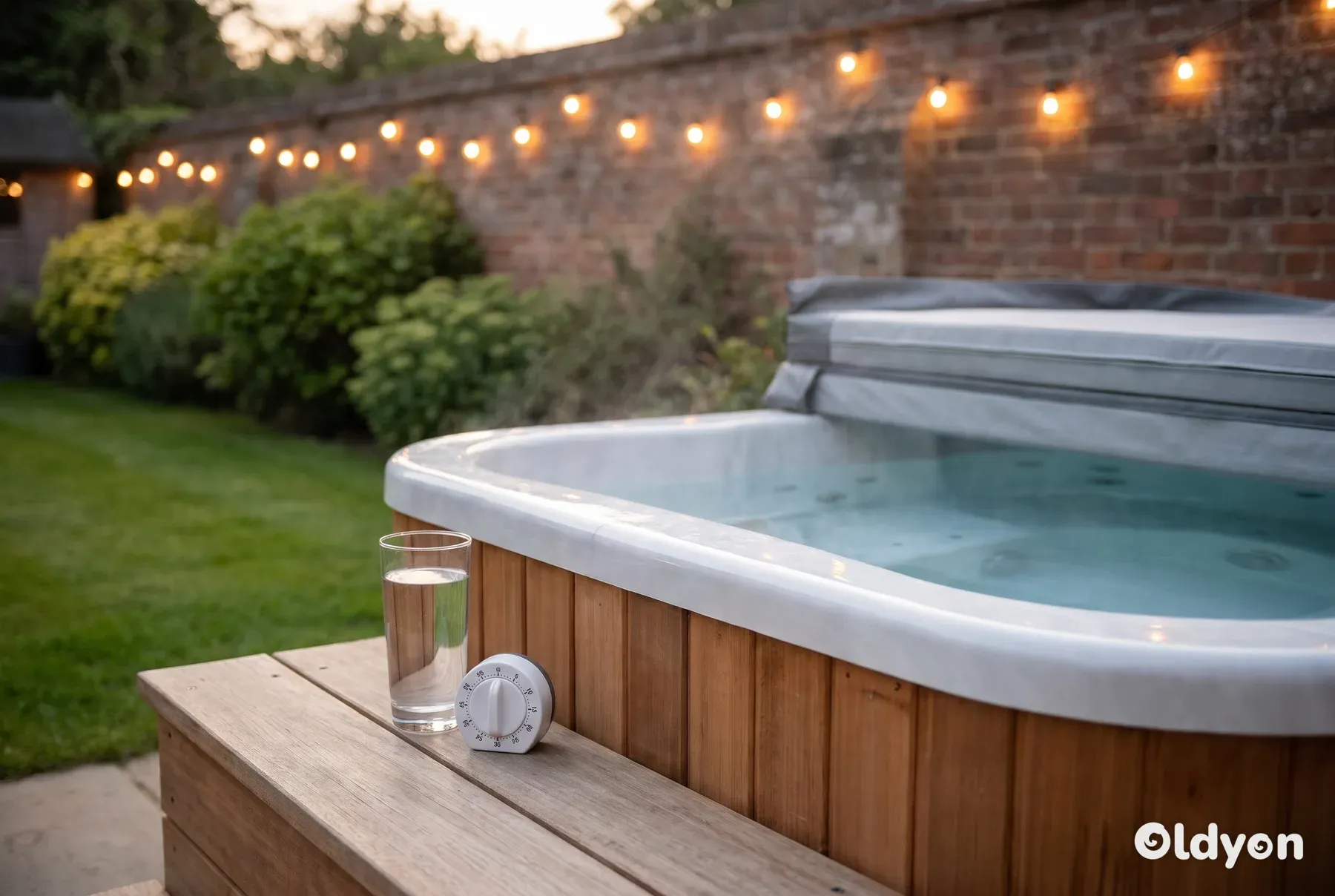
- Set a timer before you get in, using a kitchen timer or a phone kept safely away from the water
- When the timer goes off, get out however you feel, because the warmth and jets can hide the early signs of overheating
- Never soak alone, and make sure the other person is awake and paying attention
- Ask your companion to watch for slurred speech, unusual stillness or confusion, which are early signs of overheating or drifting off
- If you must soak alone, tell someone in the house and agree a time when they will check on you
- Keep the water at 40°C or below, and lower it slightly for evening soaks
- Avoid alcohol and drowsy medicines before and during a soak
- Sit upright in a standard seat rather than reclining in a lounger seat when you feel tired
- Keep a drink of water within reach on the side of the tub
- Tie long hair up and check that suction fitting covers are in place
- Leave the cover fully off while anyone is in the tub, and replace and secure it once everyone is out
A timer is the simplest safeguard of all. It does not stop you dozing off, but it puts a firm limit on how long you can stay in without noticing. For a wider set of rules covering children, covers and electrics, read our guide to hot tub safety rules.
What should you do if you or someone else becomes drowsy?
If you start to feel sleepy in the tub
Feeling heavy-eyed in a hot tub means it is time to finish the soak. Getting out carefully matters, because standing up suddenly from hot water is when people tend to feel faint.
- If someone is with you, tell them you feel drowsy before you try to get out, so they can help you.
- Sit up straight and make sure your shoulders and head are well above the water.
- Turn off the jets and move to a seat near the steps.
- Grip the edge or handrail firmly before you move, because the heat may have affected your coordination more than you realise.
- Sit on the edge of the tub for a minute or two with your legs still in the water.
- Stand up slowly, holding the handrail or the edge of the tub.
- Step out carefully and sit down somewhere cool and shaded or indoors.
- Drink a glass of cool water and rest until you feel normal.
- Go to bed rather than getting back in.
A few common reactions make things worse. Avoid these when you feel sleepy or unwell:
- Do not rest your head back on the edge of the tub "for a minute", because this is how people drift off and slip under
- Do not stay still in the water and wait for dizziness to pass, because the heat keeps affecting you until you get out
- Do not lie in direct sun to recover
- Do not gulp a large amount of water at once; sip cold water slowly instead
If you still feel dizzy, sick or confused after resting and drinking water, or if you have a headache that does not ease, contact NHS 111 or your local health service for advice. If you have chest pain or lose coordination after a soak, call 999 or 112.
If you find someone asleep or unwell in the tub
Act quickly but calmly. Your aim is to get their face out of the water, get them out of the heat and get help if they are not fully alert.
- Call their name loudly and touch their shoulder to wake them.
- If their face is in the water or they do not respond, lift their head clear of the water straight away.
- Shout for help from anyone nearby.
- With help, move them out of the tub, taking care not to slip on wet surfaces.
- If they are not breathing normally, call 999 or 112 and follow the call handler's instructions, including starting CPR if asked.
- If they are breathing but confused, very drowsy or have fainted, call 999 or 112.
- If they wake fully and seem well, move them somewhere cool, give them water to sip and stay with them.
Call 999 or 112 (112 works across the UK and Europe) if someone found in a hot tub is unconscious, not breathing normally, confused or having a fit. Do not wait to see if they improve.
Even if the person seems fine afterwards, keep an eye on them for the rest of the evening. Anyone who inhaled water, felt very unwell or was hard to wake should get medical advice the same day.
Summary: enjoy the soak, but stay awake
Falling asleep in a hot tub is dangerous because the heat keeps building while you sleep and because a sleeping person can slip under the water. Alcohol, drowsy medicines, late nights and soaking alone all make it more likely.
The safeguards are simple. Keep the water at 40°C or below, set a timer, never soak alone, avoid alcohol and treat drowsiness as a signal to get out. If you have a health condition or take regular medicines, ask your GP or pharmacist whether hot tub use is right for you.
Frequently asked questions
Is it safe to doze in a hot tub if I turn the temperature down?
A lower temperature reduces the risk of overheating, but it does nothing about the risk of drowning. Even in water at 36°C or 37°C, a sleeping person can slide down and put their face in the water. Cooler water also cools you less effectively than you might think if you stay in for hours. If you feel sleepy at any temperature, get out and go to bed.
Is it safe to sleep in the hot tub if someone else is watching?
Having someone nearby lowers the drowning risk only while they are awake and paying attention, which is hard to guarantee late at night. It does not prevent overheating, dehydration or a drop in blood pressure. Your companion's job is to make sure you get out when you become drowsy, not to watch over you while you sleep in the water.
Do hot tub pillows and headrests make sleeping in the tub safer?
No. Headrests and floating pillows make a soak more comfortable, which can actually make falling asleep more likely. They are not designed to keep your face out of the water if your body slides down or turns. Use them for comfort while you are awake, and get out as soon as you notice your eyes closing.
Can I use the hot tub after a night out if I feel fine?
It is best not to. Alcohol can make you feel more alert than you really are, and its effects on blood pressure and sleepiness can build once you are in the warm water. If you have been drinking, wait until the next day. If you really want a short soak, keep it brief, drink water and only go in with a sober adult present.
Are children at risk of falling asleep in a hot tub?
Yes, and they also heat up faster than adults because of their smaller body size. Many manufacturers recommend a lower water temperature and much shorter sessions for children, and some advise against use for young children altogether, so check your manual. An adult should supervise at all times, stay within arm's reach and take children out at the first sign of tiredness.
How can I tell if I am too tired for a hot tub?
If you are yawning, struggling to keep your eyes open, or know you would fall asleep on the sofa right now, you are too tired for a safe soak. The warm water will only make that sleepiness stronger. A quick warm shower is a safer way to relax before bed on nights like this, and you can enjoy the hot tub another time.
Does drinking water stop you fainting in a hot tub?
Drinking water helps keep up your blood volume, which lowers the risk of fainting, but it does not prevent it. The heat still widens your blood vessels and lowers your blood pressure however much you drink. Have a glass of water before you get in, keep sessions short, and always get out slowly, sitting on the edge for a minute before you stand up.
Filed under