Can a hot tub help arthritis?
Using a hot tub for arthritis? Learn what the evidence says, the safest temperature, a gentle water routine for stiff joints and when to stop during a flare.
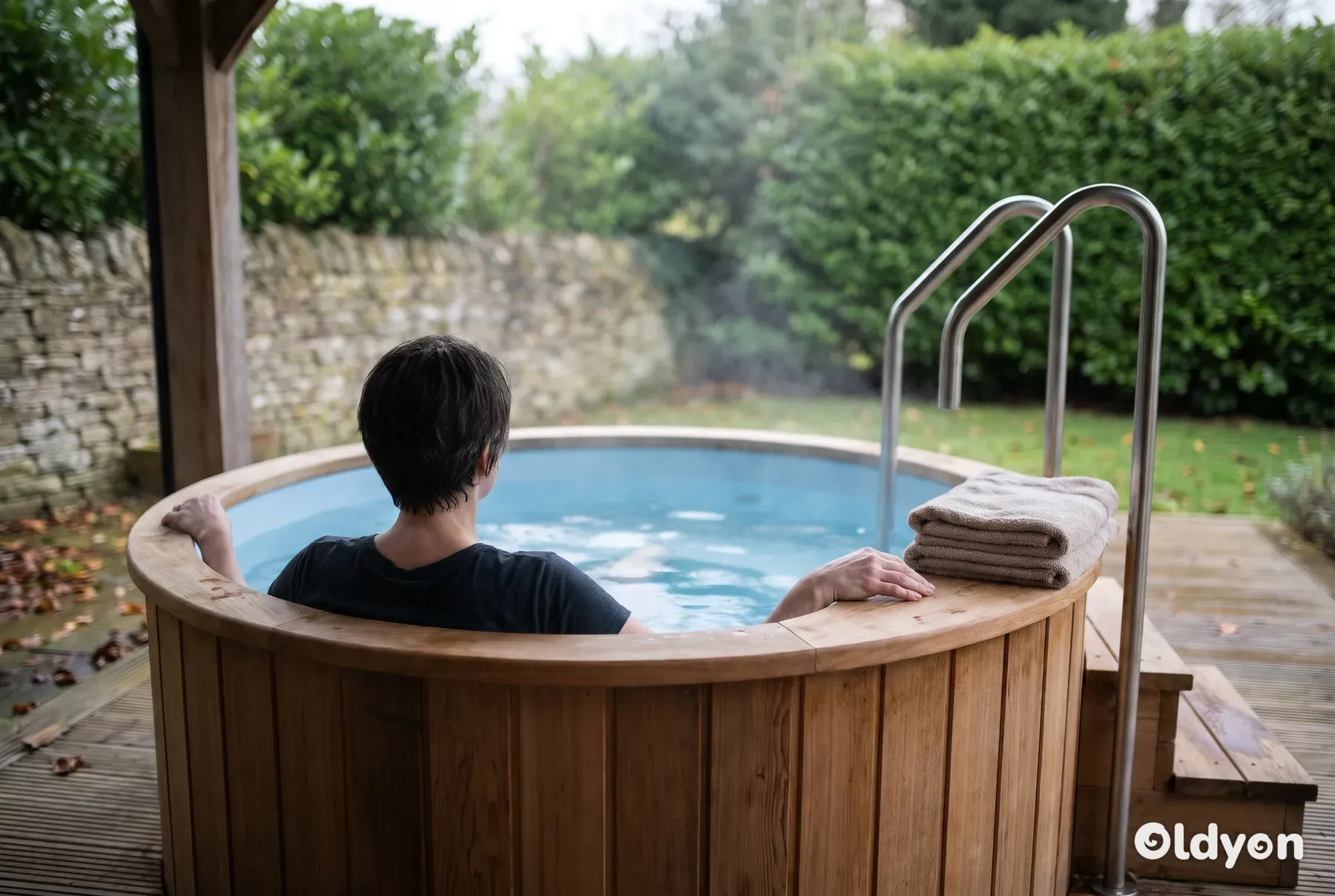
A hot tub for arthritis can ease stiffness and make gentle movement more comfortable, mostly through warmth and buoyancy. It will not cure arthritis or slow joint damage, and the research behind it is modest. Used at a sensible temperature for short sessions, it can be a useful part of a plan agreed with your GP or physiotherapist.
Below you will find what the evidence says, how warm the water should be, how long to stay in, a simple exercise routine and the times when you should stay out of the water altogether.
This article is general information, not medical advice.
What does the evidence say about warm water and arthritis?
Warm water exercise has been studied most in osteoarthritis of the knee and hip. Reviews of that research have found small, short-term improvements in pain and in how well people can move. The improvements are real but modest, and they come mainly from moving in the water, not from sitting still in it.
Bathing in warm water as a therapy is called hydrotherapy or balneotherapy. Reviews of these studies report lower pain and better function in osteoarthritis, and fewer tender joints and shorter morning stiffness in rheumatoid arthritis. The trials are small and their quality varies, so treat these findings as encouraging but not certain.
In some of the balneotherapy trials in osteoarthritis, the improvements in pain and function lasted for weeks after the course of treatment ended, not only while it was going on. Not every trial found this, but it suggests that a regular routine may give more than short-lived relief.
Short-term trials of heat treatment in osteoarthritis have also reported clear reductions in pain compared with people's starting levels. On average, pain scores in these trials fell by about 25% from where they began. The benefit appears greater when heat is combined with the buoyancy of water, which is one reason a warm soak can feel more helpful than a heat pack alone.
For rheumatoid arthritis, the research on warm water bathing is more limited and the studies are often small. Many people report that warmth helps with morning stiffness, and health services commonly suggest heat as a self-care option for stiff joints. That is a reasonable basis for trying a hot tub, but not proof that it will help everyone.
The NHS lists exercise, weight management and physiotherapy among the main ways to manage arthritis, alongside medicine where needed. Its guide to arthritis is a good starting point. A hot tub fits best as a comfortable place to warm up and move, not as a treatment on its own.
If you want a wider look at what warm water can and cannot do for the body, our guide to hot tub health benefits and what the evidence shows covers sleep, muscles and circulation as well as joints.
How does a hot tub ease stiff joints?
Three things happen when you sit in warm, moving water. Each one helps in a different way, and together they explain why many people with arthritis find it easier to move in water than on land.
Buoyancy takes weight off your joints
Water supports a large part of your body weight, and the deeper you sit, the more it supports. Your knees, hips and spine carry less load, so movements that hurt on land can feel easier. This is why physiotherapists use pools for gentle exercise.
Sitting in water up to shoulder depth reduces the weight your joints carry by as much as about 90%. For a person weighing 70 kg (about 154 lb), that means the joints bear roughly 7 kg (about 15 lb).
On land, the muscles around a painful joint tighten to protect it, which is called muscle guarding. In warm water this reflex partly eases. You can then move through a bigger range with less pain, sometimes including movements that are too painful to try on land.
Because buoyancy lets you do range-of-motion exercises that would hurt too much on land, the water is a good place to practise them. Regular, gentle movement in the hot tub can gradually help you win back some of the mobility that arthritis has limited.
Warmth relaxes muscles around the joint
Heat increases blood flow to the skin and muscles and helps tight muscles relax. When the muscles around a stiff joint loosen, the joint often moves more freely. Many people with arthritis notice this most in the morning or after sitting still for a long time.
The extra blood flow carries more oxygen and nutrients to stiff, inflamed tissue. The jets can add to this effect, building on the circulation that the warm water starts.
Heat also warms the synovial fluid that lubricates the inside of a joint. Warmer fluid is thinner, so the joint can move more smoothly. Heat reduces muscle spasm too, which is a major secondary source of pain in both rheumatoid arthritis and osteoarthritis.
Moist heat from warm water is more even than the heat from a heating pad. It also warms every joint under the water at the same time, instead of one area at a time.
Water conducts heat more evenly than air and reaches deeper into the tissue than a dry heating pad does. For this reason, moist heat from immersion is generally preferred over dry heat sources for stiff joints and tight muscles.
Jets give a gentle massage
Massage jets can soothe tense muscles near a sore joint. Keep them on a low setting and aim them at the muscle, not straight at a swollen or tender joint. Strong pressure on an inflamed joint can make it feel worse, not better.
Arthritis pain and muscle tension tend to feed each other: pain makes muscles tighten, and tight muscles add to the pain. Gentle jet massage stimulates touch receptors in the skin, and these signals compete with pain signals on their way to the brain. This is known as the gate control theory of pain, and it may help break the cycle.
Gentle massage may also lower levels of cortisol, a stress hormone that is known to make pain feel stronger. In controlled studies of massage, cortisol fell by an average of roughly 31%. Those studies used hands-on massage rather than hot tub jets, but they suggest jets may ease pain through relaxation as well as through the gate control effect.
Well-aimed, low-pressure jets may also encourage lymphatic drainage, the movement of excess fluid away from tissues. This could help reduce some of the local swelling that comes with rheumatoid arthritis flares, but aim the jets near a puffy joint, never hard onto it, and stay out entirely if the joint is hot and red.
Where to aim the jets for rheumatoid arthritis and osteoarthritis
Jet placement works best when it matches your condition. Rheumatoid arthritis often affects the small joints of the hands and wrists, while osteoarthritis more often affects the knees, hips and lower back.
Rheumatoid arthritis usually affects joints on both sides of the body in the same way, for example both wrists or both knees. As well as the hands, wrists, shoulders and knees, it often involves the elbows. Osteoarthritis is not limited to the weight-bearing joints either: it can also affect the hands.
- Rheumatoid arthritis: low-pressure jets at hand and wrist height, shoulder jets aimed along the shoulder blade, and moderate pressure on the neck.
- Osteoarthritis: knee jets across the front and sides of the joint, lumbar jets for tight hip and buttock muscles, and floor-level jets for the feet.
Osteoarthritis usually tolerates firmer jet pressure than rheumatoid arthritis. Whatever your condition, start on a low setting and increase it gradually over several sessions. Aim for a deep, steady feeling in the muscle, not hard pressure on the surface of the skin.
A few positioning tips help you get the most from each type of jet:
- Hands and wrists: sit at a seat height where you can put your hands into the stream from a low-pressure, adjustable jet and slowly rotate them in it. Look for directional jets at that height.
- Knees: sit with your knees slightly bent, so the jets also reach the thigh muscles around the joint (the quadriceps at the front and the hamstrings at the back) and ease the muscle guarding there.
- Lower back and hips: lean slightly forwards and backwards to move the point where the jet meets your body, until it reaches the tight buttock muscles.
- Feet: floor-level foot jets may relieve pain that spreads down the legs, which is common when osteoarthritis affects the lower back.
- Neck: jets built into headrests can ease the neck tension that often comes with rheumatoid arthritis. Keep the pressure moderate, because the neck is sensitive.
What temperature is best when using a hot tub for arthritis?
Most people with arthritis do well somewhere between 36°C (97°F) and 38°C (100°F). That is warm enough to ease stiffness but cool enough to let you stay in for a useful session and move around without overheating.
For comparison, NHS and private hydrotherapy pools are usually kept at around 33-36°C (91-97°F). They run cooler than most hot tubs because people exercise in them for longer. If you plan to do a full exercise routine, the lower end of the range is often more comfortable.
Never go above 40°C (104°F). Hotter water puts extra strain on your heart and blood pressure, and it can leave you dizzy when you stand up. Some manufacturers set their maximum slightly lower, so check your manual.
Water hotter than the top of the recommended range adds risk to your heart and circulation without giving your joints any extra benefit. There is no reason to turn the heat up in search of more relief.
Water temperature | Best suited to | Typical session |
|---|---|---|
33-35°C (91-95°F) | Longer gentle exercise | 20-30 minutes, if comfortable |
36-37°C (97-99°F) | Exercise plus relaxing | 15-20 minutes |
38°C (100°F) | Easing morning stiffness | 10-15 minutes |
39-40°C (102-104°F) | Short soaks only | 10 minutes or less |
These are general starting points, not fixed rules. Adjust them to how you feel, and ask your GP first if you have a heart condition, high or low blood pressure, or take medicine that affects either.
Some arthritis medicines, such as methotrexate and biologics, can affect how your body handles heat and infection. Talk through your specific medicines with your rheumatology team before you set up a regular hot tub routine.
How long should you soak, and how often?
Start with 10 to 15 minutes and build up to about 20 minutes if you feel well. Longer sessions at hot tub temperatures can leave you lightheaded, dehydrated or more tired than when you started. Shorter, regular sessions usually help more than one long soak.
Long sessions raise your core body temperature. This can cause dizziness and nausea, and it makes a fall more likely. The risk of falling is highest at the moment you climb out, so keep sessions short and get out slowly.
Once you have tolerated sessions well over several weeks, some people extend them gradually to 20-25 minutes. Do this only slowly, a few minutes at a time, and only with input from your GP or rheumatology team.
Set a timer for every session so you do not stay in longer than you meant to. It is easy to lose track of time in warm water.
Aim for roughly 3 to 5 sessions a week. Some people like a rest day between sessions. The benefit tends to build over weeks of regular use, while a once-a-week soak usually gives only temporary relief.
Many people find a daily or near-daily session works well, especially in the morning when stiffness is often worst. Some prefer the evening to relax before bed. There is no single right time, so try both and notice how your joints feel the next day.
After you get out, allow about 10 minutes to cool down before going back to normal activity. This gives your heart rate and blood pressure time to settle.
Drink a glass of water before and after each session. A good starting point is about 250-350 ml (8-12 fl oz) before you get in and the same again afterwards, to replace what you lose through sweating. If you notice stiffness or aching that lasts longer than usual afterwards, shorten the next session or lower the temperature. Our article on why your body can ache after a hot tub explains the common causes.
If you are not improving, or your joints feel worse, after 4 to 6 weeks of regular sessions, stop and review your routine with your GP or rheumatology team. Do not keep adjusting the temperature or session length on your own.
Soak times for sore muscles after sport follow similar principles, and our guide to how long to soak for muscle recovery goes into more detail if you are also active.
How do you get in and out safely with sore joints?
Most hot tub injuries happen on the way in or out, not in the water. Wet surfaces are slippery, and stiff hips or knees make high steps harder. A steady routine helps you avoid slips and awkward twists.
- Switch on the step lights or make sure the area is well lit, especially on winter evenings.
- Fold the cover back fully so it cannot slide or flap while you climb in.
- Approach the steps slowly. Never rush, even if you feel cold.
- Hold the grab rail with both hands and step up onto the first step with your stronger leg.
- Plant both feet firmly on the step before you let go of the rail.
- Sit on the edge of the hot tub, then swing your legs over one at a time instead of stepping over.
- If you step down into the water instead, move one foot at a time and pause to check your footing before you shift your weight onto it.
- Lower yourself onto the seat slowly, using the rail or the edge for support. Do not drop suddenly into the seat, as this can jar arthritic hips and knees.
- Wait 2 to 3 minutes before switching the jets on, so your body can adjust to the heat.
- About 2 minutes before you plan to get out, turn the jets off.
- When getting out, sit on a higher seat for a minute or two first so your blood pressure can settle.
- Sit upright for about 30 seconds before you stand.
- Stand up slowly, hold the rail with both hands and step down with your weaker leg first, keeping your stronger leg on the step above.
- Step onto the non-slip mat one foot at a time, not with both feet at once.
- Sit on a chair near the hot tub for 5 to 10 minutes before walking on, because your muscles are relaxed and your balance is poorer for a while.
Keep a towel and non-slip shoes within reach of the steps. If you feel dizzy at any point, sit back down and wait before trying again.
Put a non-slip mat at the point where you step out, and fit anti-slip strips to the steps. Wet feet on smooth surfaces are a common cause of falls.
A gentle exercise routine to try in the water
Moving in warm water is where most of the benefit comes from. These movements are simple and low impact. Do each one slowly, within a comfortable range, and stop any movement that causes sharp pain.
- Settle in: sit upright on a seat with water at chest level and breathe slowly for two minutes to let your muscles warm.
- Shoulder rolls: roll both shoulders forwards ten times, then backwards ten times.
- Ankle circles: lift one foot slightly and draw slow circles, ten in each direction, then switch feet.
- Knee straightening: sitting back, slowly straighten one knee until your leg is level, hold for three seconds, then lower. Repeat eight times on each leg.
- Hip marching: still seated, lift one knee gently towards your chest and lower it, alternating legs for one minute.
- Hand and wrist work: under the water, open and close your hands slowly ten times, then circle your wrists ten times in each direction.
- Gentle neck turns: turn your head slowly to look over one shoulder, then the other, five times each side.
- Cool down: rest for a few minutes before moving to a higher seat and getting out.
This routine takes about 15 minutes. A physiotherapist can tailor exercises to the joints that trouble you most and show you safe ways to progress. You can ask your GP for a referral, or in many areas refer yourself; the NHS physiotherapy page explains how.
For more ideas on structured water exercise, see our guide to hydrotherapy at home with your hot tub. If your back is also stiff, our article on whether a hot tub can help lower back pain has movements for the spine.
Extra movements for hands, hips and shoulders
Once the basic routine feels easy, you can add these sets. Keep every movement slow and stay within a range that feels comfortable.
- Hands and wrists: spread your fingers wide and hold for 5 seconds, 10 times. Bend and straighten your wrists up and down, 10 times in each direction, then touch each fingertip to your thumb in turn for a few rounds.
- Hips and lower back: make slow seated hip circles, about 8 in each direction. Hold one knee towards your chest for around 15 seconds, 5 times on each side, then do a gentle seated twist with your hands on your knees, 10 times.
- Neck and shoulders: tilt one ear towards your shoulder and hold for about 10 seconds, 5 times on each side. Shrug your shoulders up for 3 seconds then release, 10 times, and make small, controlled arm circles, 10 in each direction.
Why hand movements feel easier under water
Buoyancy takes the weight of gravity off your hands and wrists while they are under the water. Small tasks and fine finger movements, such as touching each fingertip to your thumb, often feel less painful as a result. This makes the water a good place to practise hand exercises that are hard to do on land.
A full-body flow for moderate days
On days when your symptoms are moderate, you can join several sets into one session of about 12 minutes.
- Do the morning stiffness set, focusing on your ankles, knees and shoulders, with about 6 repetitions of each movement.
- Move on to the hand and wrist set, again with about 6 repetitions of each movement.
- Do the hip and lower back set, with about 6 repetitions of each movement.
- Finish with roughly 3 minutes of rest against low-pressure jets.
Finish every session the same way
- Slow breathing: breathe in for 4 counts and out for 6 counts, for about 10 cycles.
- Ankle pumps: gently flex and point your feet, about 10 times.
- Body scan: notice any area that still feels tense and let it relax before you get out.
Make a mental note of any area that still feels tense after the body scan. Once you are out and dry, give that area some gentle stretching on land.
Build up gradually
Introduce the exercises slowly, adding one new set of movements each week. A good place to begin is a short morning set for the stiffness that follows sleep, focusing on your ankles, knees and shoulders.
For the morning stiffness set, raise each knee gently towards your chest about 8 times. Then rotate each ankle slowly, 10 times in each direction on each foot, and finish with the shoulder rolls from the basic routine.
A passive session for harder days
On days when active movement hurts too much, but no joint is hot or swollen, a passive session can still help. Spend a few minutes resting each of your knees, hips and shoulders in front of low-pressure jets, then relax fully for the rest of the session.
- Rest your knees in front of low-pressure jets for about 3 minutes.
- Move so your hips rest against the side jets for about 3 minutes.
- Sit so your shoulders are near the upper jets for about 3 minutes.
- Turn the jets off and relax fully for a final minute, which makes about 10 minutes in all.
Can you use a hot tub during an arthritis flare?
It depends on what the flare looks like. If a joint is hot, red and swollen, it is inflamed, and adding heat can make the swelling and pain worse. In that case, stay out of the hot tub until the flare settles, and consider a cold pack on the joint instead, wrapped in a cloth.
If you have general stiffness and aching without obvious heat or swelling, a short, cooler soak may still feel helpful. Keep the temperature at the lower end of the range, skip the jets on sore joints, and see how you feel the next day.
For a mild flare without obvious heat or swelling, lower the water to around 37°C (99°F), set the jets to minimum and keep the session to about 10 minutes. Stick to passive soaking instead of exercise until the flare passes.
If you are unsure whether a flare counts as mild or severe, do not guess. Check with your rheumatology team before your next session.
Stay out of the hot tub and contact your GP or rheumatology team promptly if a joint suddenly becomes hot, red and very swollen, especially with a fever or feeling unwell. This can be a sign of infection in the joint and needs medical attention the same day. If you cannot reach your GP, call NHS 111.
Who should check with a GP first?
Speak to your GP, rheumatology nurse or pharmacist before using a hot tub if any of these apply to you:
- You have a heart condition, high blood pressure or low blood pressure.
- You take medicine that suppresses the immune system, such as some treatments for rheumatoid arthritis.
- You have had joint replacement surgery and the wound has not fully healed.
- You have open cuts, skin ulcers or a skin condition that is flaring.
- You are pregnant, in which case speak to your midwife.
- You have diabetes with reduced feeling in your feet.
- You often feel dizzy or have had falls.
If you are pregnant, avoid water above about 38°C (100°F), whatever type of arthritis you have. Keep the temperature lower and check with your midwife first.
If you have heart disease or poorly controlled high blood pressure, a lower-temperature warm bath or a supervised hydrotherapy pool may be a safer choice than a hot tub. Ask your GP which option suits you.
Signs to get out of the water
- Dizziness, lightheadedness or feeling faint
- A pounding heart or chest discomfort
- Nausea or a headache
- New or sharp joint pain
- Feeling unusually hot or flushed
Stop using the hot tub and get medical advice if you notice chest tightness, breathlessness or an unusual heartbeat during or after sessions, even if it settles.
If chest pain does not ease quickly after you get out, or you have trouble breathing, call 999.
Keep the water clean and balanced
Clean water matters more if your immune system is weakened by medicine, because poorly treated hot tubs can carry bacteria that cause skin and chest infections. Keep free chlorine or bromine at 3-5 ppm and pH at 7.2-7.6, and test the water before each use.
Shower before you get in and after you get out. If the water looks cloudy or smells strongly of chemicals, do not use it until it has been tested and corrected.
Which hot tub features help with arthritis?
If you are choosing a hot tub with arthritis in mind, the features that matter most are about comfort and safe access, not the number of jets. Look at these first when you compare models:
- Seat height and depth: a mix of seat heights lets you sit low for warmth and higher to cool down. Very deep seats can be hard to get up from.
- Seats at several depths: these let you sit only partly immersed on days when full immersion is not suitable.
- Lumbar support: seats that support your lower back stop you slouching, which can create new tension while easing old pain.
- Low-entry design: a low step height matters, because a high step is both a fall risk and a reason to stop using the tub.
- Steps with a handrail: wide, non-slip steps and a sturdy rail make getting in and out much safer.
- Fixed grab rails: rails fixed to the tub frame, not removable ones, give stable support when your muscle control is reduced after soaking.
- Adjustable jets: jets you can turn down or close let you avoid pressure on sore joints.
- Individual jet controls: jets with their own on and off controls and directional nozzles let you target specific joints and avoid inflamed ones.
- Easy temperature control: a clear panel you can reach from the seat, with buttons that are not too stiff for painful hands.
- Accurate digital thermostat: look for one accurate to within about 0.5°C, as basic or older controls can drift and make a safe temperature harder to hold.
- Ozone or UV sanitation: these systems can reduce the amount of chemicals you need, which helps if your medicines have made your skin sensitive.
- Good insulation and an efficient heater: these lower the running cost of each session, which matters if you plan daily or near-daily use.
- A cover lifter: covers are heavy, and a lifter means you do not strain your shoulders, back or hands.
- Good step lighting: helpful on dark evenings, when slips are more likely.
- A lounger seat with caution: loungers can be comfortable, but some people find them hard to get out of.
If you can, sit in a hot tub before you buy, even a dry one, and practise getting in and out. Ask whether the seller can fit a handrail or steps that suit your height. Prices vary widely, so compare the features above first and think of extras such as rails and lifters as part of the total cost.
Is a hot tub worth it for arthritis?
A hot tub can make stiff joints more comfortable and give you a warm, supportive place to move. The evidence for benefit is modest and strongest for gentle exercise in water, especially for knee and hip osteoarthritis.
A hot tub only eases symptoms; it does not treat the underlying disease. Keep taking prescribed medicines such as DMARDs (disease-modifying anti-rheumatic drugs) or biologics, and never reduce or stop them because your joints feel better.
Osteoarthritis has no disease-modifying medicine. That is why managing symptoms through warmth and gentle movement plays a bigger part in the plan for osteoarthritis.
Keep the water at 36-38°C, soak for 15 to 20 minutes, move gently while you are in, and stay out during a hot, swollen flare. Treat it as one part of your care alongside exercise, physiotherapy and any treatment your GP or rheumatology team recommends. The NHS pages on rheumatoid arthritis explain how flares and treatment are usually managed.
Frequently asked questions
Does a hot tub help with arthritis in the hands?
Many people find warm water eases stiffness in the fingers and wrists. Try slowly opening and closing your hands under the water, then gently spreading your fingers wide. Avoid pointing strong jets at swollen knuckles. If your hands are hot and swollen during a flare, keep them out of warm water and speak to your GP or rheumatology nurse about other options.
How should I soak my hands if I have rheumatoid arthritis?
Sit so your hands and wrists are under the water, with the temperature around 37-39°C (99-102°F) and low-pressure jets at seat height. Small studies suggest regular warm water soaks can improve grip strength and reduce morning stiffness in the hands. Move your fingers gently while they soak, and keep hot, swollen joints out of the water during a flare.
Can I use a hot tub after a knee or hip replacement?
Not until your surgical wound has fully healed and your surgeon or physiotherapist says it is safe. An unhealed wound can let bacteria in, and an infected joint replacement is a serious problem. Once you have the all clear, start with short, cooler sessions and take extra care on the steps, as your balance and strength may still be recovering.
Is it better to use a hot tub in the morning or evening for arthritis?
Morning sessions often help most with rheumatoid arthritis, because stiffness tends to be worst after waking. Evening sessions may help you relax and sleep, which also affects how you cope with pain. Try each for a week or two and keep a short note of how your joints feel. Avoid very hot soaks right before bed if they leave you restless.
Can a hot tub replace physiotherapy for arthritis?
No. A hot tub is a comfortable place to warm up and move, but a physiotherapist assesses your joints, builds strength and checks that you are exercising safely. Land-based strengthening exercises are also important for protecting your joints. The best approach is usually to use the hot tub alongside the exercises your physiotherapist gives you, not instead of them.
Should I use a hot tub during a gout attack?
It is best not to. A gout attack causes a joint to become hot, red, swollen and very painful, which is a sign of active inflammation. Heat can make it feel worse. The NHS suggests resting the joint, raising it and using a cold pack wrapped in a cloth. See your GP if it is your first attack or it does not settle.
Can I add Epsom salts to my hot tub for joint pain?
Most manufacturers advise against it. Salts and bath additives can upset the water balance, interfere with sanitiser and may damage the heater or pump over time. Check your manual before adding anything. There is also little reliable evidence that the salts themselves ease joint pain; the warmth and movement are what most people notice.
Filed under