Why does your body ache after a hot tub?
Why does your body ache after a hot tub? Learn how dehydration, heat, long soaks, jets and water balance cause aches, and simple ways to soak without them.
If you are wondering why your body aches after a hot tub, the cause is usually one of five things: mild dehydration, overheating, soaking for too long, jets working one spot too hard, or unbalanced water. Most of these aches fade within a day once you drink water, cool down gently and rest.
Each cause is easy to prevent with a few habits before, during and after your soak. This guide explains what is happening in your body, what to check in the water, and when an ache is a reason to speak to your GP.
This article is general information, not medical advice.
Why does your body ache after a hot tub?
Hot water does several things to your body at once. It raises your core temperature, widens your blood vessels, makes you sweat and relaxes your muscles. Each of these is pleasant in moderation, but too much of any one can leave you stiff, heavy or sore afterwards.
While you soak, the widened blood vessels send more of your blood towards the surface of your skin, where heat can escape. A larger share of your circulation goes to the skin and less to deeper tissues such as your muscles. This is why your face flushes and you feel loose and warm in the water.
Because these effects happen together, an ache often has more than one cause. A long, hot soak after a few drinks, for example, combines dehydration, overheating and time. The table below matches common feelings to their likely cause.
Likely cause | How it often feels | Quick fix |
|---|---|---|
Dehydration | Dull headache, stiff muscles, cramps | Drink water before and after |
Overheating | Heavy limbs, dizziness, tiredness | Keep water at 37-39°C, take breaks |
Soaking too long | Drained, sleepy, achy next morning | Shorter sessions with a timer |
Jet pressure | Tender or bruised spot | Move seats, lower the pressure |
Unbalanced water | Itchy skin, sore eyes, flu-like aches | Test and correct the water |
Cold air afterwards | Tense shoulders and neck, shivering | Have a robe ready at the tub |
To find your own cause, think about what was different about the session that left you sore. The temperature, how long you stayed in, what you drank and which seat you used are the usual suspects.
Why the ache often shows up later
Warm water and buoyancy take weight off your joints and dull your awareness of muscle tension while you soak. You may not notice that a muscle is tired or a joint is under strain until you are out of the water. As you cool down, your muscles tighten again, which is why you can feel fine as you climb out and still wake up stiff the next morning.
Stepping into cooler air also changes your circulation quickly. The blood vessels that widened in the heat narrow again, which can cause a brief drop in blood pressure and leave your muscles with less oxygen-rich blood for a while. This can bring stiffness and a heavy, tired feeling, even if you drank plenty of water.
This rebound is usually sharpest when the water was at the 40°C (104°F) maximum or hotter (which is not recommended), and you sit or lie down straight away after getting out. Your circulation has to readjust while you are still, and the stiffness is often felt most in the lower back and legs. A few minutes of gentle movement, such as a slow walk indoors, helps your circulation settle.
Cool air also prompts your nervous system to make your muscles contract to produce heat. If you already carry tightness, for example from long hours at a desk, ongoing back tension or a hard workout, this can feel like rebound tightness that is worse than before you got in. It is uncomfortable, but it is not a sign that the tub has damaged anything.
Can dehydration make you ache after a hot tub?
Yes, and it is the most common cause. You lose fluid through sweat in hot water even though you cannot feel it, because the sweat washes straight off. If you are surprised by that, read why you sweat more than you think in a hot tub.
How much you lose depends on the water temperature, the weather and your own body. As a rough guide, a 30-minute soak without drinking can cost around half a litre to a litre (about 1-2 pints) of sweat. That is enough to leave you noticeably short of both fluid and salt.
Sweat carries water and salts such as sodium and potassium, which your muscles need to contract and relax smoothly. When levels drop, muscles can feel tight, cramp or ache. The NHS lists the signs of dehydration, including thirst, dark yellow pee, dizziness and tiredness.
Alcohol makes this worse. It makes you pass more urine, and it adds to the effect of heat on your blood pressure. A glass of wine in the tub may feel relaxing, but it is a common reason for a sore head and heavy legs the next day.
Coffee, fruit juice and alcohol are not good replacements for water before a soak. Caffeine and alcohol both make you pass more urine, which speeds up fluid loss. Plain water or an electrolyte drink is the better choice.
- Drink a large glass of water, around 250-300 ml (8-10 fl oz), in the half hour before you get in.
- Keep a bottle of water by the tub and sip it during the soak.
- Drink again afterwards, and a little more on warm days or after exercise.
- Leave alcohol until later, or skip it on hot tub evenings.
- After a long or very sweaty session, a meal or an electrolyte drink can help replace lost salts.
If you soak often, for example most evenings, and always replace the lost fluid with plain water alone, you can gradually run down your sodium and potassium stores over time. Using an electrolyte drink regularly after soaks helps keep those salts topped up.
Is your hot tub too hot?
The widely accepted maximum for hot tub water is 40°C (104°F). In water this warm, your body cannot cool itself well, because sweat cannot evaporate from skin that is under water. Your core temperature rises steadily the longer you stay in.
To shed heat, your blood vessels widen. This is called vasodilation, and it lowers your blood pressure while your heart works harder. When you stand up, blood can pool in your legs for a moment, which is why some people feel light-headed, weak or achy as they climb out.
Many owners find 37-39°C (about 99-102°F) comfortable for regular use, and lower still in summer. If you are not sure where to set yours, this guide to the ideal hot tub temperature for each season explains the options.
Signs you are overheating
- Feeling dizzy or light-headed
- A headache that builds while you soak
- Feeling sick
- A racing or pounding heart
- Very hot, flushed skin
- Feeling confused, unusually sleepy or weak
If you notice any of these, get out slowly, sit somewhere cool and sip water. The NHS explains how to treat heat exhaustion and when it becomes an emergency. If someone is not improving after resting and cooling down, call 999.
If you feel dizzy or unusually tired after getting out, sit down, drink some fluids and rest. Seek medical help if the dizziness or tiredness lasts longer than about 30 minutes or gets worse.
How long can you soak before it starts to ache?
Time and temperature work together. At 40°C, common guidance is a session of about 15-20 minutes, while at lower temperatures many people can comfortably stay in longer. Manufacturers give different advice, so check the manual for your tub. This guide to how long you should stay in a hot tub covers the details.
Long soaks add up. You lose more fluid, your core temperature keeps climbing, and your muscles go from relaxed to heavy. That drained feeling often turns into stiffness or a dull ache by the next morning.
If you enjoy a longer evening in the tub, take breaks. Sit on the edge or step out for a few minutes to cool down and drink some water, then get back in. Children should have shorter sessions at a lower temperature, following your manufacturer's guidance.
Can hot tub jets make your muscles sore?
Yes. Jets are a form of massage, and a strong stream aimed at one spot for many minutes works like firm deep tissue pressure. That can leave a tender or bruised feeling the next day, especially over bony areas such as the spine, shoulder blades, hips and the backs of the knees.
Jet soreness has a typical pattern. It is limited to the area where the jets were aimed, often appears 12-24 hours later, and feels much like the soreness after a firm massage. It usually settles within 24-48 hours with rest and gentle movement.
The soreness comes from the pressure itself. A strong jet can cause tiny disruptions in the muscle fibres it hits, and those fibres then repair over the following day or two. This is the same process that causes soreness after a firm massage, which is why the timing is so similar.
Strong jets can also aggravate a fresh injury, a recent strain or a bruise. If a muscle was already sore before you got in, keep the jets away from it or turn them down.
- Change position every few minutes so the jets do not hit the same spot.
- Use the air controls or diverter valves to soften the flow.
- Keep strong jets off your spine, joints and any injured area.
- Start on a low setting and increase it only if it feels comfortable.
- If one seat always leaves you sore, use a different seat.
Delayed onset muscle soreness (DOMS) is the stiffness that peaks a day or two after hard exercise. The hot tub does not cause it, but a long, hot, high-pressure session on top of it can leave you feeling more sore. Keep these soaks short and gentle.
Timing matters too. Heat applied within one to two hours of intense exercise increases blood flow to muscle that is already inflamed, which can turn mild DOMS into a wider, longer-lasting ache. A common approach is to wait 24-48 hours after hard training before a full hot soak.
If you still want to use the tub on a hard training day, try a short contrast routine instead of a long soak:
- Soak in warm water for about 5 minutes with the jets on a low setting.
- Get out and rinse with cool water for about 30 seconds.
- Repeat the warm soak and the cool rinse once more.
- Dry off, wrap up and drink some water.
If you use the tub after training, read how long to soak for muscle recovery. Some people prefer cold first, and this comparison of a hot tub or an ice bath for sore muscles explains when each one suits.
Can unbalanced hot tub water cause aches?
It can. When sanitiser levels are too low, bacteria can grow in warm water. Some cause skin rashes, and others can cause a flu-like illness with muscle aches, headache and fever. Too much chemical will not make your muscles ache, but it can leave your skin itchy and your eyes sore.
These are the widely accepted target ranges for hot tub water. Your manufacturer may give slightly different figures, so follow your manual where it differs.
- Free chlorine: 3-5 ppm (if you use chlorine)
- Bromine: 3-5 ppm (if you use bromine)
- pH: 7.2-7.6
- Total alkalinity: 80-120 ppm
- Calcium hardness: 150-250 ppm
pH matters as much as sanitiser. When pH is too high, chlorine works less well, so the water can look fine while bacteria grow. When pH is too low, the water can sting your eyes and dry your skin. Test before you soak, especially if the tub has been busy.
Hot tub rash and hot tub lung
The most common problem from poorly kept water is hot tub folliculitis, sometimes called hot tub rash. It is an itchy, bumpy red rash, often where your swimwear sat, that usually appears within a day or two. It often clears by itself, but see a pharmacist or GP if it spreads, becomes painful or you feel unwell.
Hot tub folliculitis is caused by Pseudomonas bacteria. They thrive in warm water that is not kept properly sanitised. Heat breaks chlorine down faster than in a cooler swimming pool, so sanitiser levels in a hot tub can fall quickly.
The rash can look like acne and usually appears around 12-48 hours after a soak. It is often mistaken for heat rash. Most cases clear within about 7-10 days, but severe or widespread cases may need antibiotics from a doctor.
Do not get back in the tub while you have the rash. Wait until the rash has cleared and the tub has been sanitised, because treating it as heat rash and going back in can make the infection worse.
Hot tub lung is much rarer. It is a lung reaction to bacteria carried in the fine mist above the water, and it is linked mainly to indoor tubs with poor ventilation. Symptoms include a cough, breathlessness, tiredness and fever, and they need a GP's attention.
Hot tub lung is a hypersensitivity reaction to Mycobacterium avium complex bacteria in the water and its mist. A persistent dry cough, breathlessness, fever and tiredness can appear days to weeks after exposure. It is diagnosed with scans and lung function tests, so tell your doctor that you use a hot tub.
You may see hot tub rash and hot tub lung grouped together under the label 'hot tub syndrome'. They are two separate conditions: hot tub rash is a skin infection, while hot tub lung is a reaction in the lungs. They have different symptoms and need different care.
These bacteria do not live only in the water. They can colonise biofilm, the thin slimy layer that builds up on the shell and inside the pipework, where sanitiser struggles to reach them. Balanced water alone is not enough, so clean the shell and filters regularly and use a pipe cleaning product when you drain and refill, following your manual.
Legionella, Pontiac fever and Legionnaires' disease
Legionella bacteria can grow in warm water and spread in the fine droplets that jets create. The HSE gives guidance on controlling Legionella, which is why steady sanitiser levels and clean filters matter so much in a hot tub.
Legionella grows best in water between about 20°C and 45°C (68-113°F) when disinfection is poor, which includes the normal temperature of a hot tub. You catch it by breathing in tiny contaminated droplets, not by swallowing the water.
Legionella can cause Pontiac fever, a milder flu-like illness with fever, headache and muscle aches that usually clears without treatment. It can also cause Legionnaires' disease, a serious lung infection with a high temperature, cough, muscle pain and breathlessness.
With Legionnaires' disease, the fever can be very high, reaching 40°C (104°F) or more, and the muscle aches can be severe. This is very different from the mild, local stiffness of an ordinary post-soak ache.
Symptoms of Legionnaires' disease usually start 2-10 days after exposure. The illness is most dangerous for people over 50, smokers and anyone with a weakened immune system.
Pontiac fever usually passes in about 2-5 days. Its early symptoms look like the start of Legionnaires' disease, so anyone with a fever and muscle aches after using a hot tub should get medical advice, especially if symptoms are getting worse after 48 hours.
If you develop a fever, cough, breathlessness or flu-like aches in the days after using any hot tub, speak to your GP or call NHS 111, and tell them you used a hot tub. Do not use the tub again until the water has been tested, sanitised and the filter cleaned.
How do you prevent aches before, during and after a soak?
Most aches come from a handful of habits, so a simple routine prevents nearly all of them. Here is the order I would follow.
Before your soak
- Test the water and correct sanitiser and pH if they are out of range. Wait as long as the product label says before getting in.
- Check the temperature on the control panel. Aim for 37-39°C for regular use and never above 40°C.
- If you have heart or circulation concerns as well as a joint condition, set the water to about 33-38°C (92-100°F) rather than the maximum, and check with your GP first.
- Drink a large glass of water or an electrolyte drink, not coffee, juice or alcohol.
- If you have not eaten for three hours or more, have a light snack with some sodium and potassium, such as a banana, a small handful of salted nuts or an electrolyte sports drink.
- Avoid alcohol for at least an hour before you get in, because alcohol widens your blood vessels by itself and adds to the drop in blood pressure from the heat. Avoid a heavy meal just before, too.
- Put a towel, a robe and a bottle of water within reach of the tub.
During your soak
- Set a timer for 15-20 minutes at 40°C, or follow your manual.
- Sip water throughout the session.
- At around the 10-minute mark, take a hydration break and drink about 150-200 ml (5-7 fl oz) of water or an electrolyte drink kept at the edge of the tub.
- Move between seats so the jets do not work one spot for too long.
- Sit higher on a step or on the edge if you start to feel too warm.
- Get out at the first sign of dizziness, a headache or feeling sick.
After your soak
- Stand up slowly and hold the edge or a handrail as you climb out.
- Once you are standing, pause for 10-15 seconds while holding a stable surface before you step out. This gives your blood pressure time to adjust and helps prevent a head rush.
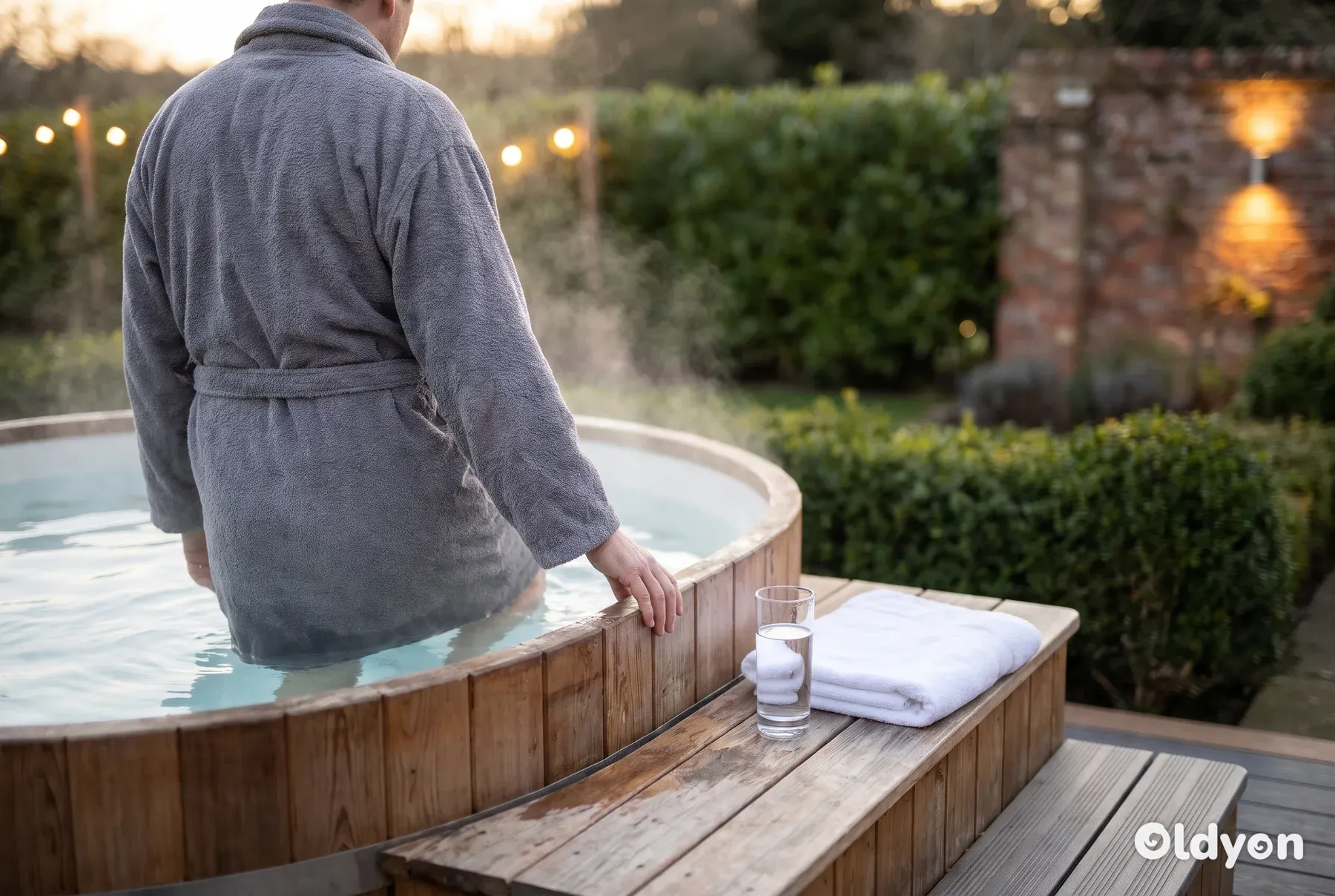
- Wrap up straight away. Cold air on warm skin makes your muscles tense, especially your neck and shoulders on a winter evening.
- Within 15 minutes, drink around 350-500 ml (12-17 fl oz) of an electrolyte drink. Plain water does not replace lost salts, so look for a drink with roughly 300-500 mg of sodium and 100-200 mg of potassium per serving.
- Take a lukewarm shower of about 30 seconds if you like, to rinse off chemicals and cool down gradually. Avoid ice-cold water straight after a hot soak, because the sudden change in temperature can trigger muscle cramps.
- Spend 3-5 minutes on gentle stretches for your lower back, hamstrings and shoulders while your muscles are still warm, without forcing anything. This helps stop them tightening into a shortened position overnight.
- Rest for a while before doing anything strenuous.
- Leave 30-60 minutes between getting out of the tub and going to bed.
Drinking water after a soak is good, but very large amounts of plain water after long soaks can, in rare cases, lower the sodium level in your blood. This is one reason an electrolyte drink is a better choice after a long or sweaty session.
Timing matters before bed. If you go to sleep within about 30 minutes of a soak, muscles that tighten from the chill can stay tense through the night as your core temperature falls. This can make morning stiffness worse.
Does a hot tub detox your body?
No. The main job of sweat is to cool you down, and it is mostly water and salts. Your liver and kidneys are the organs that remove waste from your body, and soaking in hot water does not change how well they work.
Sweat is roughly 99% water, with small amounts of electrolytes such as sodium and potassium. Your liver and kidneys remove waste products, which leave your body in urine and bile. Sweating in a hot tub therefore does not clear any meaningful amount of toxins.
You may read that headaches, tiredness or aches after a soak are signs of toxins leaving your body. They are far more likely to be signs of dehydration, overheating or a session that went on too long. Treat them as a message to drink more, lower the temperature or shorten your soak.
A soak does have real physical benefits. Warmth improves circulation and can increase the range of motion in stiff joints, and the raised heart rate in hot water burns some extra calories. These effects are genuine, even though detox is not one of them.
A hot tub can still help you relax, ease stiffness and sleep well. Enjoy it for those reasons, not as a cleanse.
Who should take extra care in a hot tub?
Heat affects some people more than others. If any of the following apply to you, speak to your GP, pharmacist or midwife before using a hot tub, and keep sessions short and cooler.
- You are pregnant. NHS advice is to avoid hot tubs, especially in the first trimester, because overheating may affect the baby's development. Speak to your midwife or doctor before any use.
- You have a heart condition, or high or low blood pressure.
- You take medicines that cause drowsiness or affect your blood pressure. Your pharmacist can advise.
- You have diabetes, especially if you have reduced feeling in your feet or legs.
- You have lupus or another autoimmune condition. Some people find heat triggers fatigue or a flare, while others find warmth soothing, so ask your specialist team.
Hot tubs and lupus
Lupus is an autoimmune disease, which means the immune system attacks the body's own tissues. This causes inflammation, joint pain and skin sensitivity, which is why heat can aggravate it.
Heat is a known trigger for lupus flares. A flare can bring joint swelling and pain, skin rashes such as the butterfly rash, and fatigue. If you have lupus, aches after a soak may be the start of a flare rather than ordinary soreness.
Check with your rheumatologist before using a hot tub, and avoid soaking during an active flare. If you do soak, keep it under about 10 minutes in water of roughly 33-37°C (91-99°F). Get out at once if joint pain, skin changes or fatigue increase.
Common signs of lupus include the following. Symptoms vary widely from person to person, and diagnosis needs blood tests and an assessment by a doctor, so speak to your GP if you recognise several of them.
- A butterfly-shaped rash across the cheeks and nose
- Sensitivity to sunlight
- Pain and swelling in several joints
- Fatigue that is out of proportion to what you have done
- Unexplained fever
- Kidney problems, such as swelling or changes in your urine
- Chest pain when you breathe in deeply
Lupus is often called 'the great imitator' because its symptoms overlap with many other conditions. Having some of the signs listed above does not mean you have lupus, so let your GP assess them rather than drawing conclusions yourself.
Is a hot tub or a sauna better for arthritis?
Both give warmth, which many people with arthritis find eases stiffness. A hot tub adds buoyancy, which takes weight off your joints and makes gentle movement easier. A sauna gives dry heat with no support. Neither is a treatment, so ask your GP or physiotherapist which suits your condition.
A hot tub also lets you exercise gently. Slow movements in warm water, such as ankle circles, knee bends and shoulder rolls, combine buoyancy with heat and can improve your range of motion. A sauna gives heat without buoyancy, so it does not make movement easier in the same way.
A sauna is much hotter than a hot tub. Sauna air usually runs at roughly 65-90°C (150-195°F), compared with a maximum of 40°C for hot tub water. This is why a sauna carries more risk of dehydration and puts more stress on your heart and circulation, even though dry air can feel easier to tolerate at first.
If you have a joint condition, aim for cooler water of about 33-38°C (92-100°F) rather than the full 40°C. Cooler water still eases stiffness while putting less strain on your circulation.
During an active rheumatoid arthritis flare, both hot tubs and saunas can make symptoms worse. Outside a flare, gentle warm-water therapy may help. Osteoarthritis tends to benefit more from the buoyancy of a hot tub, while a sauna may suit general muscle tension.
For widespread muscle pain, such as fibromyalgia, some people prefer a sauna. Soreness after a session appears to be less common, possibly because it is easier to cool down gradually in stages. The main risks of a hot tub are different: bacterial exposure if the water is not well kept, and overheating if you stay in too long. Ask your GP or specialist team which suits you.
During an active lupus or rheumatoid arthritis flare, a gentle warm bath at about 33-35°C (91-95°F) is a safer alternative to a hot tub. It is warm rather than hot, and you can get out easily whenever you need to.
When should you speak to a GP?
Most ordinary post-soak aches ease within 24-48 hours. Aches that start during a soak or within about two hours of it, or that last or get worse beyond 48 hours, point to something more than ordinary soreness.
Ordinary post-soak aches are spread across your body or follow the areas where the jets were aimed. Symptoms concentrated in your skin, lungs or lymph nodes are a warning sign. Examples include a spreading rash, a cough or tight chest, or swollen, tender glands in your neck, armpits or groin.
Mild redness of the skin that fades within an hour of getting out is normal. A rash, bumps or pustules that last more than 24 hours after a soak need medical attention.
- Aches that last more than a few days or return after every soak
- Fever, cough, breathlessness or flu-like symptoms in the days after using a hot tub
- Chest tightness, breathlessness or a cough that does not go away after using a hot tub
- A temperature of 38°C (100.4°F) or higher after using a hot tub
- Muscle aches with nausea, vomiting or diarrhoea after using a hot tub
- Visible joint swelling, warmth or redness, or joint pain that gets worse over 48 hours instead of better
- A rash that spreads, becomes painful or comes with a fever
- Dizziness or confusion that does not clear within about 30 minutes of getting out
- Cramps that do not ease with rest and fluids
- Call 999 for chest pain, fainting or sudden confusion during or after a soak
Soaking without the aches
Aches after a hot tub usually come from too much heat, too much time, too little water or jets working one spot too hard. Keep the water at 40°C or below, use a timer, drink before and after, and move around the seats.
Keep your water balanced and your filters clean, and wrap up warm when you climb out. If aches come with fever, a cough or a rash, stop using the tub and speak to your GP.
Frequently asked questions
Can a hot tub cause muscle cramps?
Yes. Sweating in hot water removes fluid and salts that your muscles need, so cramps are more likely after a long or very hot soak, especially in the calves and feet. Drink water before and after, keep sessions shorter and avoid alcohol. If cramps are severe or do not ease with rest and fluids, speak to your GP or pharmacist.
Should you stretch after a hot tub?
Gentle stretching after a soak is fine for most people, because warm muscles move more easily. Keep it slow and comfortable, and never force a stretch just because you feel looser than usual. Stand up slowly first, wrap up so you do not get cold, and drink some water. If a stretch causes sharp pain, stop.
Why do I feel so tired after a hot tub?
Heat widens your blood vessels and lowers your blood pressure, and your body works to cool itself down. Combined with fluid loss, this often leaves you sleepy and relaxed. Mild tiredness is normal, and many people sleep better after an evening soak. Feeling exhausted, dizzy or confused is not normal, so shorten your sessions and lower the temperature.
Can a hot tub give you a headache?
It can. The most common causes are dehydration, overheating, staying in too long and drinking alcohol in the tub. Strong chemical smells from poorly balanced water can also leave some people with a sore head. Drink water, keep the temperature at 40°C or below, test the water before you soak and get out if a headache starts.
Why do people put tennis balls in a hot tub?
Some owners float two to four clean tennis balls in the water. Their fuzzy surface can soak up some body oils, lotions and hair products, which helps reduce the greasy ring at the waterline and the oil load on the filter. They do not replace proper sanitiser, balanced water or regular filter cleaning. The balls become saturated, so replace them roughly every few weeks, and sooner if they start to break down.
How soon after exercise can I use a hot tub?
Many people wait until they have cooled down and their heart rate has settled, usually after a shower and a drink of water. Getting into hot water while you are still hot from exercise adds to dehydration and overheating. Keep the session short and gentle, and keep strong jets off any muscle that already feels strained.
Filed under