Can a hot tub go above 40°C, and should it?
Can you set a hot tub hotter than 40 degrees? Learn why controllers stop at 40°C, what heat stress does to your body and why bypassing the limit is unsafe.
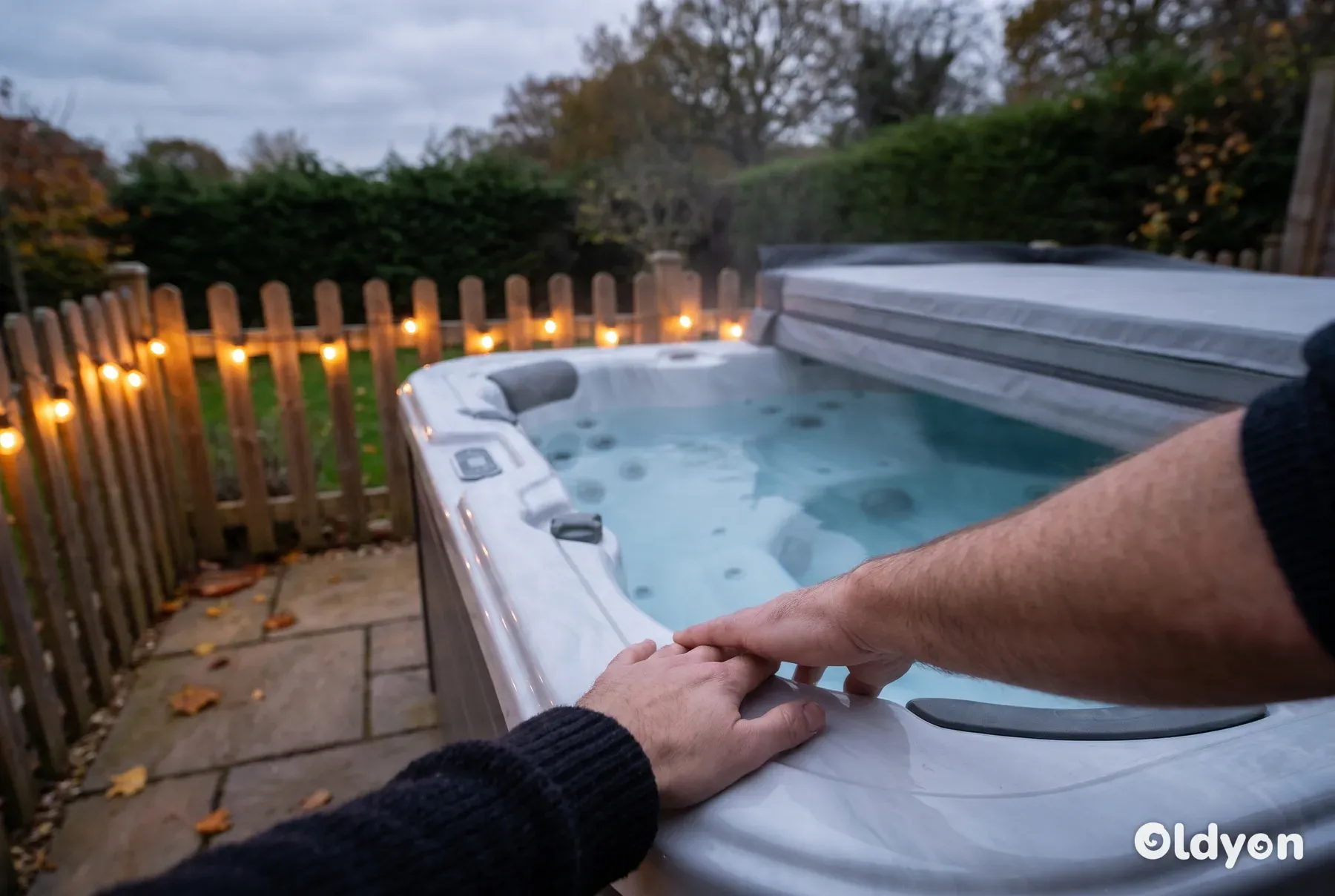
No, a standard hot tub will not go hotter than 40 degrees Celsius, and it should not. Almost every controller stops at 40°C (104°F) because that is the widely accepted upper limit for safe bathing. Above it, your body struggles to lose heat, and the risk of dizziness, fainting and heart strain rises quickly.
Some owners still look for ways to push past the limit, usually because the water feels cooler than the display suggests. Below, you will find out where the 40°C cap comes from, what happens to your body above it, why sensor tricks are dangerous, and the safe ways to make your soak feel warmer.
Why do hot tubs stop at 40°C?
The 40°C cap is a safety limit, not a heating limit. Your heater could easily warm the water further. The controller is simply programmed not to let it.
Where the limit comes from
The limit traces back to safety guidance published in the United States in 1979 by the Consumer Product Safety Commission, which recommended that spa water should never exceed 104°F. That figure, 40°C, became the default setting for manufacturers around the world.
The guidance was a response to real incidents. As home hot tubs became popular in the 1970s, there was little in the way of a safety framework, and reports of people being taken to hospital or dying after soaking in very hot water led regulators to act. The 40°C limit is not an arbitrary setting chosen by manufacturers.
In the UK, the Pool Water Treatment Advisory Group (PWTAG), which sets out good practice for pools and spas, also advises that spa water should not exceed 40°C, and many operators run lower. Electrical safety standards for spas in the UK and Europe, such as the IEC 60335 family, and in North America, such as UL 1563, cover the controls and protection built into the tub.
How your controller enforces it
Your hot tub uses a temperature sensor, usually a small thermistor, to measure the water. The control board reads that sensor and switches the heater on or off to hold your set temperature. The highest setting the panel allows is normally 40°C.
A thermistor is a sensor whose electrical resistance falls as the water warms. It usually sits recessed in a plumbing fitting near the heater. The control board reads that changing resistance as a temperature, and uses it to decide when to stop heating.
Most tubs also have a second, separate safety sensor called a high limit. If the water or the heater housing gets far hotter than it should, the high limit cuts power to the heater and shows an error code. This is a backstop for faults, and it is set well above 40°C, so it does not protect bathers from water that is merely too hot to sit in.
The sensor, control board, heater and high limit are designed and tested together as one integrated safety system. That is why altering any part of this chain does not just void the warranty. It also means the tub no longer matches the design that was tested and certified as safe.
What happens to your body above 40°C?
Your normal core body temperature is about 37°C. When you sit in water hotter than that, you cannot cool down by sweating, because most of your skin is underwater. Instead, you absorb heat, and your core temperature starts to climb.
Water is much better at moving heat than air. It conducts heat roughly 25 times more efficiently, so sitting in water at 40°C raises your core temperature far faster than standing in air at 40°C. That is why a 40°C hot tub is much more demanding on your body than a 40°C summer day.
To cope, your blood vessels widen and your heart beats faster to move blood to the skin. Your blood pressure can drop, especially when you stand up. Every degree above 40°C makes this happen faster, which is why the safe soaking time shrinks quickly as the temperature rises.
The rise in core temperature is not linear. As a rough guide, water only about 2°C above the limit, around 42 to 43°C, can heat your body roughly twice as fast as water at 40°C. That means you could reach a dangerous core temperature in about half the time. Exact figures vary from person to person, but a small change on the display makes a large difference to your body.
Above 40°C, the effects tend to build in stages. The timings below are a rough guide only, because they vary a lot with the water temperature, your health and how much of your body is underwater:
- In the first five minutes, the blood vessels in your skin widen to carry heat away from your core, and your heart rate rises to compensate and keep your blood pressure up
- From roughly five to ten minutes, you start to sweat, but because most of your skin is underwater, the sweat cannot evaporate and cannot cool you, so your core temperature keeps rising
- Within about 10 to 15 minutes, your core temperature can pass roughly 38.5°C, and dizziness and nausea can begin
- By about 15 to 20 minutes, it can approach 39.5 to 40°C, bringing weakness and confusion
- Beyond about 20 minutes, the risk of fainting, strain on the heart and drowning climbs sharply
The danger is not only the heat itself. Overheating can leave you too weak or confused to climb out of the tub safely, and it dulls your judgement, so you may not realise you need to get out. This is one reason never to soak alone in very hot water.
Get out of the water, sit somewhere cool and sip water if you notice any of these signs:
- Dizziness or light-headedness
- Headache
- Nausea or feeling sick
- A racing or pounding heartbeat
- Feeling unusually sleepy or confused
- Very red, hot skin
- Feeling faint when you stand up
These are early signs of heat exhaustion. The NHS guidance on heat exhaustion and heatstroke explains how to cool down and when it becomes an emergency. If symptoms do not improve within about 30 minutes of cooling down, or the person becomes confused or stops sweating, call 999.
Heat also makes people drowsy, and drowsiness in deep warm water is a serious risk. Read more about why falling asleep in a hot tub is dangerous and how to avoid it.
Who is most at risk from hot water?
Some people should use a lower temperature, a shorter soak or no hot tub at all. Speak to your GP, pharmacist or midwife first if any of these apply to you:
- You are pregnant, or trying to become pregnant (the NHS advises avoiding overheating in pregnancy, including in hot tubs)
- You have a heart condition, high or low blood pressure, or have had a stroke
- You have diabetes or nerve damage that reduces feeling in your feet or legs
- You take medicine that affects blood pressure, heart rate or alertness
- You have epilepsy or a history of fainting
- You are elderly or frail
Pregnancy needs particular care. Overheating in early pregnancy, especially in the first trimester (roughly the first 12 weeks), is linked to a higher risk of neural tube defects in the baby, such as spina bifida. For this reason, avoid hot tubs during that period, and ask your midwife or GP before using one later in pregnancy.
If you have low blood pressure, get out slowly. Hot water widens your blood vessels, and standing up quickly can make you faint. Sit on the edge for a moment before you stand, and make sure someone is nearby.
Some medicines can interact badly with heat. Diuretics (water tablets), blood thinners and sedatives are common examples, but there are others. Ask the person who prescribed your medicine, or your pharmacist, before you soak.
If you have a heart condition and your doctor has said a hot tub is suitable for you, keep the water to about 37 to 38°C rather than 40°C, and keep your soaks short.
If you have diabetes, limit soaks to about 10 minutes and check your feet for cuts, blisters or redness after each session. Reduced feeling in your feet can mean you do not notice damage while you are in the water.
Children overheat faster than adults because they are smaller. They need cooler water and much shorter soaks, so check our guide to hot tub temperature for children before they get in. Alcohol also increases the risk, because it widens your blood vessels further and dulls your judgement.
Keep children under about five years old out of an adult hot tub altogether. As well as heating up quickly, they cannot reliably tell you when they feel too hot, dizzy or unwell, so overheating or distress can go unnoticed until it is serious.
How long can you safely soak at 40°C?
There is no single fixed time, and manufacturers give different advice, so check your manual. As a general guide, many recommend around 15 to 20 minutes at 40°C for a healthy adult, followed by a break to cool down. At lower temperatures, you can usually stay in for longer.
The 15-minute guidance exists for a simple reason. Sweating cannot cool you while your skin is surrounded by hot water, so your core temperature keeps climbing the whole time you are immersed. It does not level off the way it can on a warm day.
Water temperature | How it feels | Typical guidance |
|---|---|---|
35-36°C (95-97°F) | Warm, close to body heat | Longer soaks, good for children with supervision |
37-38°C (99-100°F) | Comfortably hot | Popular everyday setting for adults |
39°C (102°F) | Hot | Moderate soaks with breaks |
40°C (104°F) | Very hot | Short soaks, often 15-20 minutes |
Above 40°C | Too hot | Not recommended for anyone |
As a rough guide, many sources suggest a maximum of about 30 to 40 minutes at 37 to 38°C, and about 20 to 30 minutes at 38.5 to 39°C, with shorter sessions at 40°C. Figures differ between manufacturers and between people, so check your manual and treat these as upper limits, not targets.
Listen to your body rather than the clock. If you feel any of the warning signs above, get out, even if you have only been in for a few minutes. Our guide on how long you should stay in a hot tub covers soak times in more detail.
Do not rely on symptoms alone to tell you when to get out, though. By the time you feel dizzy, sick or suddenly weak, you may already be in the early stages of overheating. Use a timer as your upper limit, and treat any symptoms as a reason to get out sooner.
How to soak safely at 40°C
- Drink around 500 ml of water before you get in. Starting dehydrated weakens your ability to control your temperature and makes overheating more likely, even at normal settings.
- Set a timer each time you get in, so you are not relying on your sense of time.
- Get out when the timer goes off, or sooner if you feel unwell.
- Cool down out of the water for at least five minutes, and drink more water.
- Only get back in once you feel fully comfortable, and set the timer again.
Most people do not need 40°C at all. Many owners find 37°C to 38°C more relaxing and can stay in longer. Our guide to the ideal hot tub temperature for every season suggests settings for summer and winter use.
Can you make a hot tub hotter than 40 degrees?
Technically, some people do try. The usual approach is to fool the temperature sensor, so that the controller thinks the water is cooler than it really is and keeps heating. Methods shared online include fitting a resistor to the sensor circuit, moving the sensor, or adjusting older bulb-type thermostats.
We will not explain how to do any of these, because none of them is safe. Every one of them works by making the tub give you false information about the water you are sitting in.
Even without any modification, the water can be briefly uneven while the heater is running. Once the display reaches your set temperature, wait about 10 minutes for the water to stabilise before you get in, rather than climbing in while the tub is still heating.
Why sensor tricks are dangerous
Once you tamper with the sensor, the display no longer shows the real water temperature. You might set 40°C and actually be sitting in water at 42°C or more, without any way of knowing. That removes the one reliable guide you have for safe soaking.
Tampering can also affect how the heater and safety circuits behave. Control boards are designed to work with sensors that read correctly. A modified circuit may not respond as expected to a fault, such as low water flow, which can overheat the heater and damage the tub.
The worst case is a sensor that fails while its signal has been altered. The heater may then have no working cut-off and can keep running unchecked, damaging the heater and pipework and creating a fire risk.
Heater damage from a DIY override is rarely a cheap fix. It can mean replacing the whole heater assembly rather than a single sensor or element, which typically costs hundreds of pounds, far more than a simple part swap.
What you risk by overriding the limit
- Heat exhaustion, fainting or heart strain for anyone using the tub, including guests who do not know it has been modified
- A higher risk of drowsiness and drowning
- Damage to the heater, control board, pipework or shell, which are designed for water no hotter than about 40°C
- A voided manufacturer's warranty
- Loss of the tub's safety certification, because the control, sensor and heater chain no longer matches the tested design
- Problems with your home insurance if a modified tub causes injury or damage
- Legal problems, as local building or safety rules in some areas may not allow a modified spa to be operated
- Electric shock or fire risk from amateur work inside the control box
Never open the control box or alter the heater or sensor wiring yourself. Hot tubs combine water and high-current electricity. In the UK, any electrical work must meet BS 7671, the tub must be protected by an RCD, and the work should be done by a registered electrician (in England and Wales, much of this falls under Part P of the Building Regulations). Other countries have their own rules. If you need to look at anything, switch off at the isolator first.
The charity Electrical Safety First publishes advice on outdoor electrics and finding a registered electrician.
Why does my hot tub feel cooler than the display says?
If 40°C does not feel hot enough, the problem is often heat loss rather than the temperature limit. Cold air, wind and the air drawn in through the jets all make the water feel cooler on your skin, especially in a British winter.
How hot the water feels also depends on the air around you. On a cold winter night, the same water temperature feels more intense when you first get in, because the difference between the cold air and the warm water is greater. On a mild evening, that contrast is smaller, so the water can feel cooler even though the display reads the same.
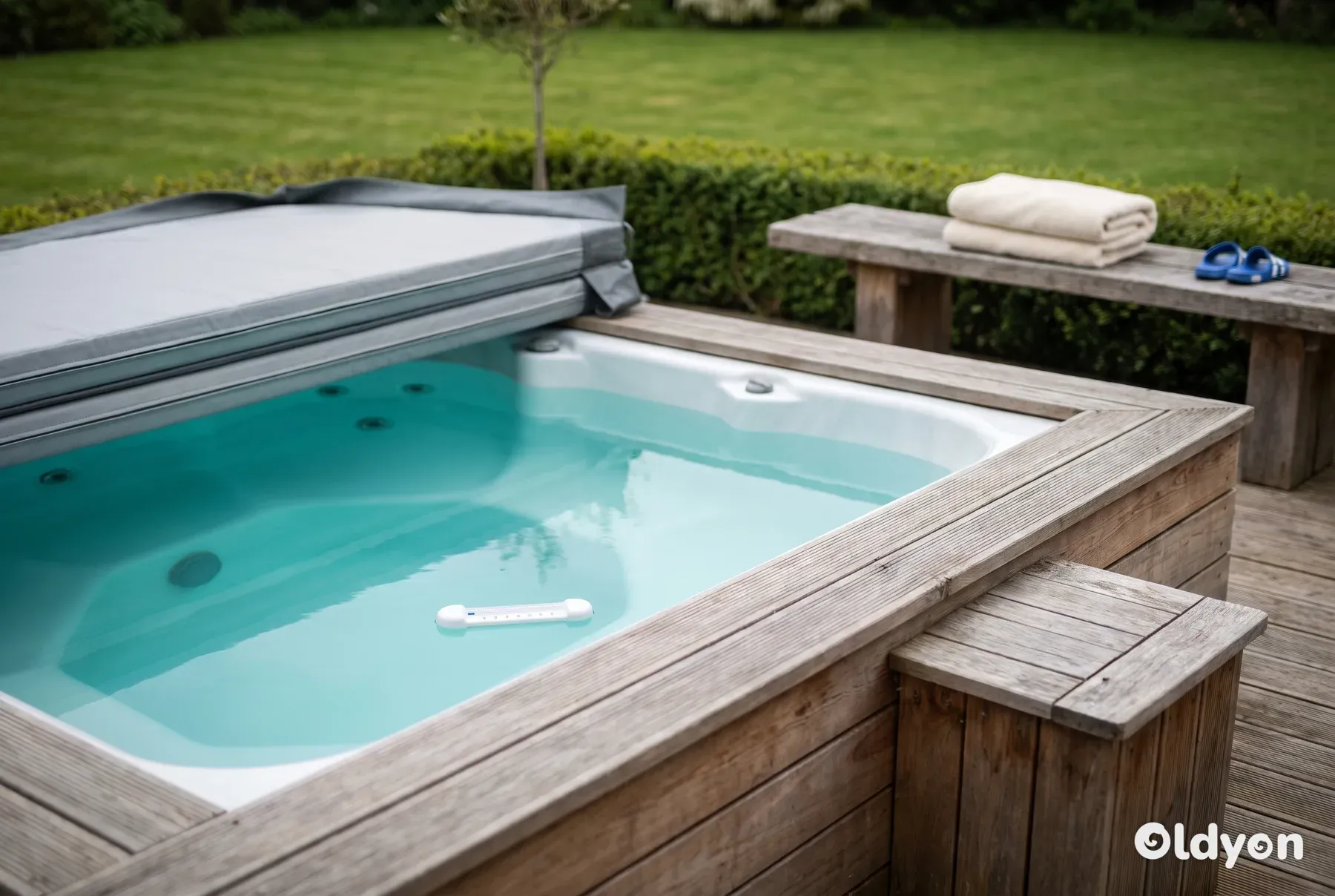
It is also worth checking that your display is accurate. Use a floating thermometer and compare it with the panel after the tub has been running for a while. If they differ by more than about one degree, ask a technician to check the sensor rather than adjusting anything yourself.
Check your cover and insulation
Test your cover by pressing on the foam panels. If they feel soft, heavy or waterlogged, or the vinyl is cracked, the insulation has failed and the cover needs replacing. A worn cover can let a large share of the tub's heat escape.
As a rough guide, a worn or badly fitted cover can let around 30 to 40 percent of the tub's heat escape. Estimates vary with the tub, the cover and the weather, but the loss is large enough that the water can struggle to stay at your set temperature on cold days.
A new, well-fitted cover with thick tapered foam, typically about 10 to 15 cm at its thickest point, cuts heat loss substantially compared with a worn one, by as much as about three quarters by some estimates. The taper lets rain run off, which helps stop the foam soaking up water.
For an extra layer of insulation, float a thermal blanket on the water surface under the cover. It sits directly on the water and reduces the heat and moisture that escape into the cover.
Check the cabinet too. Make sure the side panels are intact and that the insulation around the equipment bay has not slipped or compressed, because gaps let heat leak out. Switch off at the isolator before you remove any panel.
Safe ways to make your soak feel warmer
Try these steps before your next soak. None of them involves raising the water temperature above 40°C.
- Keep the cover on whenever the tub is not in use, and check that it seals well. A tired, waterlogged cover lets heat escape.
- Close the air controls on the jets, or turn them down. Air drawn in from outside cools the water and your skin, especially on cold days.
- Shelter the tub from wind with a screen, fence, hedge or gazebo. Wind across the water surface removes heat quickly.
- Give the heater time. Set your temperature well before you plan to use the tub, so the water reaches it fully.
- Aim the jets at large muscle groups, such as your lower back, thighs and shoulders, and sit close to them. The moving water breaks up the cooler layer that forms around your skin, so the same temperature feels hotter.
- Get in with cool skin. A hot shower beforehand warms your skin and makes the water feel milder, while cooler skin makes it feel hotter.
- Take shorter soaks with cool-down breaks. Each time you get back in, the water feels hotter than it does at the end of one long soak.
- Wear a woolly hat in winter. Keeping your head warm makes the rest of your body feel more comfortable.
- Have a warm towel and robe ready, so you do not feel chilled the moment you get out.
- Sit lower in the water, with your shoulders under, rather than perching on a high seat.
These steps also save energy, because the heater does not have to work as hard to replace lost heat.
Faults that make the water feel cooler
Limescale on the heater element insulates it from the water and slows heating. This is common in hard water areas. If your tub feels lukewarm and takes a long time to heat, it may need professional descaling.
After draining and refilling, air can get trapped in the plumbing. This restricts circulation and can create cold spots, so the water feels cooler than the display says. Bleed the air out by following the steps in your manual, and switch off at the isolator first.
Can a hot tub help aches, sciatica or stress at a safe temperature?
Many people find that warm water and gentle jets help them relax and ease stiff muscles. The buoyancy of the water also takes some weight off your joints. You get these effects at 37°C to 40°C, and there is no evidence that hotter water gives more benefit.
Back pain and sciatica
Warm water may help back and sciatic pain in two ways. Heat increases blood flow to irritated tissue, and buoyancy temporarily takes pressure off your lower spine. People who find it helpful typically soak for 15 to 20 minutes at around 39 to 40°C.
Some people with back pain or sciatica say warmth makes them feel more comfortable. Others find it makes no difference. A hot tub is not a treatment for sciatica or any nerve condition, so speak to your GP or a physiotherapist about your pain, and ask them whether warm water is suitable for you.
Some people with sciatica also use complementary approaches, such as acupuncture, moxibustion (heat applied to acupuncture points) or cupping. Some studies suggest short-term pain relief, but the evidence is mixed, and NICE does not recommend acupuncture for low back pain with or without sciatica. People use these alongside warm water, not instead of it, so discuss them with your GP first.
Stress and relaxation
Warm baths are often linked with feeling calmer and sleeping better, and some people use a short evening soak as part of a relaxing routine. If you feel very drowsy afterwards, keep your soak shorter or lower the temperature.
Warm immersion at a safe temperature can calm your nervous system and may help lower cortisol, the body's main stress hormone. Very hot water works the other way: excessive heat acts as a stress on the body and can raise cortisol. For relaxation, hotter is not better.
Neuropathy and nerve pain
If you have neuropathy, which means nerve damage that can reduce feeling in your feet or hands, take extra care. You may not notice that the water is too hot or that your skin is being harmed. Ask your GP or diabetes team before using a hot tub, and always check the water with a thermometer rather than your feet.
For mild peripheral neuropathy, warm water at about 37 to 39°C may improve circulation to your hands and feet and ease pain for a while. If your GP agrees it is suitable, keep soaks to about 10 to 12 minutes at no more than about 39°C.
Avoid going hotter. Heat stress above the safe range can trigger an inflammatory response across your whole body, which may make sensitive nerves worse rather than better.
Other heat therapies to consider
Some people alternate a soak with a cold plunge at about 10 to 15°C. This can boost circulation more than sustained heat alone, but the sudden change puts real strain on your heart. Only try it if you are healthy and have checked with your GP first.
Alternating hot and cold may also give a more noticeable drop in stress hormones afterwards than staying in the heat for one long soak. Research on this is still limited, and it does not replace the heart warning above.
If you want deep heat, a far-infrared sauna is a gentler option. It heats the body with air at roughly 50 to 65°C and raises your core temperature less than hot water immersion, partly because you can still sweat freely. Sessions of 20 to 30 minutes are typical. Ask your GP first if any of the risk factors above apply to you.
When should you call a hot tub technician?
Some temperature problems are faults that need a professional. Call a qualified hot tub technician if you notice any of these:
- The water never reaches your set temperature, even with the cover on
- The water goes above your set temperature, especially above 40°C, without warm weather to explain it
- The display and a separate thermometer disagree by more than about one degree
- The panel shows a high limit, overheat or sensor error code
- The heater trips the RCD or the power keeps cutting out
- You notice a burning smell, scorch marks or water near the control box
A professional call-out for a temperature problem usually costs a small fraction of replacing a heater that has been damaged by an unsupervised modification. Getting the fault diagnosed properly is the cheaper option as well as the safer one.
If the water is hotter than 40°C for any reason, do not get in. Switch the heater off or lower the set temperature, keep everyone out, and let the water cool before using the tub again.
In a summer heatwave, the water can sometimes creep above your set temperature because the pump adds heat and the sun warms the tub. Shortening filtration cycles or running them at night often helps. Check your manual, as settings vary between controllers.
For a full list of everyday precautions, read our hot tub safety rules everyone should know.
The bottom line on hot tub temperature
Your hot tub stops at 40°C (104°F) on purpose. Above that, your body cannot shed heat, and the risk of heat exhaustion, fainting and drowsiness rises fast.
Do not try to override the controller or fool the sensor. It hides the real water temperature, can damage the tub, voids your warranty and puts everyone who uses it at risk. If 40°C feels too cool, improve your cover, close the air controls, shelter the tub from wind and check the sensor is reading correctly.
Most people are happiest at 37°C to 38°C. Keep soaks short at 40°C, get out at the first sign of feeling unwell, and speak to your GP, pharmacist or midwife if you have a health condition or are pregnant.
Frequently asked questions
Is 41°C too hot for a hot tub?
Yes. Health and safety guidance, including PWTAG's advice for spas, sets 40°C as the maximum. Even one degree higher speeds up how quickly your core temperature rises and shortens the time you can safely stay in. If your tub reads 41°C or more, do not get in. Lower the set temperature, let the water cool and have the sensor checked if it keeps happening.
Is 40.5°C (105°F) really that different from 40°C?
Yes, more than it sounds. As a rough guide, at about 40.5°C the safe soaking window for a healthy adult can shrink from 15 to 20 minutes to around 10 minutes or less. For older people, anyone who is pregnant or people with heart conditions, even a brief soak at that temperature can trigger a medical emergency. Lower the setting and wait for the water to cool.
Why do people talk about a 15-minute rule for hot tubs?
At 40°C, many manufacturers suggest limiting soaks to around 15 to 20 minutes for a healthy adult. That is roughly how long it takes for your core temperature to rise noticeably in water that hot. The figure is a guide, not a guarantee. At lower temperatures you can usually stay longer, and anyone feeling unwell should get out straight away.
Can I set my hot tub to 40°C if children will use it?
It is better not to. Children heat up faster than adults because of their size, so most guidance suggests a lower temperature for them, often around 36°C to 37°C, with much shorter soaks and constant adult supervision. Very young children and babies should not use a hot tub. Lower the setting well before children get in, as the water takes time to cool.
My hot tub is above the set temperature in summer. Is that a fault?
Not always. In hot weather, the circulation pump adds heat and the sun warms the tub, so the water can rise above your setting even with the heater off. Try running filtration cycles at night and shortening them. If the water goes above 40°C, stay out until it cools, and call a technician if it happens in cool weather.
Will a hotter hot tub help my muscles recover faster?
There is no good evidence that water above 40°C helps muscles more than water at 37°C to 40°C. The benefits people notice, such as relaxation and easier movement, come from warmth and buoyancy, which you already get at a safe temperature. Hotter water mainly adds risk. After hard exercise, cool down first and drink water before you get in.
Is a sauna a safe alternative if I want more heat?
Saunas use hot, dry air, so your body can cool by sweating in a way it cannot underwater. They still carry heat risks, and the same people who should avoid hot tubs, such as those who are pregnant or have heart conditions, should ask their GP first. Keep sessions short, drink water, and never use a sauna after drinking alcohol.
Filed under