Can you catch an STI from a hot tub?
Can you get STDs from a hot tub? Learn why STIs need close contact, which real infections a poorly kept tub can spread, and how clean water protects you.
Can you get STDs from a hot tub? In practice, no. Sexually transmitted infections spread through sexual contact, close skin-to-skin contact and body fluids, and the germs that cause them do not survive well in warm, properly sanitised water. Sharing a well-kept tub with other people will not give you chlamydia, gonorrhoea or HIV.
That does not mean every hot tub is harmless. A poorly kept tub can spread real infections, including an itchy skin rash called folliculitis, a stomach bug called Cryptosporidium and the bacteria that cause Legionnaires' disease. Keeping the water clean and balanced, and keeping ill bathers out, prevents most of them.
This article is general information, not medical advice.
Can you get STDs from a hot tub?
STI (sexually transmitted infection) is the term the NHS uses, and STD (sexually transmitted disease) is the older term that is still common in searches. Both describe the same group of infections: chlamydia, gonorrhoea, syphilis, genital herpes, genital warts caused by HPV, HIV, trichomoniasis and a few others. Each one needs a direct route from one person's body to another person's body.
The NHS states that chlamydia is not passed on through sharing baths, towels, swimming pools or toilet seats, and it gives the same reassurance about gonorrhoea. You can read this on the NHS page about chlamydia. Hot tubs belong in the same group, because shared water is not a sexual route.
Why hot tub water is a poor home for STI germs
The bacteria that cause chlamydia, gonorrhoea and syphilis are fragile once they leave the body. They need the warmth, moisture and particular cells found in the genitals, throat or rectum to survive and multiply. In open water they are diluted almost straight away.
Chlamydia is a clear example. Chlamydia bacteria are obligate intracellular organisms, which means they can only multiply inside a living host cell. In open water there are no host cells for them to enter, so they cannot reproduce or persist there.
A typical home hot tub holds around 1,000 to 1,500 litres (about 260 to 400 US gallons), so any germs released are spread through a large volume of water. Chlorine or bromine at the correct level then attacks bacteria and many viruses. The heat on its own does not sanitise the water, but the sanitiser does.
Viruses such as HIV and hepatitis B are also fragile outside the body. Health authorities do not list pool or spa water as a way these viruses spread.
HIV is an enveloped virus, which means it is wrapped in a delicate outer coat made of fats and proteins. Chlorine and bromine break down that coat, and once it is damaged the virus can no longer infect cells. This is one more reason HIV cannot stay infectious in treated hot tub water.
Chlamydia, gonorrhoea, herpes, HIV and HPV
- Chlamydia and gonorrhoea: spread through unprotected vaginal, anal or oral sex and by sharing sex toys. They do not spread through shared water.
- Syphilis: spread through direct contact with a syphilis sore, usually during sex. It does not spread through water or seats.
- Genital herpes: spread by skin-to-skin contact with the affected area, even when no sores are visible. The virus does not survive well in sanitised water.
- HIV: spread when certain body fluids, such as blood, semen or vaginal fluids, enter another person's body. It does not spread through hot tub water, sweat or saliva.
- Genital HPV: spread through intimate skin contact during sex. It does not spread through hot tub water.
HPV is tougher than the bacterial STIs and can last longer on surfaces. Even so, there is no documented case of genital HPV spreading through shared pool or hot tub water. Diluted in a large volume of sanitised water, it has no realistic route to another person's genitals.
There is one detail worth knowing about HPV. Other types of HPV cause verrucas (plantar warts) on the feet, and these can spread on wet, shared floors around pools, changing rooms and hot tub steps. These are not sexually transmitted types, but they are a good reason to keep steps and surrounds clean and to wear sliders in shared spaces.
Cold sores are caused by the herpes simplex virus, which spreads through direct contact with the sore. If you or a guest has one, read our guide on whether you can use a hot tub with a cold sore before anyone gets in.
What about having sex in a hot tub?
This is the one situation where an STI can be passed on in a hot tub, and the water plays no part in it. If two people have sex, any infection passes through the sexual contact itself, exactly as it would anywhere else. Being underwater gives no protection at all.
Hot water can add to the risk. Water washes away natural lubrication, which can cause tiny tears in the skin that let infections in more easily. Heat and sanitiser chemicals may also weaken latex condoms, and a condom can slip off in water without either person noticing.
The comfort of hot water can also hide warning signs. Discomfort or friction that would normally make people stop, slow down or add protection is easier to miss in warm water, so small injuries and condom problems are more likely to go unnoticed.
If you do have sex in a hot tub, use a silicone-based lubricant, because it stays in place in water where a water-based one washes away. Avoid oil-based lubricants with latex condoms, as oil weakens latex. Check that the condom is intact before you start and again during sex.
Because a condom is less reliable in water, consider extra protection beyond a single condom. Do not wear two condoms at once, as the friction between them makes tearing more likely. Instead, combine condoms with regular STI testing, and ask a sexual health clinic whether options such as PrEP (medicine that prevents HIV) suit you.
If you are worried about your personal risk afterwards, speak to a doctor or a sexual health clinic. They can advise on testing and, where relevant, on emergency HIV medicine (PEP), which needs to be started within 72 hours.
Some people also find that sex in a hot tub leads to irritation, thrush or a urinary tract infection afterwards. This happens because sanitiser chemicals and bacteria from the water come into contact with sensitive skin.
Pregnancy is possible too, and our guide on whether you can get pregnant from a hot tub explains the facts. From a water care point of view, body fluids use up sanitiser quickly, so test and adjust the water afterwards.
What can you actually catch from a hot tub?
The real risks come from germs that thrive in warm water and from bathers who bring germs in with them. A hot tub runs at up to 40°C (104°F), which is comfortable for people and for bacteria. When the sanitiser runs low, these germs can multiply quickly.
Hot tub rash (folliculitis)
Hot tub folliculitis is the most common problem. It is caused by a bacterium called Pseudomonas aeruginosa, which infects hair follicles when sanitiser levels drop. It is not an STI, even though it often appears in areas covered by swimwear.
Pseudomonas is much hardier than STI germs. Chlamydia and gonorrhoea bacteria die within seconds to minutes outside the body, but Pseudomonas can survive and grow in warm water for days or even weeks once the sanitiser level falls. This is why a tub that has been left unchecked is a common source of rash.
- Itchy red bumps or small spots filled with pus
- A rash that is often worse under swimwear, where wet fabric holds water against the skin
- Spots that usually appear from a few hours to a few days after using the tub
- Sometimes sore ears or eyes at the same time
- Sometimes a mild fever or feeling slightly unwell
Folliculitis is often mistaken for an STI rash. The difference is where it appears: hot tub rash follows the whole area covered by swimwear, such as the bottom, hips, thighs and tummy, and can also appear on the chest or back. It does not focus on the genitals specifically, which helps tell the two apart.
In healthy people, hot tub rash usually clears up on its own within a week or two. See a pharmacist or GP if it spreads, becomes very painful, does not improve, or comes with a high temperature. Severe or spreading cases may need a short course of antibiotics from a doctor. Our guide on how to prevent hot tub folliculitis explains the water care steps in detail.
Cryptosporidium and stomach bugs
Cryptosporidium is a tiny parasite that spreads through faeces, usually from someone who has recently had diarrhoea. It causes watery diarrhoea, stomach cramps and sometimes a fever. Unlike most germs, it can survive for days even in correctly chlorinated water.
Cryptosporidium and E. coli cause illness mainly when bathers accidentally swallow the water. The risk is highest in busy shared tubs with poor filtration, where more people bring germs in and the water is cleaned less effectively. Keep your mouth out of the water and never drink it.
This is why anyone who has had diarrhoea should stay out of a hot tub until two weeks after their symptoms have stopped. Other stomach bugs, such as norovirus and some types of E. coli, can spread in the same way when the water is not well sanitised. If there has been an accident in your tub, follow our steps for cleaning up poo in a hot tub safely.
Adenovirus behaves in a similar way to norovirus. It can survive in poorly sanitised recreational water and cause stomach illness, or a respiratory illness with a sore throat, cough and sore eyes.
Legionella and Legionnaires' disease
Legionella bacteria grow in warm water, especially where water sits still or where slime (called biofilm) builds up in pipes and filters. Hot tub jets create a fine mist, and breathing in that mist is how people become infected. Legionella does not usually spread from person to person.
You cannot catch Legionella by swallowing hot tub water or from the water touching your skin. The risk comes specifically from breathing in contaminated droplets or mist. This is why the spray from the jets and the air just above the water matter more than the water you sit in.
Legionella can cause Legionnaires' disease, a serious type of pneumonia, or a milder illness similar to flu called Pontiac fever. People over 50, smokers, people with chronic lung conditions and people with weakened immune systems are at higher risk. Hot tubs have been linked to outbreaks, which is why the Health and Safety Executive guidance on Legionella covers spa pools run by businesses such as hotels and holiday lets.
Symptoms of Legionnaires' disease can take up to two weeks to appear. They include a cough, shortness of breath, chest pain, a high temperature, muscle aches, a headache and symptoms similar to flu, and confusion in severe cases. It needs antibiotic treatment and can be life-threatening if untreated. If you develop these after using a hot tub, contact your GP or call NHS 111 and mention the hot tub. The NHS page on Legionnaires' disease explains when to get urgent help.
Ear, eye, skin and lung irritation
Pseudomonas can also cause outer ear infections, often called swimmer's ear. These develop when contaminated water stays trapped in the ear canal. Symptoms include ear pain, itching and sometimes discharge from the ear. Badly balanced water, especially water with a pH that is too high or too low, can sting the eyes and dry out the skin.
A strong 'chlorine' smell usually means the water has too little free chlorine, not too much. The smell comes from chloramines, which form when chlorine reacts with sweat and other waste from bathers.
Indoor hot tubs with poor ventilation carry a rarer risk sometimes called 'hot tub lung'. This is inflammation of the lungs linked to breathing in mist that contains certain bacteria. Good ventilation and clean water reduce the risk.
The bacteria behind hot tub lung are non-tuberculous mycobacteria, such as Mycobacterium avium complex, which can live in biofilm and be carried in the mist. The illness causes a persistent cough, breathlessness and tiredness that are often put down to something else, so mention regular hot tub use if you see a doctor about these symptoms.
Infection | How it spreads in a tub | Typical signs | Main prevention |
|---|---|---|---|
Folliculitis | Bacteria entering hair follicles | Itchy red bumps | Keep sanitiser in range |
Cryptosporidium | Swallowing water with faeces in it | Watery diarrhoea | No bathing for 2 weeks after diarrhoea |
Legionella | Breathing in mist from jets, not swallowing or skin contact | Cough, fever, breathlessness | Sanitiser, clean filters, regular draining |
Hot tub lung | Breathing in mist with mycobacteria | Lasting cough, tiredness | Clean water, good ventilation indoors |
Swimmer's ear | Contaminated water in the ear | Itchy, painful ear, discharge | Balanced water, dry ears afterwards |
Chlamydia, HIV and other STIs | Not through water | Not applicable | Safer sex and regular testing |
Why does properly sanitised water matter?
Almost every real hot tub risk starts in the same place: the sanitiser has dropped too low, the pH has drifted, or the filters are dirty. Each bather adds sweat, skin cells, body oils and bacteria. A small volume of hot water uses up sanitiser far faster than a swimming pool does.
These are widely accepted targets for a domestic hot tub. Manufacturers sometimes recommend slightly different ranges for their own systems, so check your manual and follow it where it differs.
- Free chlorine: 3-5 ppm
- Bromine, if you use it instead of chlorine: 3-5 ppm
- pH: 7.2-7.6
- Total alkalinity: 80-120 ppm
- Calcium hardness: 150-250 ppm
- Water temperature: no hotter than 40°C (104°F)
pH matters more than many owners realise. As pH rises above the target range, chlorine becomes much less effective. A tub can show sanitiser on the test strip and still be poorly protected.
Follow this routine to keep the water safe:
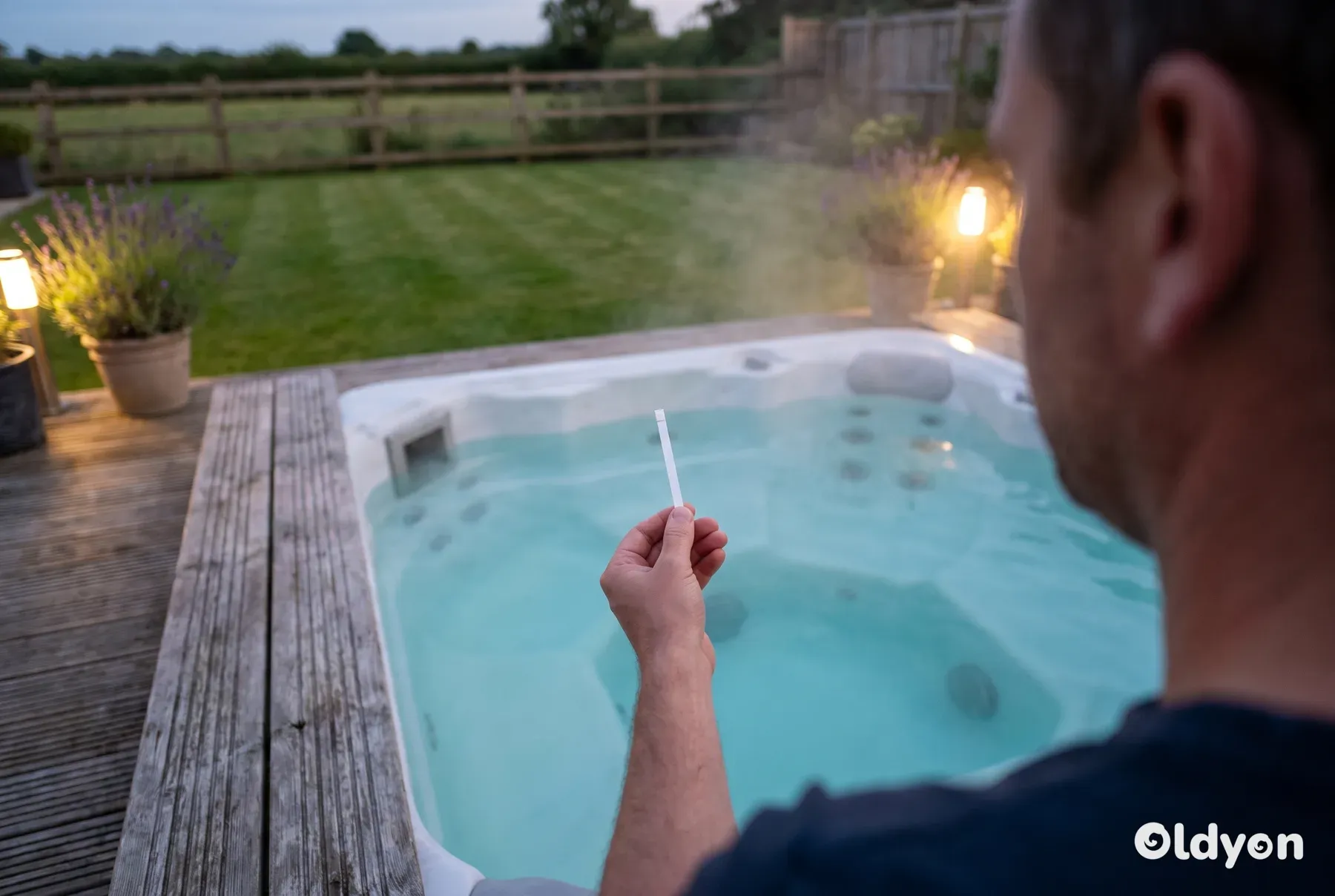
- Test the water with strips or a test kit before each use, or at least three times a week if the tub is used less often.
- Adjust total alkalinity and pH first, then bring the sanitiser up to the target range.
- Shock the water once a week and after heavy use, such as a party or several bathers in one day.
- Ask everyone to shower before getting in, and keep anyone with diarrhoea, an infected wound or a skin infection out of the tub.
- Rinse the filters every week and deep clean them about once a month, following your manufacturer's instructions.
- Drain, clean and refill the tub every three to four months, or sooner if the water stays cloudy or the tub is used heavily.
- Keep the cover on between uses, and clean the waterline and the underside of the cover regularly to stop slime building up.
Clear house rules make this routine easier to keep. Our guide to hot tub hygiene rules for owners and guests sets out the habits that keep the water cleaner for longer.
How can you tell if a hot tub is safe to use?
When you use a tub at a holiday let, a hotel or a friend's house, you usually cannot test the water yourself. These signs give you a fair idea of how well it has been looked after.
- The water is clear and you can see the seats and floor easily
- There is no strong chemical smell and no musty or stale smell
- The waterline and surfaces feel smooth, not slimy
- There is no foam, scum or floating debris on the surface
- The tub has a cover and the area around it looks cared for
- The owner can tell you when the water was last tested, or can show you a test log
If the water looks cloudy, smells strongly or feels slimy, stay out. A small pack of test strips is light enough to take on holiday if you want to check the water for yourself.
Public and commercial spas, such as those at hotels, gyms and leisure centres, should keep records of water testing and inspections. Ask the staff to show you a recent water-quality or inspection record. If none is available and you have concerns, contact the environmental health team at the local council.
Should you use a hot tub when you are unwell?
Staying out of the tub when you are ill protects other bathers and helps you recover. Warm water does not kill infections inside your body, and heat can make some illnesses feel worse.
Stay out of a hot tub if you have any of the following:
- Diarrhoea or vomiting, and for two weeks after diarrhoea stops
- An open wound, a new piercing or a healing surgical wound
- A skin infection, a rash or a cold sore
- Shingles with open or weeping blisters, which should never go into shared water
- A fever, or you feel generally unwell
- An eye or ear infection
- A respiratory illness, such as a cold, a cough or a chest infection
Respiratory illnesses deserve a special mention. Hot, humid air and the effort of staying in heat can make a cold, cough or chest infection feel worse. You are also sitting close to other bathers and breathing the same air above the water, so you could pass your germs on to them.
Before using a shared hot tub again, wait until you have been free of fever for at least 24 hours and any skin condition has fully healed. This protects you while you recover and stops germs passing to other bathers.
If your immune system is weakened, for example by HIV, chemotherapy or medicines taken after a transplant, your risk from Pseudomonas, Legionella and mycobacteria is much higher. Talk to your doctor before using any shared hot tub.
If you have a long-term health condition, are pregnant or take medicine that affects your blood pressure, speak to your GP, pharmacist or midwife before using a hot tub.
What about toilet seats, swimming pools and other STI myths?
The same science answers many other everyday worries. STIs need sexual contact or very close skin contact, so most casual situations carry no realistic risk.
- Toilet seats: the NHS says chlamydia and gonorrhoea are not spread this way. The germs do not survive long on cold, dry surfaces and would need to reach the genitals directly.
- Swimming pools, lakes, the sea and natural hot springs: STIs are not spread through shared water. Natural water and hot springs are not sanitised, though, so they can carry other germs that cause stomach or skin problems.
- Mosquitoes and other insects: they do not spread HIV or other STIs. HIV cannot survive or multiply inside a mosquito. A mosquito injects its own saliva, not the previous person's blood, and STI germs are not in that saliva.
- Sweat: sweat does not carry STIs. The amount of HIV in sweat is far too low to infect anyone.
- Casual contact: hugging, shaking hands or sharing gym equipment carries no STI risk.
- Shared towels: most STIs cannot spread this way, but pubic lice and scabies occasionally can. Always use your own towel.
- Sharing drinks, cutlery or vapes: chlamydia, gonorrhoea and HIV are not spread this way. Cold sores can be, so it is still sensible not to share.
- Vapes and throat gonorrhoea: gonorrhoea in the throat needs direct contact with infected secretions, usually through oral sex, so the trace of saliva on a mouthpiece is not enough. Sharing a vape can still pass on cold and flu viruses.
Why a toilet seat is not a realistic route
For gonorrhoea to spread from a toilet seat, three things would all have to happen. An infected person would have to leave enough live bacteria on the seat, those bacteria would have to survive until the next person sat down, and they would then have to reach that person's mucous membranes, such as the inside of the genitals.
Each step is unlikely on its own. Laboratory research has found that gonorrhoea bacteria quickly become undetectable on dry surfaces at room temperature, usually within one to two hours and often much sooner. No case of gonorrhoea caught from a toilet seat has been documented.
Swimming pools
Swimming pools are usually kept at a lower free chlorine level than hot tubs, often around 1-3 ppm, and some public pools run lower still. Guidance varies between countries and pool types. Even at these levels, chlorine neutralises STI germs almost immediately, and there are no documented cases of an STI spreading through shared pool water.
A pool being safe from STIs does not make it free of all infection risk. Cryptosporidium, Pseudomonas and some respiratory germs can still spread in swimming pools. The same habits help as in a hot tub: shower before swimming, try not to swallow the water and stay out for two weeks after diarrhoea.
Lakes, rivers and natural hot springs
Lakes, rivers and natural hot springs are not chlorinated, but STI germs still face a hostile environment. They are diluted in huge volumes of water, exposed to sunlight (UV light) and hit by changes in temperature, so natural water does not become an STI route. The extra risks in natural water come from other waterborne germs, such as those that cause stomach upsets.
When should you see a GP or get tested?
If you have symptoms that could be an STI, they did not come from hot tub water. Get tested, because most STIs are easy to treat and early treatment prevents complications.
Any genital symptom, such as discharge, sores, pain or an unusual smell, needs an STI test whether or not you have used a hot tub. A rash that follows your swimwear line, rather than sitting on the genitals, is more likely to be folliculitis than an STI, but a pharmacist or GP can check if you are unsure.
If you have had sex in or around a hot tub and are worried about exposure, book an STI test at a sexual health clinic or through your GP. Testing is the only way to get a definite answer, and the clinic can tell you the right time to test after a particular exposure.
Many people with chlamydia or gonorrhoea have no symptoms at all. Up to about 70% of women and 50% of men with chlamydia notice nothing. When symptoms do appear, it is usually 7 to 21 days after exposure, so testing is the only way to know for certain. Symptoms can include:
- Pain when peeing
- Unusual discharge from the vagina, penis or bottom, which with chlamydia can be white, yellow or cloudy
- Pain or discharge from the bottom (rectum)
- Pain or bleeding during or after sex, or bleeding between periods
- Pain in the lower tummy, pelvis or testicles
- Sores, blisters, lumps or warts around the genitals or anus
Sexual health clinics in the UK offer free, confidential testing, and in many areas you can order a free home test kit online. Your GP or pharmacist can also advise you. The NHS guide to sexually transmitted infections explains the symptoms and where to get tested. If you live elsewhere in Europe, your local health service or pharmacist can help in the same way.
For hot tub problems, see a pharmacist or GP if a rash lasts more than a week or two or keeps spreading, if diarrhoea lasts more than seven days, or if you develop a cough, fever or breathlessness after using a tub. Call 999 or go to A&E if you have severe difficulty breathing or chest pain.
See a doctor too if you have ear pain or discharge from the ear after time in water, or a rash that has not cleared within about 10 days.
The short answer
You cannot catch chlamydia, gonorrhoea, herpes, HPV, HIV or any other STI from hot tub water. These infections pass through sexual contact and very close skin contact, which is why sex in a hot tub is the only real STI risk.
The infections a hot tub can spread, such as folliculitis, Cryptosporidium and Legionella, all thrive when water care slips. Keep sanitiser and pH in range, clean the filters, change the water regularly and keep ill bathers out, and your tub stays a safe place to relax.
Frequently asked questions
Can a hot tub kill STI germs on your body or cure an infection?
No. The sanitiser can kill germs released into the water, but it cannot reach an infection inside your body, and hot water does not treat it. Bathing does not wash an STI away either. If you think you might have an STI, get tested at a sexual health clinic or through your GP, and avoid sex until you have the result and have finished any treatment.
Is a saltwater hot tub less likely to spread infections?
A saltwater hot tub uses a generator to turn salt into chlorine, so the water is still sanitised with chlorine. When levels are correct, it is neither safer nor riskier than a standard chlorine tub. You still need to test the water, keep free chlorine and pH in range, clean the filters and drain the tub as often as your manufacturer recommends.
Can I catch anything from a hot tub at a holiday let?
The risks are the same as with any hot tub, but you do not control the water care. Rented and shared tubs often have more bathers, so sanitiser runs out faster. Check that the water is clear and smells fresh, shower before and after, and stay out if anything seems wrong. Tell the owner if you develop a rash, a stomach bug or a cough afterwards.
Should I shower after using a hot tub?
Yes, it helps. A shower with soap after bathing rinses off sanitiser and any bacteria left on your skin, which lowers the chance of hot tub rash. Change out of wet swimwear quickly and wash it before wearing it again, because damp fabric holding water against your skin is where folliculitis often starts.
How quickly can a hot tub become unsafe?
It depends on how the tub is used. One busy evening with several bathers can use up much of the sanitiser, especially in hot weather. A tub left uncovered or unchecked for a week can also lose most of its sanitiser. This is why testing before each use is the safest habit, rather than relying only on a fixed weekly schedule.
Do I need to drain my hot tub if someone with an STI has used it?
No. STIs do not spread through hot tub water, so there is no need to drain the tub or treat it differently. Keep up your normal routine: test the water, keep sanitiser and pH in range, and shock it after heavy use. Draining is needed after a diarrhoea accident, or when the water is due for its regular change.
What does 'STD' mean on a hot tub label or listing?
On a hot tub label, in a manual or in a product listing, 'STD' is usually a short form of 'standard'. It describes a standard model, size, cover, setting or set of features, often to set it apart from a deluxe or premium version. It has nothing to do with sexually transmitted diseases. If an abbreviation is unclear, check the glossary in your manual or ask the manufacturer.
Filed under