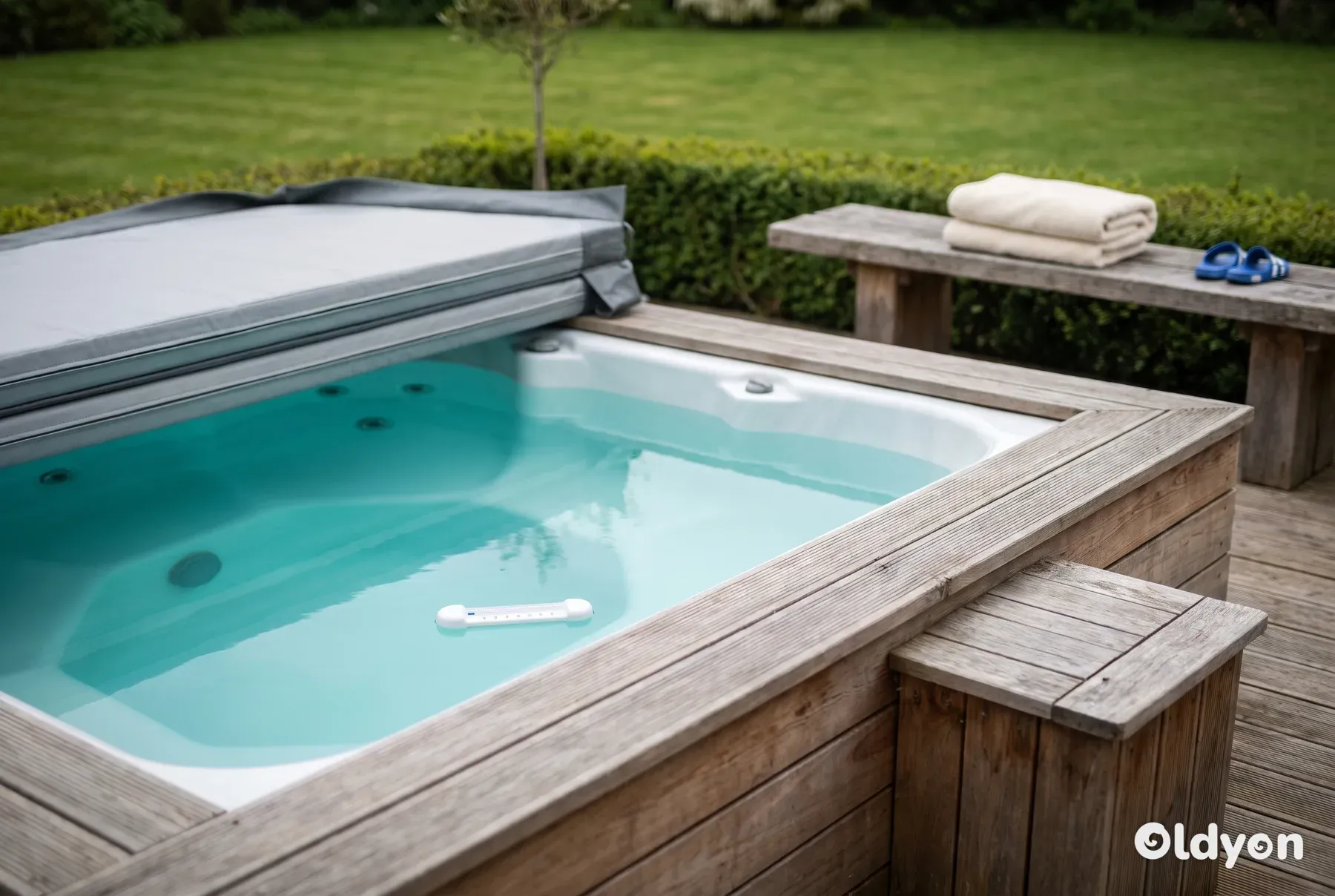
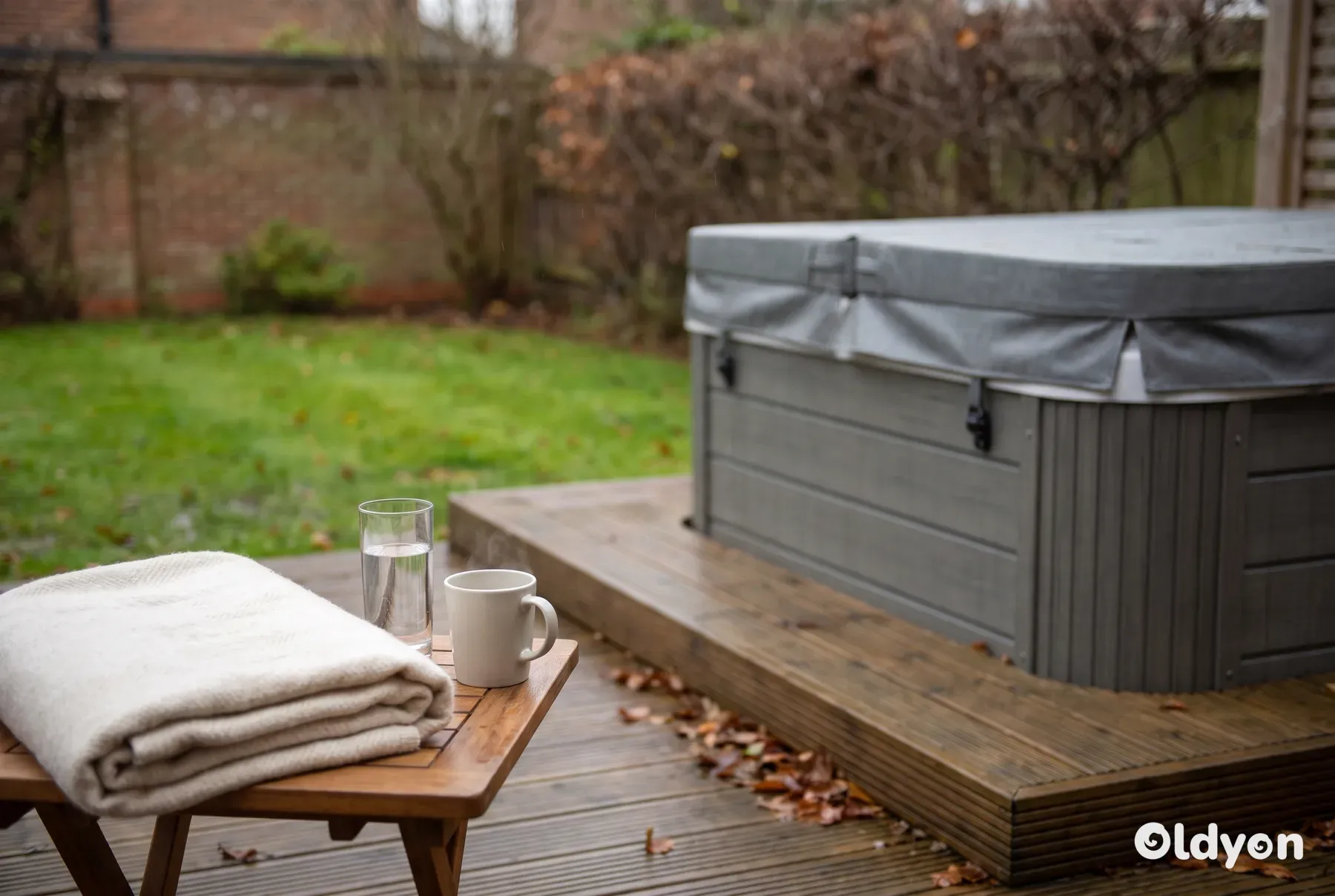
Is it safe to use a hot tub in the rain?
Is it safe to use a hot tub in the rain? Yes, but never in thunder or lightning. Learn how to rebalance water after heavy rain and avoid overflow and slips.
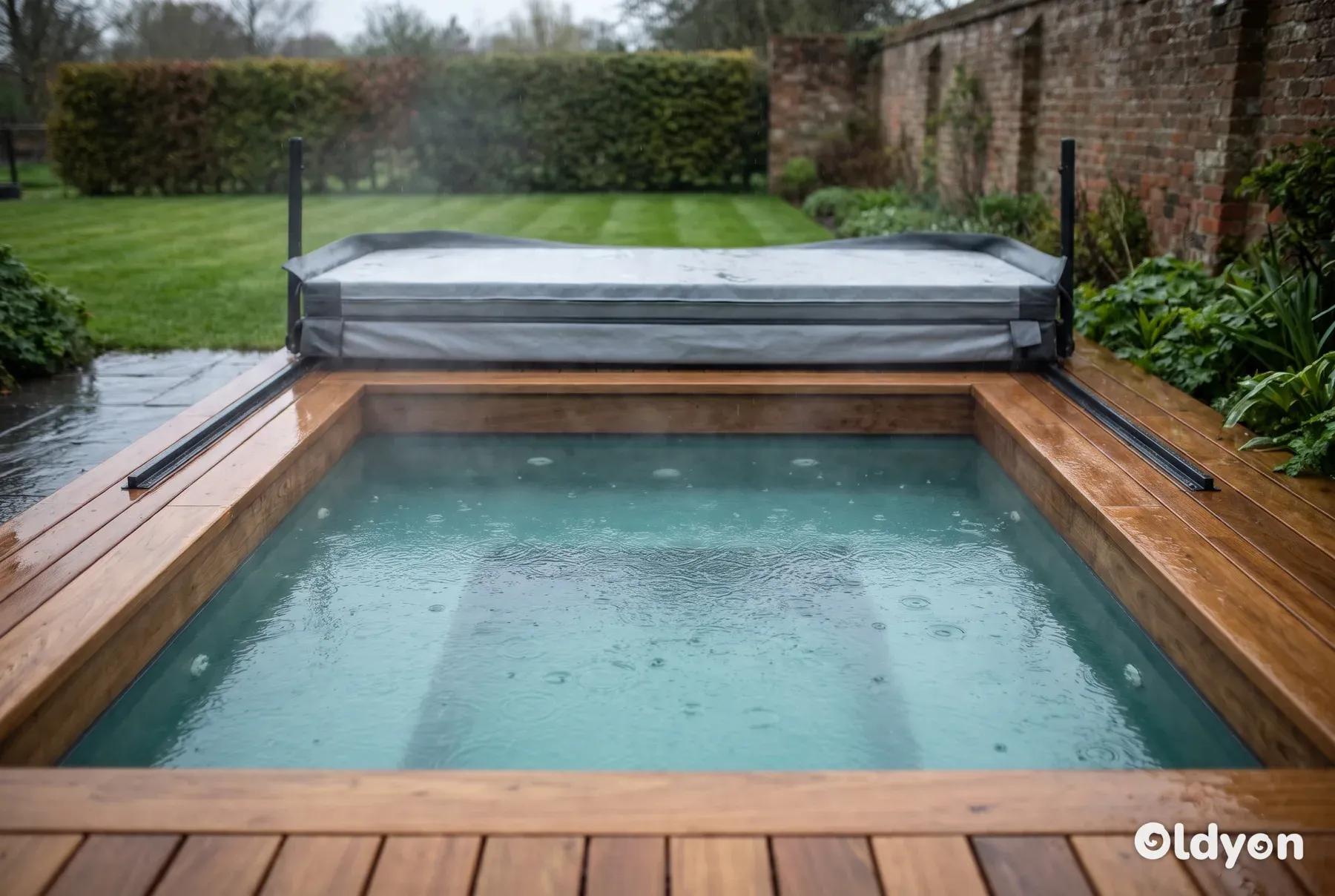
Yes, it is safe to use a hot tub in the rain, as long as there is no thunder or lightning. Light or steady rain does not harm you or a correctly installed tub. Get out as soon as you hear thunder or see lightning, and wait 30 minutes after the last rumble before getting back in.
Rain does change a few things, though. It dilutes your water chemistry, it can raise the water level until the tub overflows, and it makes steps and decking slippery. The sections below cover each of these, with simple steps to put things right after a heavy downpour.
Is it safe to use a hot tub in the rain?
Outdoor hot tubs are built to sit outside all year in British and European weather. The shell, cabinet and equipment bay are designed to cope with rain, and the electrics are sealed and protected. Sitting in warm water while rain falls on you is perfectly safe for a healthy adult.
Many owners find a rainy soak one of the nicest ways to use a tub. Your body stays warm in the water while the cool air and rain keep your head and shoulders comfortable. It can even help you stay in the water a little longer without overheating, although the usual time limits still apply.
A simple test for light rain is to ask whether you could walk to your car comfortably without an umbrella. If you could, it is light rain, but only if there is no thunder, no visible lightning and no strong wind gusts. If any of those are present, treat the weather as a storm rather than rain.
The safety of a rainy soak depends on three things: the weather (rain only, no storm), the installation (a dedicated supply with RCD protection, no extension leads) and the surroundings (steps and paths that stay grippy when wet). If all three are right, rain is simply part of the experience.
A covered structure such as a gazebo or pergola over the tub keeps the worst of the rain off your face. It also cuts the amount of rainwater falling into the tub, which helps keep your water chemistry stable between tests. It gives no protection from lightning, though, as explained further down.
Tips for a comfortable soak in the rain
- Keep a towel and robe somewhere dry, such as under a covered porch or inside a sealed storage box, within a few steps of the tub.
- Wear a woolly hat or a shower cap if you dislike cold rain on your head, since most body heat in the tub is lost from your head and shoulders.
- Lift the cover only for as long as you are in the tub, then close it straight away to keep heat in and rain out.
- Fold the cover onto a cover lifter or a clean surface so rainwater does not run off it into the tub.
- Check the weather forecast before you get in, and look for any thunderstorm warnings for your area.
- Set a repeating reminder on your phone, for example every 10 minutes, to look at the sky and check the weather. Conditions can change quickly, and a rainy soak is only safe if you keep checking.
- Lower the water temperature by about 1°C (1-2°F) on a rainy or cool day. Slightly cooler water lets you stay in comfortably a little longer, while you still keep to sensible time limits.
Why are thunder and lightning different from rain?
Lightning is the real danger in stormy weather. When you sit in a hot tub you are outdoors, in water, and often the highest point in an open garden. A nearby strike can travel through the ground, metal fittings, pipes and water, so being in or near the tub during a storm carries a real risk of serious injury.
If you can hear thunder, you are close enough to be struck by lightning. You do not need to see a flash or feel heavy rain first. Storms can arrive quickly, and lightning can strike several miles ahead of the rain.
Thunder can usually be heard up to about 10 miles (16 km) away, and lightning can strike at that distance from the centre of a storm. That can be well outside the area where rain is falling. Thinking 'it is only raining over there' is a dangerous assumption, so treat any thunder you can hear as a close storm.
Get out of the hot tub as soon as you hear thunder or see lightning. Go inside a proper building or a car with a metal roof, and wait at least 30 minutes after the last thunder before going back in.
Using the 30/30 flash-to-bang rule
If you see lightning before you hear thunder, you can judge how close the storm is. Sound travels about 1 km in 3 seconds (about 1 mile in 5 seconds), so the gap between flash and thunder tells you the distance.
- When you see a flash, start counting the seconds.
- Stop counting when you hear the thunder.
- If the thunder arrives within 30 seconds, the storm is within roughly 10 km (6 miles). Get out of the tub and go indoors straight away.
- Stay inside until 30 minutes have passed since the last thunder you heard.
If you hear thunder without seeing a flash, do not wait to count. Get out of the tub anyway and go indoors.
How long should you wait after a storm?
The widely used rule is to wait 30 minutes after you last hear thunder. If you hear thunder again during that time, start counting the 30 minutes again. Weather services in the UK and abroad give similar advice: shelter indoors when you hear thunder and stay there until the storm has clearly passed.
The 30-minute wait exists because thunderstorms do not always move away in a straight line. They can linger, move around and redevelop, and a second storm cell can form close by even after the first seems to have passed. Waiting the full 30 minutes gives you a margin of safety against that.
Does a gazebo or pergola protect you?
No. A gazebo, pergola, umbrella or open-sided shelter keeps rain off, but it does not protect you from lightning. Some of these structures are made of metal or are taller than everything around them, which can make the situation worse. Only a fully enclosed building or a metal-roofed car counts as safe shelter.
Which weather conditions mean you should stay out?
Most weather is fine for a soak, but a few conditions call for a change of plan. Use this table as a quick guide, and always follow your manufacturer's instructions for your model.
Weather | Safe to soak? | What to do |
|---|---|---|
Drizzle or light rain | Yes | Enjoy it, keep towels dry |
Steady or heavy rain | Yes | Watch the steps, test water after |
Heavy downpour or darkening clouds | With care | Be ready to leave, get out early |
Thunder or lightning | No | Get out, wait 30 minutes after last thunder |
Strong wind or gales | Not advised | Keep the cover locked down |
Hail | Not advised | Stay inside, keep the cover on |
Rain with frost or ice | Take care | Grit or clear steps before use |
Strong wind deserves a mention of its own. It can catch an open cover and throw it across the garden, or blow branches and garden furniture towards you. If gusts are strong enough to move garden chairs, it is better to skip the soak and make sure the cover straps or locks are fastened.
Warning signs that mean you should leave early
Heavy downpours and dark clouds building overhead are a warning stage. Be ready to get out, and leave early rather than staying 'just a bit longer'. A distant storm can become an active one within minutes, and the first sound of thunder, however faint, means it is time to go inside.
When to skip the soak altogether
- A storm is forecast within the next hour, or a weather radar app shows a storm cell heading your way. Light rain can turn dangerous quickly, so save the soak for another day.
- You have not tested the water for more than 72 hours, especially after recent rain. Low sanitiser combined with rain dilution gives bacteria a good chance to grow.
- Your cover is damaged or waterlogged. Rain has probably been getting into the tub, bringing debris and organic matter that feed bacteria, so test and treat the water first.
- You would be soaking alone and have any heart or circulation concerns, or any chance of dizziness or a medical event. Make sure someone else is with you or nearby.
What does heavy rain do to your hot tub water?
If the cover is on, very little rain reaches the water. When the tub is open during a downpour, or the cover does not seal well, rain adds a surprising amount of water. A tub roughly 2 by 2 metres (about 6.5 by 6.5 feet) collects around 40 litres (about 10 US gallons) from just 10 mm of rain.
Why rain lowers pH and alkalinity
Clean rainwater is naturally slightly acidic, usually around pH 5.6, because it absorbs carbon dioxide from the air. It also contains almost no alkalinity or calcium. Adding it to your tub pulls the pH down and weakens the total alkalinity, which normally holds the pH steady.
Rain in or near industrial areas can be more acidic still, sometimes down to around pH 4.2. If you live in such an area, the pH drop in your tub after rain can be larger.
Low pH water can sting eyes and skin and, over time, can attack metal parts in the heater and pump. Low alkalinity makes the pH swing up and down, so it becomes harder to keep the water balanced.
How far the pH moves depends on how much rain gets in and how big the tub is. A single heavy storm falling into an open tub can be enough to push pH out of the 7.2-7.6 range. Smaller tubs (under about 1,300 litres, or 340 US gallons) change faster from the same rain, and small drifts add up over several rainy days if nobody tests the water.
As a rough guide, a single heavy storm into an open tub can shift pH by around 0.3-0.5 points. Even a 30-minute light shower can move it by about 0.2-0.3 points in a smaller tub. The exact change depends on the rainfall, your tub's volume and its alkalinity, but repeated rain that nobody checks can quickly become a real water-quality problem.
Balanced pH also matters for your sanitiser. Chlorine is used up faster when pH is low and works less well when pH is high. Water whose pH swings after rain can let bacteria survive at levels that balanced water would normally deal with.
Why rain weakens your sanitiser
Rain dilutes chlorine or bromine in the same way it dilutes everything else. It also brings in pollen, dust, leaves and bird droppings that use up sanitiser as it works to break them down. After a heavy shower your free chlorine or bromine reading can fall below the safe range.
Low sanitiser gives bacteria a chance to grow. One common result is hot tub folliculitis, an itchy rash of small red bumps caused by bacteria called Pseudomonas. Poorly maintained hot tubs can also spread Legionella, the bacteria behind Legionnaires' disease, which the NHS describes as a serious lung infection. Good sanitiser levels prevent both.
What hot tub folliculitis looks like
Hot tub folliculitis usually appears within a day or two of using the tub, often 12-48 hours afterwards. It shows as red, itchy bumps around hair follicles, mostly on the torso, buttocks, arms and legs. It is often worse where a wet swimsuit stayed against the skin.
Do not use the tub while you have an active rash. Hot water can irritate the skin further and may help the bacteria spread to more follicles. Wait until the rash has fully cleared, and see a GP if it lasts more than a week or you feel unwell. Test and treat the water before anyone else uses it.
How do you rebalance hot tub water after heavy rain?
You only need to do this if rain got into the water, for example after a soak in a downpour or if the cover was left open. If the cover was on and sealed, a normal routine test is enough.
- Wait until the rain has fully stopped, then test within about two hours of a heavy downpour. Testing while rain is still falling gives you a moving target.
- Check the water level first. If it is above the top of the skimmer opening, lower it before you do anything else (see the next section).
- Scoop out leaves and debris with a net, and rinse or swap the filter if it looks clogged.
- Run the pumps for a few minutes so the rainwater mixes evenly, then take a sample from elbow depth.
- Test total alkalinity and adjust it to 80-120 ppm first, because it controls how stable the pH will be. If it is low, raise it with sodium bicarbonate (sold as alkalinity increaser).
- Wait for the circulation to mix the chemicals, usually 20 to 30 minutes, then test the pH and adjust it to 7.2-7.6. If it is low, raise it with sodium carbonate (soda ash, sold as pH increaser).
- Add increasers in small doses, retest about 30 minutes later, and repeat until the readings are stable. Large single doses tend to overshoot.
- Test sanitiser and bring free chlorine back to 3-5 ppm. Bromine targets vary between brands, from 3-5 ppm to 4-6 ppm, so follow the range on your product label.
- If rain has been heavy for several days, test calcium hardness and keep it at 150-250 ppm.
- Retest after a few hours and before anyone gets back in.
If you use test strips, dip the strip for about 15 seconds, or for the time given on the pack, then read it against the colour chart in good light. Allow roughly 15 minutes for the first test and adjustment, plus extra time for the chemicals to mix and for the retests above.
Test sanitiser after every spell of rain that reaches the water, even a light one. It is the reading that tends to fall fastest and matters most for health.
Always add one chemical at a time, with the pumps running and the cover open, and follow the dose on the product label. Chemical makers and hot tub manufacturers sometimes give slightly different target ranges, so check your manual if the numbers differ.
If the water still looks cloudy after you balance it, a shock dose of non-chlorine or chlorine shock usually clears organic matter from rain and debris. Leave the cover open for the time stated on the label so gases can escape.
Can heavy rain make a hot tub overflow?
Yes. An open tub in a long downpour can fill above its normal level and spill over the edge. Some water also runs down inside the cabinet, where the pumps, heater and control box sit. Equipment bays are designed to cope with some moisture, but standing water around them is not good for any electrical part.
Overflow also happens when rain collects on top of a cover that does not slope properly, then runs into the tub when you lift it. A high water level stops the skimmer from working, because the skimmer needs the surface to sit in the middle of its opening.
To lower the level, switch off at the isolator, then use the tub's drain valve or a small submersible pump to remove the extra water. Let the sanitiser level drop before draining into a surface drain or garden, and check your local water company's rules on emptying treated water. Our guide on why a hot tub overflows and how to stop it covers other causes, such as faulty auto-fill valves.
How do you stay safe on wet steps and decking?
Slipping on the way in or out is one of the most common hot tub injuries, and rain makes it far more likely. Wet timber, smooth composite steps and paving with moss or algae can all become slippery. You are also more likely to feel light-headed when you stand up from hot water into cold air.
- Fit non-slip treads or anti-slip strips to the hot tub steps and the edge of the decking.
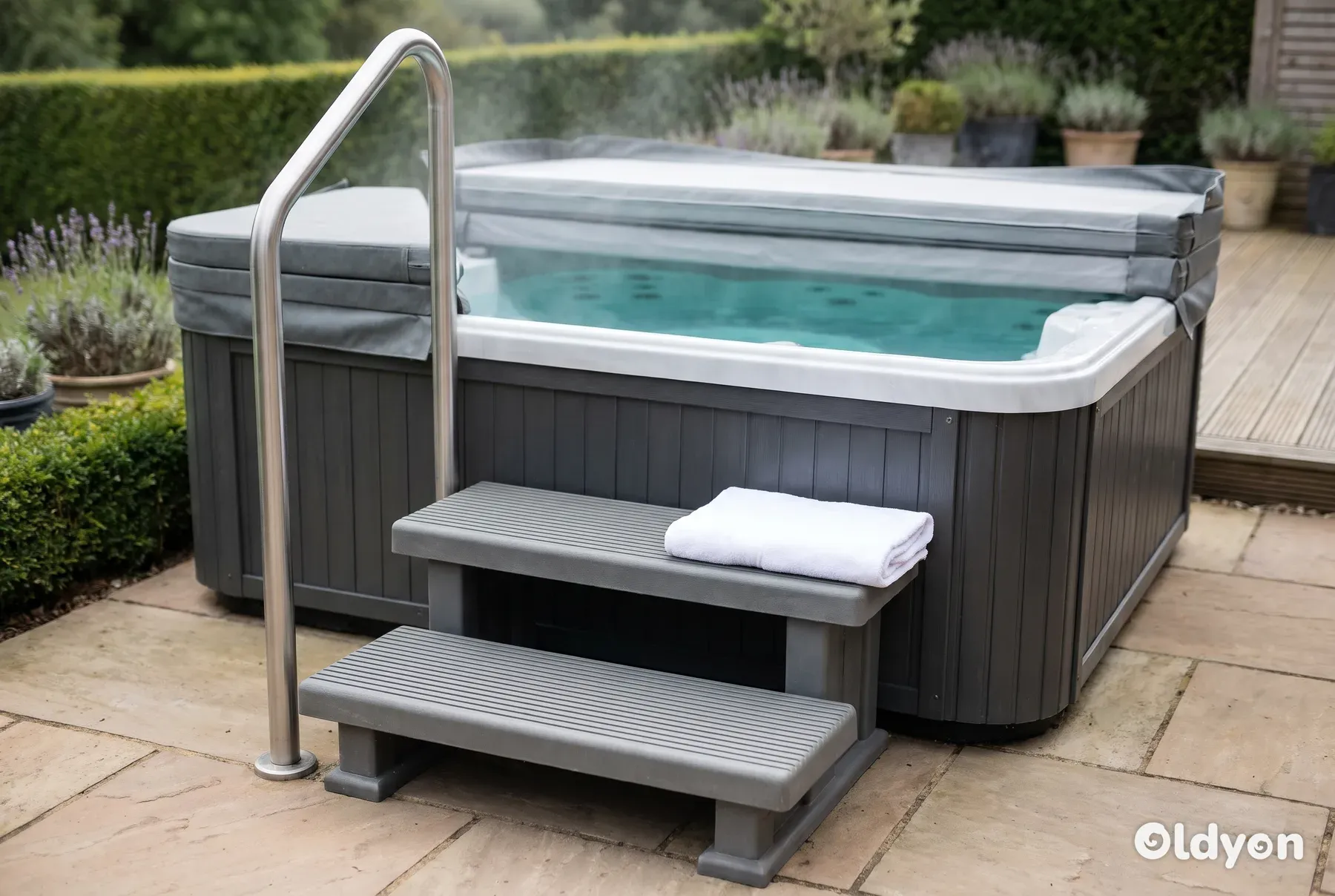
- Install a sturdy handrail or grab handle, and use it every time you get in or out.
- Clear wet leaves, moss and algae from decks and paths regularly, as these are slippery after rain.
- Wear slip-resistant pool sliders between the house and the tub, and take them off at the top step.
- Add low-level path or step lighting for evening soaks, installed by a qualified electrician.
- Sit on the edge and swing your legs over rather than stepping straight down into the water.
- Stand up slowly at the end of a soak and pause for a moment before climbing out.
Keep glass out of the hot tub area completely. A dropped glass on wet decking is hard to see and very hard to clean up properly. Use plastic cups or shatterproof drinkware instead. You will find more advice like this in our hot tub safety rules everyone should know.
Should you keep the cover on when it rains?
Yes. Whenever nobody is in the tub, keep the cover on and fastened. It keeps rainwater, leaves and debris out, holds heat in, and keeps your water chemistry stable. A good cover also stops the tub from overflowing during long spells of wet weather.
A cover only works if it sheds rain. Look for a cover that is thicker in the middle than at the edges, so water runs off rather than pooling. If you see puddles forming on top, the foam cores may be sagging or waterlogged, and the cover will soon become very heavy and lose its insulation.
Sunlight slowly breaks down the vinyl and the protective wrap around the foam. Once that happens, the foam absorbs water over time, and the cover becomes waterlogged and heavy. That strains the cover lifter and lets cold air in around the edges. If water has soaked into the foam core, replacing the cover is usually more cost-effective than repairing it.
How to protect your cover and equipment
- Brush standing water off the cover after heavy rain, before it soaks into the seams.
- Wipe the cover with a vinyl protectant every 60-90 days, or as often as the cover maker recommends, so it keeps shedding water.
- Check that the cover straps or locks are fastened, especially when wind comes with the rain.
- Make sure gutters and downpipes do not pour water onto the tub or the cabinet.
- Keep the ground around the cabinet clear so rainwater drains away rather than pooling at the base.
- Inspect the cabinet panels after heavy rain. On older tubs, cracked panels or gaps can let moisture reach the pump and heater, which is a short-circuit hazard.
- Look inside the equipment bay after a storm for standing water, and call a technician if you find any.
If your current cover lets water through or has started to sag, our guide on how to choose a hot tub cover explains what thickness, taper and materials to look for.
Is the electrical supply safe in the rain?
A correctly installed hot tub is safe to use in the rain. In the UK the supply should meet the wiring regulations (BS 7671), have its own protected circuit with RCD protection, and be fitted by a registered electrician. In England and Wales this work is notifiable under Part P of the Building Regulations. Other countries have their own rules, so check yours.
Never run a hot tub from an extension lead, even a heavy-duty outdoor one. Test the RCD as often as your manufacturer recommends, using its test button. The charity Electrical Safety First has clear guidance on outdoor electrics, and our article on whether you can get electrocuted in a hot tub explains the risks in more detail.
Are there health points to know for a cold, wet soak?
Rain and cold air make it feel easier to stay in the water for a long time, but your body is still heating up. Keep the water no hotter than 40°C (104°F). Many manufacturers suggest limiting a soak at that temperature to around 15 to 20 minutes, then getting out to cool down. Check your manual, because advice varies.
Rather than one long continuous soak, get out after about 15 minutes, cool down for a few minutes, and then get back in if you want to. Staying in continuously keeps raising your core temperature and makes your heart work harder, which can lead to dizziness, nausea or fainting.
Blood pressure, heart rhythm and age
Hot water widens your blood vessels and lowers your blood pressure. For healthy adults that is part of what makes a soak relaxing. It can also cause dizziness or fainting when you stand up, especially into cold, wet air.
A long-term observational study of Japanese adults, published in the medical journal Heart in 2020, linked regular hot bathing with a lower risk of heart disease and stroke. The people in that study had no heart disease when it started, so the finding applies to healthy people only. It does not mean a hot tub is good for anyone who already has a heart condition, and it shows a link rather than proof of cause.
In people with atrial fibrillation or another heart rhythm problem, the heat and the drop in blood pressure can trigger an irregular heartbeat. If you have one of these conditions, check with your cardiologist before using a hot tub. If you have a pacemaker or another implanted heart device, check with your doctor first as well.
Blood pressure control becomes less efficient with age, so people around 50 and over should take extra care. Keep the water at or below about 39°C (102°F), keep sessions short, stand up slowly and avoid soaking alone.
The usual signs that you have had enough are the same in any weather. Get out slowly and cool down if you notice any of these:
- Dizziness or light-headedness
- Nausea or a headache
- A racing or pounding heartbeat
- Feeling unusually tired or confused
- Skin that is very red and hot to the touch
Who should check with a doctor first
Some people should speak to a GP before using a hot tub at all. This includes anyone with a heart condition, high or low blood pressure, or a long-term illness, and anyone taking medicine that causes drowsiness or affects blood pressure. If you are pregnant, ask your midwife or GP first, as hot water can raise your body temperature too far.
The same applies if you have diabetes or a skin condition. Medicines that interact with heat include sedatives, blood thinners and diuretics, so ask your pharmacist if you are not sure about yours.
Anyone with possible signs of heart failure should see a doctor before using a hot tub. The NHS guidance on heart failure describes the symptoms in more detail. Early signs include:
- Unexplained tiredness or weakness
- Breathlessness, especially when lying down or after mild effort
- Swelling in the legs, ankles or feet
- A persistent dry cough or wheeze
Pregnancy and skin conditions
During pregnancy, a core body temperature above about 38.3°C (101°F) carries documented risks to the baby, particularly in the first trimester. Water at 40°C can raise your temperature towards that level quite quickly, which is why your midwife or GP should guide any hot tub use.
Stay out of the tub if you have open wounds, eczema or any active skin infection. Hot water and water chemistry that rain has thrown off balance can make these worse.
Can a warm soak help back pain or stress?
A warm soak can give temporary relief from sciatic nerve pain and lower back pain. Heat relaxes tight muscles, buoyancy takes some pressure off the spine, and the pressure of the water around your body adds gentle support. Sessions of about 15 minutes at 37.5-39°C (99.5-102°F) are typical.
A soak eases symptoms but is not a substitute for treating the cause. If back pain or sciatica is not improving after a few weeks, or keeps getting worse, speak to a GP.
Warm-water soaking is also reported to lower the stress hormone cortisol after sessions as short as 20 minutes. Regular soakers often report better sleep, less muscle tension and lower stress, although the evidence is still limited.
Regular warm soaking is also reported to lift mood and reduce anxiety, which fits with the drop in cortisol. Part of this comes from the heat itself, which helps calm the nervous system. Part comes from the experience as a whole: warm water, quiet time and, on a wet day, the sound of rain around you.
Avoid alcohol before and during a soak. It adds to the effect of the heat on your blood pressure and makes slips on wet steps more likely. If you develop an itchy rash or flu-like symptoms after using a hot tub, speak to a pharmacist or GP and mention that you have been in one.
Cold weather often comes with rain in the UK. If you want to know how low the outside temperature can go before a soak stops being comfortable, see what temperature is too cold for a hot tub.
Rain is fine, storms are not: a quick summary
- Light and heavy rain are both safe for a soak in a correctly installed hot tub.
- Get out as soon as you hear thunder or see lightning, and wait 30 minutes after the last thunder.
- Check the sky every 10 minutes or so, and leave early when rain turns heavy or clouds darken.
- Test and rebalance the water after rain gets in, starting with alkalinity, then pH, then sanitiser.
- Lower the water level if it rises above the skimmer opening.
- Fit non-slip treads and a handrail, and take extra care on wet steps.
- Keep the cover on and fastened whenever nobody is in the tub.
Frequently asked questions
Can rain make my hot tub water green or cloudy?
It can if a lot of rain gets in and nobody tests the water afterwards. Rain dilutes sanitiser and carries in pollen, dust and leaves, which feed algae and bacteria. Cloudy or green water is a sign that sanitiser has dropped too low. Test straight away, balance alkalinity and pH, then shock the water and run the filtration until it clears.
Do I need to switch the hot tub off during a thunderstorm?
You do not normally need to switch it off, as long as nobody is in or near the tub. The RCD and the sealed equipment are designed to stay safe in bad weather. Keep the cover locked down. If your area has frequent power cuts or surges during storms, ask your electrician whether surge protection is suitable for your installation.
Is it safe to sit in the hot tub while it is snowing?
Yes, snow is no more dangerous than rain, and many owners enjoy it. The same rules apply: keep the water at 40°C or below, limit your soak time, and take extra care on icy steps. Clear heavy snow off the cover so its weight does not damage the foam cores or the hinge.
Should I add chemicals while it is still raining?
It is better to wait until the rain stops, or at least until you can close the cover soon after. Rain falling into an open tub keeps diluting the water, so your readings will keep changing. Add each chemical with the pumps running, give it time to mix, then retest before adding the next one.
Can I use my hot tub during a weather warning?
It depends on the warning. A yellow rain warning on its own usually means you can soak with care. Any thunderstorm warning means you should expect lightning and stay indoors. Wind warnings make an open cover dangerous to handle. Check your national weather service before you lift the cover.
Why does my skin sting after a soak in the rain?
Stinging eyes or skin often point to pH that has fallen too low, which is common after rain gets in. It can also mean sanitiser is out of range. Test the water and bring pH back to 7.2-7.6. If the irritation continues after the water is balanced, or a rash appears, speak to a pharmacist.
Filed under