How to drain a hot tub step by step
Learn how to drain a hot tub safely: isolate the power, drain by hose or pump, clear water from the pipes, clean the shell and refill without an airlock.
To drain a hot tub, switch it off at the isolator, add a line flush if you are using one, then empty the tub through the drain valve with a hose or with a submersible pump. Clear the water left in the pipes, clean the shell and filters while the tub is empty, and refill through the filter housing.
Most owners drain their tub every few months as part of a routine water change, and our guide on how often to change hot tub water explains how to judge the timing. The steps below work for most acrylic hard-shell tubs. Your manual is the final word on your model, so keep it to hand.
What do you need before you drain a hot tub?
Why does a hot tub need draining?
Every time you add chemicals or someone gets in, the water collects a little more dissolved material: minerals, spent chemicals, and organic waste such as sweat, skin oils and cosmetics. Together these are measured as total dissolved solids (TDS).
TDS builds up over time until the water can no longer be balanced or cleared with chemicals. Sanitiser works less well, the water turns dull or foamy, and adding more products does not help. Only a full water change fixes it.
Letting TDS build up too far causes more than poor-looking water. It can cause skin irritation for bathers, and it can corrode the tub's equipment, such as the heater and pump parts, as well as making the water dull, foamy and hard to sanitise.
Under normal use, drain and refill every 3 to 4 months. With heavy use, such as many bathers or daily sessions, every 6 to 8 weeks is more realistic. Treat these as starting points and adjust them to how your own tub is used.
Normal use here means roughly 2 to 4 bathers and 3 to 4 sessions a week. Therapy use, such as daily soaks to ease aching muscles, also counts as heavy use and calls for the 6 to 8 week interval.
Drain straight away, whatever the schedule, if the water stays cloudy, foamy or will not balance even after correct chemical additions. At that point, adding more chemicals rarely clears the water, and a fresh fill is the quicker fix.
What to gather
Gather everything before you start. Once the power is off and the water is running out, you will not want to leave the tub half empty while you search for a hose adaptor.
- A garden hose long enough to reach a suitable drain, plus the adaptor that fits your drain valve (many tubs come with one)
- A submersible pump if you want a faster drain (optional, but useful)
- A wet/dry vacuum for the water left in the footwell and pipes
- A line flush or pipe cleaner product made for hot tubs
- A non-abrasive hot tub surface cleaner, soft cloths and a sponge
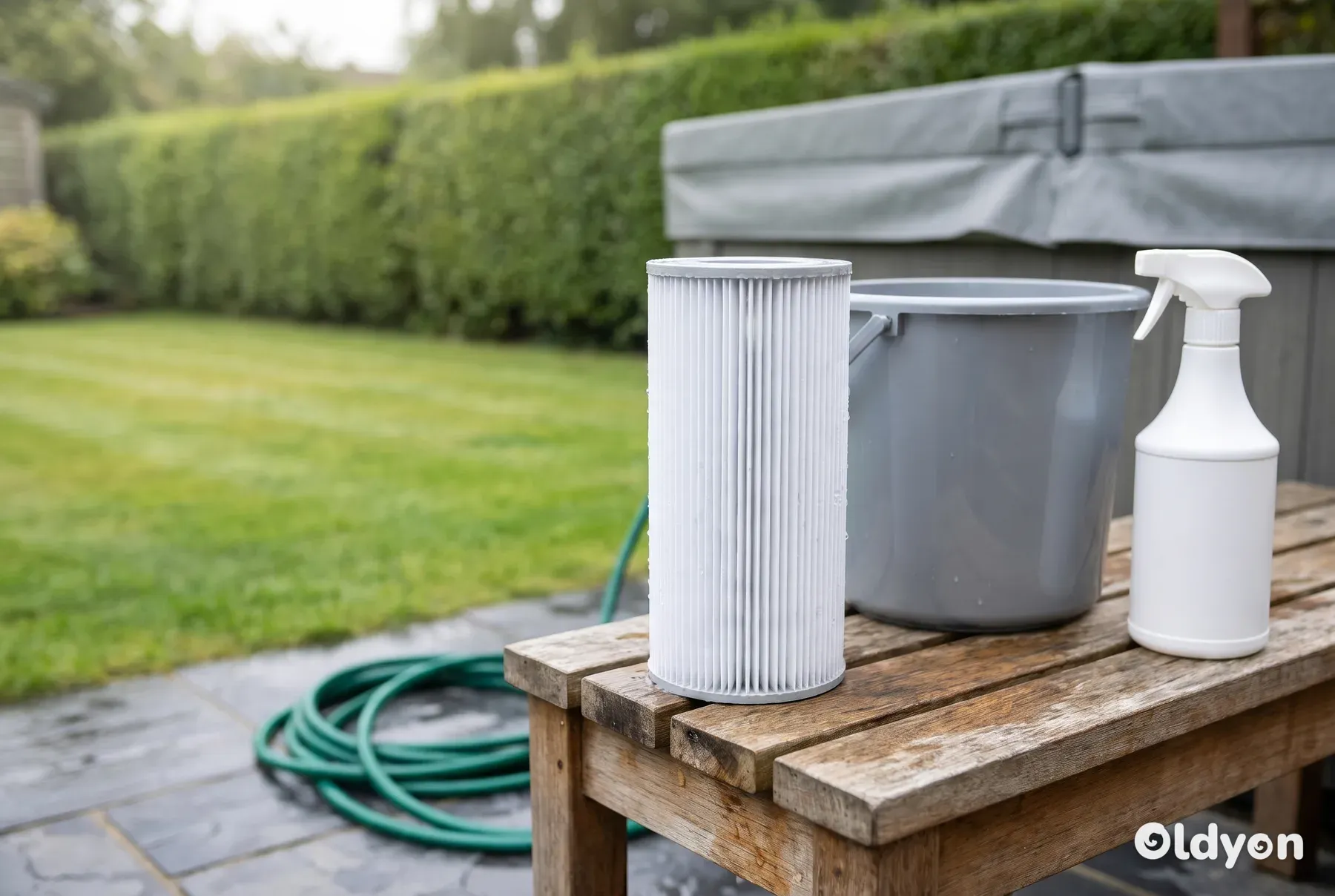
- Filter cleaner, or a spare set of clean filters
- Test strips or a test kit, plus your balancing chemicals and sanitiser
- Your owner's manual
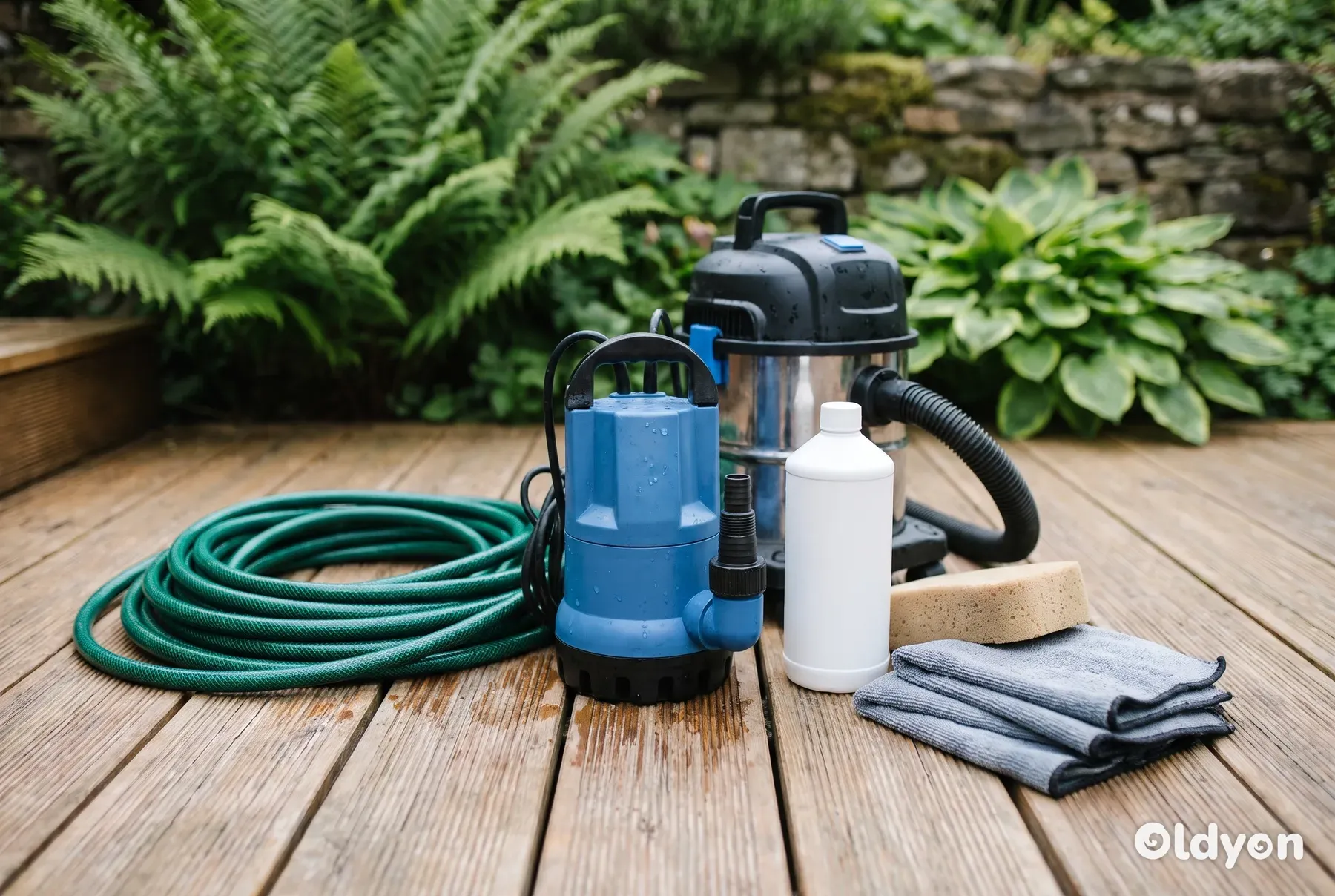
Set aside half a day. The drain itself can be quick with a pump, but cleaning, refilling and heating take longer than most people expect. A typical tub holds 1,000 litres (about 260 US gallons) or more, and all of it has to come out and go back in.
Should you flush the lines first?
Yes, if you can. Water sits in the pipes, pump and heater all the time, and a thin layer of slime called biofilm can build up inside them. Draining alone does not remove it, so the fresh water picks it up again soon after the refill.
A line flush product breaks this layer down. You usually add it to the old water, run the jets for the time stated on the label, then switch off and drain. Dose and running time vary between products, so follow the label on the one you buy.
Many line flush products are run with the jets on high for about 15 to 30 minutes. Some labels say to add the product up to 24 hours before draining, so read the label in advance and add it the day before if needed.
After you add a line flush, foam, scum or flecks of debris may rise to the surface. This shows that biofilm is breaking loose from the pipes, which is normal. Carry on as the label directs and drain the tub as planned.
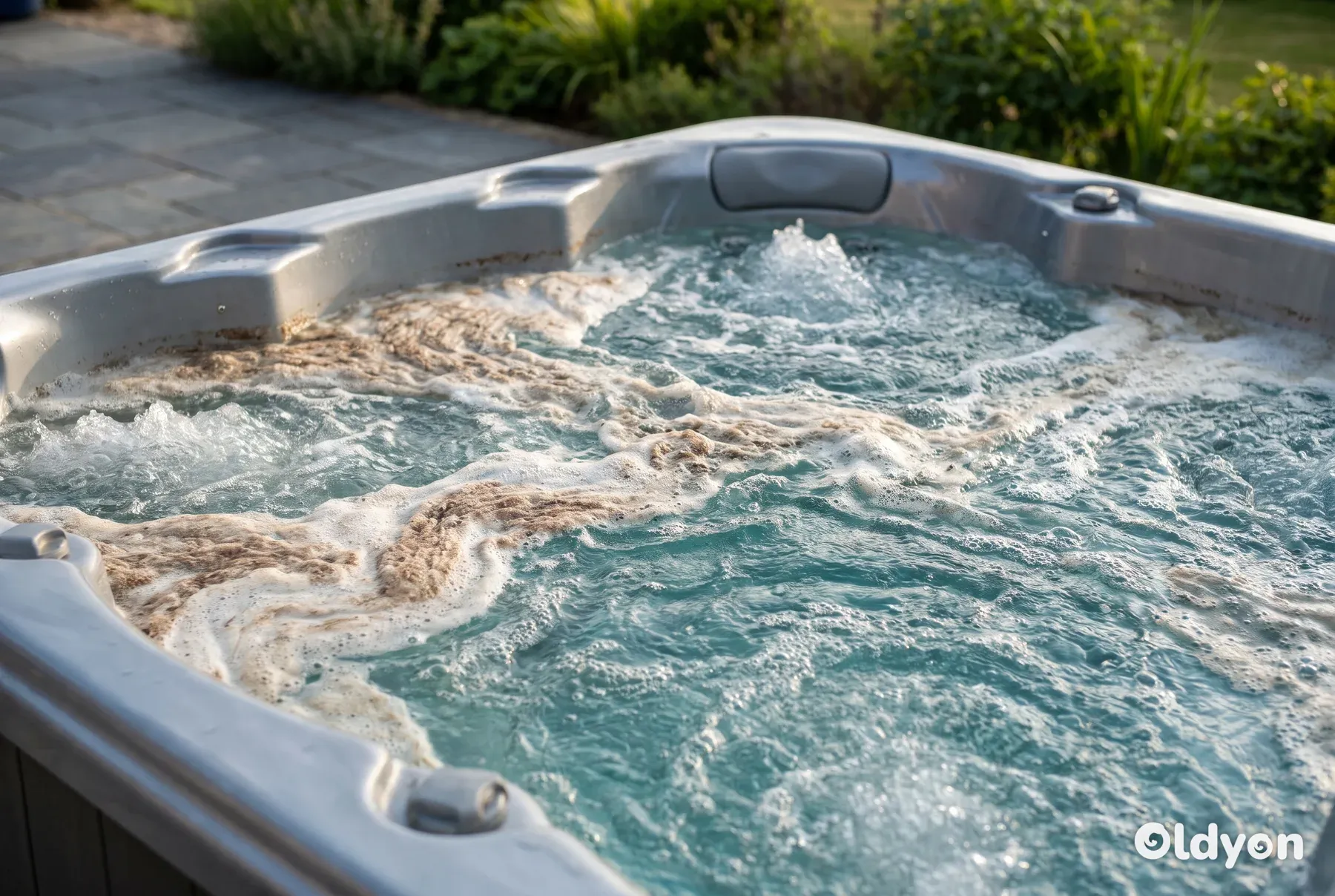
Clean pipework also matters for hygiene. The Health and Safety Executive explains how Legionella bacteria can grow in poorly maintained spa pools, and regular water changes with a line flush are part of good care.
Poorly maintained water can also harbour Pseudomonas bacteria, which can cause an itchy skin rash known as hot tub folliculitis. The rash often settles on its own, but if it spreads, does not improve after a few days or you feel unwell, speak to a pharmacist or your GP.
Switch off at the isolator
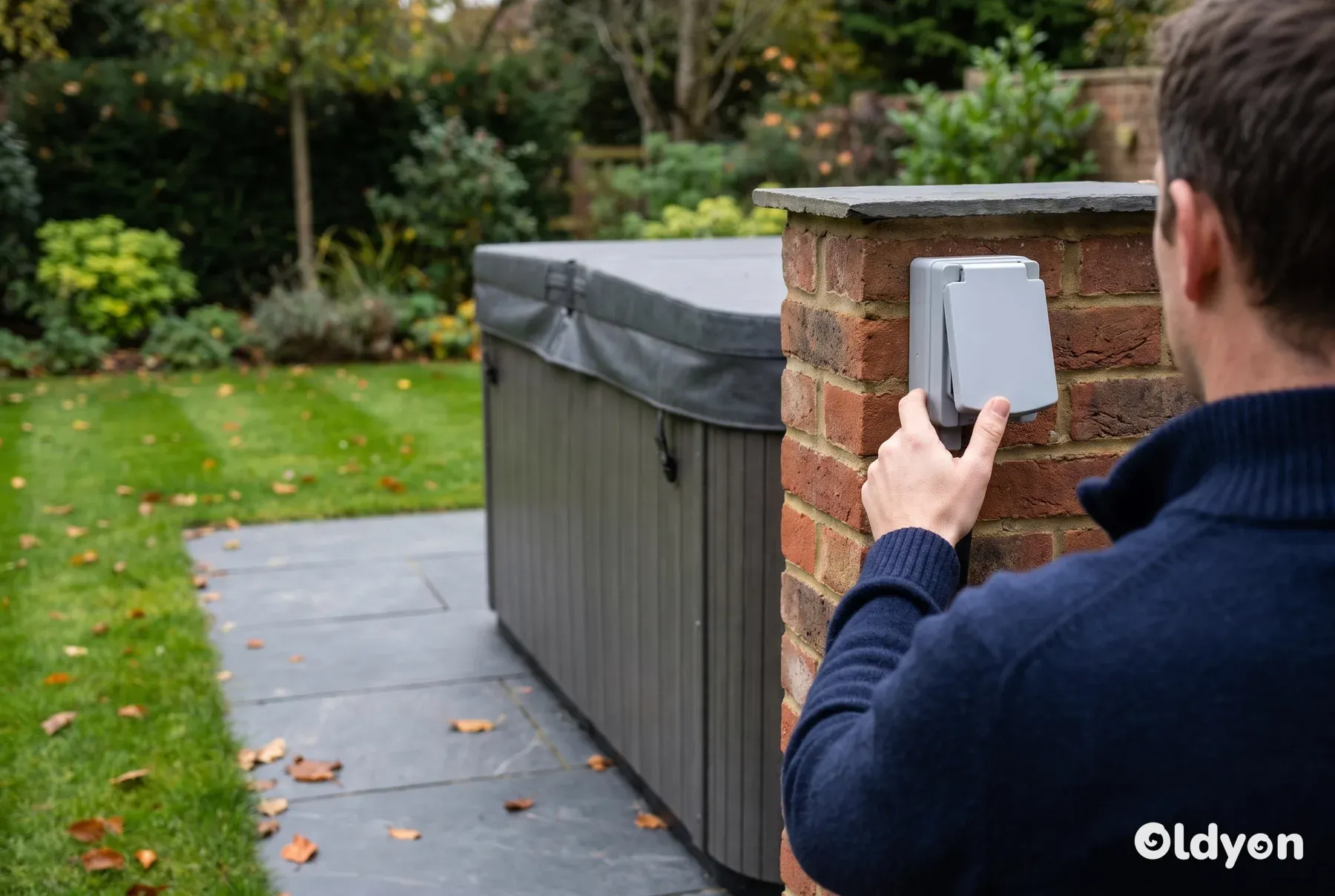
After the line flush has run, switch the tub off at its outdoor isolator switch, not just at the control panel. A pump or heater that runs without water can be damaged quickly, and some tubs start a filter cycle on their own.
Switching off at the control panel, or pressing the test button on the RCD, is not the same as isolating the tub. These only stop the controls and are not designed to cut the whole supply safely. A hot tub runs on mains voltage (230V in the UK), so isolate it at its isolator switch or at its dedicated breaker in the consumer unit.
If your tub has no outdoor isolator, switch off the hot tub's dedicated circuit breaker in the consumer unit (fuse box) instead, because this cuts power to the full circuit. In the UK, hot tub wiring falls under BS 7671 and should be installed by a registered electrician, and other countries have their own rules.
Turn the power off at the isolator before you open the drain valve, and leave it off until the tub is full again. Never run the pump or heater with the water below the skimmer or the jets. If the isolator looks damaged or wet inside, or the RCD trips when you switch back on, stop and call a qualified electrician.
How to drain a hot tub: the full procedure
These steps assume a hard-shell tub with a drain valve at the base. Inflatable tubs follow a similar process, but the valve and fittings are different, so see our guide on how to empty an inflatable hot tub if you have one.
- If you are using a line flush, add it to the old water and run the jets for the time shown on the label.
- Switch the tub off at the isolator. Check that the control panel is dark and nothing is running.
- If the water is very hot, let it cool before you drain it, especially if it is going onto a lawn or plants. Hot water can damage grass and plant roots.
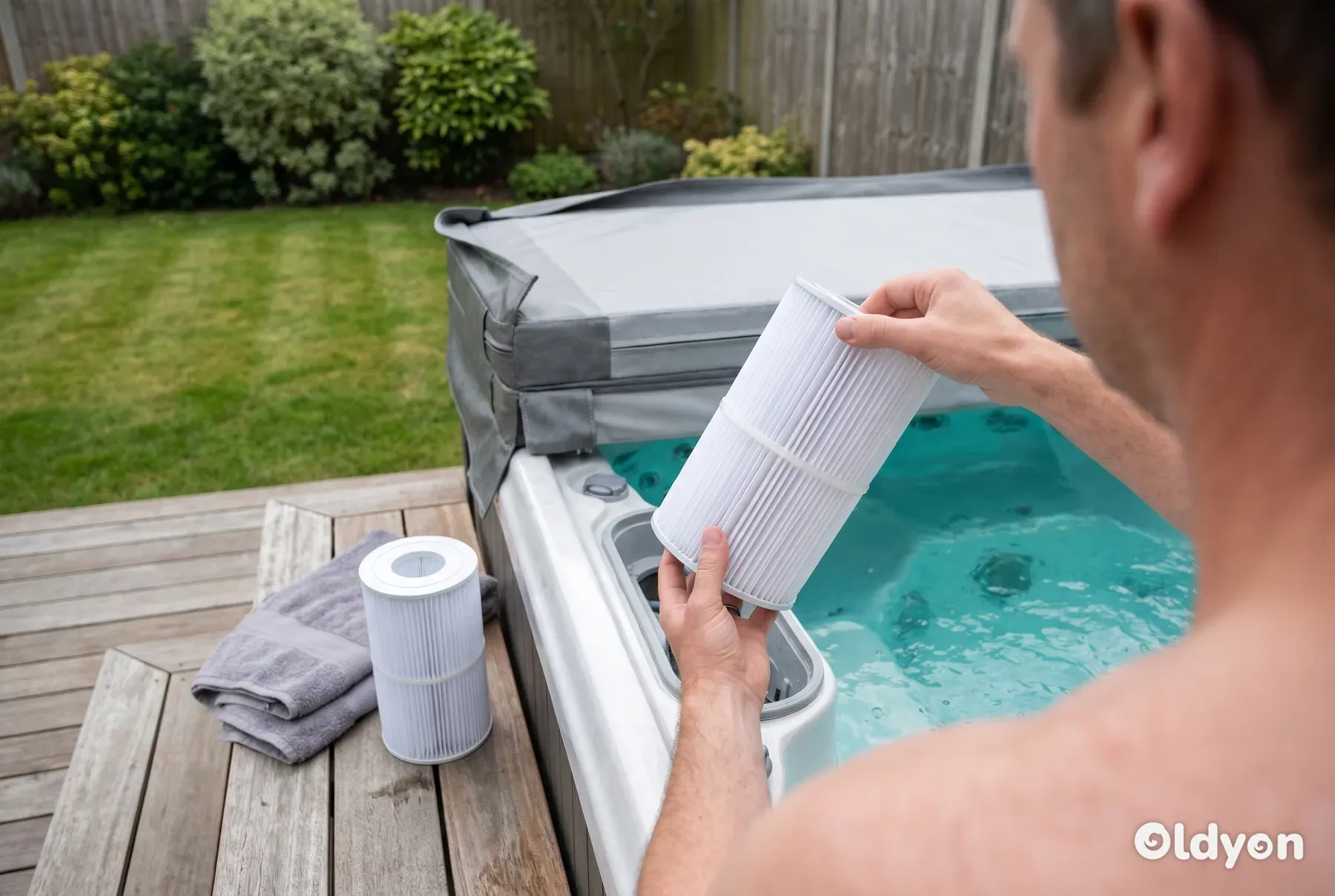
- Take the cover off and lift out the filters. Set them aside to clean later.
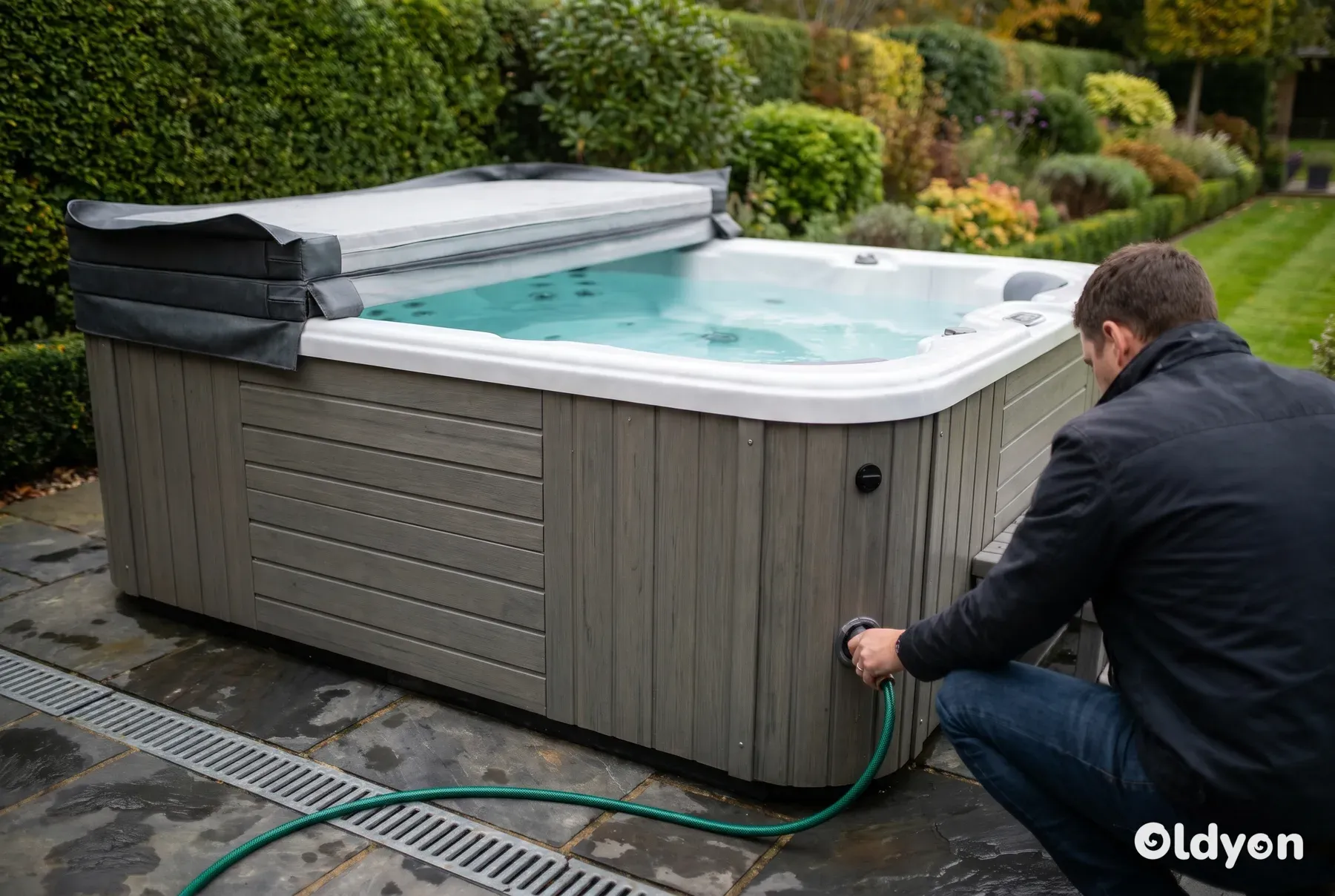
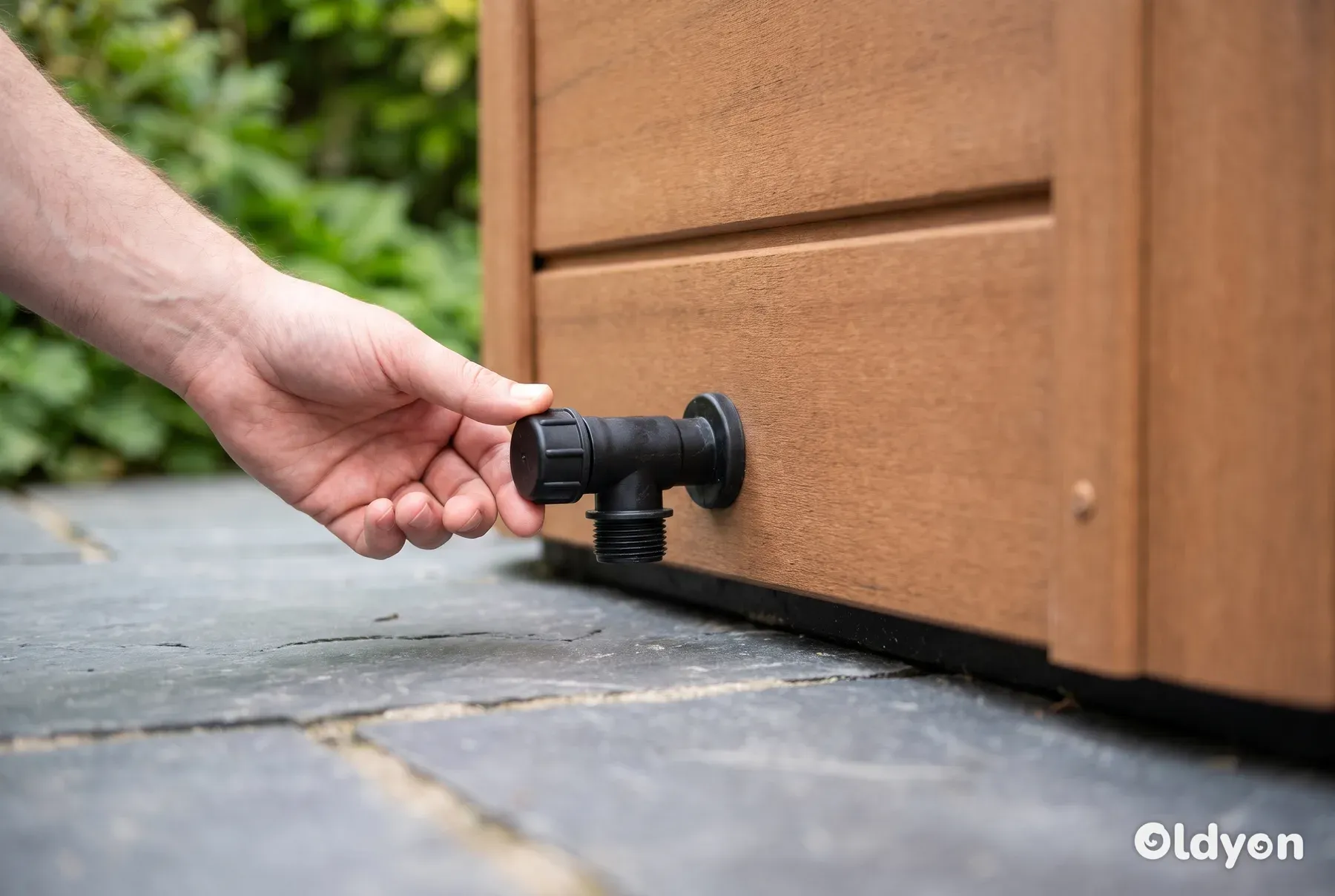
- Find the drain valve. On most tubs it sits low on the cabinet, behind a small removable panel or near a corner of the base. On many tubs it looks like a threaded outdoor tap. If you cannot see it, look behind the largest access panel on the equipment side of the cabinet, which is the usual place. Your manual will show the exact position.
- Check whether your tub has a second drain outlet. Some tubs have a larger main drain and a smaller one serving the footwell. Find both before you start.
- Decide where the water will go before you open anything. Run the hose to a suitable drain, never onto a neighbour's garden or into a stream.
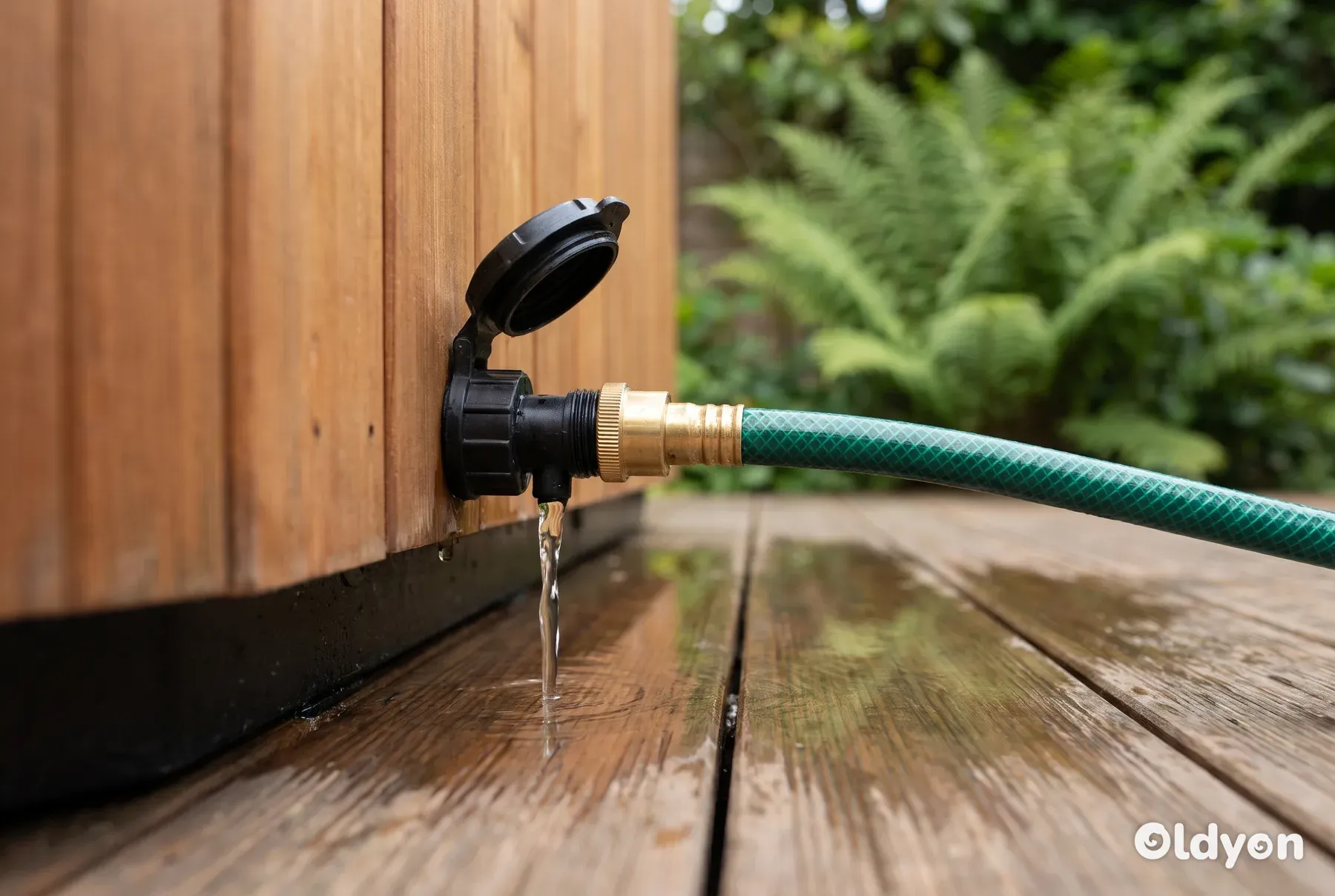
- Remove the cap from the drain valve and keep it somewhere safe while the tub drains. Without it, the valve can drip once the tub is back in use. Then fit the hose adaptor and attach the hose. On a threaded tap-style valve, screw the hose on clockwise until it is snug.
- Open the valve. Many valves open when you twist the spout and pull it outwards. On a threaded tap-style valve, turn it anticlockwise until it stops, so it is fully open. Some tubs also have a second valve inside the cabinet that must be opened as well. If your tub has two drain outlets, open the main one first.
- Let the water run until the flow stops. If you are using a submersible pump, lower it into the footwell and run its outlet hose to the same drain.
- If your tub has a separate footwell outlet, open it and let it drain fully before you start cleaning.
- Remove the last water from the footwell and seats with a wet/dry vacuum, or with a sponge and bucket.
- Clear the water left in the pipes, filter housing and jets, as described in the section below.
- Clean the tub while it is empty, then close the drain valve, refit the cap and replace the access panel.
Keep the cover nearby. An empty acrylic shell left uncovered in strong sun can get very hot, and some manufacturers warn that this can damage the surface. Put the cover back on if you will be away from the tub for long.
Draining an inflatable hot tub: the short version
Inflatable tubs drain by gravity through a plug valve near the base of the outer wall. Tilting the tub slightly towards the outlet speeds up the flow, and no pump is needed.
Before you start, switch off and unplug the pump and heater unit completely, then remove the drain plug cap. Do not leave the unit plugged in while water is running out around it.
Many inflatable tubs come with a drain hose adaptor that connects to the drain valve. Fit it and attach a garden hose, so the water runs to a suitable drain instead of spilling out around the tub and soaking the base.
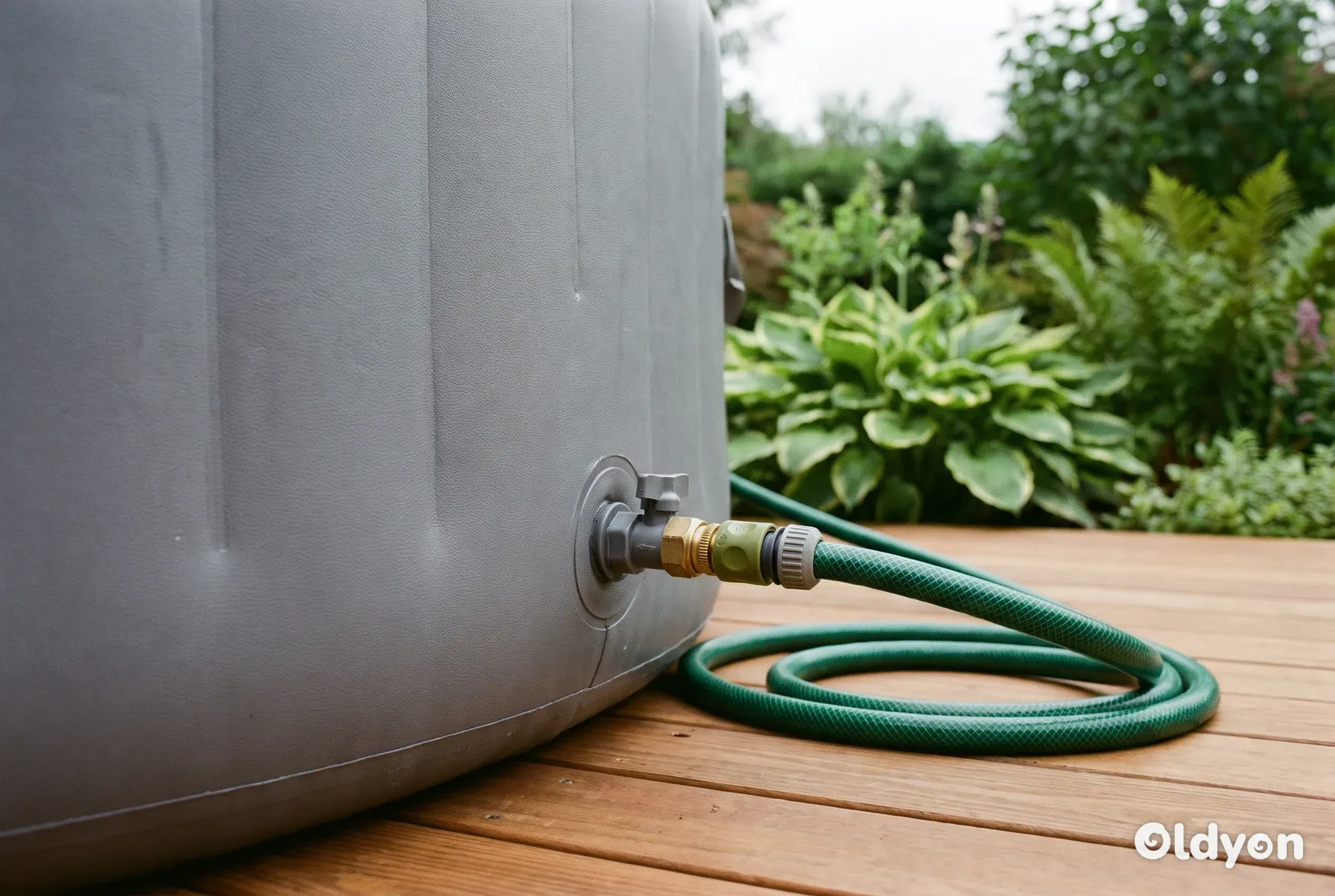
Most inflatable tubs empty in about 20 to 40 minutes. Their flexible tubing empties as the tub drains, so it does not need a blow-out like the rigid pipework of a hard-shell tub.
The short drain time comes from the smaller volume. Inflatable tubs typically hold about 570 to 950 litres (150 to 250 US gallons), so gravity alone is enough to empty them quickly.
Drain valve or submersible pump: which should you use?
The drain valve relies on gravity. It costs nothing and is simple, but it is slow, because the water can only move as fast as a small valve and a long hose allow. A gravity drain often takes a few hours.
For a gravity drain, the hose outlet must sit lower than the base of the tub, ideally at least 30 to 45 cm (12 to 18 inches) lower. If the outlet is level with the tub base or higher, the water will barely flow.
Tub size makes a big difference to gravity drain times. As a rough guide, allow about 1 hour for a tub of roughly 1,100 litres (about 290 US gallons), about 1.5 to 2 hours for roughly 1,500 litres, and 2 to 3 hours for tubs of 1,900 litres (about 500 US gallons) or more.
A submersible pump sits in the footwell and pushes the water out through a hose. It is usually much faster, and it can send water uphill or over a longer distance to a better drain. For help with this, read our guide to choosing a submersible pump to drain a hot tub.
As a rough guide, a gravity drain through the valve takes about 1 to 3 hours, while a submersible pump empties most tubs in about 10 to 45 minutes. A small utility pump of around 1/6 HP moves roughly 110 litres (30 US gallons) a minute, so at full flow it can empty a 1,500-litre (about 400 US gallon) tub in about 15 minutes. A long hose or an uphill run will slow it down.
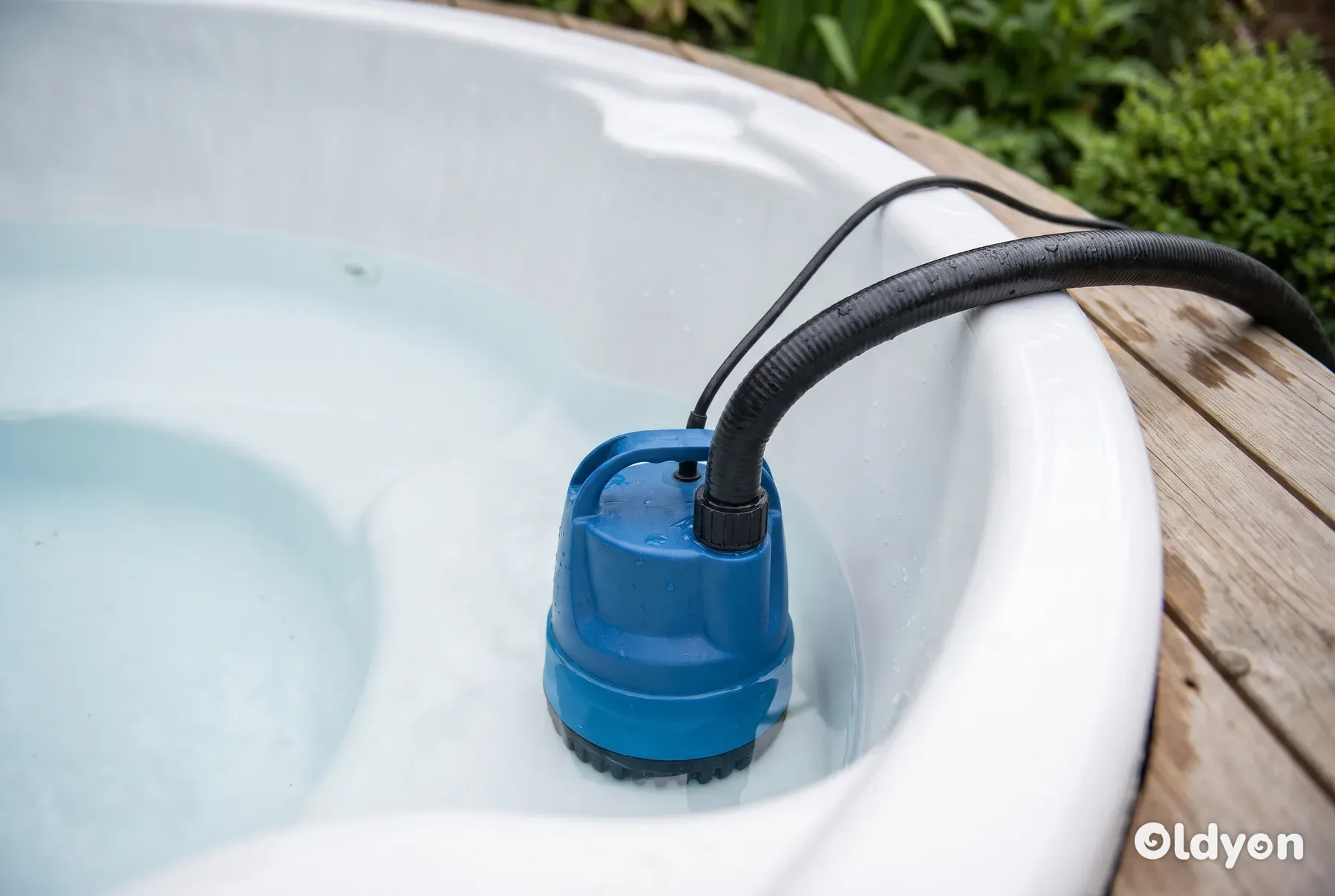
Use a submersible pump rather than the valve when you are winterising, or when the tub holds more than about 1,500 litres. For a routine water change, the valve alone is fine when you have 2 or more hours to spare.
If you drain your tub more than twice a year, buying a submersible pump is worthwhile. It saves hours on every water change, and the time adds up quickly over a few years.
Many technicians use both at once: they open the drain valve and run a pump at the same time. Speed depends on the tub size, the hose and the pump, so treat the table below as a rough guide only.
Method | Speed | Best for | Watch out for |
|---|---|---|---|
Drain valve and hose | About 1 to 3 hours | No extra equipment | Kinked hose, valve not fully open |
Submersible pump | About 10 to 45 minutes | Water changes on a busy day | Pump running dry |
Valve and pump together | Fastest | Large tubs | Two hoses to route safely |
Garden hose siphon | Slow | No valve and no pump | Siphon stops if the hose end lifts |
Wet/dry vacuum | Small amounts only | Footwell and pipe water | Emptying the tank often |
Whichever method you use, stay close for the last part of the drain. A pump that keeps running once the water has gone can overheat, and most need switching off by hand unless they have an automatic float switch.
Using a submersible pump safely
Plug the pump into an outdoor socket protected by an RCD (residual current device), which cuts the power quickly if a fault occurs. If you must use an extension lead, choose one rated for outdoor use and keep its connection dry and well away from the water.
In the UK, the wiring regulations (BS 7671) call for RCD protection on outdoor sockets, and other countries have their own rules. If you are not sure an older outdoor socket is protected, use a plug-in RCD or ask a registered electrician to check it. Electrical Safety First has further advice on using electricity safely at home and outdoors.
No drain valve and no pump?
If the tub has no usable drain valve and you have no pump, you can siphon the water out with a garden hose. The outlet end must finish lower than the tub base for the water to keep flowing.
- Lay the whole hose in the tub until it fills with water and no more bubbles come out.
- Seal one end firmly with your thumb or a hose end cap. Keep the other end under water at the bottom of the footwell, weighted down if needed.
- Carry the sealed end out of the tub and down to a drain point below the tub base.
- Release the sealed end. Water will flow as long as the end in the tub stays under water.
- Remove the last water from the footwell with a wet/dry vacuum or a sponge and bucket.
How do you clear the water left in the pipes?
When the tub looks empty, there is still water in the pipes, pump, heater and jets. Expect about 4 to 11 litres (1 to 3 US gallons) to be left in the footwell, around the jets and in the filter housing after the main drain. If you are refilling the same day, removing most of it with a vacuum is enough. If the tub will stand empty for weeks, or frost is possible, clear it more thoroughly.
- Vacuum the footwell first, because it is the lowest point of the shell. Then work along the bench seats, pulling water from each low corner, and finish by going round each jet housing.
- Vacuum out the water in the filter housing. This is often the lowest point you can reach in the plumbing from inside the tub.
- Set the wet/dry vacuum to suck and hold the nozzle over each jet in turn. Cover the nearby jets with a cloth so the suction pulls water from deeper in the pipe.
- If your vacuum can blow as well as suck, blow into the jets and the filter housing. Water will spit out of other jets, so keep a sponge ready.
- Check your manual for drain plugs on the pump and heater. Many pumps have a small plug that lets the last water out. Refit every plug before you refill.
- Sponge out any water that has been pushed back into the footwell.
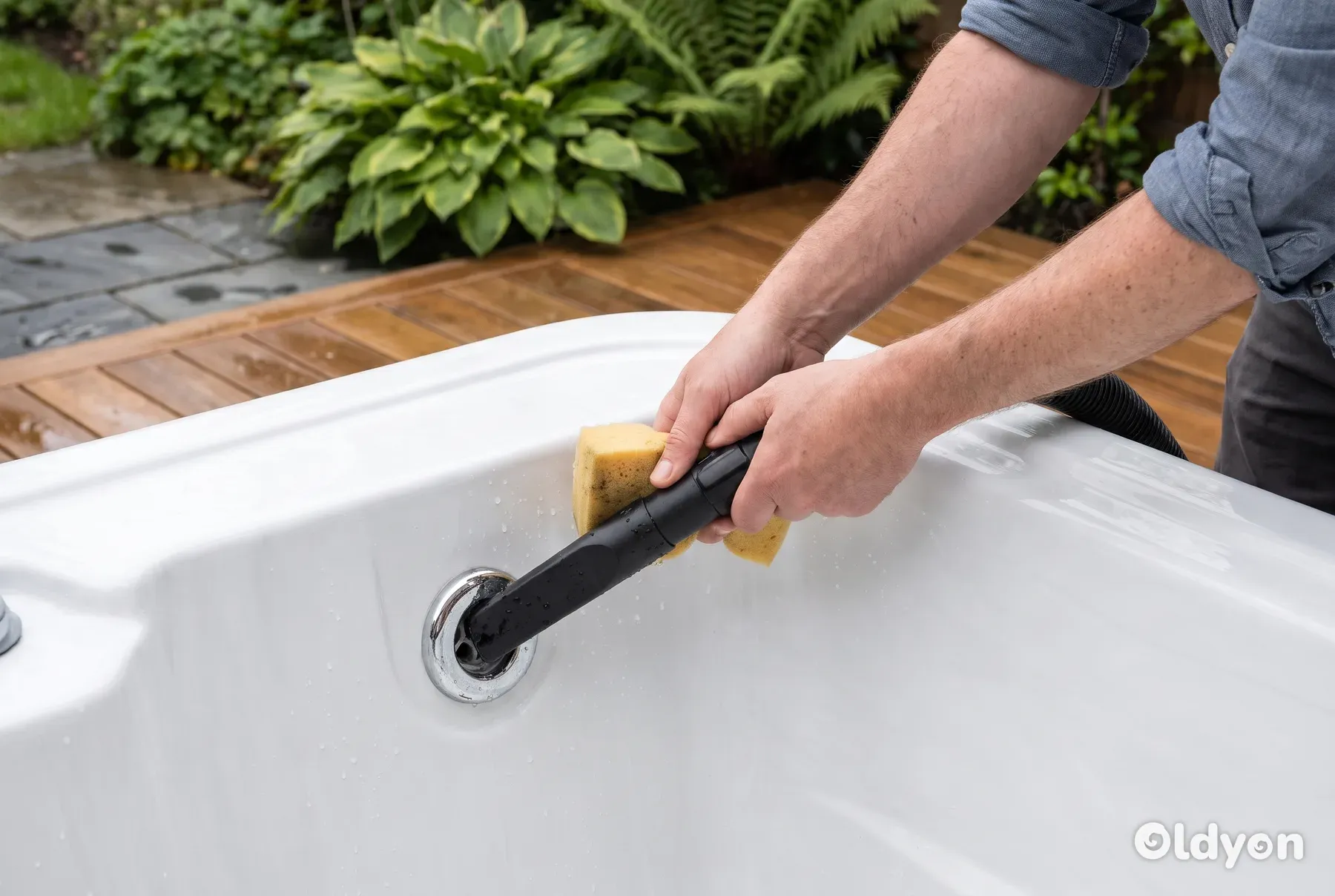
Do not use a pressure washer on the jets or inside the pipes. High pressure can damage seals and push debris further into the plumbing.
What should you clean while the tub is empty?
An empty tub gives you the best access to parts the water normally hides. A short clean now makes the fresh water easier to balance and helps it stay clear for longer. For a fuller routine, follow our guide to deep cleaning a hot tub at a water change.
Allow about 30 to 60 minutes for cleaning the empty shell, jets and filters. A filter soak can run longer, so start it first and clean the shell while it works.
Start on the shell as soon as the tub is empty, while scum and residue are still soft and come off easily. Remove any standing water first, because cleaner applied into puddles gets diluted and works less well.
- The shell: wipe it with a soft cloth and a non-abrasive cleaner made for hot tub surfaces, paying attention to the waterline
- The jets: wipe the faces, and remove any jets designed to unscrew, following your manual
- The jet housings: scrub around each one with a soft-bristle brush, because mineral deposits collect in the grooves
- The filter housing and skimmer: remove leaves, hair and grit
- The filters: soak them in filter cleaner and rinse with a garden hose, or swap in a clean spare set
- The cover: clean both sides and check for splits or a heavy, waterlogged feel
- The headrests: lift them out if they are removable, then wash and rinse them
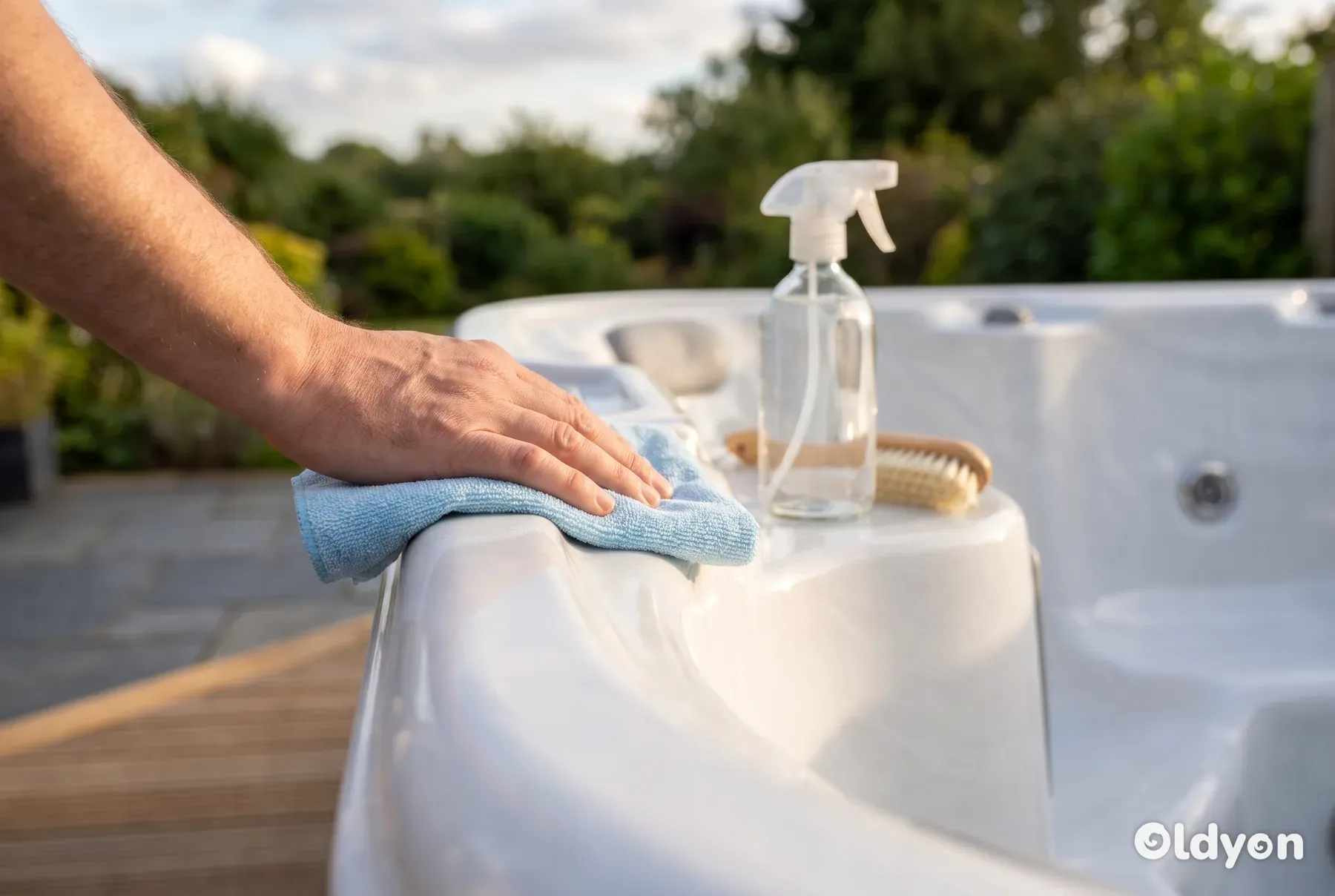
Diluted white vinegar or a paste of baking soda and water are gentle alternatives to a dedicated hot tub surface cleaner. Avoid any product that contains oils, because it causes heavy foaming in the new water.
Avoid household cleaners, washing-up liquid, bleach sprays and scouring pads. They can scratch the acrylic or leave a residue that causes foam in the new water. Rinse the shell well with clean water and vacuum up the rinse water before you refill.
Filter care at the water change
Filters need a chemical clean every 1 to 3 months, not just a rinse. If yours have not been deep cleaned for 3 months or more, soak them overnight in filter cleaner at the water change and rinse them well before refitting.
Replace a filter cartridge if its pleats are torn or damaged, it is badly discoloured, or it still looks dirty after a soak. A worn filter cannot hold back fine debris, however well you clean it.
While the tub is empty, look for anything that needs repair, such as cracked jet faces, loose fittings or signs of a slow leak under the cabinet. These jobs are easier to deal with before the water goes back in.
How do you refill a hot tub without an airlock?
An airlock happens when a pocket of air is trapped in the pump or heater. The pump hums but moves little water, and the heater may show a flow error and refuse to heat. A gurgling sound from the plumbing after refilling is another sign. Refilling in the right way prevents most airlocks.
- Check that the drain valve is closed and the cap is on.
- With the filters still out, put the hose into the empty filter housing. Filling here sends water into the pipes first and pushes air out ahead of it.
- Fill to the level shown in your manual, which is usually around the middle of the skimmer opening and at least 5 to 8 cm (2 to 3 inches) above the highest jet.
- Refit the filters.
- Switch the power back on at the isolator. Run the jets and check for strong, steady flow from every jet.
- If a pump hums without moving water, switch off at the isolator. Loosen the pump union or bleed screw slightly, as your manual shows, until water appears, then tighten it again.
- Switch the power back on and check the flow again.
A hose pre-filter is worth using if you have one. It can remove some sediment and metals from tap water before they reach the tub. It is a low-cost item and especially useful in hard water areas.
Balance the water chemistry
Let the fresh water circulate for a short while, then test it and adjust in the order below. Each value affects the next one, so make small additions and retest between them.
- Total alkalinity: 80-120 ppm
- pH: 7.2-7.6
- Calcium hardness: 150-250 ppm
- Sanitiser: free chlorine 3-5 ppm, or bromine 3-5 ppm
Nobody should get in until alkalinity, pH and sanitiser are all in range. Unbalanced water can irritate skin, and over time it can damage the seals in the tub's equipment.
Some manufacturers give slightly different ranges, particularly for calcium hardness, so check your manual and the instructions on your chemicals. Heat the water to your usual temperature, but no hotter than 40°C (104°F).
Many owners shock fresh water to bring the sanitiser up quickly. Our guide on whether you should shock a hot tub after refilling explains when it helps and when you can skip it.
How do you drain a hot tub for winter?
In much of the UK, the simplest winter plan is to keep the tub running with the cover on, because heated, moving water does not freeze. Draining for winter is only needed if the tub will stand unused for months somewhere frost is likely.
Winter draining is different from a normal water change. Water expands by about 9% when it freezes, which is enough to split pipe fittings, crack the pump housing or damage the heater. A same-day refill can cope with a little water in the lines, but an empty tub left through a frost cannot.
Blow out the lines
To use a wet/dry vacuum as a blower, move the hose from the suction inlet to the exhaust port, which is sometimes labelled as the blower port. Check the vacuum's instructions if you are not sure which port is which.
Set your wet/dry vacuum to blow. Hold the nozzle firmly against each jet for about 10 to 15 seconds and work through every jet in turn, watching for water to spray out of the drain or the footwell. Repeat on the filter housing and air controls until no more water appears.
Seal any gaps around the nozzle with rags or foam pipe insulation, and block the other openings in the same way. If possible, have a helper hold the rags in place, so the air is forced through the pipes instead of escaping.
Never skip the blow-out step. Freeze damage to the pipes, pump or heater can cost a great deal to repair, while blowing out the lines takes only one vacuum session.
Winter draining checklist
- Drain the tub fully using the steps above
- Blow out every jet, the filter housing and the air controls with a wet/dry vacuum until no more water comes out
- Remove the pump and heater drain plugs if your manual says to, and store them somewhere safe
- Disconnect and drain any external hoses and fittings attached to the tub
- Leave the drain valve open so rainwater can escape, unless your manual says otherwise
- Clean and dry the filters and store them indoors
- Fit the cover and fasten the straps to keep rain and leaves out
- Leave the power off at the isolator
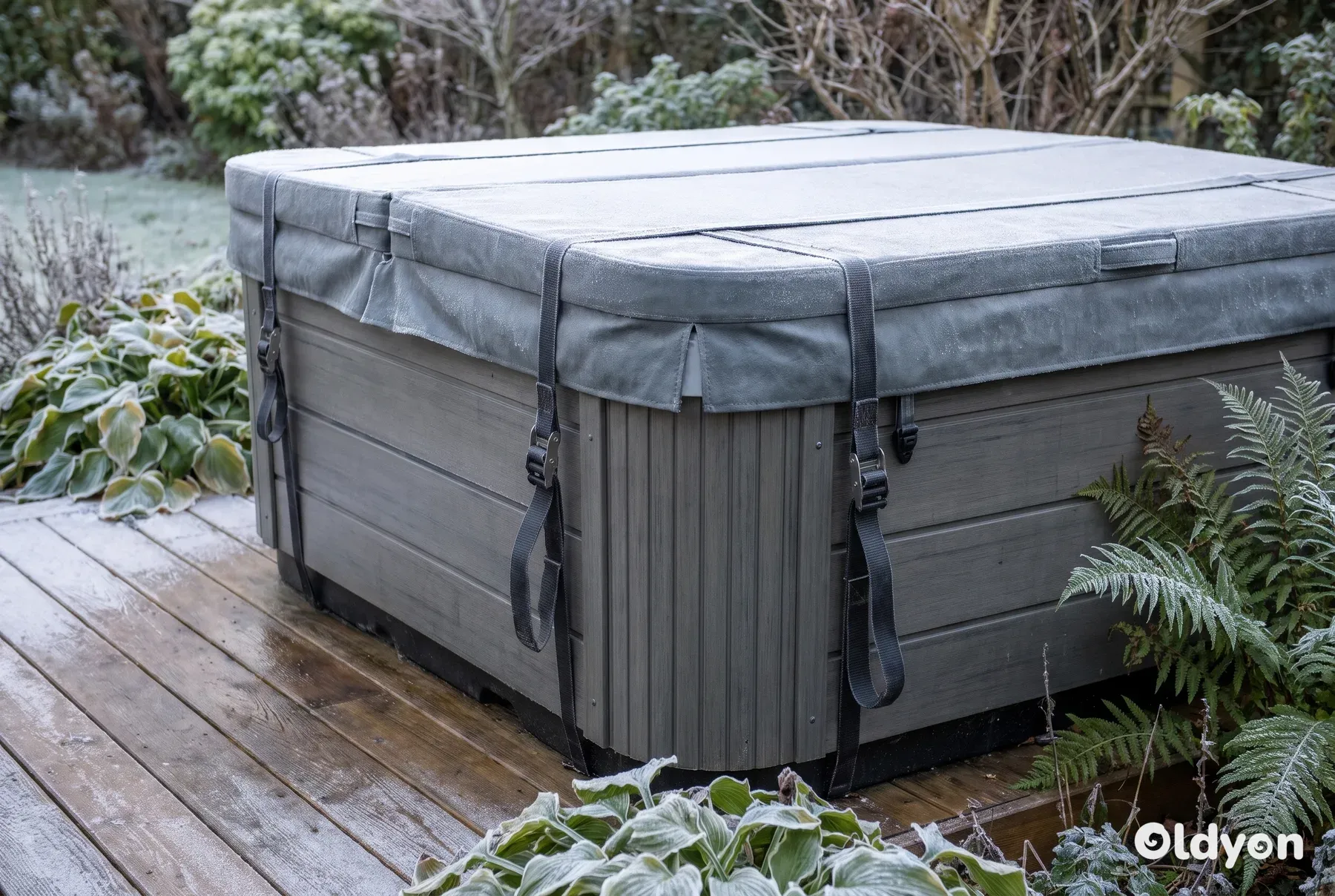
Some manufacturers recommend a non-toxic antifreeze made for plumbing, while others advise against using any. Follow your manual. If you are unsure, a hot tub technician can winterise the tub for you.
Where the manual allows it, a small amount of non-toxic plumbing antifreeze is usually poured into the filter housing after the lines have been blown out. It mainly adds a safety margin in very hard frosts, around -23°C (-10°F) or colder, so a thorough blow-out remains the main protection.
Where should the drained water go?
In the UK, the right place is usually a foul water drain, which carries water to a sewage treatment works. Surface water drains, such as roadside gullies, can lead straight to rivers and streams, where sanitiser and other chemicals can harm wildlife.
To find a foul water drain at your home, look for an outside gully that already takes waste water from a kitchen sink, washing machine or bathroom, or use a foul inspection chamber. Do not use a gully that only collects rain from roofs or paving, because it is likely to be a surface water drain.
Letting chemically treated hot tub water reach a surface water drain or a watercourse can count as pollution under UK environmental law. Checking where a drain leads is therefore a legal matter as well as an environmental one.
Before you drain, let the sanitiser level fall. Stop adding chlorine or bromine 2 to 3 days ahead, because sunlight and time break it down, and test until it reads below about 0.1 ppm. Our guide on where you can drain hot tub water in the UK covers the options, and your local water company can confirm what applies to your property.
Draining onto your own lawn is possible when the sanitiser is very low, but move the hose around to spread the water widely. A large volume in one place can waterlog the ground, and leftover chemicals can damage plants. Never let the water run onto a neighbour's property.
Use low-sanitiser hot tub water only on grass and ornamental plants. Keep it off vegetable beds, fruit and other edible plants.
What if the tub will not drain properly?
The drain valve is stuck
A stuck drain valve is usually caused by limescale build-up or a dried, swollen O-ring. It is most common on tubs that have been left undrained for 6 months or more.
A valve that is only used every few months can become stiff. Turn it gently by hand while pulling, because many valves need a twist before they open. Avoid pliers or force, since the plastic can crack and a broken valve will leak.
Once the valve moves, a little silicone grease on the seals helps it work smoothly next time. If it will not open at all, drain with a submersible pump this time and arrange a replacement valve before the next water change.
A replacement drain valve is an inexpensive part. Once the tub is empty, swapping it takes about 20 minutes. Check your manual or the manufacturer for the correct part for your model.
The water is draining very slowly
- The hose is kinked, flattened or running uphill
- The hose outlet is not far enough below the tub base
- The valve is only partly open, or the second valve inside the cabinet is closed
- Leaves or grit are blocking the valve opening
- The hose is very long or narrow, which slows a gravity drain
When you look for kinks, pay most attention to the first 2 metres (about 6 feet) of hose from the valve. This is where sharp bends most often form as the hose turns away from the cabinet, and they restrict the flow.
Straighten the hose, keep it running downhill and check both valves. If the drain is still slow, add a submersible pump.
The pump or heater does not work after refilling
The cause is usually an airlock or a low water level. Top up to the correct level, then bleed the pump as described in the refill steps. If a flow or pressure error will not clear, or the RCD trips, switch off at the isolator and call a hot tub technician.
Draining a hot tub: the short version
Run a line flush, switch off at the isolator, and drain through the valve or with a pump to a suitable foul water drain. Clear the water left in the pipes, then clean the shell, jets and filters while the tub is empty.
Refill through the filter housing to avoid an airlock, then balance alkalinity, pH, calcium hardness and sanitiser before anyone gets in. Check your manual for any steps that are specific to your model.
Frequently asked questions
How long does it take to drain a hot tub?
It depends on the tub size, the hose and the method. A gravity drain through the valve usually takes about 1 to 3 hours, while a submersible pump empties most tubs in about 10 to 45 minutes. Using both together is quickest. Allow extra time for clearing the pipes, cleaning, refilling and heating, which together often take longer than the drain itself. Planning for half a day is sensible.
Can I leave a hot tub empty for a long time?
You can, but prepare it properly. Clear as much water as possible from the pipes, pump and heater so nothing can freeze, keep the cover fastened, and leave the power off. Avoid leaving the shell uncovered in strong sun, because some manufacturers warn it can damage the acrylic. Before refilling, check seals and fittings, as they can dry out after a long period empty.
Do I need to drain the tub to change or clean the filters?
No. Filters can be removed and cleaned with the tub full, as long as the power is off at the isolator while they are out. Most owners rinse filters regularly between water changes and give them a deeper clean or replacement at the water change. Never run the tub without its filters in place, because debris can reach the pump and heater.
Should I use a line flush every time I drain?
Many technicians recommend it at every water change, because biofilm builds up inside the pipes over time and draining alone does not remove it. If the old water was foamy, cloudy or smelled unpleasant, a line flush is especially worthwhile. Follow the product label for dose and running time, and check your manual in case your manufacturer recommends a particular type.
Can I refill my hot tub with water from a water butt or well?
It is best to use mains tap water. Rainwater and well water can contain organic matter, metals or bacteria that make the water harder to balance and keep clear. If mains water is not available, ask a hot tub technician for advice, test the fill water first and expect to use more sanitiser and balancing chemicals than usual.
Why does my fresh water look green or cloudy after refilling?
Green or brown tinted water straight after refilling is often caused by metals in the tap water reacting with sanitiser. Cloudiness usually comes from unbalanced chemistry or fine debris. Test and balance alkalinity and pH first, then sanitiser, and run the filters. A hose pre-filter and a metal treatment product can help, especially in hard water areas.
Filed under