Above ground vs inground hot tubs compared
Above ground vs inground hot tub: compare costs, access for servicing, safety and resale, and see when a semi-sunken install is the sensible middle ground.
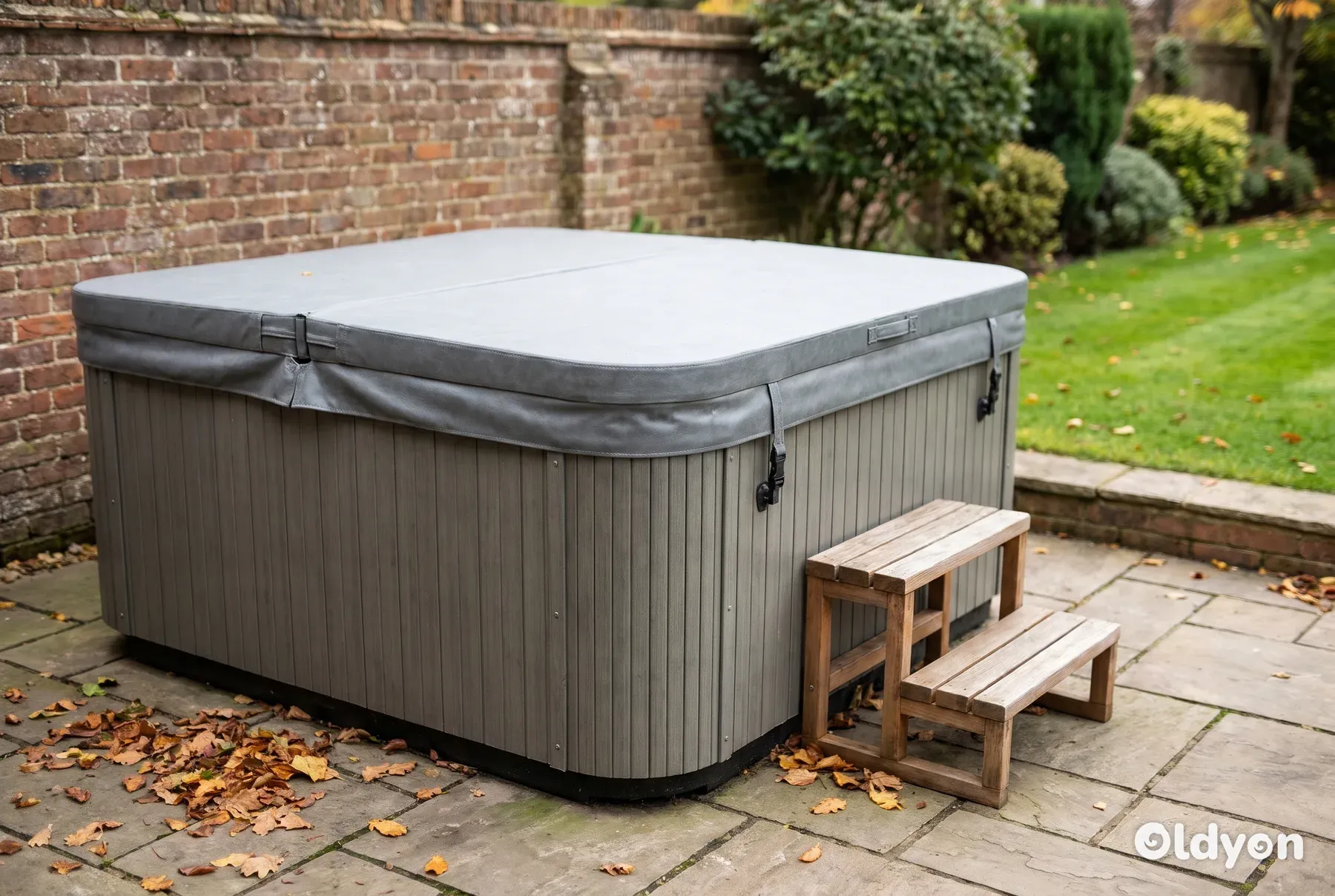
In the above ground vs inground hot tub debate, above ground usually wins for UK owners. It costs less to install, every panel stays reachable for servicing, and the tub can move house with you. A fully inground tub looks sleek but needs excavation, drainage and planned service access. A semi-sunken install sits between the two.
Most hot tubs sold in the UK are portable acrylic spas built to stand on a flat base. That design shapes almost every difference below, from what you pay to how easily a technician can fix a leak. This guide works through cost, servicing, safety and resale so you can decide what suits your garden.
What is the difference between an above ground and an inground hot tub?
An above ground hot tub stands on a base with its full cabinet showing. The pumps, heater, control box and pipework sit inside that cabinet, behind removable side panels. You step up and over the side to get in, usually with the help of a step unit.
An inground hot tub sits with its rim at or close to ground level, so you step down into it. This can mean a portable spa lowered into a lined pit, or a tub built in place from concrete or masonry and tiled, more like a small swimming pool. Built-in tubs are rare in UK gardens and are usually part of a larger pool project.
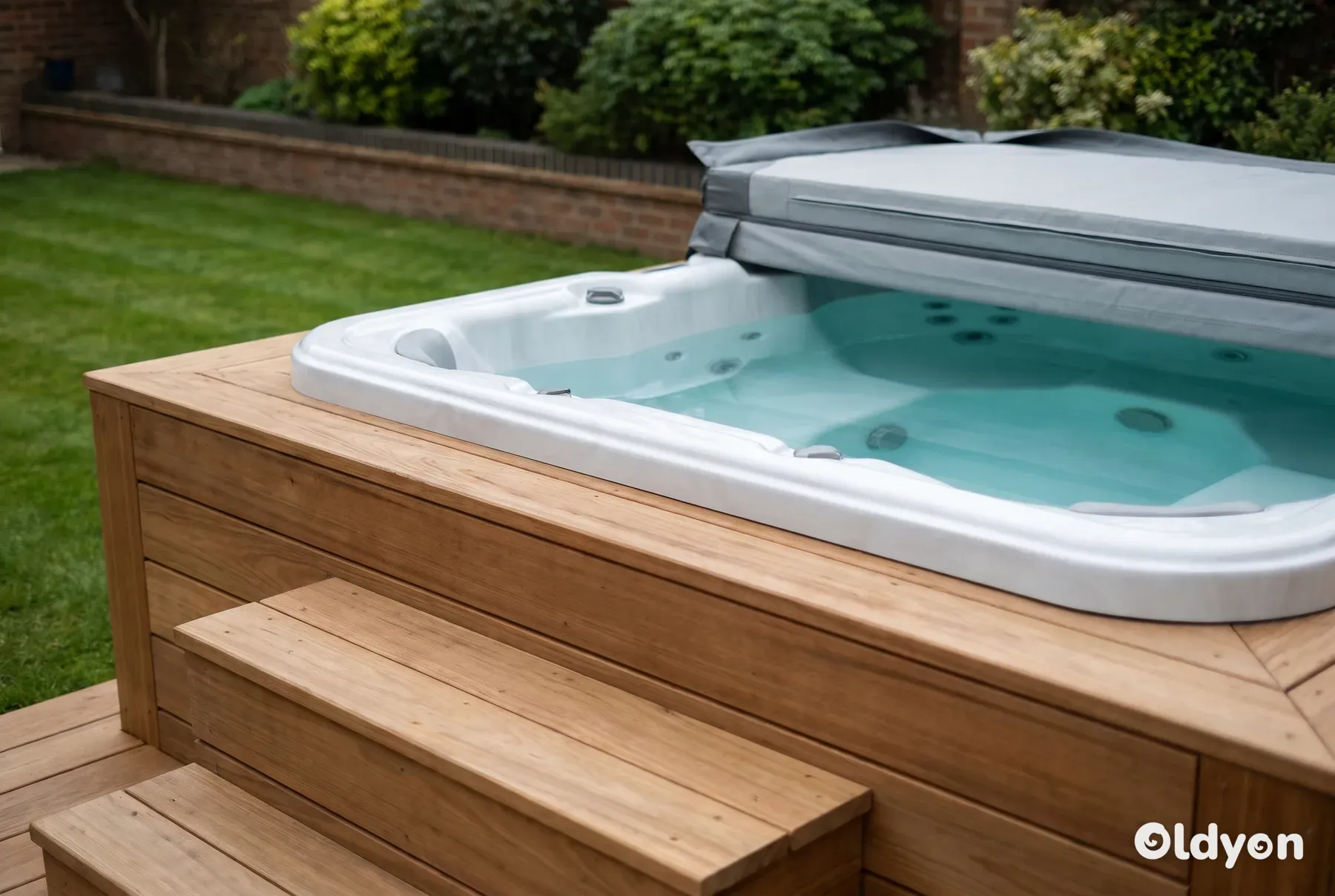
A semi-sunken hot tub is lowered partway into the ground or into a raised deck, so part of the cabinet is hidden and the rim sits at a comfortable seated height. If you want a wider picture of the shell styles available, see our guide to the types of hot tubs UK buyers can choose from.
Acrylic is not the only hard-sided choice. Rotomoulded polyethylene tubs have a one-piece plastic shell that is usually lighter and tougher than acrylic. Like acrylic spas, they are freestanding and designed to sit above ground.
The type of tub also changes the massage you get. Inflatable tubs mostly use air bubble jets, which give a gentle, fizzing effect that many people find relaxing. Hard-shell tubs use pressurised water jets, which give a firmer massage that you can aim at the back, shoulders or feet.
On air-jet tubs, the number of jets matters as well. A higher jet count spreads the bubbles more widely across the seats, but the blower also draws slightly more power while it runs.
Why do most UK hot tubs sit above ground?
The main reason is design. Portable acrylic spas are built and tested as freestanding units, with all their equipment inside the cabinet. They expect air around the cabinet and a technician able to remove the side panels. Putting one in a hole works against how it was made.
Ground conditions are the second reason. Much of the UK has clay soil, high water tables in winter and plenty of rain. A pit can fill with water, and water sitting around the cabinet can damage the base, the panels and the electrical parts inside.
Cost and flexibility do the rest. An above ground tub needs only a level, solid base and a suitable power supply. Many owners also like being able to take the tub with them, sell it separately or move it to a different part of the garden later.
Plug-in inflatable tubs take that flexibility further. You can usually set one up in an afternoon, move it to a sunnier or more sheltered spot as the seasons change, and drain it and pack it away for winter.
Inflatable and soft-sided tubs should never be sunk at all. They rely on air pressure in the walls and need to stand on a flat, clear surface, so check the manufacturer's manual for the base they require.
Cold weather is another limit for inflatables. Some models must not be run when the air temperature is below about 4°C (39°F) unless they have a frost protection feature. If you plan to use an inflatable tub through a UK winter, check the manual for its lowest operating temperature first.
Above ground vs inground hot tub: how do the costs compare?
For the same tub, going below ground almost always costs more. The tub itself is the same price, but the groundwork, drainage and finishing add a lot. Treat the figures below as broad bands only, because access, soil type and local labour rates change quotes considerably.
Factor | Above ground | Semi-sunken | Fully inground |
|---|---|---|---|
Base or groundwork | Slab or pad, usually the cheapest option | Partial dig or raised deck | Full excavation and lined pit |
Drainage | Run-off away from the base | Some drainage often needed | Soakaway or sump usually needed |
Service access | All panels reachable | Plan access to hidden panels | Must build in access space |
Typical cost band | Lowest | Middle | Highest, often several thousand pounds extra |
Moving house | Can be moved with a crane or lifter | Harder, deck may stay | Usually stays or leaves a pit |
Look | Cabinet fully visible | Partly hidden, tidy | Sleek, flush with the ground |
Installation costs
An above ground install usually needs a concrete slab, a paving base or a ready-made pad, plus an electrical supply. A simple base often costs a few hundred pounds, and a slab with a new armoured cable run can reach a low four-figure sum. Our guide to hot tub base options explains which surfaces carry the weight safely.
A fully inground install adds excavation, spoil removal, a reinforced concrete floor, retaining walls or block lining, drainage and finishing around the rim. Where machinery cannot reach the garden, digging by hand raises the labour cost again. For a fuller breakdown of each line on a quote, read our article on hot tub installation cost in the UK.
Semi-sunken installs vary the most. Sinking the tub into a raised timber deck avoids most digging, while lowering it into the ground halfway needs a smaller pit but still needs drainage and service access.
Running costs
Running costs depend far more on the tub's insulation and the quality of its cover than on whether it sits above or below ground. Surrounding soil can shelter the sides from wind, but wet, cold soil can also draw heat away. In practice, a well-fitting cover and keeping the lid on between uses make the biggest difference.
The reason is simple: a tub spends far more hours waiting than in use. Estimates vary, but a figure often quoted for portable electric spas is that around three quarters of their energy goes on keeping the water hot between soaks. That standby heat loss is what the cover controls, wherever the tub sits.
A few habits and choices cut that cost further:
- Use the tub's timer or app scheduling to heat the water only before you plan to use it, rather than holding it at full temperature all week.
- Choose a smaller tub if it suits your household, because it heats up faster and costs less to keep warm than a larger one.
- Put an insulated ground mat under an inflatable tub. It reduces heat lost into the ground and protects the floor of the tub from stones and sharp objects.
- Fill an inflatable tub with warm water from the house to shorten the first heat-up, which can take a long time on a small heater. Check the manual for any limit on the fill temperature.
The heating design also affects running costs. Some budget inflatables use circulation heating, where the water is heated as it passes through the filter loop rather than by a separate static heater. Heating and filtration then run as one cycle, so the pump runs whenever the tub is heating. This keeps the tub simple and cheap to build, but check the manual for how the cycle is controlled and how long it runs.
If you plan to rely on an app to pre-heat the tub remotely, check the Wi-Fi first. App-controlled tubs usually need a stable 2.4 GHz signal where the tub sits, so test that your router reaches that part of the garden, or plan for a Wi-Fi extender.
Chemical use and water care are the same either way. Keep free chlorine or bromine at 3-5 ppm, pH at 7.2-7.6 and total alkalinity at 80-120 ppm. Your manual may give slightly different targets, so follow it where it differs.
A saltwater system is an alternative to adding chlorine by hand. It turns salt added to the water into chlorine, and many owners find the water feels softer. You still need to test the water, and not every tub is compatible, so check with the manufacturer before fitting one.
Inflatable tubs described as saltwater compatible often do not include the salt cell or conversion kit, which is frequently sold separately. Check whether it comes in the box, and add its cost to your budget before you choose that route.
Hard water adds a separate cost. Much of England has hard water, and limescale can build up on the heater, pipework and liner over time. In a hard water area, consider a tub with built-in hard water treatment, or use a scale inhibitor, to help the equipment last longer.
How easy is each type to service?
This is where above ground tubs have the clearest advantage. On a portable spa, the pumps, heater, control pack and most pipe joints sit behind the cabinet panels. A technician removes a panel, finds the fault and fixes it, often in a single visit.
Even above ground, placement matters. Leave at least 30 cm (about 1 ft) of clear space on every side of the tub, away from walls, fences and planters, so a technician can take off any panel and routine maintenance stays easy.
When a portable spa is sunk without planning, those panels can end up against soil or concrete. A small leak or a failed pump can then mean lifting the whole tub out with a crane, which is slow and expensive. Some manufacturers also say in their warranty terms that the owner must provide clear access for repairs, so read the warranty before you plan any sunken install.
If you do sink a tub, the jobs below all need access to the cabinet or the tub's underside at some point:
- Replacing or repairing a circulation pump or jet pump
- Changing the heater element or a faulty sensor
- Finding and fixing leaks at pipe joints and jet bodies
- Replacing the control pack or the topside control cable
- Clearing a blocked or seized drain valve
- Checking for rodent damage to the insulation and wiring
Filter cleaning and water testing are easy with any type, because they happen from the top of the tub. The difference only shows when something under the surface goes wrong, which on any tub is a question of when rather than if.
Before you sink any portable hot tub, ask the manufacturer or dealer in writing how much clearance they need around the cabinet for servicing, and whether a sunken install affects the warranty. Build that space into the plan from the start.
Which is safer, above ground or inground?
Each type has different risks, and both can be made safe with sensible choices. The main concerns are children, slips and falls, and the electrical supply.
Children and pets
An above ground tub has a raised side, which makes it harder for a small child to fall in. An inground tub sits level with the garden, so a child or pet can step or slip straight in. Whichever you choose, use a rigid cover with working safety clips or locks, and never leave the cover off when the tub is not being used.
Slips, trips and getting in and out
Climbing in and out of an above ground tub means using a step, so choose a sturdy step unit with a non-slip tread and place it on firm, level ground. An inground tub is easier to step down into, but the wet edge sits at foot level, which makes trips more likely, especially at night. Good path lighting and a textured surround help with both.
Inflatable tubs need extra care here. On cheaper models with soft walls, the rim flexes when you sit on it, so it is not a stable seat for swinging your legs in or out. Use a step or hold a firm support, and lower yourself in slowly.
The wall construction makes a real difference. Inflatable tubs with drop-stitch walls have firmer, flatter sides than standard reinforced PVC walls, which flex more when you sit on the rim. If you want a stable edge, check the wall type before you buy.
Wall height matters too. A tub with lower walls, such as about 66 cm (26 in) rather than 71 cm (28 in), is easier to step over for shorter users or anyone with limited mobility.
Electrical safety
Some smaller tubs run from a standard 13 amp plug, while most larger acrylic tubs need a dedicated hardwired supply, often rated around 32 amps. Check your manual for the exact rating. In the UK, any new circuit must meet BS 7671, have RCD protection and be installed by a registered electrician. In England and Wales, a new circuit outdoors is usually notifiable building work under Part P, which a registered electrician can self-certify.
Some inflatable tubs use a PTC (positive temperature coefficient) heater, which draws less current as the water nears its set temperature. This is how some larger inflatables are able to run from a standard 13 amp plug. Even so, plug any tub only into an RCD-protected outdoor socket as the manual specifies, and never into an extension lead.
The supply also affects how the tub performs. A hardwired tub on a higher-rated supply can usually heat the water faster than a 13 amp plug-in tub, and some plug-in tubs cannot run the heater and jets at full power together. The trade-off is a higher installation cost, because the hardwired circuit needs an electrician.
A sunken install adds extra points to check. The supply cable must be protected where it runs underground, the isolator must stay outside the reach of anyone sitting in the tub, and any pit must drain so that water never collects around the electrical parts. The Electrical Safety First charity publishes guidance on outdoor electrics, and other countries have their own wiring rules, so follow local regulations if you live outside the UK.
Water and health
Keep the water no hotter than 40°C (104°F), and limit sessions if you feel dizzy or overheated. NHS advice is to avoid hot tubs or take extra care if you are pregnant, and anyone with a heart condition, low or high blood pressure or another long-term health condition should speak to their GP or pharmacist before using one. Stop and get out if you feel faint, sick or unwell.
In pregnancy, the concern is a raised core body temperature, and this matters most in the early weeks. If you are pregnant or trying to conceive, speak to your midwife or GP before using a hot tub.
Some people should get medical advice before their first soak, even if they feel well. This includes anyone who:
- Has epilepsy
- Has had a recent heart attack or has severe aortic stenosis
- Tends to feel faint or dizzy when standing up
- Takes medicines for the heart or blood pressure
Some medical reviews also treat unstable angina, poorly controlled heart failure and severe low blood pressure on standing as reasons to avoid hot water immersion. Hot water raises the heart rate and can trigger an irregular heartbeat in vulnerable people, so if any of these apply to you, speak to your GP before using a hot tub.
Good sanitiser levels and regular cleaning reduce the risk of bacteria, including Legionella, in any tub. The HSE guidance on Legionnaires' disease explains why warm, still water needs care, which matters most if a tub sits unused for long periods.
Legionella is not the only risk. Poorly kept hot tub water can spread germs that cause chest and breathing problems, skin rashes and stomach upsets. Anyone with an open wound or a skin infection should stay out of a shared tub until it has healed.
How does each type affect resale and moving house?
An above ground acrylic tub is a movable item. When you sell your home, you can take it with you, sell it separately or include it in the sale. Moving it usually needs a spa trolley or, for tight gardens, a crane, but it leaves only a base behind.
An inground tub is effectively part of the garden. Some buyers will see it as an attractive feature, while others will see a maintenance job they did not ask for, or a hole they will have to fill. Removing a sunken tub means lifting it out and then filling, levelling or decking over the pit.
It is hard to say whether either type adds value to a home, because that depends on the property, the buyer and the condition of the tub. A clean, well-kept tub with a service history helps with any sale. A tired tub, of either type, tends to count against a property rather than for it.
Lifespan matters when you weigh up an expensive install. A well-kept acrylic or rotomoulded tub typically lasts 10 to 15 years and sometimes more than 20. An inflatable PVC tub usually lasts 2 to 5 years, so costly groundwork around one rarely makes sense.
These figures are typical, not fixed. A well-maintained inflatable PVC tub can occasionally last 5 to 7 years. For any tub, lifespan depends heavily on consistent maintenance, using the cover every time and the climate the tub sits in.
If you think you may move within a few years, an above ground or deck-mounted install keeps your options open. If this is your long-term home and you want a permanent garden feature, an inground or semi-sunken install is easier to justify.
Is a semi-sunken hot tub the best middle ground?
For many UK gardens, yes. A semi-sunken tub hides part of the cabinet, lowers the rim to a comfortable height for getting in, and looks more built-in, while keeping more of the access that a fully sunken tub loses.
There are two common ways to do it. The first is to lower the tub partway into the ground, with a lined pit and drainage. The second is to build a raised deck around a tub standing on a ground-level slab, so the tub sits in the deck rather than in the soil. The raised deck route avoids most digging and drainage problems, and you can make deck sections removable for servicing. For layout ideas, see our guide to hot tub decking ideas that suit UK gardens.
In England, permitted development rules do not cover raised platforms or decking more than 30 cm (about 12 in) above the ground, and listed buildings and conservation areas have extra limits. Check with your local planning authority before building a raised deck, and use the GOV.UK building regulations guidance to see what needs approval. Rules differ in Scotland, Wales, Northern Ireland and other countries.
If you choose to sink your tub partly into the ground, plan it in this order:
- Confirm with the manufacturer that the model can be sunk, how much clearance it needs around the cabinet, and whether sinking affects the warranty.
- Check the site for drains, buried cables, tree roots and how wet the ground gets in winter.
- Decide the final rim height, usually a comfortable seated height of roughly 45-60 cm (about 18-24 in) above the surrounding surface.
- Dig the pit wider than the tub on every side to leave a service gap, and lay a reinforced concrete floor that is fully level.
- Line the sides with blockwork or a retaining wall so soil cannot press against the cabinet.
- Install drainage, such as a soakaway or a sump with a pump, so rain and ground water cannot collect around the tub.
- Have a registered electrician run a protected supply cable and fit an isolator in a safe position outside the tub's reach.
- Lower the tub in, test it fully for leaks and faults before finishing, then fit a surround with removable sections over the service gap.
Our guide to sunken hot tubs and how to sink one properly covers the groundwork in more detail, including drainage options and how wide the service gap should be.
Which should you choose for your garden?
Start with your garden, your budget and how long you plan to stay. Most portable acrylic tubs are designed to stand above ground, so that is the safe default unless you have a clear reason to change it.
An above ground tub is likely to suit you if:
- You want the lowest installation cost and the simplest groundwork
- Your ground is heavy clay or gets waterlogged in winter
- You may move house in the next few years
- You want any repair to be quick and straightforward
- You have young children and want a raised side as an extra barrier
A semi-sunken or inground tub is more likely to suit you if:
- You are planning a long-term garden redesign around the tub
- Your ground drains well, or you are happy to pay for proper drainage
- Getting in and out with a step is difficult for someone in your household
- You have the budget for groundwork and for building in service access
- The manufacturer has confirmed in writing that the model can be sunk
Trying a hot tub first
If you are not sure a hot tub will suit your routine, a low-cost inflatable can be a sensible first step. It shows you whether you will use the tub and keep up with the water care before you commit to a more expensive hard-shell model or a permanent install.
Choosing a well-made inflatable
The outer skin decides how well an inflatable copes with garden life. Look for a multi-layer or reinforced laminated PVC skin, which resists punctures far better than single-layer standard PVC or vinyl.
The inner structure matters as much as the skin. Tubs with internal fabric beams or reinforced sidewalls hold their air pressure and shape better, so the tub is more stable and needs less re-inflating.
Size, shape and weight
Choose the size for the number of people who will use the tub regularly, not the most it can hold. A larger tub costs more to heat, needs more space and needs a stronger base.
Treat the advertised seat count with caution. It often assumes very narrow shoulder widths, so compare the interior dimensions and seat layout instead of the number on the label.
Shape affects how the tub fits your space. A square tub tucks into the corner of a patio or deck more neatly than a round tub that seats the same number of people.
As a rough guide to the footprint of inflatable tubs, before you add clearance on every side:
- 2-4 person models: usually about 1.8 m (71 in) across
- 4-6 person models: about 1.8-1.96 m (71-77 in) across
- 6-8 person models: about 2.15-2.35 m (85-93 in) across
Water volume helps you plan filling time, chemical doses and heating. As a rough guide, a 4-6 person inflatable holds about 900 litres (about 240 US gallons) and a 2-4 person model about 670 litres (about 177 US gallons). Inflatables are usually filled to only about 80% of their wall height, so follow the fill line in your manual.
Seating capacity matters too. A larger tub holds more water and weighs more, so a filled five or six seat tub with people in it can weigh around 2 tonnes (about 4,400 lb) or more. That weight needs a properly designed base whether it sits on a slab, in a deck or in a pit.
Take extra care if you want the tub on a balcony, roof terrace, upper deck or indoor floor. Have the structure checked by a structural engineer first, to confirm it can carry the full weight of the filled tub and the people using it.
Parts and support
Choose a brand with readily available replacement parts, covers and local service support. Unbranded tubs can be hard to repair after the first year, and that problem is far worse if the tub is sunk and hard to reach.
With a well-known inflatable brand, covers, liners and filters are often cross-compatible across that brand's range. That makes replacements easier to find later, even after your exact model is no longer sold.
If you do buy an unbranded tub, read the seller's returns window and warranty terms before you order. There may be no established manufacturer to fall back on if the seller stops trading or a part fails.
What comes in the box
Check exactly what is included before you buy, because missing items add to the real cost. Look for:
- An insulated cover, ideally with locking clips
- Spare filter cartridges
- A ground mat for an inflatable tub
- A repair patch kit
- A chemical dispenser or floater
Comfort and wellbeing
Think about why you want a tub. Warm water, buoyancy and massage jets can ease muscle soreness, stress and tiredness, and warm water exercise is often recommended to help people manage fibromyalgia pain. If you have a health condition, ask your GP whether regular soaks are suitable for you, and choose a tub with jets that suit your needs.
The short version
Above ground is the practical choice for most UK owners. It costs least, keeps every panel reachable, copes with wet ground and moves house with you.
Fully inground looks smart but costs much more and makes repairs harder unless you build in a service gap and good drainage. A semi-sunken tub, especially one set into a raised deck with removable panels, gives you most of the look with far fewer of the problems. Whatever you choose, use a lockable cover, a registered electrician and the water levels in your manual.
Frequently asked questions
Can any hot tub be put in the ground?
No. Many portable acrylic tubs are designed to stand above ground with air around the cabinet, and inflatable or soft-sided tubs must never be sunk. Some manufacturers allow sunken installs if you leave a set service gap and provide drainage. Ask the manufacturer or dealer in writing before you dig, and check whether a sunken install changes the warranty terms.
Does a sunken hot tub need planning permission in the UK?
A hot tub on its own usually does not need planning permission, but the work around it might. Raised decking over 30 cm (about 12 in) high falls outside permitted development in England, and listed buildings or conservation areas have extra rules. Large excavations near boundaries or drains may also need checking. Contact your local planning authority before you start.
How wide should the service gap be around a sunken hot tub?
It depends on the model and the jobs a technician may need to do, so ask the manufacturer for their figure. As a rule, the gap needs to be wide enough for someone to remove each side panel and reach the pumps, heater and pipework comfortably. Cover the gap with removable decking or lids so it stays safe to walk on.
Do inground hot tubs cost less to heat?
Not by much in most UK gardens. Soil can shelter the sides from wind, but cold, wet soil also draws heat away from the shell. The cabinet insulation, the fit and condition of the cover, and how often you leave the lid off have a far bigger effect on your energy bills than whether the tub sits in the ground or on top of it.
Can I move a semi-sunken hot tub to a new house?
Usually, yes, if it is a portable acrylic tub set into a deck or a shallow pit. You will need to disconnect the electrics, drain it fully, and lift it out, often with a crane. The deck or pit stays behind, so plan how the next owner will use or fill that space. A built-in concrete tub cannot be moved.
Why do people get rid of their hot tubs?
Common reasons include running costs, not using it as often as planned, the time spent on water care, and costly repairs on older tubs. Sunken tubs add another reason: a fault that needs the tub lifted out can cost more than the tub is worth. Choosing a sensible install and keeping up with simple weekly care makes all of these less likely.
Filed under