3 person hot tubs and who they really suit
Is a 3 person hot tub right for you? Learn the typical layouts, how much space it needs, 13 amp or 32 amp supply, and when to size down or up instead.
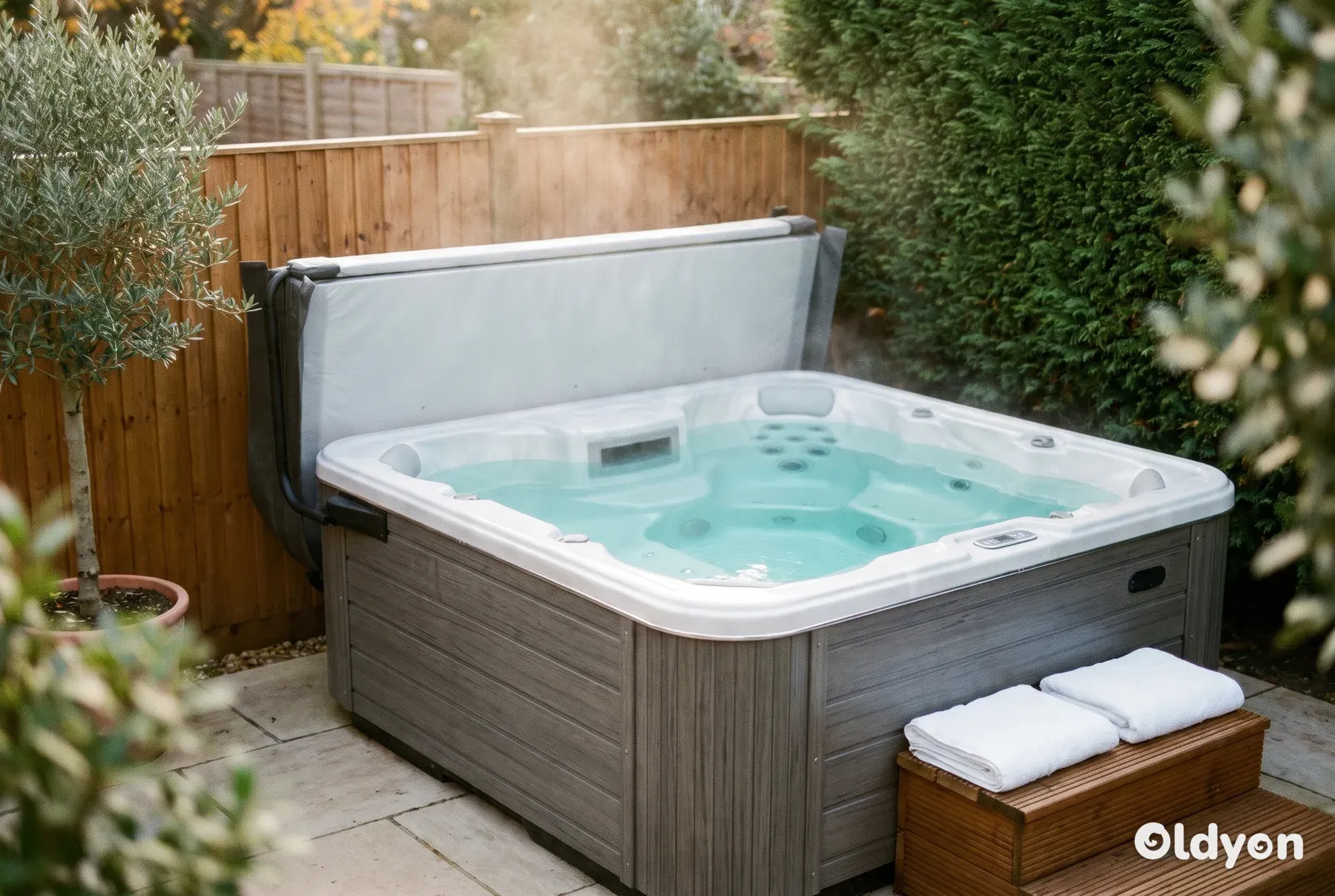
A 3 person hot tub suits couples who want room to stretch out, small families with one child, and anyone who wants a lounger without giving up much garden. Many have a lounger and two seats, need a base of around 2 m (about 6.5 ft) square, and run on a 13 amp plug or a dedicated 32 amp supply.
The seat count on the specification is a guide, not a promise. Three adults only fit comfortably if the seats suit their bodies, and the right electrical supply depends on how often you will use the tub in winter. The sections that follow cover layouts, space, power, cost and how a three seater compares with the sizes either side.
What layouts do 3 person hot tubs usually have?
Three seat tubs are small, so makers have to choose between lying down and sitting up. Most models follow one of a few patterns, and the pattern tells you more about comfort than the number of seats printed on the specification.
A lounger with two seats
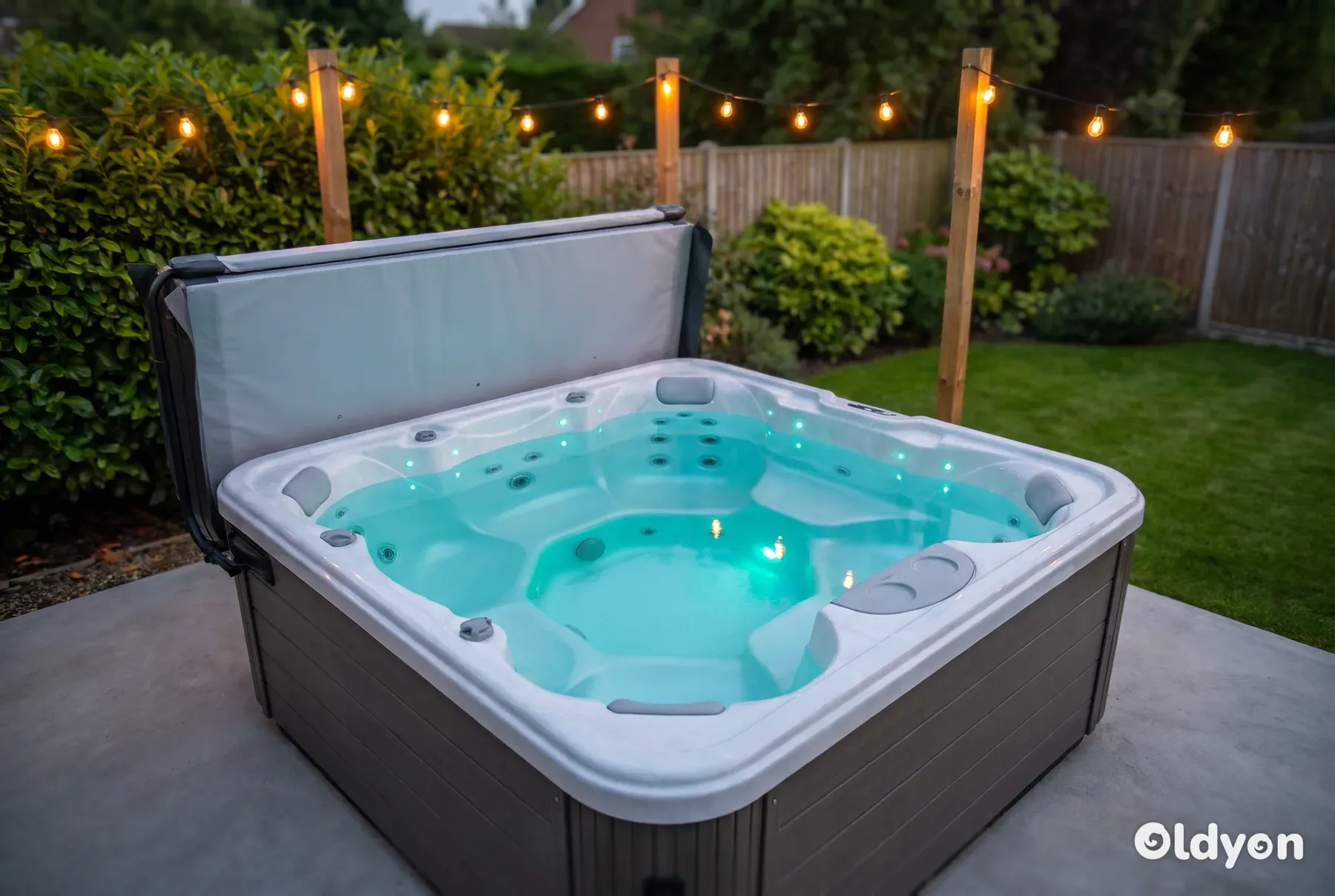
This is the most common layout in compact acrylic tubs. One person lies back in a moulded lounger with jets along the back and legs, while two people sit in upright seats opposite or alongside. It works well for a couple, with the third seat used by a guest or a child.
A lounger has a fixed length. If you are tall, your feet may press against the far wall, and if you are short or light you may float out of the seat. Some owners never get on with a lounger, so try one in a showroom before you decide if you can.
Three upright seats
Some tubs skip the lounger and fit three seats, often at different depths. This layout works better for three adults who want to sit and talk, and it usually leaves more open floor space for legs. You lose the full length stretch, which is the main reason some people buy a hot tub.
Open bench and round tubs
Inflatable tubs and many rotomoulded tubs have no moulded seats. You sit on the floor or on a low bench, and the number of people is a rough guide to how many fit around the wall. Three adults in a small round tub will sit shoulder to shoulder, with legs meeting in the middle.
Inflatable and portable tubs are often sold with a higher person count than real comfort allows. For three adults, a model marketed as 4 to 5 person, or the larger end of a 2 to 4 person range, is often the realistic choice. Three tall adults may find even that snug.
On round inflatables, a small increase in diameter makes a large difference. A tub about 1.95 m (6.4 ft) across has roughly 17% more floor area than one about 1.80 m (5.9 ft) across, which gives three adults noticeably more legroom. Compare inside diameters where the maker lists them, because wall thickness varies.
On inflatable and portable tubs, also check the wall height, which is typically about 66 to 71 cm (26 to 28 in). A taller wall allows a deeper fill, which keeps seated adults' shoulders under water. Your soaking depth also depends on how high you fill between the minimum and maximum lines marked inside the tub.
Square tubs give more usable room for three people than round tubs of the same width. Bathers can sit in the corners and stretch their legs along the diagonal, and a square tub can be pushed into a corner of the patio to save clearance on two sides.
Some portable tubs come in a cut corner, or octagonal, shape. This is a middle option between round and square: it gives a little more corner room than a round tub while still fitting on a compact patio.
Many hard shell tubs also have a cool down seat or step. It sits higher, keeps most of your body out of the hot water and is useful for children or for anyone who gets warm quickly.
How much space does a 3 person hot tub need?
Compact acrylic three seaters are commonly around 1.7 to 2.0 m (about 5.5 to 6.5 ft) on each side, and inflatables for three people are often a similar width across. Sizes vary a lot between models, so always work from the measurements in the manufacturer's specification rather than the seat count.
The footprint of the tub is only the start. You also need room to lift and fold the cover, a clear path to the control panel and service panels, and space to step in and out safely. Our guide to hot tub dimensions and how much space you need explains how to measure for all of this.
As a rule of thumb, allow about 60 cm (2 ft) of clear space around the tub for getting in and out. A tub about 1.8 m (5.9 ft) across with that gap on every side needs a clear area of roughly 3 m (about 10 ft) square. If one or two sides sit against a wall or fence, you can reduce this, as long as the service panels stay reachable.
Before you buy, mark the tub's footprint on the ground with rope, string or tape, then mark the clearance around it. Standing in the marked area shows you at once whether it fits, whether the cover can fold back and whether paths stay clear.
Weight and the base
Water weighs about 1 kg (2.2 lb) per litre, so a tub holding 800 litres (about 210 US gallons) carries roughly 800 kg of water before you add the shell and the bathers. A filled three seater with people in it can approach or pass 1 tonne (about 2,200 lb).
That weight needs a flat, level, solid base such as a concrete slab, well laid paving or a purpose made base. Ordinary garden decking may not be strong enough unless it was built for the load, so ask a builder or structural engineer before you place a tub on decking, a balcony or a roof.
- Measure the tub plus the depth of the folded cover or cover lifter behind it.
- Check that gates, side passages and steps on the delivery route are wide enough for the tub, which is often moved on its side.
- Leave access to every service panel, not just the front one.
- Keep the tub away from overhanging trees to reduce leaves in the water.
- Think about privacy and noise for neighbours, especially in a terraced garden.
If your plot is tight, our article on fitting a hot tub into a small garden covers corner placement, screening and access in more detail.
Does a 3 person hot tub need 13 amp or 32 amp?
Both types exist. A 13 amp tub plugs into a standard socket, while a 32 amp tub, often called a hardwired tub, needs its own circuit from your consumer unit. The difference is how much power the tub can draw at the same time.
In the UK, a 13 amp supply at 230 volts gives about 3 kW. That is enough for a heater of around 2 to 3 kW or for the jet pump, but on many 13 amp tubs not both at once. While the jets run, the heater may switch off and the water slowly cools.
A 32 amp circuit can deliver about 7 kW, so the tub can heat and run jets together and often has a larger heater. This makes the biggest difference in winter, during long soaks, and for anyone who uses the tub most days.
- 13 amp suits occasional use, mild weather, renters and anyone who may move the tub later.
- 32 amp suits frequent use, winter use and households who want the water back to temperature quickly after a soak.
- A 32 amp tub costs more to install because it needs a new circuit, but it is usually no more expensive to run for the same amount of heating.
Our guide on how to choose a 13 amp plug and play hot tub goes through the trade offs of plug in models in more depth.
UK electrical rules
Whatever the supply, outdoor electrics for a hot tub must meet BS 7671, the UK wiring regulations, and be protected by an RCD (residual current device). A 32 amp tub needs a new dedicated circuit, which should be installed by a registered electrician.
In England and Wales, adding a new circuit is notifiable work under Part P of the Building Regulations. A registered electrician can self certify the work and give you a certificate. Scotland and Northern Ireland have their own building rules, and other European countries have their own standards, so use a qualified local electrician wherever you live.
Never run a hot tub from an extension lead or cable reel, and never feed a lead through a window or door to an indoor socket. Use a weatherproof, RCD protected outdoor socket or circuit fitted by a registered electrician, and switch off at the isolator before you open any panel. The Electrical Safety First charity publishes clear guidance on outdoor electrical safety.
Inflatable, foam, rotomoulded or acrylic: which type of three seater?
The seat count tells you the size. The construction tells you about comfort, heat loss, running cost and how long the tub is likely to last.
- Inflatable: the cheapest to buy and easy to move or store. Usually 13 amp, with no moulded seats and air walls that lose more heat in cold weather.
- Foam wall portable: rigid foam panels inside a fabric cover. Usually better insulated than an air wall inflatable while still portable.
- Rotomoulded: a one piece plastic shell, tougher than an inflatable and lighter than acrylic. Seats are moulded but often simple, and many are 13 amp.
- Acrylic hard shell: the most shaped seats and the widest choice of jets, with a cabinet and insulation around the shell. Available in 13 amp and 32 amp versions, but heavier and harder to move.
Inflatable tubs are quick to set up. The pump unit usually inflates the walls itself, and there is no cabinet to prepare, no plumbing and no hardwired circuit to install, unlike a hard shell tub. You still need a flat, level base and a safe outdoor socket.
Weight differs a lot between types. An empty air wall inflatable three seater with its pump typically weighs around 35 to 40 kg (about 80 lb), so two people can carry it. A foam wall portable is noticeably heavier, at around 45 to 50 kg (about 100 lb) dry, and a hard shell tub weighs far more and needs equipment to move.
In a British or northern European winter, insulation and a thick, well fitting cover make the biggest difference to running cost. Ask how the cabinet is insulated, for example full foam fill, insulated panels or a thermal wrap, and how thick the cover is at the edges and in the centre.
What to check on inflatable and portable tubs
- Minimum air temperature: many inflatables must not be run below a set air temperature, often around 4°C (39°F). Check this figure in the manual if you plan to use the tub through a British winter.
- Frost protection: look for a function that switches the heater on automatically when the water gets very cold, to stop the pump, pipes and liner being damaged by freezing.
- Storage: air wall inflatables deflate flat and store in a small space over winter. Foam wall portables are rigid and heavier, and need much more storage room.
- Wall strength: check whether the walls are reinforced, for example with internal beams. Cheaper walls can sag or collapse when an adult sits on the edge.
- Outer cover: a fabric outer layer resists scuffing and sun damage better than bare PVC walls.
- Controls: some tubs can be controlled from a phone app over Wi-Fi to set the temperature, timer, filtration and jets. Basic models only have a panel on the pump.
Jets: what the numbers mean
Specification sheets often quote jet counts, but a higher number does not mean a better massage. A small tub with many tiny jets can feel weaker than one with fewer, larger jets, because the same pump is shared between all of them.
To compare massage coverage fairly, divide the total jet count by the number of seats. A larger tub with more jets can give each bather fewer jets than a smaller tub with fewer jets. For example, 140 jets across 6 seats is about 23 per person, while 120 jets across 4 seats is 30 per person.
Most inflatable and portable tubs use air bubble jets. These push air through the water for a gentle, all over fizz rather than the targeted pressure of water jets. If you want a real massage for sore muscles, you need a hard shell tub with water jets.
Look at where the jets are aimed, such as the back, shoulders, calves and feet, whether you can switch groups on and off, and how many pumps there are. In a three seater, one good pump and a lounger with leg jets is often more useful than a long list of jet numbers.
How much does a three seater cost to buy and run?
Prices fall into broad bands. Inflatable and foam wall tubs for three people tend to cost a few hundred pounds. Rotomoulded tubs and entry level 13 amp acrylic tubs usually sit in the low thousands. Well insulated 32 amp acrylic tubs commonly cost several thousand pounds or more before installation.
Budget for extras as well: the base, electrical work, steps, a cover lifter, filters, test strips and chemicals. For a 32 amp tub, the electrical installation can be a significant part of the total cost.
A second hand hot tub is another way to lower the purchase price. Check the shell for cracks, the cover for sagging or water inside it, and the pump, heater and controls for leaks or faults. Ask whether parts are still available for that model, and budget for moving it and for a new cover if needed.
Running costs
There is no single running cost figure, because it depends on your tariff, the outside temperature, the insulation, the cover and how often you open the lid. You can estimate it yourself: the power in kW multiplied by the hours it runs gives kWh, and kWh multiplied by your unit rate gives the cost.
As a physics guide, raising 800 litres of water by 1°C (1.8°F) takes just under 1 kWh. A 3 kW heater could lift that water by about 3°C an hour in perfect conditions, and less on a cold, windy evening. A smaller volume heats faster than a larger one, which is a real advantage of a three seater.
Standard hot tub heaters are electric resistance heaters, which turn one unit of electricity into one unit of heat. Some hard shell tubs offer a dedicated heat pump heater as an option. A heat pump draws heat from the outside air and can deliver around 3 to 7 units of heat for each unit of electricity, depending on the air temperature, so it can cut heating costs. It adds to the purchase price and works less efficiently in very cold weather.
Energy efficiency claims on hot tub listings, such as a percentage saving over other models, are usually the maker's own figures rather than independently tested ratings. Treat them with caution, and compare the insulation and cover details instead.
Some portable tubs have a programmable heating timer that you can set days or even weeks ahead. The tub stays cooler in between and starts heating in time to reach your chosen temperature when you plan to use it. If you only use the tub at weekends, this avoids paying to hold the water at full temperature all week.
- Keep the cover on whenever the tub is not in use, and replace it when it starts to sag or feel heavy with water.
- Shelter the tub from wind with a screen, fence or hedge.
- Use timer or economy settings if your tariff has cheaper off peak hours.
- Keep filters clean so the pump does not work harder than it needs to.
- Lower the set temperature if you will not use the tub for a day or more, rather than keeping it at full heat.
Who does a three seater really suit, and when should you size down or up?
A three seater fits a specific set of households well. It is worth being honest about who will use it, how often and at the same time, before you choose.
- Couples who want one person in the lounger each evening and room for a guest.
- A parent with one child, or two adults with a child at weekends.
- Single owners who want space to stretch out without a large volume of water to heat.
- Gardens where a four or five seater would crowd the patio.
It suits three adults less well than the label suggests. In a lounger layout, one adult lies back while two share a small area, with knees and feet meeting in the middle. If three adults will often use it together, sit in it first or consider the next size up.
If this is your first hot tub and you are not sure how often you will use it, a cheaper inflatable is a low risk way to start. A season or two shows you which features matter to you, such as a lounger, stronger jets or faster heating, before you spend thousands of pounds on a hard shell tub.
Size | Typical layout | Best for | Watch out for |
|---|---|---|---|
2 person | Two seats or two loungers | Couples, very small spaces | Little room for a guest |
3 person | Lounger and two seats | Couples with a guest, small families | Tight for three adults |
4 person | Mixed seats, often a lounger | Families, regular visitors | More water to heat and treat |
Going one size down
A two seater is smaller, lighter and cheaper to buy, with less water to heat and treat. It is a good choice for couples who rarely have guests and for very tight spaces. Many two seaters have no lounger, or two loungers side by side with little room for anyone else. Read more in our guide to choosing a 2 person hot tub.
Going one size up
A four seater is often only a little larger on the ground than a three seater, but it holds more water and usually offers more seat variety. It makes sense if you have two children or regular visitors. It costs more to buy, heats more slowly on a 13 amp supply and uses more chemicals. Our article on choosing a 4 person hot tub covers the details.
What should you check before you buy?
- Sit in the tub in a showroom with the people who will use it most.
- Check the lounger length against the tallest regular user.
- Confirm whether the heater and jets can run at the same time.
- Ask what the warranty covers for the shell, structure, equipment and labour, and for how long.
- Ask whether parts and service engineers are available in your area.
- Check the cover thickness and how the cabinet is insulated.
- Check the filled weight and the base the manufacturer requires.
- Check what comes in the box. Portable tubs may or may not include a cover, ground protection pad, filter cartridges, hose adapter, chemical dispenser and repair patch kit.
- Buy water care products separately. Even portable tubs supplied with a cover, filters and a dispenser usually come without test strips, sanitiser or other chemicals, so have these ready before the first fill.
The same tub model is sometimes sold under several listings, or as older stock alongside a newer version. These can differ in the accessories included, the pump or heater version and the length of the warranty. Compare these details line by line rather than assuming the cheapest listing is the same product.
Which hot tubs are most reliable?
Reliability depends more on build quality, insulation and after sales support than on the name on the cabinet. A small number of pump and control makers supply parts to many hot tub brands, so similar core parts appear in tubs at very different prices. A clear warranty, a local engineer and easy access to parts usually matter more than the brand.
Mistakes to avoid
- Choosing by seat count alone rather than by layout.
- Forgetting the delivery route and the space needed to lift the cover.
- Buying a 13 amp tub for heavy winter use and finding it slow to recover.
- Placing a tub on decking that was not designed for the weight.
- Leaving the electrical work until after the tub has been delivered.
How do you look after the water in a small hot tub?
A three seater holds less water than a large tub, so each bather and each dose of chemical has a bigger effect. The water balance can change quickly after a busy session, so test before each use and add products in small amounts.
Fill an inflatable or portable tub to between the marked minimum and maximum lines on the inside wall. The pump and heater rely on the water level being in that range, and three people getting in will raise the level, so do not fill right to the top.
Check how the water capacity on a listing was measured. For inflatable and portable tubs, the figure is often quoted at around 80% fill rather than filled to the brim. Use the same basis when you compare tubs, and use the volume you actually fill to when you work out the weight on your base or the dose of each chemical.
- Free chlorine: 3-5 ppm, or bromine: 3-5 ppm
- pH: 7.2-7.6
- Total alkalinity: 80-120 ppm
- Calcium hardness: 150-250 ppm
Manufacturers' recommendations differ slightly, so check your manual and follow the dosing instructions on each product label. Keep the water no hotter than 40°C (104°F), and ask everyone to shower before getting in to reduce the load on the sanitiser.
After a session with three people, a short routine keeps the water safe and clear.
- Test the sanitiser level and pH with a test strip or kit.
- If total alkalinity or pH is out of range, correct it first, in small steps.
- Top up the sanitiser with the pump running and the lid open.
- Wait for the time given on the product label, then test again.
- Close the cover once the readings are back in range.
Warm water that is not looked after can allow bacteria to grow, including legionella. The Health and Safety Executive explains the risks on its legionella guidance pages.
Soak times and health
Hot water raises your body temperature. Many manufacturers suggest soaks of around 15-20 minutes at higher temperatures, with shorter, cooler soaks for children, because overheating can cause dizziness or fainting. Children should use the higher seat or step and must always be supervised.
The main danger of a long soak is hyperthermia, which means your core body temperature rises too high. Some public health guidance advises limiting continuous soaks at 40°C to 10 to 15 minutes, then getting out to cool down before you get back in. Advice varies between sources, so check your manual and keep soaks shorter when the water is at the top of the range.
The reason for this limit is that, in water at 40°C, your core body temperature can climb to a dangerous level of around 41°C (106°F) within that time. Your body cannot cool itself by sweating while most of it is under hot water, so the temperature keeps rising for as long as you stay in.
Get out straight away if you feel dizzy, sick or faint. If you are pregnant, have a heart condition or blood pressure problems, or take medicines that affect your circulation, speak to your GP, pharmacist or midwife before using a hot tub. The NHS has general advice on its pregnancy pages.
Summary: is a three seater the right size for you?
A three seater is a strong choice for couples, single owners and small families who want a lounger in a modest space. It is tight for three adults at once, so try the layout before you decide, and look one size up if you often have company.
Plan the base, the delivery route and the electrics before you order. Choose 13 amp for occasional, flexible use and 32 amp for frequent or winter use, and always have the work done by a registered electrician.
Frequently asked questions
Can four people fit in a 3 person hot tub?
Sometimes, but rarely comfortably. Four small adults, or two adults and two children, may squeeze in, but every extra person adds weight, heat and contamination to a small volume of water. Never go above the maximum number of bathers in the manual, because the base, filtration and sanitiser are planned around it. If four people will use it regularly, a four seater is the better choice.
Why are some 3 person hot tubs so cheap?
Low prices usually mean an inflatable or thin walled design, a 13 amp heater, simpler jets and less insulation. These tubs can be good value for summer use, but they lose more heat in winter and may come with shorter warranties. Compare the warranty, cover and insulation as well as the purchase price, because a cheap tub can cost more to run over a year.
Why are hot tubs from warehouse clubs and general retailers cheaper?
Large retailers buy in high volume, so makers can accept lower margins in return for guaranteed orders, and the tubs are often sold only in season. They are often stripped down versions of a maker's range, with fewer jets, simpler insulation and shorter warranties. They usually come without dealer support, delivery to the final position or installation, so you arrange the base, electrics and any repairs yourself. They can suit a confident buyer, but compare the full specification and warranty, not just the price.
How long does a 3 person hot tub take to heat up?
It depends on the water volume, the heater size, the starting temperature and the weather. Inflatable and portable tubs on a plug in supply typically heat at roughly 1°C (1.8°F) per hour, so going from cold mains water to 40°C usually takes around 18 to 24 hours, and longer in cold weather. A 32 amp tub is usually quicker. Keep the cover on while it heats and check the heating rate stated by the manufacturer.
Is there a time limit for sitting in a hot tub?
There is no single legal limit, but many manufacturers suggest around 15-20 minutes at a time at higher temperatures, followed by a break to cool down. This lowers the risk of overheating, dizziness and dehydration. Drink water, keep the temperature at or below 40°C and get out straight away if you feel unwell. Children should have shorter soaks at a lower temperature.
Can I put a 3 person hot tub on decking?
Only if the decking was designed for the load. A filled three seater with people in it can weigh around a tonne, spread over a small area. Most ordinary garden decking is not built to carry that weight. Ask a builder or structural engineer to check the joists, posts and footings, or lay a concrete slab or paved base instead.
How often should I change the water in a small hot tub?
Many manufacturers suggest every three months or so, but a small tub that is used often may need fresh water sooner, because dissolved solids build up faster in a small volume. Signs include cloudy water, foam that will not clear and chemicals that stop working as expected. Follow your manual, and switch off at the isolator before you drain the tub.
Filed under