How to choose a 13 amp plug and play hot tub
How to choose a plug and play hot tub for a UK 13 amp socket: why the heater pauses with the jets on, winter heating times and the outdoor socket it needs.
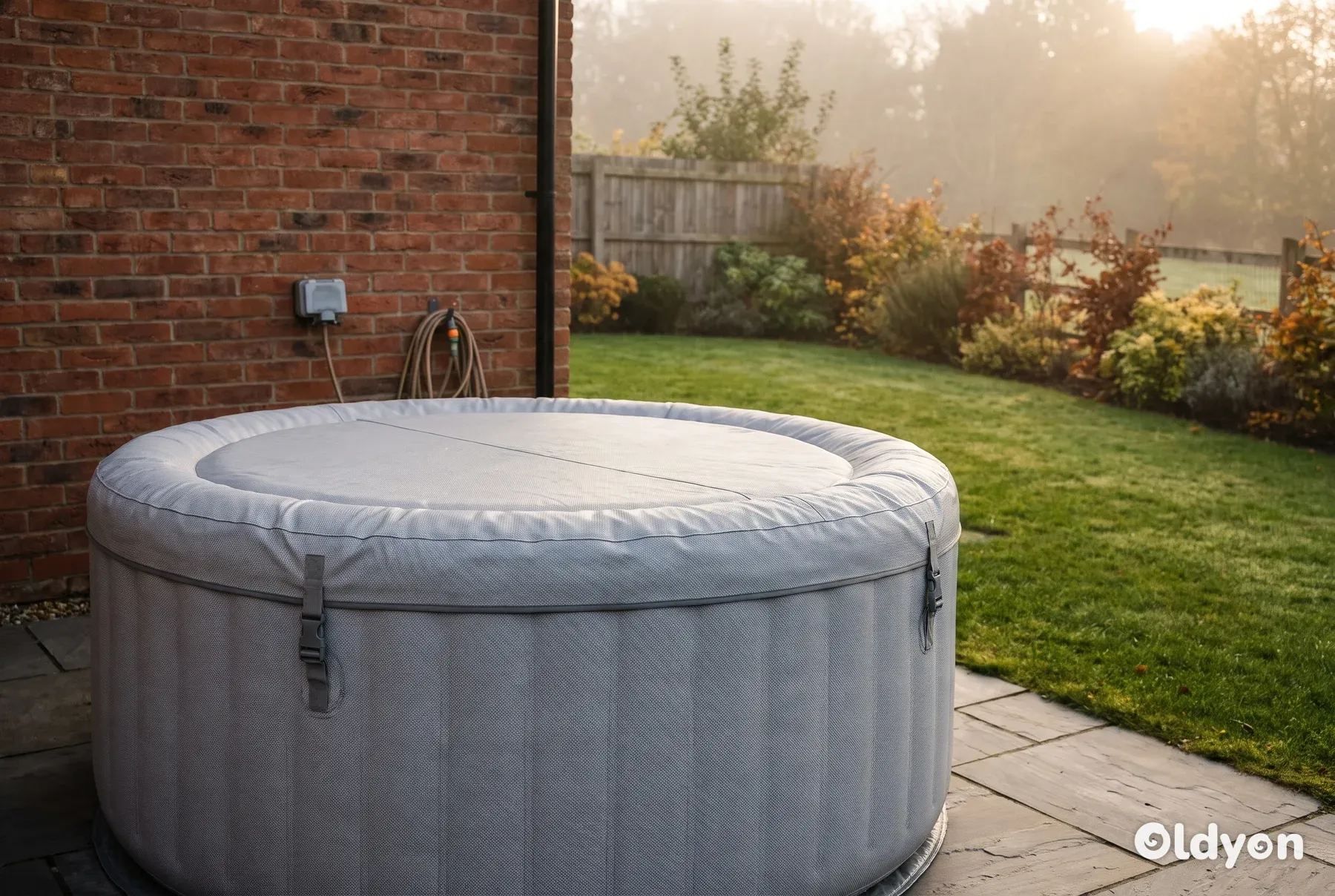
A plug and play hot tub runs from an ordinary UK 13 amp socket, so you can set it up without a new circuit. The trade-off is power: on about 3 kW, the heater usually pauses while the jets or bubbles run, the water heats slowly in winter, and the tub needs an RCD protected outdoor socket, never an extension lead.
None of that makes a 13 amp tub a poor choice. It means you should buy one with clear expectations, check your socket and base before delivery, and compare the features that actually change how the tub behaves on a cold evening.
What does plug and play mean on a UK 13 amp supply?
UK mains electricity is nominally 230 volts. A 13 amp socket can therefore supply roughly 3 kW (13 amps multiplied by 230 volts is about 2,990 watts). Everything the hot tub does at any one moment has to fit inside that limit, or the plug fuse or circuit protection will cut the power.
A hot tub has three main loads: the heater, the circulation and filter pump, and the jet pump or air blower that makes the bubbles. On many 13 amp tubs the heater alone is close to 2 kW, and a blower or jet pump can add 1 kW or more. Running them all together would go over what a standard socket can safely deliver.
Plug and play simply means the tub arrives with a lead and plug, and you connect it to a suitable existing socket instead of having it hard-wired. Most inflatable tubs work this way, and so do some rigid and rotomoulded tubs. For the numbers behind this, see our guide to how many amps a hot tub uses in the UK.
Why does the heater switch off when the jets are on?
To stay within about 3 kW, the tub's controller decides which loads may run together. On most 13 amp models, the heater is switched off while the bubbles or jets are running, and it switches back on when they stop. This is normal behaviour, not a fault.
The practical effect is that the water slowly loses heat during a bubble session, especially on a cold or windy day. The tub then has to recover that heat afterwards, which takes time on a small heater.
As a typical figure, the water drops by roughly 0.5 to 1°C per hour while the bubbles run and the heater is paused. The exact rate depends on the air temperature, wind and insulation. Once the bubbles stop, the heater switches back on and makes up the loss after the session.
Mode | What runs | What it means for you |
|---|---|---|
Heating | Filter pump and heater | Water warms slowly towards the set temperature |
Bubbles or jets on | Blower or jet pump, filter pump | Heater paused, water cools gradually |
Reduced-power bubbles (some models) | Heater, filter pump, jets or blower at low power | Gentler bubbles, water keeps heating |
Filtration only | Filter pump | Water is cleaned but not heated |
Freeze protection (if fitted) | Pump and heater as needed | Stops water freezing in very cold weather |
Many controllers also switch the bubbles off automatically after a set time, so the heater can catch up. The exact behaviour varies between manufacturers, so check the manual for how your model handles heating and jets.
Not every 13 amp controller switches the heater fully off. Some keep heating and run the jets or blower at reduced power instead, so the total load stays within about 3 kW. The bubbles feel gentler, but the water keeps warming. Check the specification or manual to see which approach a model uses before you buy.
A simple habit helps: let the tub reach temperature before you get in, then use the bubbles in shorter bursts instead of leaving them on for the whole session.
How long does a 13 amp hot tub take to heat up?
Heating time depends on the water volume, the starting temperature, the air temperature, wind and the quality of the cover. Manufacturers of inflatable tubs commonly quote rates in the region of 1-2°C per hour. Treat any quoted figure as a best case in mild, still conditions with the cover on.
Cold tap water in the UK can be around 10°C (50°F). Raising it to 38°C (100°F) is a rise of 28°C, so the first heat-up after filling often takes most of a day, and longer in winter. Plan your first fill for a day when you are not expecting to use the tub that evening.
As a concrete guide, the first heat-up from cold tap water to 40°C (104°F) on a typical small heater often takes around 18 to 24 hours. In winter, with cold air and colder tap water, it can take longer than that.
Setting up the tub itself is quicker. Inflatable plug and play tubs come with a pump that inflates the tub in roughly 20 minutes, so the whole setup including filling usually takes about an hour. Heating time comes on top of that.
Steps for the first fill and heat-up
- Check that the base is level, firm and clear of sharp objects, and that the socket is close enough for the lead to reach without strain.
- If the tub is inflatable, inflate it with the supplied pump to the firmness the manual describes, which usually takes around 20 minutes.
- Fill the tub with a garden hose to the level marked on the liner or shell, using a hose filter if your water is hard.
- Plug the tub directly into the outdoor socket and test the RCD on the lead, if one is fitted, as the manual describes.
- Set the temperature, switch on heating and fit the cover straight away, fastening all the straps or clips.
- Add sanitiser and balance the water once the water is circulating, following the dosing guidance on the product label.
- Leave the cover on and avoid using the bubbles until the water has reached the set temperature.
Using a plug and play hot tub in winter
You can use many 13 amp tubs through a British winter, but you need to manage heat loss. A small heater can only keep up with cold air and wind if the tub is well insulated and the cover stays on whenever nobody is in the water.
- Keep the tub running at your chosen temperature instead of letting it cool and reheating it for each use.
- Use a thick, well-fitting cover and check that its seal sits flat all the way round.
- Put an insulated ground mat or base under an inflatable tub to reduce heat loss into the ground.
- Shelter the tub from wind with a fence, wall or windbreak.
- Use the bubbles in short bursts, because the heater is paused while they run.
- Accept that recovery after a long session may take several hours on a cold night.
Some manufacturers state a minimum outdoor temperature for using or running their inflatable tubs, and some models include automatic freeze protection. These limits differ between brands, so read the manual before you plan winter use.
Many inflatable tubs list a minimum outdoor operating temperature of around 4°C (39°F). Treat this as a typical figure only, and check the exact limit for your model in its manual.
If you live somewhere with frequent hard frosts and want to use a 13 amp tub through winter, consider a sheltered outbuilding or a covered structure such as a gazebo. Out of the wind and rain, the tub loses far less heat than it would in an open garden position.
An enclosed space needs good ventilation, because warm water releases a lot of moisture and some sanitisers give off fumes. The floor must also be level and strong enough for the full weight of the filled tub with people in it, so ask a builder or structural engineer if you are unsure.
Storing an inflatable tub over winter
If you do not plan to use an inflatable tub through winter, you can pack it away until spring. Drying it fully before storage is the step that matters most, because damp material can grow mould in storage.
- Switch the tub off at the socket and unplug it.
- Drain the water following the manual, using the drain valve and a hose to a suitable drain.
- Remove and clean the filter cartridges, and clean the inside of the tub.
- Leave the tub, pump unit and cover to dry thoroughly in a dry, airy place.
- Deflate the tub and fold it loosely without sharp creases.
- Store the tub, pump and accessories indoors in a dry place that does not freeze.
What socket does a plug and play hot tub need?
The tub should plug directly into a weatherproof outdoor socket that is protected by a 30 mA residual current device (RCD). BS 7671, the UK wiring regulations, requires this level of RCD protection for sockets used with equipment outdoors. Our guide to hot tub RCD protection explains how the RCD protects you.
- An outdoor socket designed to stay weatherproof while a plug is inserted, not an indoor socket used outside.
- 30 mA RCD protection on the circuit, tested regularly using the test button.
- A position close enough that the tub's own lead reaches without being stretched or lying in a walkway.
- The plug and socket kept off the ground and away from where water splashes or collects.
- A circuit that is not already heavily loaded by other outdoor equipment at the same time.
Never run a hot tub from an extension lead or cable reel, even a heavy-duty outdoor one. A hot tub draws close to the full 13 amps for hours, which can overheat leads and connections, and extra joints let water in. Hot tub manufacturers consistently forbid extension leads. If the lead does not reach, have a socket fitted closer.
Many inflatable tubs have a portable RCD built into the lead near the plug. Test it before use as the manual describes. It adds protection but does not replace RCD protection on the fixed wiring.
If you do not have a suitable outdoor socket
Ask a registered electrician to fit one. In England and Wales, installing a new circuit is notifiable work under Part P of the Building Regulations, and a registered electrician can certify it for you. Scotland and Northern Ireland have their own building rules, and other countries have their own wiring standards.
The electrician can also check that your existing wiring, consumer unit and RCD are suitable for a continuous load. Our guide to hot tub electrical requirements in the UK covers this in detail, and the Electrical Safety First charity publishes free guidance on outdoor electrics.
Is a 13 amp or a 32 amp hot tub better for you?
A 32 amp tub is hard-wired on its own dedicated circuit through an outdoor isolator. With more power available, it can usually heat and run the jets at the same time, and it often heats faster. The cost is a new circuit installed by an electrician.
For comparison, a 32 amp tub can typically heat from a cold fill in around 6 to 8 hours. A 13 amp tub often needs the best part of a day for the same job. Actual times depend on the tub's size, heater rating and the weather.
Running costs are closer than many people expect. Heating the same volume of water by the same amount takes roughly the same energy on either supply, so a 13 amp tub usually costs little more to run than a 32 amp tub of similar size and insulation.
The main extra cost of a 32 amp tub is the electrician installing its dedicated circuit. Any running-cost saving would take many years to recover that installation cost, so choose the supply for how you want to use the tub, not to save on electricity.
- A 13 amp tub suits you if you want a simpler setup, already have a suitable outdoor socket, use the tub mainly in spring to autumn, or may move house.
- A 32 amp tub suits you if you want long jet sessions in winter, have a larger rigid tub, or plan to keep the tub in one place for many years.
- Some rigid tubs can be set up for either supply. On 13 amps they behave like a plug and play tub, with the heater pausing while the jets run.
For a full comparison of heating, running and installation, read 13 amp vs 32 amp hot tubs compared.
How to choose a plug and play hot tub: the features that matter
Once you accept the 13 amp limits, a few features decide how pleasant the tub is to own. Compare these before you compare colours or accessories. If you are leaning towards an inflatable model, our guide on how to choose the best inflatable hot tub goes further into liners and wall construction.
Size, capacity and weight
The advertised number of seats is often generous, especially for inflatable tubs with no moulded seats. Look at the internal diameter and water depth, and consider how many adults will usually use it.
As a rule of thumb, a tub sold as four-person fits two or three adults comfortably, and a six-person tub suits about four adults. Size the tub for the number of people who will usually use it together, not for the occasional party.
A larger tub holds more water, and more water takes longer to heat on a small heater. One litre of water weighs about 1 kg, so a tub holding 1,000 litres (about 264 US gallons) weighs about a tonne before anyone gets in. Your base must be level and strong enough for the full weight.
Wall height sets how deep you sit in the water. A tub around 63 cm (25 in) high leaves more of your upper body out of the water than one around 71 cm (28 in). Lower walls are easier to step over, which helps people with limited mobility.
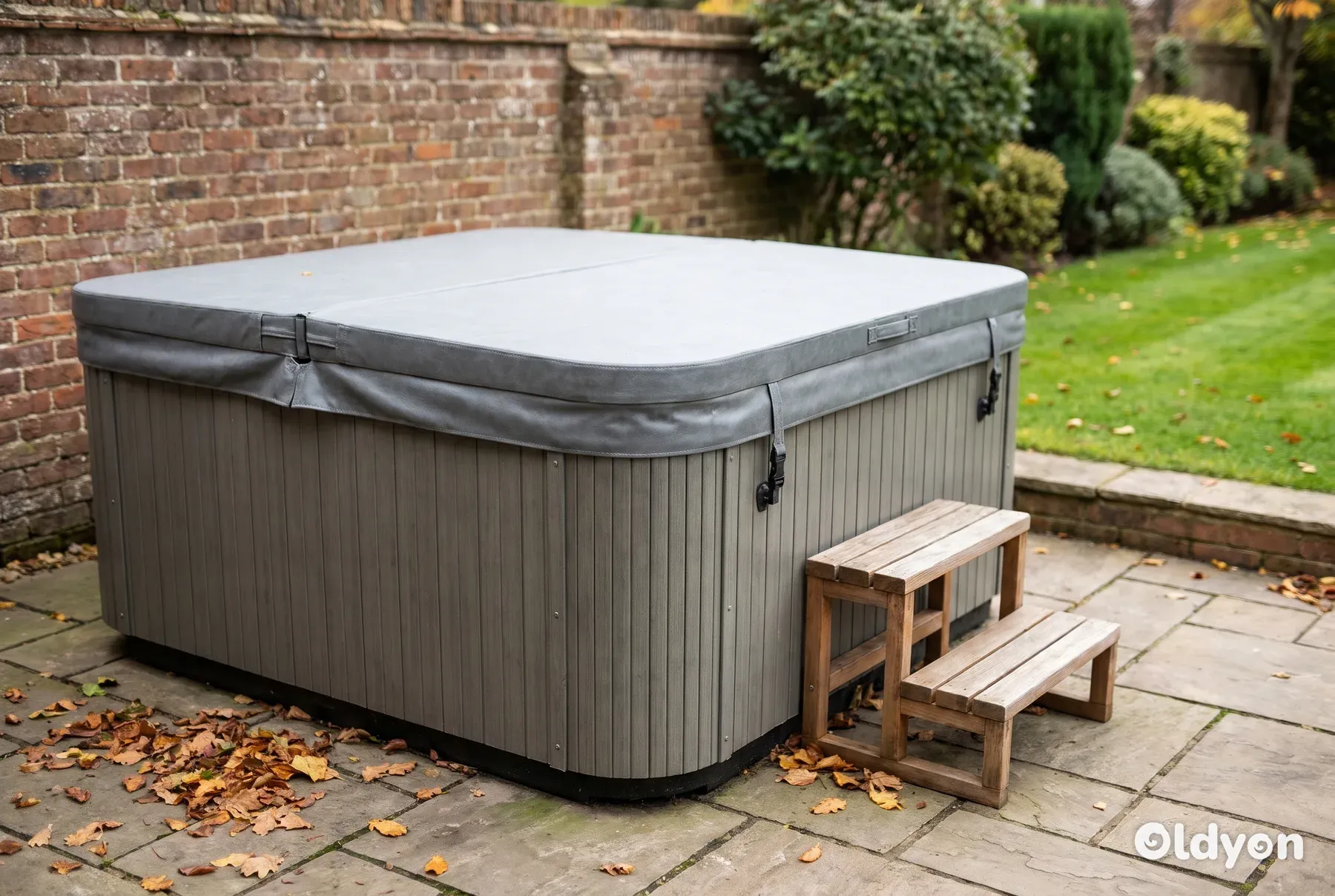
On a taller-walled tub, think about how you will get in and out safely, especially with wet feet. A spa step or a sturdy, stable bench beside the tub gives you a secure footing. Some bundles include a step, while others need one bought separately, so check before you compare prices.
Shape affects how the tub fits your space. A square tub fits neatly into a corner, but it takes up more ground area than a round tub of the same width. Measure the space, including room to walk around the tub, before you buy.
Jets and bubbles
The jet count on a plug and play tub often tells you less than it seems. Most inflatable tubs use an air blower that pushes air through many small holes in the floor, which gives a bubbling effect, not a targeted massage. Rigid tubs may have water jets driven by a pump.
With air bubble systems, more outlets give more coverage around your body, but not stronger pressure. A tub with a higher jet count does not give a stronger massage, so do not treat the number as a measure of strength.
Whatever the type, the heater pauses while the bubbles or jets run. Compare how the controller manages this, and whether the jets or blower can run on a lower setting, instead of comparing the number of outlets.
Wall construction: air-filled or rigid foam
For inflatable walls, look for multi-layer laminated PVC with drop-stitch or internal beam construction. These walls are stiffer and more resistant to punctures than a simple single-layer wall, and they hold their shape better when people lean on them.
Some plug and play tubs have rigid foam walls instead of air-filled ones. Foam walls insulate better, feel sturdier and need no inflation. The downside is that they are heavier and harder to drain, fold and store, so they suit a tub that stays set up all year.
Because a rigid foam wall tub needs no inflation, setup is mostly assembling the wall panels, fitting the liner and connecting the pump unit. This typically takes about 30 to 45 minutes before filling. Follow the manual for the exact steps.
Heater, insulation and cover
- Heater rating, usually listed in kW in the specification.
- Wall construction and any insulating layer in the walls or floor.
- Cover thickness, fit and how securely it fastens.
- Whether an insulated floor mat or base is included or needs buying separately.
Controls and filtration
- A temperature setting that suits you. Most plug and play controllers let you set the water anywhere between about 20°C (68°F) and a maximum of 40°C (104°F).
- A heating timer or economy mode that lets you heat at cheaper times or hold a lower standby temperature. Some timers can be programmed weeks ahead.
- App or Wi-Fi control on some models, letting you adjust temperature, heating timer, filtration and bubbles from your phone.
- Automatic freeze protection, if you plan to keep the tub running in winter.
- Filter cartridges that are easy to remove, clean and buy as replacements.
- A filter reminder. Some controllers prompt you to replace the filter after a set number of running hours, for example around 120 hours, and show an error code when the filter is clogged.
- A built-in hard water treatment system on some tubs, which helps reduce limescale in areas with hard water.
- A control panel you can read and use easily in low light.
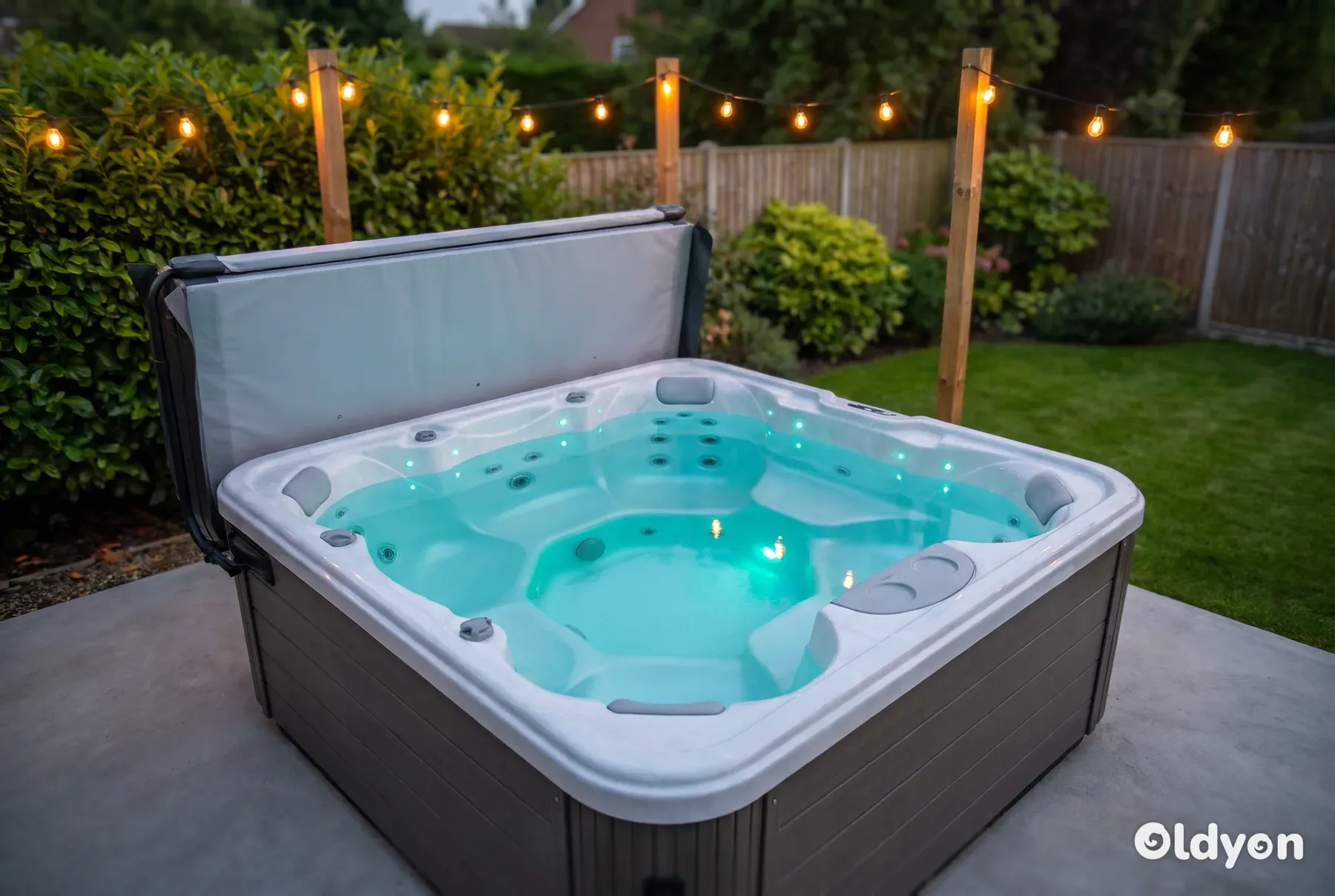
- Built-in LED lighting on some models, which makes evening and winter use easier and safer when you get in and out in the dark.
What comes in the box
Check the contents list before you compare prices, because missing items add to the real cost. Two tubs at a similar price can differ a lot in what you need to buy separately.
- Spare filter cartridges.
- A ground sheet or insulated floor mat.
- A puncture repair kit for inflatable tubs.
- A hose adapter for filling and draining.
- Headrests or cushions.
- A floating chemical dispenser.
- A spa step, which matters most on taller-walled tubs.
Water care supplies are usually not included. Budget separately for sanitiser, pH increaser and decreaser, and test strips, and buy them before the first fill so you can balance the water as soon as it starts circulating.
Warranty, spare parts and support
Lesser-known or unbranded tubs can be cheaper, but warranty support, spare parts and customer service are less predictable. Before you buy, read the warranty terms, including what they cover on the pump and heater unit and for how long.
Also check that replacement filters, covers and pump parts are easy to buy in your country. A tub that cannot be repaired when the heater unit fails may cost more in the long run than one that was more expensive at the start.
How much does a plug and play hot tub cost to buy and run?
As a broad guide, inflatable plug and play tubs usually cost from a few hundred pounds to over £1,000, depending on size, insulation and features. Rigid tubs that run on 13 amps generally start at a few thousand pounds. Prices change often, so compare current listings.
Running cost depends mostly on how long the heater runs. To estimate it, multiply the heater's power in kW by the hours it runs, then by the unit rate on your electricity bill. For example, a 2 kW heater running for 3 hours uses 6 kWh.
Heating hours rise sharply in cold, windy weather, so a tub will cost more to run in winter than in summer. A good cover, a sheltered position and an insulated base reduce heater running time more than anything else.
What should first-time owners know about safety?
- Keep the water no hotter than 40°C (104°F), and use a lower temperature for longer sessions.
- Keep sessions short and get out if you feel dizzy, sick, faint or too hot.
- Do not use the tub after drinking alcohol.
- Always supervise children and keep the cover locked when the tub is not in use.
- If you are pregnant or have a heart condition, high or low blood pressure or another health condition, speak to your GP or midwife before using a hot tub. The NHS pregnancy pages cover overheating in pregnancy.
- Switch the tub off at the socket before any cleaning or maintenance.
If you want to stay in for longer than 15 to 20 minutes, a water temperature of around 37 to 39°C (98 to 102°F) is generally safer than 40°C. A lower temperature does not remove the risk, so still get out straight away if you feel unwell.
Water care matters as much as electrical safety. Widely used targets are free chlorine 3-5 ppm or bromine 3-5 ppm, pH 7.2-7.6, total alkalinity 80-120 ppm and calcium hardness 150-250 ppm. Some manufacturers give slightly different ranges, so follow your manual where it differs.
Warm water that is poorly maintained can allow bacteria such as Legionella to grow. The Health and Safety Executive explains the risk. Keeping sanitiser levels steady, cleaning filters and changing the water regularly all reduce it.
Common mistakes to avoid
- Buying the largest tub available without considering how long the heater will take to warm that volume.
- Expecting to run the bubbles for an hour and keep the water hot on a winter evening.
- Planning to use an extension lead because the nearest outdoor socket is too far away.
- Placing the tub on grass, decking of unknown strength or an uneven surface.
- Leaving the cover off between sessions, which wastes most of the heat the tub has built up and lets leaves and debris fall into the water.
- Ignoring the manufacturer's minimum air temperature or water care instructions.
Summary
A 13 amp plug and play hot tub gives you a simple setup, with clear limits. The heater pauses while the jets or bubbles run, heating is slow, and winter use depends on good insulation and a cover that stays on.
Choose a size the heater can realistically manage, check the base and cover, and make sure you have a weatherproof outdoor socket with 30 mA RCD protection within reach of the lead. If you want long jet sessions in cold weather, compare a 32 amp tub before you decide.
Frequently asked questions
Are plug and play hot tubs any good?
They can be very good if your expectations match the 13 amp limits. They are cheaper to set up because they need no new circuit, and many owners use them happily all year. The compromises are slower heating, and a heater that pauses while the bubbles or jets run, so the water cools during long sessions in cold weather.
Can I use a plug and play hot tub all winter?
Often yes, but check the manufacturer's minimum operating temperature first, because some inflatable models set one. Keep the tub running at temperature instead of reheating from cold, keep the cover on, add an insulated base and shelter it from wind. Expect slower recovery after sessions and higher running costs than in summer.
Why are hot tub sessions often limited to about 15 to 20 minutes?
Hot water raises your body temperature, and long sessions can cause dizziness, fainting or overheating. Many manufacturers suggest a time limit for this reason, and shorter sessions are sensible at higher temperatures. Get out if you feel unwell. People who are pregnant or have heart or blood pressure conditions should ask their GP or midwife for advice first.
Can I plug my hot tub into a socket in the garage?
Only if the socket is RCD protected and the tub's own lead reaches it directly, with no extension lead. The lead must not pass through a door that can trap or crush it, and the plug must stay dry. In practice, a dedicated weatherproof outdoor socket near the tub, fitted by a registered electrician, is usually the safer option.
Can I use a smart plug or timer plug with a hot tub?
It is best avoided unless the manufacturer specifically allows it. A hot tub draws close to 13 amps for long periods, which is a heavy continuous load for a plug-in device, and adds another connection that could overheat. Use the tub's built-in timer or economy mode to control heating times instead.
Why does my plug and play hot tub keep tripping the RCD?
Common causes include water getting into the plug or socket, a damaged lead, moisture in the heater or pump, or too much other equipment on the same circuit. Switch off, keep away from wet electrics and do not keep resetting it. Check the manual's troubleshooting section, and ask a registered electrician or the manufacturer if it continues.
Filed under