How to get sand out of a hot tub
Learn how to get sand out of a hot tub with a spa vacuum or wet vac, clean the filter afterwards and keep grit out with a foot tray and rinse.
The quickest way to get sand out of a hot tub is to switch off the pump, let the sand settle, then lift it from the floor with a spa vacuum or a wet/dry vacuum. Afterwards, rinse or deep clean the filter, because that is where the rest of the sand ends up.
Removing it is only half the job. A foot tray, a quick rinse before you get in and a cover kept in place will stop most sand and garden grit from coming back, and they matter even more on the soft floor of an inflatable.
Is it sand, scale or something else?
Before you start, check what you are actually looking at. Gritty bits on the floor of a hot tub are not always sand, and the fix for each problem is different. Ten seconds of checking can save you an hour of vacuuming the wrong thing.
What each one looks like
- Sand: loose grains that collect in the footwell and seat corners, roll freely when you rub them, and settle again quickly when the water is still.
- Garden grit and soil: darker, mixed particles, often with bits of grass or leaf, that may cloud the water slightly when stirred.
- Calcium scale: white or pale grey flakes or a rough crust that sticks to surfaces, especially at the waterline, on jets and around the heater area.
- Worn filter material: soft grey or white fibres rather than hard grains, often after a filter has been pressure washed or is near the end of its life.
A simple rule helps. Sand and dirt are usually tan, brown or grey and do not stick to your fingers or to the shell. If the grit is white and clings to surfaces, treat it as scale first until a test shows otherwise.
The vinegar test
Scoop a few grains onto a saucer and add a few drops of white vinegar. Calcium scale is mostly calcium carbonate, so it fizzes or bubbles as the acid reacts with it. Ordinary sand is mostly silica and does not react, so it just sits there.
To make the result easy to read, put the grit on a dark plate or tile, as small bubbles are hard to see against white. Use 3 to 4 drops of vinegar and watch closely for 10 to 15 seconds before you decide there is no reaction.
There is one exception. Some beach sand is made largely of crushed shell, which is also calcium carbonate and will fizz. If you have just come back from a shell beach and the grains look like sand, treat it as sand. If the particles appeared without anyone bringing sand in, scale is the more likely cause.
If it is scale, vacuuming will only remove the loose flakes. You also need to test calcium hardness, which most guidance puts at 150-250 ppm, and bring your water back into balance, or the flakes will keep forming.
Scale forms most readily when pH is high, so lower the pH into the 7.2-7.6 range first, then adjust calcium hardness. Use a dedicated spa scale remover to dissolve deposits that are bonded to the shell, following the product instructions, then clean the surface with a non-abrasive spa surface cleaner. No vacuum can lift scale that has stuck to the surface.
Can sand damage a hot tub?
A small amount of sand will not ruin a hot tub overnight, but leaving it there is a bad idea. Sand is hard and abrasive, and the parts it reaches are not designed to cope with it for long.
- The filter: sand packs deep into the pleats and reduces water flow, which makes the pump and heater work harder.
- The pump: grains that get past the filter can wear the impeller and seals over time.
- Pump seals: a seal worn by sand can let water leak into the motor housing, which can damage the motor.
- Circulation and heating: a worn impeller moves less water, and poor circulation puts extra strain on the heater.
- Jets and fittings: sand can lodge in jet bodies and around moving parts, making them stiff or noisy.
- The shell or floor: sand under bare feet acts like fine sandpaper, which can dull acrylic and scuff the PVC floor of an inflatable.
- Water quality: garden grit carries soil and organic matter, which uses up sanitiser and can make the water harder to keep clear.
No hot tub chemical will dissolve or break down sand or grit, and that includes shock. Sanitisers and other water treatments do not break sand down, so it stays in the tub until you take it out. The only way to remove it is physically: by suction, by siphoning or by draining.
There is a hygiene side too. Sand and organic grit give bacteria such as Pseudomonas aeruginosa places to shelter from sanitiser, and this bacterium is linked to hot tub folliculitis, an itchy skin rash. Remove sand promptly and keep sanitiser in range. The NHS page on folliculitis explains the symptoms and when to get help.
The good news is that sand is heavy. Once the water is still, it sinks and stays in one place, which makes it far easier to remove than fine dust or floating debris.
What do you need before you start?
You do not need every item on this list. Pick the tools that suit how much sand there is and what type of hot tub you have.
- A spa vacuum: a manual piston type, a garden hose powered type or a battery powered type.
- A wet/dry vacuum, for heavy sand or after a trip to the beach.
- A turkey baster or large syringe, for corners and seat edges.
- A soft sponge or soft cloth.
- A garden hose with a spray nozzle, for rinsing the filter.
- Filter cleaner, if the filter is heavily clogged.
- A water test kit or test strips, for checking the water afterwards.
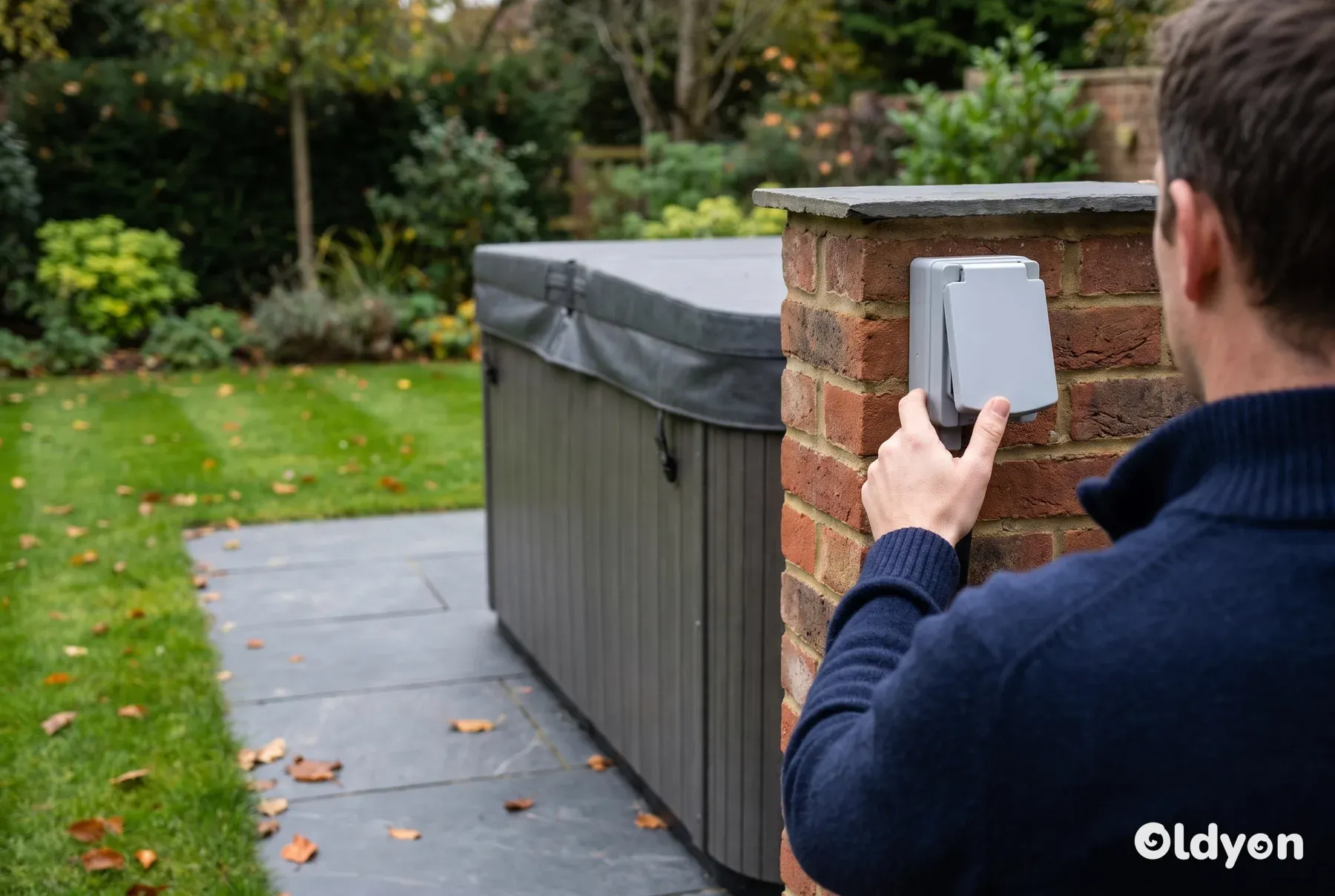
Switch the hot tub off at the isolator before you put a vacuum, hose or your hands near the suction fittings or filter. If you use a mains-powered wet/dry vacuum, keep the vacuum, its cable and plug on dry ground well away from splashes, and plug it into a socket with RCD protection.
How to get sand out of a hot tub without draining it
Most sand can be removed with the water still in. The key is patience: turn off the jets and circulation, and give the sand an hour or so to settle into the footwell and corners before you start. Stirring the water while you work just spreads it around again.
Gather scattered sand into one pile
If the sand is spread thinly across the floor, herd it together first. Direct a gentle stream from a water squirter or spa wand across the floor towards the footwell or one corner. Once the sand is in a single pile, vacuuming or basting it up is much quicker.
Fill the squirter or wand with water from the hot tub rather than fresh water, so you do not change the water balance or temperature. Hold the tip just above the floor surface, aim at the outer edges of the scattered grit first, and sweep slowly inwards. This gathers the sand in the middle instead of pushing it further out.
Using a spa vacuum
A spa vacuum is the tidiest option for light to moderate sand. Manual piston types work like a large syringe: you pull a handle to draw water and sand into a tube, then empty it. Hose-powered types use water pressure from your garden hose to create suction, and battery types use a small motor, with both trapping debris in a bag or filter.
If you use a battery spa vacuum, charge it fully before you start. Suction drops as the battery runs down, and a weak vacuum leaves fine sand behind.
- Switch the hot tub off at the isolator and remove the cover.
- Wait for the water to go completely still and the sand to settle.
- Lower the vacuum head slowly into the water so you do not create a current.
- Start in the footwell, where most sand collects, and move the head slowly in overlapping strokes.
- Work along the seat edges and corners, then check the steps and any ledges.
- Empty the collection bag or chamber whenever suction drops, rinsing it away from the tub.
- Switch the power back on and run the filtration for about 30 minutes, so the filter can catch fine particles still suspended in the water. Then switch off at the isolator again.
- Clean the filter (see the section below) and top up the water if the level has dropped.
If you use a hose-powered vacuum, remember that it adds fresh water as it works. That is usually fine, but keep an eye on the level and test the water afterwards.
Using a wet/dry vacuum
A wet/dry vacuum is the fastest way to deal with a lot of sand, for example after children come home from the beach. It removes water along with the sand, so expect to top up afterwards. Only use a vacuum that is designed for liquids, never a household vacuum.
It is also a practical choice for small amounts of sand if you do not own a spa vacuum. Many households already have a wet/dry vacuum in the garage or shed, or can borrow one from family or a neighbour.
- Switch the hot tub off at the isolator and let the sand settle.
- Set the wet/dry vacuum to wet mode and remove the dry paper or cloth filter if it has one, as water will ruin it.
- Set the wet/dry vacuum on dry, level ground beside the tub, with the cable kept away from water.
- Fit a narrow crevice tool or a long extension tube.
- Hold the nozzle just above the floor and move it slowly through the footwell, letting it draw up sand with as little water as possible.
- Watch the tank level and empty it before it fills, as most wet/dry vacuums will cut out or lose suction when full.
- Do the corners and seats, then switch the vacuum off and move it away from the tub.
- Top up the hot tub with fresh water, run the filtration for about 30 minutes, then clean the filter and test the water.
Avoid pushing the nozzle hard against the floor of an inflatable, as strong suction can grip the soft material. Hover just above it instead.
Small amounts in corners
For a few grains in a seat corner or around a jet, a turkey baster or large syringe works well. Draw the sand up slowly, then squirt it into a bucket rather than back into the tub. A soft damp sponge pressed gently onto a small patch of sand will also pick up a surprising amount.
- Squeeze the bulb of the turkey baster before you lower it into the water, so you do not blow air into the sand.
- Lower the tip slowly and hold it about 1 cm (half an inch) above the grit, without touching the floor.
- Release the bulb slowly, so the sand is drawn in without being stirred up.
- Lift the baster out and empty it into a bucket.
- Repeat until the patch is clear.
A turkey baster is only practical for small amounts, up to about 250-500 ml (one or two cups) of sand. If you can still see a layer on the floor after about 10 minutes, switch to a vacuum.
Using a garden hose as a siphon
If you are planning to drop the water level anyway, a garden hose siphon can carry sand out with the water. Fill the hose with water, keep one end under the surface near the sand and run the other end to a point lower than the tub. Move the submerged end slowly across the floor, and stop before the water level gets below the jets or skimmer.
- Switch the hot tub off at the isolator and let the sand settle.
- Push the whole hose under the water until it is completely full and no more air bubbles come out.
- Seal one end firmly with your thumb, keeping the other end under the water near the sand.
- Lift the sealed end out over the side of the tub and lower it below the tub's waterline, into a bucket or a suitable drain.
- Take your thumb away. Water should start to flow out on its own.
- Guide the submerged end slowly across the floor, just above the sand.
- Stop before the water level drops below the jets or skimmer, then top up the tub.
The lower the outlet end sits below the tub, the stronger the pull. If the flow stops, the siphon has been lost, usually because air got into the hose. Refill the hose under the water and start again.
Which method suits your situation?
As a general rule, start with the method that takes the least effort, such as a turkey baster or a spa vacuum. Only move on to a wet/dry vacuum, a siphon or a full drain if the simpler method leaves grit behind.
The times below are rough guides for the removal itself, not including the settling time before you start.
Method | Best for | Watch out for | Rough time | Water loss |
|---|---|---|---|---|
Manual spa vacuum | Small patches and the footwell | Slow for large amounts | 10-20 minutes | Minimal |
Hose-powered spa vacuum | Moderate sand across the floor | Adds water; needs good hose pressure | 10-20 minutes | None (adds water) |
Battery spa vacuum | Regular quick cleans | Fine sand can pass coarse bags | 10-20 minutes | Minimal |
Wet/dry vacuum | Heavy sand after a beach trip | Removes water; keep the unit dry | 15-25 minutes | Moderate |
Garden hose siphon | Sand when lowering the water level | Lost siphon; level dropping too far | 15-30 minutes | Moderate |
Turkey baster or sponge | Corners and seat edges | Tiny amounts only | 2-5 minutes | None |
Squirter or spa wand | Gathering scattered sand into a pile | Moves sand but does not remove it | 2-5 minutes | None |
Drain and clean | Large amounts or water due a change | Refill and reheating take hours | Several hours | Full refill |
For a wider routine that keeps the shell and water clean between full changes, see our guide on how to clean a hot tub without draining it.
How do you clean the filter after removing sand?
However carefully you vacuum, some sand will already have been pulled into the filter. If you skip this step, that trapped sand slows the water flow and keeps working against your pump. Always treat filter cleaning as the last part of sand removal.
A clogged filter does more than reduce flow. Once the pleats are packed, fine grit can be pushed past the filter and recirculated back into the tub, so the water never quite clears.
- Switch the hot tub off at the isolator.
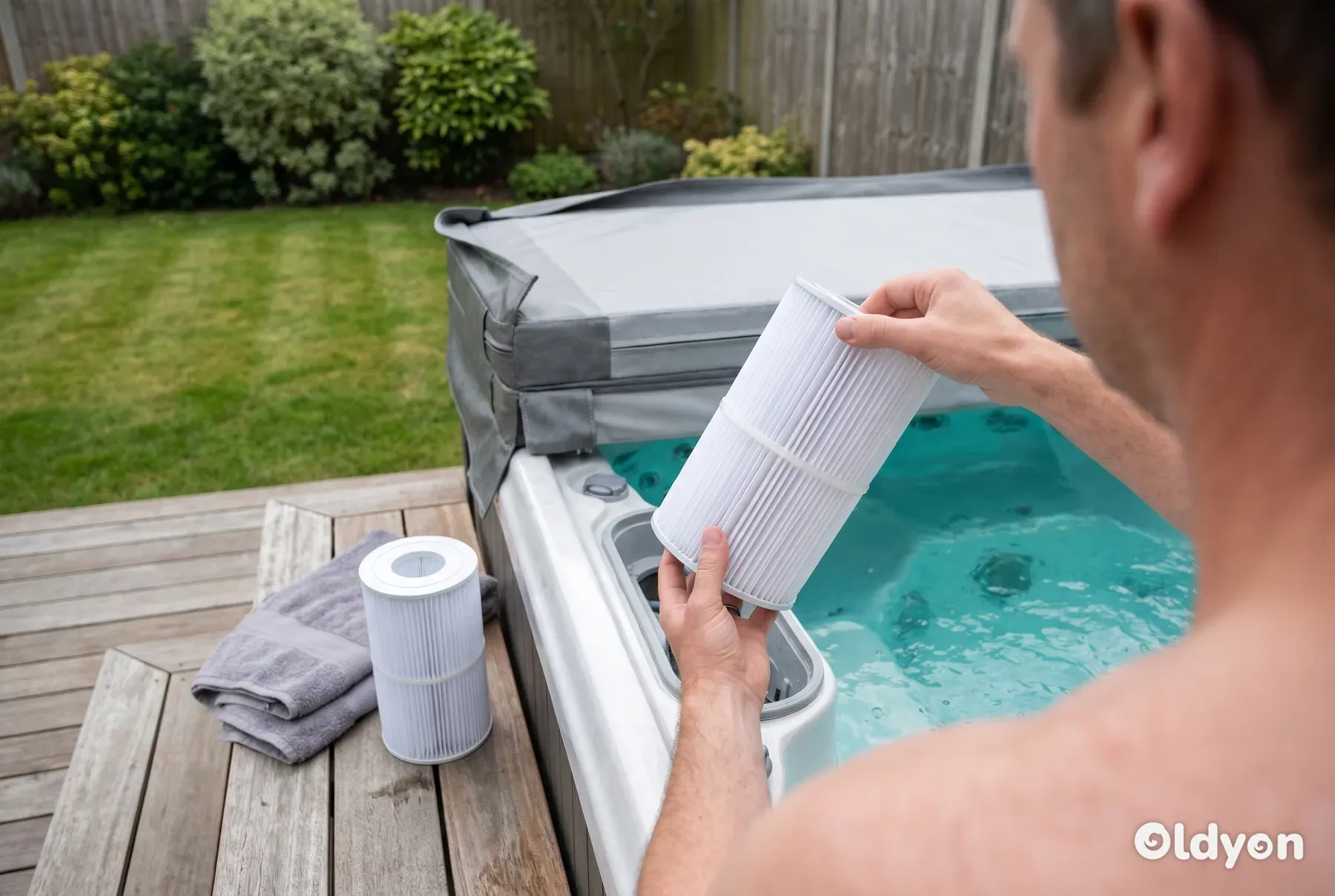
- Open the filter housing or skimmer and check the bottom of it for loose sand before you lift the filter out. Scoop or sponge out any sand you see, so it does not fall into the plumbing.
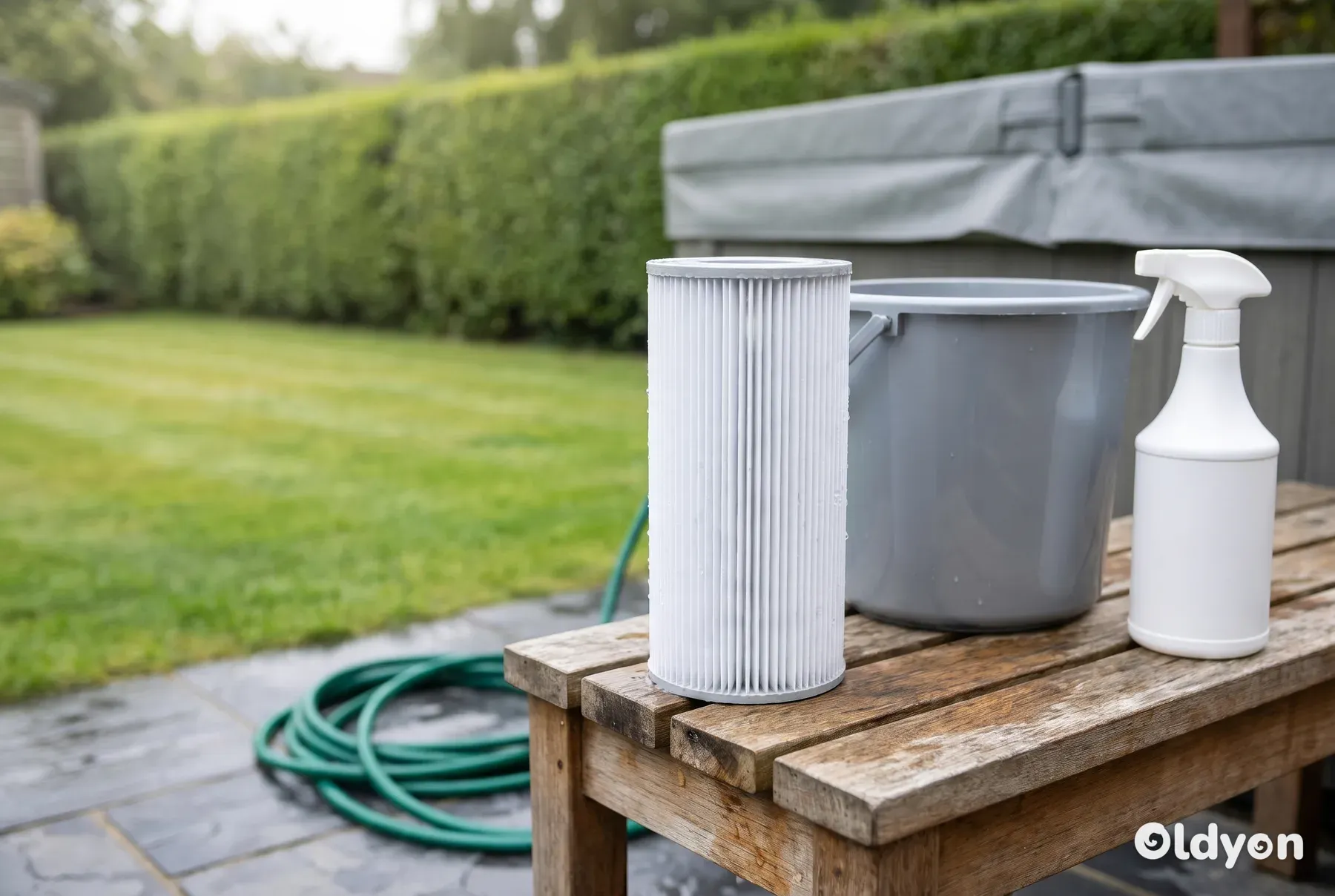
- Remove the cartridge and tap it gently against your hand over the lawn or a bucket to loosen the worst of the sand.
- Rinse it with a garden hose on a firm spray, working from top to bottom and angling the water between each pleat.
- Spread the pleats gently with your fingers and check for sand still packed at the base of each fold.
- If it is heavily clogged, soak it in a filter cleaner following the product instructions, then rinse thoroughly. A badly clogged cartridge can be left to soak overnight for a deeper clean.
- Inspect the cartridge for torn pleats, cracked end caps or a flattened, fuzzy surface, and replace it if it is damaged.
- Refit the filter, close the housing and switch the hot tub back on.
Do not use a pressure washer on a filter cartridge. It can tear the fabric and drive sand deeper into the pleats. Our full guide to cleaning a hot tub filter properly covers soaking times and how often to replace a cartridge.
Keeping a spare filter makes this much easier. You can fit a clean one straight away and let the sandy one dry fully before you inspect it, as dried sand is easier to see and shake loose.
When should you drain the hot tub instead?
Draining is worth it when there is a lot of sand, when the water is cloudy with soil, or when the water is nearly due for a change anyway. Many manufacturers suggest changing the water roughly every three to four months, but this varies with use and tub size, so check your manual.
Draining is also the right choice when grit has worked its way into the jets or plumbing, not only when there is a lot on the floor. Signs include jets that sputter, feel weak or make a grinding sound after a sand event.
Water chemistry is another reason. If the water is hard to bring back into balance after a big sand or soil intrusion, consider an early drain rather than chasing the problem with more and more chemicals.
A common rule of thumb for how often to change the water uses the tub's volume and how many people use it. Divide the volume in litres by 3.8 to get US gallons, divide that by 3, then divide by the average number of bathers per day. The result is the number of days between water changes. For example, a 1,500 litre (about 400 US gallon) tub used by two people a day gives roughly 66 days. Treat this as a rough guide and follow your manual if it differs.
Most acrylic tubs drain through a drain valve or spigot near the base. Gravity draining through a garden hose usually takes around 1 to 2 hours, depending on the tub's size, and a submersible pump speeds this up considerably. If you use a mains-powered pump, plug it into a socket with RCD protection and keep the plug dry.
- Switch the hot tub off at the isolator.
- Let sanitiser levels fall if you can, then drain the water to a foul drain, not a surface water drain, stream or pond. Rules vary by area, so check with your local water company if you are unsure.
- Once the tub is empty, wipe the sand from the floor and footwell with a soft sponge, collecting it in a bucket rather than rinsing it into the drain outlet.
- Rinse the shell lightly and wipe again until no grit remains.
- Inspect the jets and the filter housing for trapped grit and rinse it out.
- Clean the shell with a non-abrasive spa surface cleaner and a soft cloth, then rinse.
- Clean or replace the filter.
- Refill the tub. On most acrylic tubs, filling through the filter housing helps reduce airlocks, but follow your manual.
- Switch the power back on, balance the water and let it heat up before anyone uses it.
How do you get sand off an inflatable hot tub floor?
Inflatable hot tubs need a gentler approach. The floor is usually soft PVC or a similar material, and sand rubbed underfoot can scuff it. The pump and heater unit is also compact, with a small filter cartridge that clogs quickly, so sand causes problems sooner than it would in a large acrylic tub.
- Use a soft vacuum head or a sponge, never a stiff brush or scouring pad.
- Hover a wet/dry vacuum nozzle just above the floor rather than pressing it down.
- Pay attention to the seam where the floor meets the wall, as sand collects in that crease.
- Rinse the small filter cartridge after every sand clean, and keep a spare, as these filters are inexpensive and clog fast.
- Check that no sand has collected around the inlet and outlet strainers on the inside wall.
Grit underneath an inflatable matters too. Sand or small stones trapped between the floor and the ground can rub through the material over time and cause a slow puncture. When you set up or move the tub, sweep the base clean and use the ground mat or insulated floor protector that came with it.
If you are still deciding on a model, our guide on how to choose the best inflatable hot tub explains floor construction and what to look for in a base.
How do you stop sand getting into a hot tub?
Almost all the sand in a hot tub arrives on people's feet. Stopping it at the steps is far easier than vacuuming it out later, and a few small habits make a big difference.
Set up a foot tray
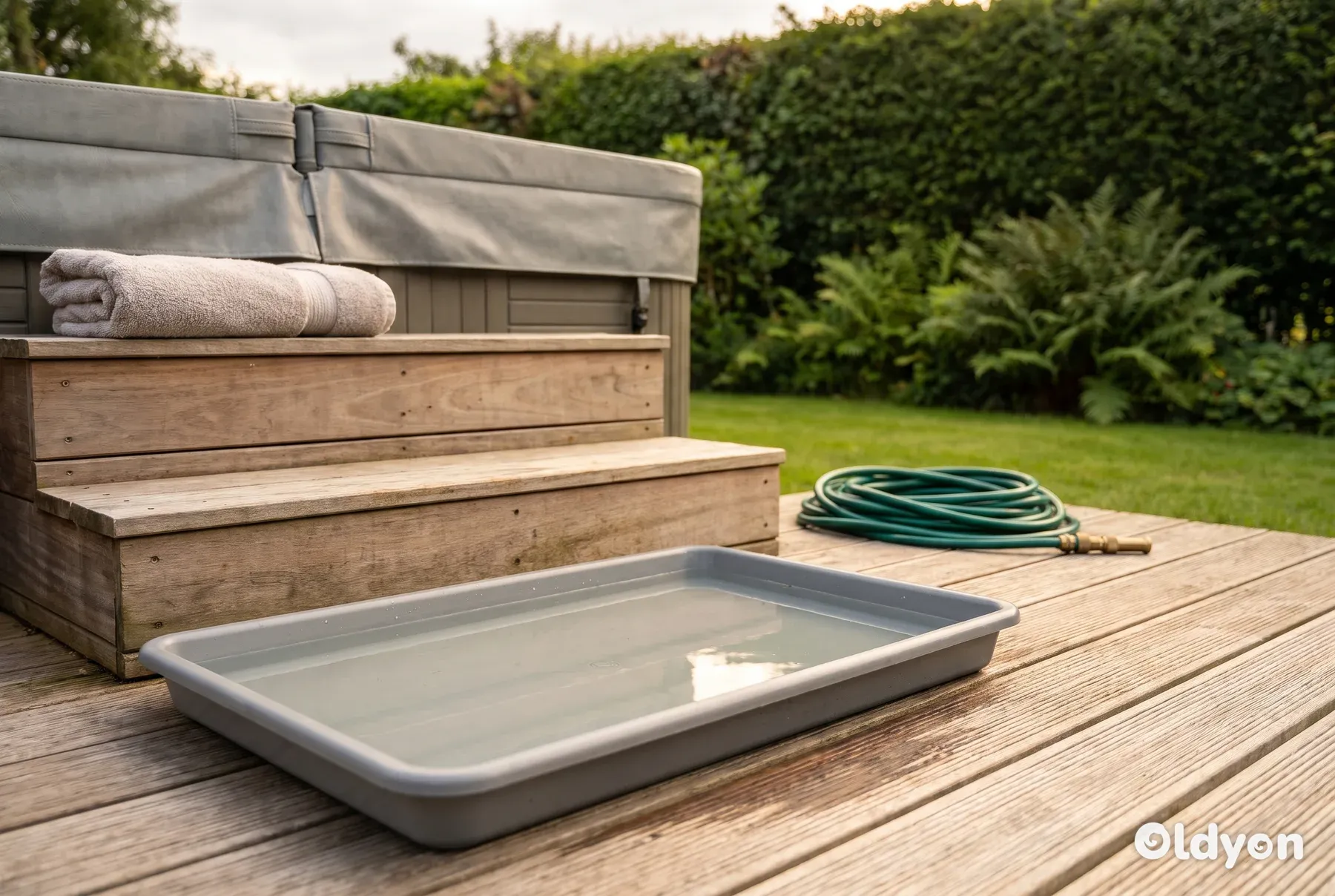
Place a shallow tray at the bottom of the hot tub steps with around 5 cm (2 in) of clean water in it. Everyone steps in it, swishes their feet, then climbs straight in. Change the water whenever grit builds up on the bottom of the tray, which may be every session during summer.
You do not need a special product. A cheap, shallow plastic storage box works well as a foot tray. Make using it a firm house rule for anyone coming to the tub from the beach, the lawn or the garden, including guests and children.
Rinse before you get in
A quick rinse under a garden hose or an outdoor shower removes sand from feet, legs and swimwear. This is especially useful after a beach trip or time in a sandpit, as sand hides in swimwear seams and falls out once it is underwater. A rinse also removes sun cream and sweat, which helps your sanitiser.
Make a clean path to the tub
- Lay a firm path of paving, decking or rubber mats from the house to the tub, so feet do not cross bare soil or lawn.
- Keep a mat or towel on the top step for a final wipe.
- Site children's sandpits and play areas well away from the hot tub.
- Sweep the deck or patio around the tub regularly, as wind blows grit onto it.
- Avoid gravel or bark chippings right next to the steps.
Keep the cover on
Wind can carry fine sand, soil and dust a surprising distance, especially in coastal or dry gardens. Keep the cover closed and locked whenever the tub is not in use. Brush any grit off the cover before you open it, so it does not slide into the water.
An uncovered tub can collect wind-blown sand, dust, pollen and lawn debris within a few hours, especially during dry, windy spells. Put the cover back on as soon as everyone is out, rather than leaving the tub open for the rest of the day.
Building sites are another source of wind-blown sand and dust. If there is construction work nearby, keep the cover on at all times when the tub is not in use, and check the water more often until the work is finished.
The cover only works if it seals. If it is damaged, split or no longer sits tightly on the tub, replace it. A poor seal lets in grit and dust, which means more cleaning and more chemicals.
The single most useful habit is the foot tray. Put it where nobody can reach the steps without walking through it, and most sand problems disappear.
A foot tray, a step mat and a spare filter are among the small items covered in our list of hot tub accessories worth buying.
What mistakes should you avoid?
- Running the jets or air blower before vacuuming: this lifts the sand and drives it into the filter and plumbing.
- Using a household vacuum: it is not designed for water and is an electrical hazard near a hot tub.
- Pressure washing the filter: it can damage the pleats and push sand further in.
- Scrubbing with abrasive pads: sand plus scrubbing scratches acrylic and wears inflatable floors.
- Forgetting the filter housing: loose sand at the bottom of the housing can fall into the pipework when you lift the filter.
- Skipping the water test: soil and grit use up sanitiser, so the water may need adjusting even if it looks clear.
- Skipping the shock after a heavy debris event: after a lot of sand or soil, shock the water as a matter of course once the debris is out, not only when a test shows low sanitiser.
- Draining into a surface water drain: hot tub water should go to a foul drain.
After any sand clean, test the water. Widely accepted targets are free chlorine 3-5 ppm or bromine 3-5 ppm, pH 7.2-7.6 and total alkalinity 80-120 ppm. Guidance from bodies such as the Pool Water Treatment Advisory Group explains why keeping disinfectant and pH in range matters, and your manufacturer may give slightly different figures, so check your manual.
If you find yourself cleaning out sand every week, it may help to build it into a simple routine. Our guide on making hot tub maintenance easier shows how to group small jobs so they take less time.
The short version
Switch off at the isolator, let the sand settle, then lift it out with a spa vacuum for small amounts or a wet/dry vacuum for large ones. Finish by checking the filter housing, rinsing the filter and testing the water.
Drain and clean only when there is a lot of sand or the water is due a change. Treat inflatable floors gently, keep the ground underneath them clean, and stop most sand before it arrives with a foot tray, a quick rinse and a cover that stays on.
Frequently asked questions
Can I use a pool vacuum in a hot tub?
Usually not. Pool vacuums are designed for large, deep pools and connect to a pool pump or skimmer, which a hot tub does not have in the same form. Their heads are often too big for a footwell and seats. A spa vacuum is smaller and made for tight spaces, and a wet/dry vacuum handles heavy sand. If you are unsure, check what your hot tub manufacturer recommends.
Why does sand keep appearing when nobody has been to the beach?
Bare feet from a lawn, flower bed or sandpit can carry grit, and wind can blow fine soil under a loose cover. If the particles fizz with vinegar, it is likely calcium scale, so test calcium hardness. If they are soft grey fibres rather than hard grains, the filter may be breaking down and need replacing.
Will the filter catch all the sand if I just run the jets?
Some of it, but not reliably. Running the jets lifts sand off the floor and drives much of it into the filter, which clogs it fast and reduces flow. Fine grains can pass through and reach the pump. Heavier sand often just settles again once the jets stop. It is better to vacuum first and let the filter catch only what is left.
Why do some people put a tennis ball in a hot tub?
A tennis ball floating in the water is said to soak up a little surface oil from skin and sun cream. It does nothing for sand, which sinks to the floor. At best it is a small extra, and it is no replacement for cleaning the filter, keeping sanitiser in range and asking people to rinse before getting in. If you use them, replace them roughly every 2 to 3 months, as the felt becomes saturated.
Does shocking the water help after removing sand?
It can help if the sand came with soil, sweat or sun cream, as these add organic matter that uses up sanitiser. Shocking does not remove the sand itself, so vacuum and clean the filter first. Then test the water and shock if your free chlorine or bromine is low or the water looks dull, following the product instructions.
How often should I clean the filter if sand is a regular problem?
Rinse the filter after every sand removal and at least once a week during busy summer use. Many manufacturers suggest a deeper soak with filter cleaner every few weeks to a month, depending on use. Inflatable hot tub filters are small and may need rinsing every few days. Keeping a spare means you can always swap in a clean one.
What does hot tub folliculitis look like?
It usually shows as an itchy, red, bumpy rash, often on areas covered by swimwear. It typically appears about 12 to 48 hours after using the tub and, in healthy people, often clears within 7 to 10 days. Do not ignore a rash. Speak to a pharmacist or GP, stop using the tub until it clears, and correct the sanitiser level. It can be more serious with a weakened immune system, so seek medical advice promptly.
Is it safe to use a hot tub if I have a heart condition?
Hot water widens blood vessels and raises your heart rate, which puts extra demand on the heart. If you have a heart condition such as atrial fibrillation, check with your doctor before using a hot tub. Keep the water no hotter than 40°C (104°F) and sessions short. Get out straight away if you feel dizzy, faint or notice palpitations, and call 999 for chest pain.
Filed under