How to clean a hot tub without draining it
Learn how to clean a hot tub without draining it: wipe the waterline, skim, rotate filters, clean the cover, use enzymes and spot when only a drain helps.
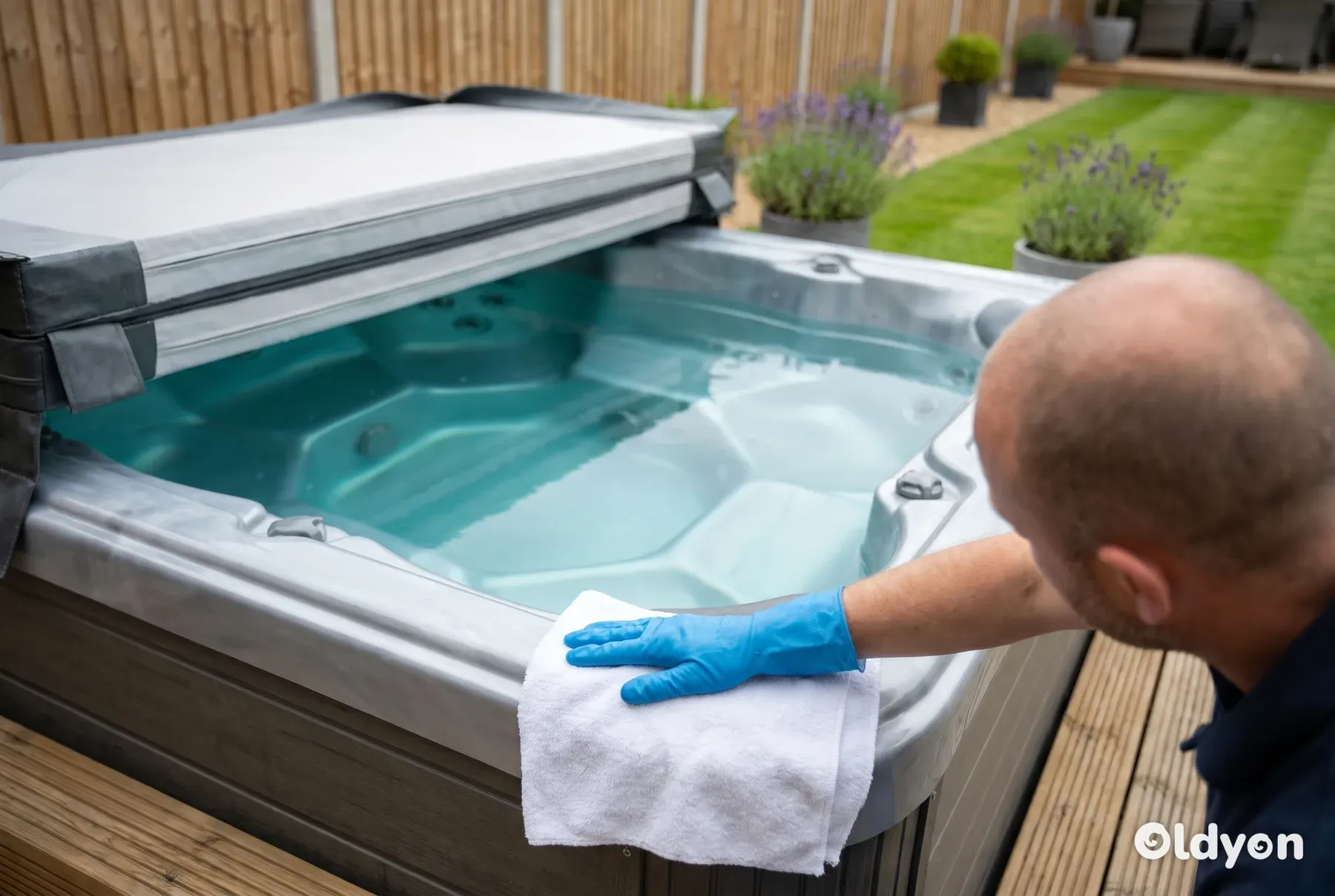
You can keep a hot tub clean for months without draining it by doing small, regular jobs: skim out debris, wipe the waterline, rotate your filters, clean the cover and add enzymes to break down oils. This is how to clean a hot tub without draining it, and it safely stretches the time between water changes.
None of this replaces a full drain forever. Dissolved solids build up in every tub, and some problems, such as biofilm inside the pipes, only clear with fresh water. The section near the end lists the signs that tell you a drain is the only real fix.
What do you need before you start?
Most of the kit is cheap and lasts for years. Keep it in one box near the tub so the routine takes minutes rather than an afternoon.
- A fine-mesh skimmer net for leaves, insects and hair.
- A handheld spa vacuum, either manual or battery powered, for grit on the floor and seats.
- A turkey baster, as a cheap alternative to a spa vacuum for sucking small pockets of grit out of corners and seats.
- Soft, non-abrasive cloths or sponges that you only use on the hot tub.
- A spa-safe surface cleaner made for acrylic shells and waterlines.
- A spray bottle for diluted white vinegar, used only on surfaces above the water.
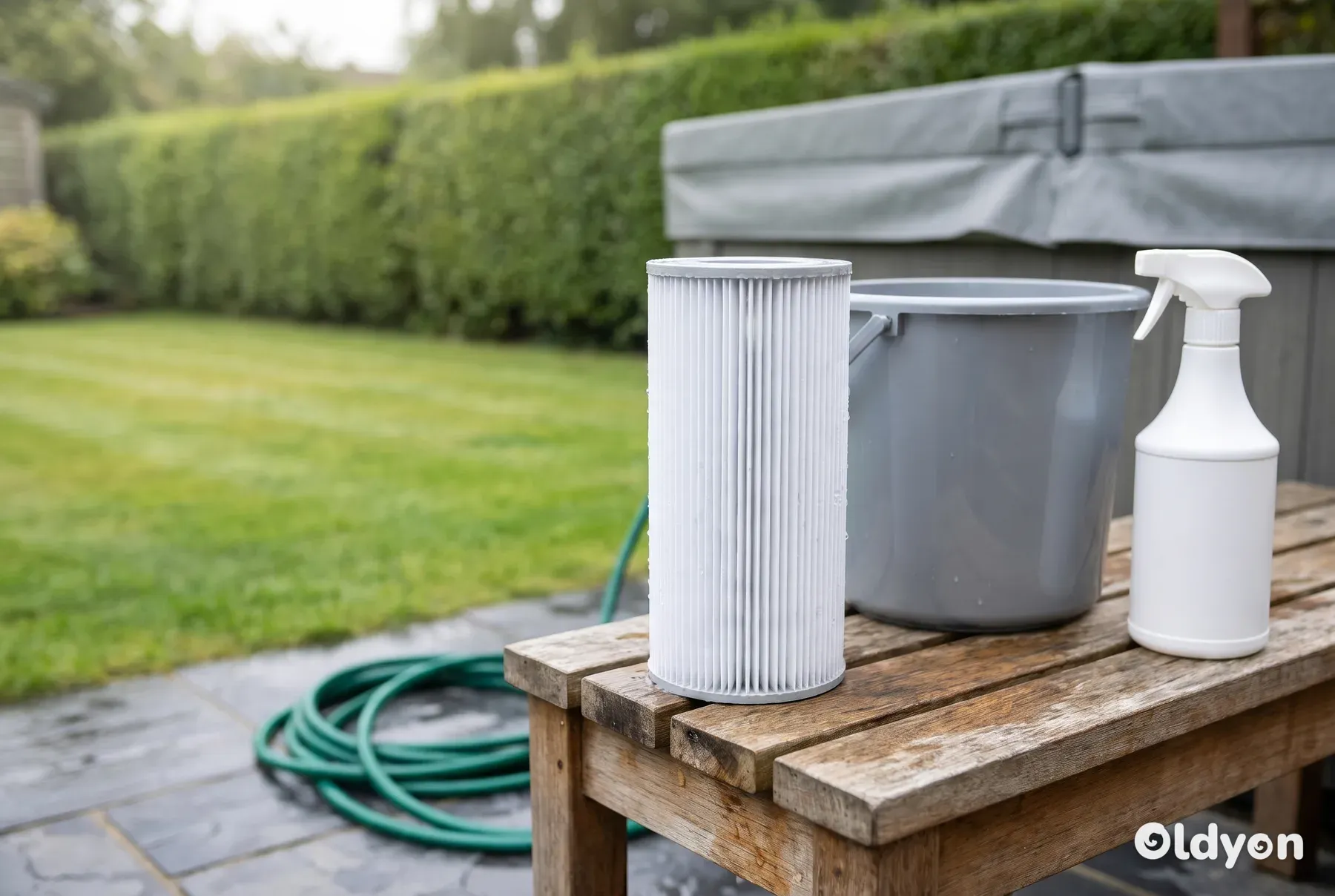
- A filter cleaning wand or a garden hose with a gentle spray nozzle.
- A filter cleaning solution for monthly soaks, plus a bucket or soaking tub.
- A second set of filters, so you can rotate them.
- A vinyl cover cleaner and a cover protectant.
- An enzyme treatment that is compatible with your sanitiser.
- Shock, either non-chlorine (MPS) or chlorine granules, to suit your sanitiser.
- Test strips or a liquid test kit, and rubber gloves for handling chemicals.
If you own an inflatable or soft-sided tub, a sponge and a skimmer net are usually enough, and you can skip the vacuum. Expect scale to build faster, though, because the small volume of water concentrates minerals more quickly than in a larger tub.
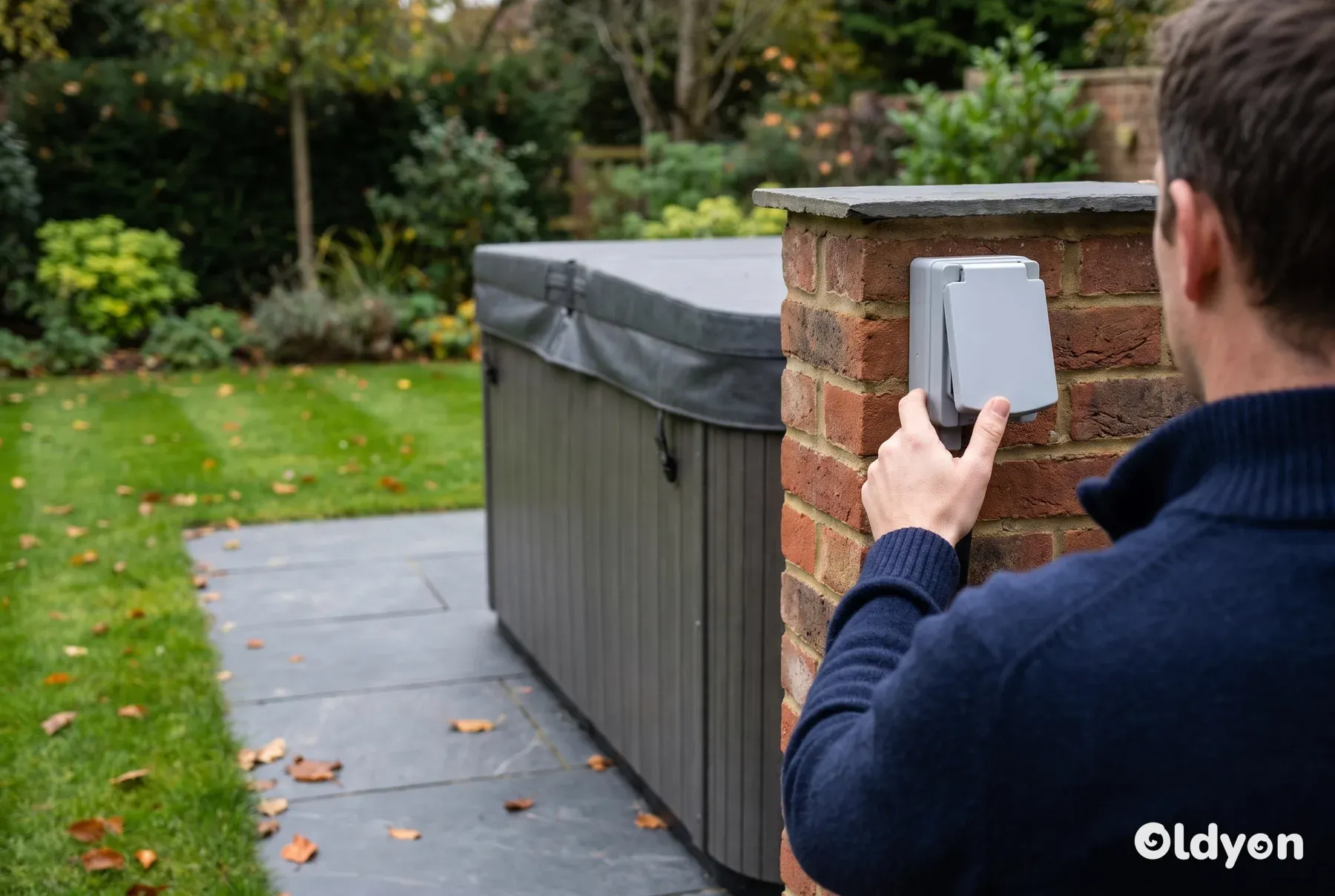
Switch the hot tub off at the isolator before you remove filters, take out jet faces or put your hands near the suction fittings. Running the pump without filters in place can let debris reach the heater and pump, and suction fittings can trap hair or fingers.
Pressing off on the control panel does not fully de-energise the heater and pump on most tubs. Switch off at the isolator, then check that the control panel display has gone dark before you touch the water.
How to clean a hot tub without draining it, step by step
This is the full routine in a sensible order. You will not need every step every week, but working from top to bottom stops dirt you loosen from settling on parts you have already cleaned.
Cleaning without draining saves a full refill. For a typical tub, that is roughly 1,100-1,900 litres (about 300-500 US gallons) of water, plus several hours of draining, refilling and reheating.
The full routine usually takes under an hour. Skimming and vacuuming alone take about 5-10 minutes, so you can fit them in even on a busy day.
By comparison, a full drain, refill and reheat typically takes about 4-6 hours of work and waiting. That difference is why the short routine is worth doing regularly between water changes.
- Switch the hot tub off at the isolator and fold back the cover.
- Skim the surface with a fine net to lift leaves, insects and floating hair.
- Vacuum the floor, footwell and seats to remove grit and sand.
- Wipe the waterline and the shell just above and below it with a spa-safe cleaner on a soft cloth.
- Take out the filters and swap in your clean, dry spare set.
- Check removable jet faces and the skimmer basket for trapped debris, and rinse them.
- Clean the top and underside of the cover while it is open.
- Restore power, run the jets for a few minutes, then test and balance the water.
- Shock the water if it has had heavy use, then add your enzyme treatment as the label directs.
- Rinse the dirty filters and leave them to dry completely before their next turn.
Skimming and vacuuming
Skim before you do anything else, because floating debris sinks once you start moving the water. A fine net catches hair and pollen that a coarse leaf net misses.
Work from the edges towards the centre with slow, steady sweeps. Fast or choppy movements push debris under the surface, where it sinks and ends up in the filter.
Grit and sand collect in the footwell and wear the filter quickly. A handheld spa vacuum lifts it out in a few passes. Empty the vacuum away from the tub so the dirt does not blow back in.
On an inflatable tub, hold the vacuum at a slight angle to the floor. This creates less turbulence, so sediment lifts cleanly instead of swirling back into the water.
Cleaning the jets
Many hot tubs have jet faces that twist out, but some do not, so check your manual before pulling on anything. Rinse removable jet faces under a tap and use a soft brush on any scale.
You cannot properly clean the plumbing behind the jets with the water in. That job needs a line flush product, which you add just before a drain. Between water changes, running all the jets for a few minutes each day keeps water moving through every pipe.
How do you clean the waterline without draining?
The waterline is where body oils, lotions, sun cream and cosmetics float and stick. Left alone, they form a greasy ring that traps dirt and gives bacteria a place to settle.
Spray a spa-safe waterline cleaner onto your cloth, not directly onto the shell. This keeps most of the cleaner out of the water, where it could cause foam or upset the balance. Wipe in small circles along the line, and reach a few centimetres (about an inch) below the surface.
Rinse the cloth in a bucket of clean water as you go, so you are not spreading the grime around. Once a week is enough for most tubs, but wipe more often if the tub is used daily or by several people.
Work below the waterline in sections, moving around the whole perimeter of the tub. Wring the sponge or cloth into your bucket, never back into the tub, so the grime actually leaves the water.
Never use steel wool, scouring pads or rough brushes on an acrylic or vinyl shell. They leave fine scratches, and those tiny grooves give bacteria and scale a place to build up faster.
Sponges and oil absorbers
Melamine foam sponges are mildly abrasive and lift stubborn marks well. Some shell manufacturers accept them and others advise against them, so check your manual, test a hidden area first and use light pressure.
To use a melamine sponge, wet it and wring it out until it is only damp. Scrub in small circles and rinse the sponge often, so you lift the dirt away rather than smearing it.
Floating oil-absorbing sponges sit in the water or the skimmer and soak up surface oils between cleans. They are a useful extra, not a replacement for wiping. Replace them when they turn grey or stop floating well.
Rinse and squeeze out a floating oil-absorbing sponge about once a week. This clears the oil it has collected so it keeps working.
Using a floating oil absorber together with a weekly waterline wipe noticeably cuts how much oil reaches the filter. The filter then clogs more slowly and needs a deep clean less often. How much less often depends on bather numbers, sun cream and showering habits, so judge it by how quickly the pleats look greasy rather than by a fixed figure.
How often should you clean and rotate hot tub filters?
The filter does most of the cleaning in your hot tub, so a dirty filter makes every other job harder. Having two sets is the easiest way to keep the water clear without pausing the tub.
A clogged filter is the most common reason for cloudy or slimy water that will not respond to chemicals. If the water looks wrong, check and clean the filter before you add more products.
With two sets, one is always in the tub while the other is being cleaned or drying. A filter that dries fully between uses also stays fresher, because sunlight and air help break down the bacteria living in the pleats.
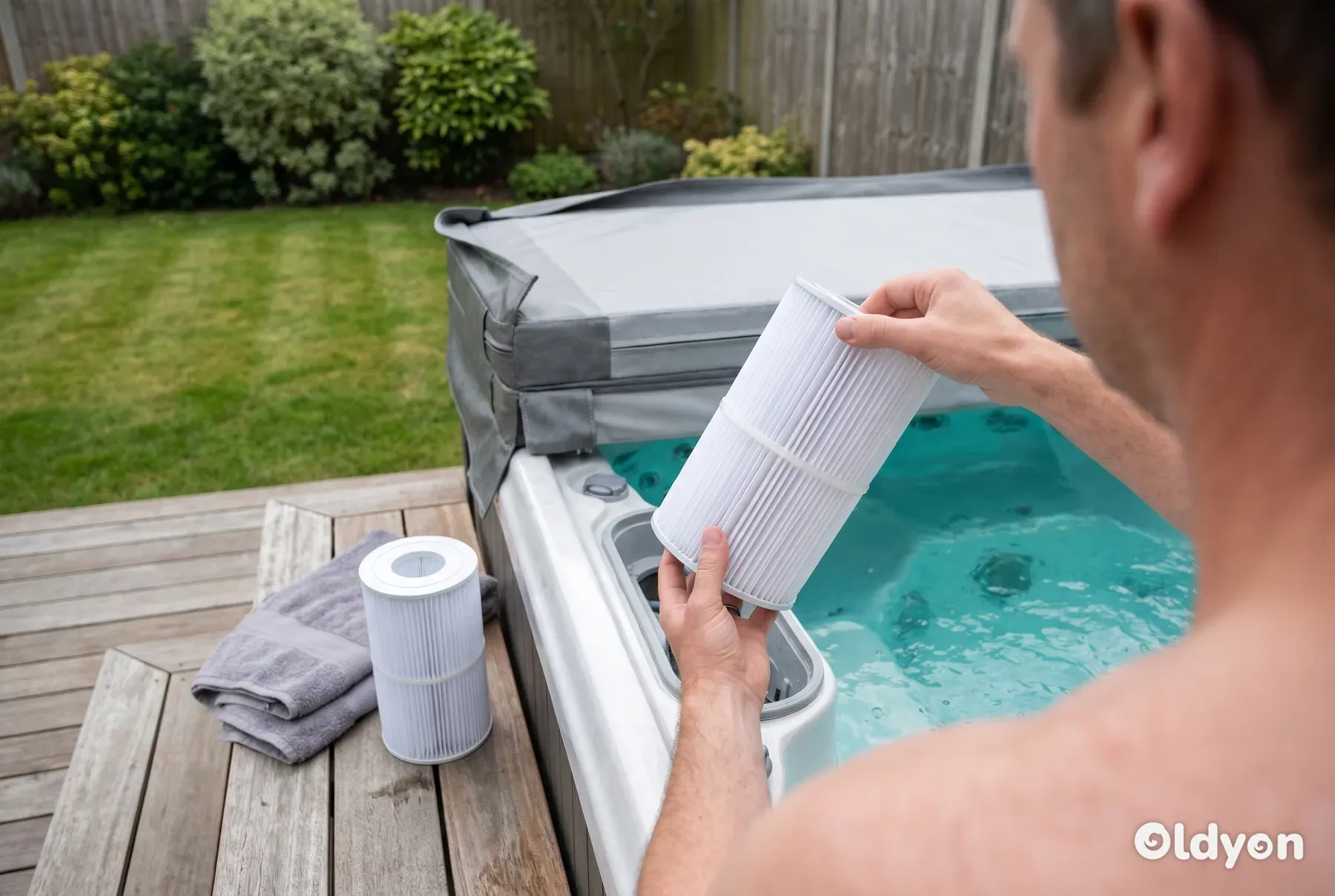
On most tubs you reach the filter from inside the tub by twisting and lifting a cap or lid over the filter housing. Some tubs place it elsewhere, so check your manual to find where yours is.
- Switch off at the isolator and lift out the filters in use.
- Rinse the empty filter housing and its plastic surround, because oils and scale build up there as well as on the cartridge.
- Fit the clean, dry spare set and switch the tub back on.
- Hold the dirty filter at an angle and rinse from top to bottom between each pleat with a hose or filter wand.
- Once a month, or as your manual says, soak the filter in a filter cleaning solution for the time on the label. Depending on the product, this ranges from about 15 minutes to overnight for a heavily soiled cartridge.
- Rinse again thoroughly so no cleaner goes back into the tub.
- Leave the filter to dry completely before it goes back in.
Do not use washing-up liquid as a substitute for a proper filter cleaner when you soak cartridges. The soap residue stays in the pleats and causes foam once the filter goes back in.
Never use a pressure washer, because it damages the pleats and lets dirt pass straight through. Most manufacturers suggest replacing cartridges about every one to two years, sooner with heavy use. Our guide on how to clean a hot tub filter properly covers soaking and replacement in more detail.
Inspect the filter each time you clean it. If the fabric is torn, the end caps are cracked or the pleats are crushed, replace it straight away rather than cleaning it, because a damaged filter lets dirt straight through.
How do you clean the hot tub cover between water changes?
The cover sits on top of warm, damp air for months, so it can grow mildew and drip dirty condensation back into clean water. A quick clean of the cover is part of keeping the water clean.
- Rinse the top with a hose to remove dust, leaves and bird droppings.
- Wash the vinyl with a cleaner made for spa covers and a soft cloth, then rinse.
- Wipe the underside with a damp cloth and a mild spa-safe cleaner, then let it air dry with the cover open.
- For mildew on the underside, wipe it with a cloth dampened in white vinegar, leave it for a few minutes, then rinse it off.
- Apply a vinyl protectant to the top every month or two to slow cracking from sunlight.
- Check the cover feels light and even; a heavy, sagging cover may have waterlogged foam.
Avoid bleach, solvents and household cleaners on the vinyl, because they dry it out and can leave residue that ends up in the water. There is more on materials and lifespan in our guide on how to clean a hot tub cover and make it last.
Do enzyme treatments help keep a hot tub clean?
Enzymes are proteins that break down organic waste such as body oils, lotions and sweat. They help stop the greasy ring at the waterline, reduce scum on the surface and take some load off your filter and sanitiser.
Enzymes do not kill bacteria and they are not a sanitiser. You still need chlorine or bromine at the right level. Think of enzymes as a cleaning helper that works alongside your normal chemicals.
Most products are added weekly, and some suggest an extra dose after heavy use. Check that the enzyme product is compatible with your sanitiser and with any mineral or ozone system, and follow the dose on the label for your water volume.
What about vinegar, washing-up liquid and tennis balls?
Vinegar
Diluted white vinegar on a cloth removes light limescale from jet faces, the shell above the water and the edges of the tub. Rinse afterwards so it does not drip into the water.
Household white vinegar is usually about 5% acetic acid. That acid dissolves calcium carbonate, which is the main component of chalky scale, so it works well on light deposits.
- Mix white vinegar and water 50/50 in a spray bottle.
- Spray it onto scale on surfaces above the water only.
- Leave it for about 2-3 minutes.
- Scrub with a soft or melamine sponge.
- Wipe the area clean with a damp cloth.
The same diluted vinegar can clean the plastic filter housing while the filter is out, but not the filter fabric itself. You can also use it to wipe down the outside of the tub's cabinet, then rinse with clean water.
Do not pour vinegar into the water. It is an acid, so it lowers pH and total alkalinity and throws off your chemistry. Some owners run vinegar through the pipes on drain day, but many manufacturers recommend a purpose-made line flush instead, so check your manual.
Even a cup of vinegar added to a typical tub of about 1,100 litres pulls pH and alkalinity down, and in water with low alkalinity it can push pH below the safe range. Acidic water can also harm equipment seals over time.
Vinegar is not a sanitiser. It does not kill bacteria at hot tub temperatures, so it can never replace chlorine or bromine.
Washing-up liquid and household cleaners
Never use washing-up liquid, multi-surface sprays or bathroom cleaners on the shell or in the water. Even a small amount causes thick foam that is very hard to remove, and the residue clogs the filter.
Some household cleaners also contain ingredients that react with sanitisers or damage acrylic. If foam appears after cleaning, a drain is often the only reliable way to get rid of it.
Antifoam products only give temporary relief from foam caused by washing-up liquid. The soap residue clings to the plumbing and the filter, so it foams again every time the jets run.
After soap contamination, fresh water alone is not enough. The fix usually needs a full drain, a thorough scrub of the shell and a new or deep-cleaned filter.
Tennis balls
A tennis ball in the skimmer or floating in the water absorbs a small amount of surface oil through its fibres. The effect is modest, and the fuzz can shed into the water and collect in the filter.
Dyes on some balls can also bleed into warm water over time. A purpose-made oil-absorbing sponge does the same job better and is designed to sit in treated water.
If you do use tennis balls, float two or three in the water after a session. Rinse them weekly and replace them about once a month, when they stop absorbing oil.
Leave the balls floating in the covered tub overnight after a session, so they have time to absorb surface oils. They reduce the oil load, but they do not sanitise the water and they do not replace regular filter cleaning.
How do you test and balance the water after cleaning?
Cleaning stirs up dirt and adds traces of cleaner, so always test the water afterwards. Run the jets for a few minutes first so you test mixed water, not just the surface.
Balancing is what makes the cleaning last. Even after a thorough scrub, bacteria can recolonise the surfaces within about 24-48 hours if the pH is wrong or the sanitiser has run out.
Once you know the target ranges, a full test and rebalance usually takes only about 15 minutes. Most of that time is spent waiting for each chemical to circulate before you retest.
Taking an accurate reading
Take your sample at about elbow depth, away from the jets and any chemical dispenser. Water near the surface or a dispenser can give a misleading reading.
Dip a test strip for the time given on the pack, often about 2 seconds. Hold it flat without shaking, blowing on or waving it, then read it against the chart after about 15-30 seconds.
Liquid drop test kits are more accurate than strips, especially for total alkalinity. When you are troubleshooting a problem, use a drop kit to confirm what the strips show.
Target ranges and what each reading does
Correct pH and total alkalinity first, because they affect how well your sanitiser works. Then bring chlorine or bromine into range. The widely accepted targets are below, but check your manual, as some manufacturers set slightly different ranges.
Within that first step, correct total alkalinity before pH. Total alkalinity acts as a buffer that holds pH steady. If you adjust pH while alkalinity is out of range, the pH will keep drifting back, and you will use more chemicals chasing it.
Reading | Target range | If it is out of range |
|---|---|---|
Free chlorine | 3-5 ppm | Add chlorine granules or shock |
Bromine | 3-5 ppm | Top up bromine and shock |
pH | 7.2-7.6 | Use pH increaser or reducer |
Total alkalinity | 80-120 ppm | Adjust before correcting pH |
Calcium hardness | 150-250 ppm | Add hardness increaser, or dilute if high |
- Low pH can corrode metal parts and sting eyes. High pH causes scale and cloudy water.
- Low total alkalinity makes pH swing wildly. High total alkalinity makes pH hard to bring down.
- Too little sanitiser lets bacteria multiply. Too much irritates skin and eyes.
- Chalky scale at the waterline usually comes from high pH combined with high calcium hardness, so keeping pH in range is the most effective way to prevent it.
Bromine stays more stable than chlorine at hot tub temperatures, which is why many owners prefer it. Chlorine dissipates much faster in hot water than in a pool, so a tub that tested fine in the morning can be under-sanitised by evening after heavy use.
Adjusting the water safely
- Raise total alkalinity first if it is low, using sodium bicarbonate (the same compound as baking soda). As a starting dose, add roughly 1 tablespoon per 380 litres (about 100 US gallons) of water, run the jets for about 15 minutes, then retest before adding more.
- Raise pH with sodium carbonate, sold as pH increaser or soda ash.
- Lower pH or alkalinity with sodium bisulphate, sold as pH reducer or dry acid. Add it slowly, because overdosing can crash the pH.
- Add only one chemical at a time. Run the jets for about 15 minutes after each addition and retest before adding the next.
- Bring the sanitiser into range last, once pH and alkalinity are correct.
Never mix chemicals together or add one on top of another. Add each one separately, and pre-dissolve shock in a bucket of water if the label tells you to.
Leave the cover off for about 15-20 minutes after adding any chemical, not only shock. This lets gases escape instead of being trapped under the cover, where they can damage the underside and build up.
When to shock
Shocking oxidises the waste that builds up from bathers and helps your sanitiser work. Most owners shock once a week and again after a busy session.
Non-chlorine shock, based on potassium monopersulphate, lets you use the tub again sooner. Chlorine shock is stronger and also sanitises. Leave the cover open with the jets running while you shock, and wait the time on the label before anyone gets in.
Non-chlorine shock oxidises bather waste without raising the chlorine reading. That is why you can use it every week without pushing your sanitiser level too high.
- After a session with four or more bathers, which counts as heavy use.
- After rain gets into the tub.
- When algae appears.
- When foam will not clear.
- After a fresh fill or a large top-up.
Shock in the evening where you can, because sunlight breaks down chlorine and weakens the treatment. Always measure the dose for your water volume: using more than the label says does not clean faster and can irritate skin and eyes.
Non-chlorine shock typically allows bathing again after about 15 minutes. Chlorine shock can need several hours, often 4-8, until free chlorine falls back to 3-5 ppm, so retest before anyone gets in.
Keeping the water healthy for bathers
Asking everyone to shower before using the tub removes a large share of the oils and cosmetics that cause scum. It also means less work for the filter, the sanitiser and you.
Rinsing swimwear after each soak matters too. Laundry detergent left in the fabric gets into the water, where it adds to foam and increases the demand on your sanitiser.
Poorly sanitised water can cause skin problems such as hot tub folliculitis, an itchy, spotty rash around hair follicles. The NHS page on folliculitis explains the symptoms. Stop using the tub and speak to a pharmacist or GP if you have a rash that spreads, hurts or comes with a high temperature. The CDC healthy swimming guidance also covers hot tub hygiene.
Hot tub folliculitis is caused by the bacterium Pseudomonas aeruginosa. It typically shows up as an itchy, bumpy red rash, often in areas covered by swimwear, within a day or a few days of using the tub.
To reduce the chance of a rash, shower after each soak and rinse your swimwear in clean water. If you do get a rash, stay out of the tub until the water is properly balanced and sanitised, and keep the affected skin clean and dry.
Anyone who already has folliculitis should stay out of the hot tub until the rash has fully cleared. Soaking in warm water can make the infection worse.
Safe soaking
Keep the water no hotter than 40°C (104°F). Many manufacturers suggest limiting sessions to about 15-20 minutes at higher temperatures to avoid overheating, but check your manual. If you are pregnant or have a heart condition, ask your midwife or GP before using a hot tub.
Most hot tubs run at about 38-40°C (100-104°F). Even within that normal range, the body cannot shed heat well, so session limits apply at standard settings and not only above 40°C.
Session limits exist because your body cannot cool itself by sweating when it is surrounded by hot water. Long soaks can cause overheating, with dizziness, nausea or fainting.
The medical name for this overheating is hyperthermia, which means a dangerously raised core body temperature. In severe cases it can go beyond dizziness and nausea to loss of consciousness or heart problems. If you feel dizzy, sick or faint, get out slowly, cool down and drink water. Call 999 in the UK, or 112 elsewhere in Europe, if someone collapses or does not recover quickly.
Water hotter than 40°C shortens the safe soaking time considerably. This is another reason never to set the tub above that limit.
Children, pregnant women and people with heart or circulation conditions face a higher risk of overheating. Keep their soaks to about 5 minutes unless a doctor or midwife advises otherwise.
- For a longer soak, get out and cool down for several minutes before getting back in.
- Give children shorter sessions than adults and always supervise them.
- Never use a hot tub alone, because heat can impair your judgement and stop you recognising that you are in trouble.
- Drink water before and after soaking, and avoid alcohol in the tub.
When does only a drain fix the problem?
Regular cleaning keeps water usable for longer, but it cannot remove dissolved solids. Every chemical you add, every bather and every top-up leaves something behind, and in time the water stops responding to treatment.
- The water stays cloudy or dull even after you balance it, shock it and clean the filter.
- Cloudiness does not clear within about 24 hours of shocking and filtering.
- Foam keeps coming back, even with clean filters and no recent soap or cosmetics.
- Foam returns within hours of using an antifoam product.
- Your sanitiser level drops quickly and is hard to keep in range.
- pH keeps swinging and will not stay in range despite correct dosing, which shows the water is chemically exhausted.
- The water smells musty or of strong chemicals after shocking.
- A strong chemical smell persists even when sanitiser levels are correct, which in a chlorine tub usually means a build-up of chloramines (used-up combined chlorine).
- Jets feel slimy, or white or grey flakes appear when you start them.
- Slime returns within days of a full clean, which shows biofilm too established to treat with the water in.
- Total dissolved solids (TDS) have risen a long way above the reading you had after the last fill; a common guideline is around 1,500 ppm above that starting value.
- Calcium hardness has climbed so high that scale forms on the shell and heater.
- Someone has been ill in the water, or there has been a faecal or vomit accident.
You can measure TDS yourself with an inexpensive handheld TDS meter. Take a reading straight after each fill so you have a starting value to compare against.
Why slime needs more than fresh water
Biofilm is a slimy layer of bacteria that protects itself inside the pipes. It resists normal sanitiser levels, which is why water can test in range yet still smell musty or feel slimy.
Draining and refilling a slimy tub without first scrubbing the surfaces and treating the pipes will not cure the slime. The biofilm stays behind and recolonises the fresh water within days.
Flakes or slime from the jets usually mean biofilm in the pipes, and our guide on how to get rid of biofilm in a hot tub explains how to treat it. To plan ahead, read how often to change hot tub water, which explains how bather numbers and tub size affect the schedule.
How often to plan a drain
Average use, about two to four people a few times a week, suits a drain every three to four months. Heavy daily use by larger groups may need one every six to eight weeks.
Heavy use in this sense means roughly daily use by groups of six or more people. Most households fall well short of that, so a three to four month cycle is the usual starting point.
When drain day comes, it is the right time for a line flush, a deep filter soak and a full shell clean. Our guide on how to deep clean a hot tub at water change walks through each step.
After adding a line flush product, run the jets on their highest setting for about 15-20 minutes, or for the time on the label. This gives the product time to push biofilm out of the pipes before you drain.
When you run a line flush before a drain, expect brown or grey foam to rise to the surface as biofilm is pushed out of the pipes. This is normal, and you can skim the foam off before you drain.
When to call a professional
- Cracks in the shell, damaged jet housings or leaking fittings.
- Jets that have stopped working.
- Any sign of water near the electrical components. Switch off at the isolator and call a technician or registered electrician immediately.
- Slime or biofilm that persists after two thorough cleaning cycles plus a line flush and drain.
If the water is clean but the tub shows heater errors, tripping power, leaks or unusual pump noise, cleaning will not help. Switch off at the isolator and call a qualified hot tub technician, and use a registered electrician for any electrical fault.
A simple routine between water changes
Small, regular jobs keep the water clear and the shell clean far longer than an occasional big clean. Use this as a starting schedule and adjust it for how often your tub is used.
- Before each use: test the water, and skim any debris.
- Weekly: wipe the waterline, rinse or swap the filters, shock and add enzymes.
- Every one to two weeks with average use: run the full cleaning routine to stop slime, grit and scale building up.
- Every few weeks: vacuum the floor, rinse jet faces and clean the cover.
- Monthly: soak a filter set in cleaning solution and check calcium hardness.
- When the water stops responding to treatment: plan a full drain and deep clean.
If rinsing the filter weekly is not practical, a hose rinse every two weeks is enough, as long as a full soak in filter cleaner still happens once a month.
Regular cleaning between water changes also makes drain day quicker and easier. Less scale, slime and grime has built up by the time you empty the tub, so the deep clean takes less scrubbing.
Frequently asked questions
How long can hot tub water last if I clean it regularly?
Many owners change the water every three to four months, and good cleaning habits help you reach the longer end of that range. The real limit depends on tub size, how many people use it and how often. Watch how the water responds to treatment rather than the calendar alone. If sanitiser will not hold or the water stays dull, it is time to drain.
Can I use bleach to wipe the waterline?
It is best not to. Household bleach often contains fragrances or additives that are not meant for hot tub water, and wiping with it can upset your chemistry or mark the shell. A spa-safe waterline cleaner is designed to lift oils without causing foam. If you use chlorine as your sanitiser, that is added to the water, not wiped onto surfaces.
Is it safe to get in straight after adding enzymes?
Most enzyme products are designed to be used with bathers in the water, but always check the label, as products vary. What matters more is your other chemicals. If you have just shocked or made a large pH adjustment, wait the time shown on that product and retest before anyone gets in.
Do I still need to clean a hot tub that nobody uses in winter?
Yes, though less often. Without bathers, the water still collects airborne dust and pollen, and the sanitiser still runs down over time. Keep testing at least weekly, keep the filters clean and the cover closed, and let the tub circulate as normal. In freezing weather, never switch the tub off with water in it unless your manual says it is safe.
Why does my hot tub foam after I clean it?
Foam after cleaning usually means some cleaner reached the water, often from spraying directly onto the shell or from a household product. Low calcium hardness and a build-up of oils can also cause it. Clean or swap the filter, check your water balance and shock. If the foam is heavy and keeps returning, a drain is the most reliable fix.
Should I lower the water level to reach the scum line?
Usually you do not need to. A soft cloth reaches a few centimetres below the surface easily. If you do let the level drop slightly, keep it above the minimum mark on the skimmer, because a low level can let the pump draw in air and damage it. Top up with fresh water afterwards and retest.
Filed under