How to keep hot tub water clear all year
Learn how to keep hot tub water clear all year: showering first, filter rotation, steady sanitiser, weekly shock, the cover and seasonal pollen and leaves.
The way to keep hot tub water clear is to stop dirt building up rather than chasing it once the water turns. Shower before every soak, keep sanitiser steady at the right level, shock once a week, rinse and rotate your filters, use the cover, and adjust your routine for pollen in spring and leaves in autumn.
Cloudy water rarely appears overnight. It is usually the result of small amounts of oil, sweat, cosmetics and debris that the sanitiser and filter could not keep up with. The habits below take a few minutes a week and save you hours of fixing problems later.
Why does hot tub water go cloudy?
Hot tub water is warm, shallow and shared, so it collects contamination quickly. A typical tub holds 1,000 to 1,500 litres (about 260 to 400 US gallons), far less than a swimming pool, so each person adds a lot relative to the volume of water.
- Body oils, sweat and dead skin from bathers.
- Cosmetics such as lotion, sunscreen, deodorant, make-up and hair products.
- Detergent left in swimwear, which also causes foam.
- Sanitiser that has dropped too low, letting bacteria and organic matter build up.
- pH or total alkalinity outside the target range, which weakens sanitiser and can make calcium form a haze.
- A dirty, clogged or worn filter.
- Pollen, leaves, insects, dust and rain getting into the water.
- Biofilm in the pipework, which releases debris back into the tub.
Most of these causes have one thing in common: they are easier to keep out of the water than to remove from it. That idea sits behind every habit in this guide.
How to keep hot tub water clear with a weekly routine
Prevention comes down to a short routine you repeat every week, plus a few habits each time you use the tub. The order matters, because each step helps the next one work better.
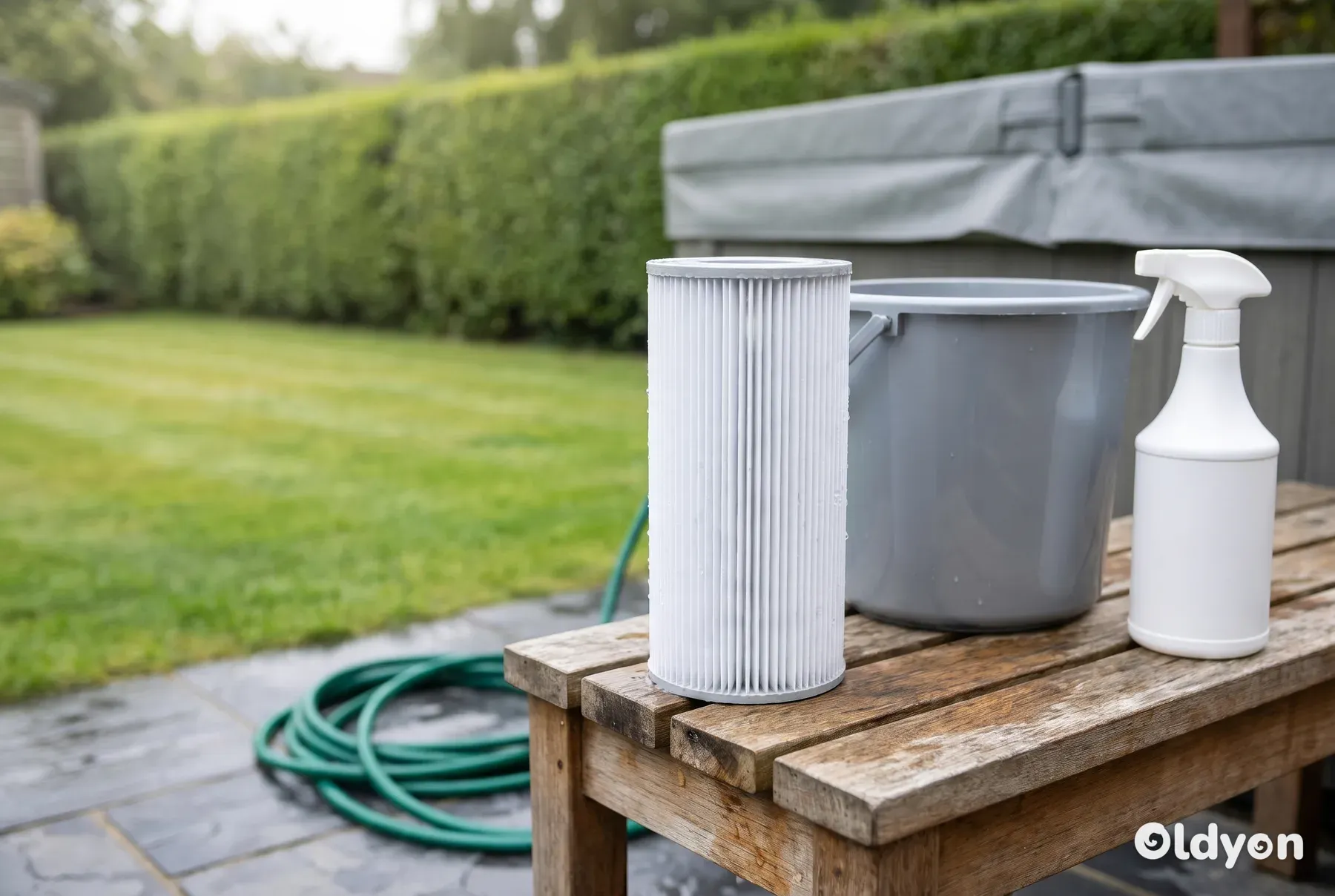
Before you start, gather everything in one place: test strips or a test kit, balancing chemicals, sanitiser, shock, a garden hose, filter cleaner and a clean bucket used only for hot tub chemicals. Running out of something halfway through is a common reason the chemistry ends up thrown off. Allow roughly 30 minutes for the full weekly routine.
Keep all your hot tub supplies together in one dedicated box with a lid, close to the tub, so nothing is missed during the weekly routine. Store the box somewhere dry and shaded, out of reach of children, and check it each week so you can restock before anything runs out.
Use the bucket whenever a product label tells you to dissolve the chemical before adding it. Fill the bucket with water from the tub first, then add the chemical to the water, stir until it dissolves and pour it slowly near a running jet. Rinse the bucket between chemicals so different products never mix.
- Test the water with strips or a liquid test kit, ideally at the same time each week and before anyone uses the tub.
- Adjust total alkalinity first, then pH, because alkalinity holds pH steady. Add one chemical at a time with the pump running and the cover open.
- Top up your sanitiser so free chlorine or bromine sits within the target range.
- Shock the water, using the dose on the product label for your water volume.
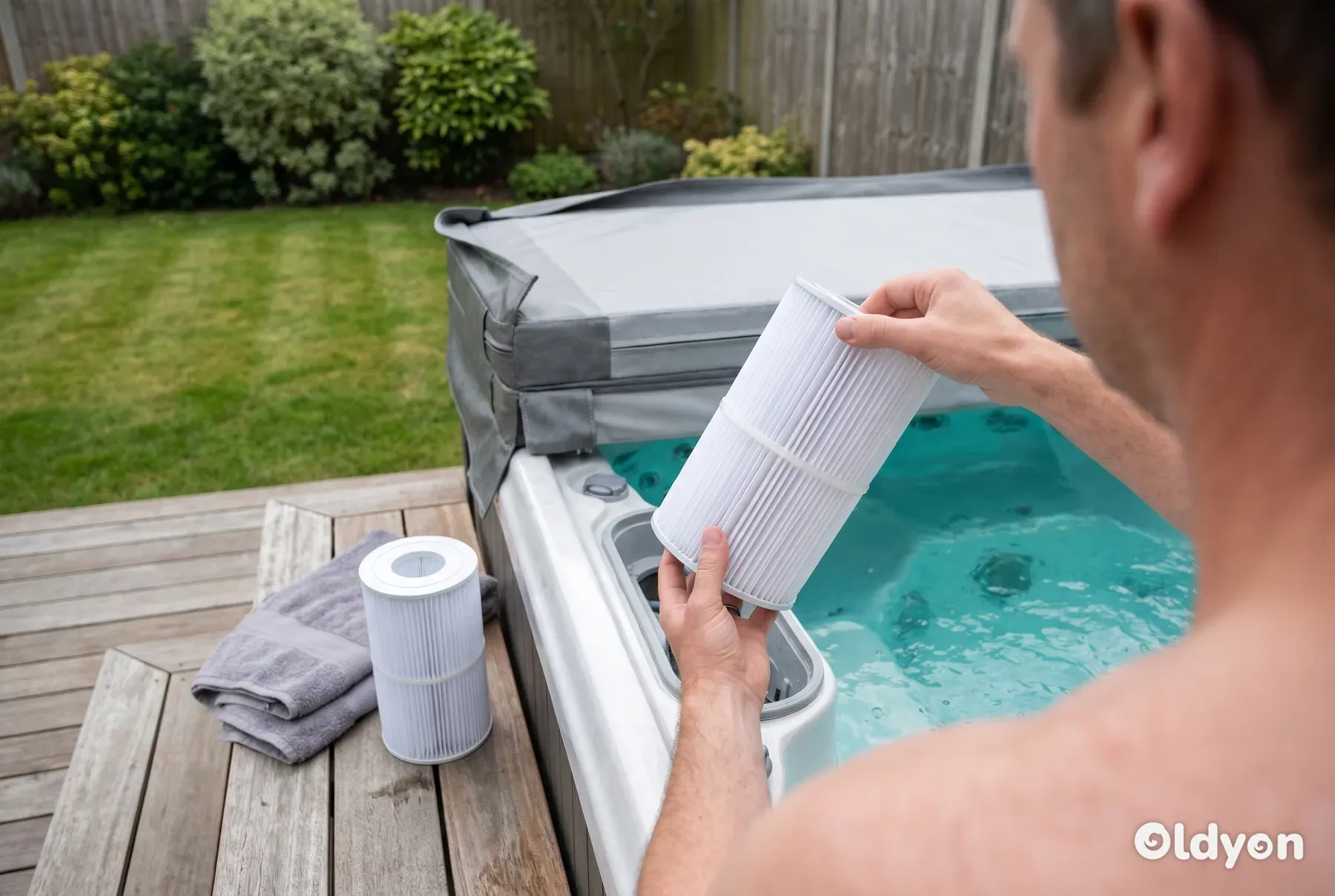
- Take out the filter and rinse it with a garden hose, or swap in your clean spare set.
- Wipe the waterline with a soft cloth or sponge to remove any film before it hardens into a scum line.
- Check that the water level is above the skimmer opening and top up if needed.
- Write down your readings so you can spot slow changes, such as pH that keeps creeping upwards.
Test before you treat. Most cloudy water problems start with a guess. A quick test tells you exactly what the water needs and stops you adding chemicals it does not need.
If you would like a version with daily, monthly and quarterly tasks as well, use our hot tub maintenance checklist alongside this routine.
How to test the water accurately
A reading is only useful if it reflects the whole tub. Water near the surface can differ from water lower down, so mix it before you test.
For quick weekly checks, choose test strips that read pH, total alkalinity and chlorine or bromine in one dip. A liquid test kit, where you add drops of reagent to a small water sample, gives more precise readings than strips. It is worth having one for when a strip result looks odd or the water will not settle.
- Run the jets for about 30 seconds so the water is mixed and the reading is representative.
- Dip the strip about 15 cm (6 inches) below the surface for 2-3 seconds.
- Hold the strip flat and do not shake it, so the colours on the pads do not run into each other.
- Wait about 15 seconds, or the time on the packaging, then compare the pads with the colour chart.
Strips give better readings if you keep wet fingers off the pads and read them in natural daylight rather than under artificial light. Store the container closed, in a cool, dry place, and replace strips that are out of date or have been open for months.
How to adjust alkalinity and pH
Product names vary between brands, so check the active ingredient on the label to make sure you buy the right chemical. These are the common balancing chemicals:
- pH decreaser, which also lowers alkalinity: usually sodium bisulphate.
- Alkalinity increaser: sodium bicarbonate.
- pH increaser: sodium carbonate.
- Calcium hardness increaser, for soft-water areas: calcium chloride.
If total alkalinity is above range, lower it with a pH decreaser (sodium bisulphate) added in small doses. If it is below range, raise it with an alkalinity increaser (sodium bicarbonate). Once alkalinity is right, pH is often close to target already.
If pH is still below 7.2 once alkalinity is corrected, raise it with a pH increaser (sodium carbonate). Add it in small doses, just as you would a decreaser, and retest after about 30 minutes before adding more.
After each adjustment, wait about 30 minutes with the pump running and retest before the next one. Retest alkalinity before you touch pH. Small doses and frequent retests work best, because one large dose is a common cause of badly thrown-off water.
If your readings stay out of range after several rounds of small adjustments, stop adding chemicals. Contact your hot tub dealer or a water chemistry professional, who can test for less common problems and tell you what your water needs.
Wear gloves when handling hot tub chemicals, and follow the instructions on the packaging for dose, handling and storage.
Shower before every soak
This is the cheapest step and the one owners skip most often. A quick rinse removes much of the sweat, deodorant, lotion and hair product that would otherwise end up in the water.
Those oils and residues use up sanitiser and coat the filter, which leads to dull water and a scum line. Ask guests to shower too, and rinse swimwear in plain water rather than washing it with detergent before each use.
Keep sanitiser steady, not up and down
Sanitiser only protects the water while it is present at the right level. If it drops to zero for a day, bacteria and organic matter get ahead, and a large dose afterwards rarely brings back the same clarity.
Small, regular doses work better than occasional large ones. A floating dispenser or an inline feeder for bromine tablets helps keep levels steady, but you still need to test, because bathers, heat and sunlight all change how fast sanitiser is used up.
After adding sanitiser, run the jets to spread it through the water, then retest after about 30 minutes. Keep everyone out of the tub until the level is within the safe range.
Shock once a week and after heavy use
Shocking breaks down the waste that sanitiser has combined with, such as chloramines in chlorine tubs, and removes organic matter that the normal dose cannot handle. Without it, the water slowly loses its sparkle even when the sanitiser reading looks fine.
Combined chlorine (chloramines) gives off an unpleasant smell, irritates the eyes and no longer kills bacteria effectively. A strong chlorine smell or sore eyes usually means the water needs shocking, not more sanitiser.
Many owners use a non-chlorine shock (potassium monopersulphate) every week and a chlorine shock after a party or when the water smells strongly. In a bromine tub, non-chlorine shock also helps reactivate the bromide in the water. Leave the cover open for as long as the label advises.
As a general guide, leave the cover off for 20-30 minutes after shocking so gases can escape. Do not soak until at least 30 minutes have passed and a test shows chlorine has fallen below about 5 ppm.
Add enzymes to break down oils
Enzyme products are designed to break down the oils, lotions and other organic residue that cause scum lines, foam and greasy filters. They do not kill bacteria, so they work alongside your sanitiser, never instead of it.
Enzymes are most useful in tubs that see frequent use or many different bathers. Dose as the product directs, usually weekly, and you should find that your filters stay cleaner between rinses.
Never mix hot tub chemicals together, and always add chemicals to water, never water to chemicals. Let the pump circulate each one before adding the next, and store them dry, sealed and out of reach of children.
What water balance keeps the water clear?
Balance is what lets your sanitiser and filter do their job. If pH runs high, chlorine works far less effectively and calcium can come out of the water as a fine haze. If pH runs low, the water can irritate skin and eyes and corrode equipment.
Reading | Target range | Signs it is too low | Signs it is too high |
|---|---|---|---|
Free chlorine | 3-5 ppm | Cloudy water, slimy surfaces | Skin and eye irritation |
Bromine | 3-5 ppm | Cloudy water, slimy surfaces | Skin and eye irritation |
pH | 7.2-7.6 | Eye irritation, corrosion | Haze, scale, weak sanitiser |
Total alkalinity | 80-120 ppm | pH swings up and down | Cloudiness, pH hard to lower |
Calcium hardness | 150-250 ppm | Foaming, corrosion | Scale, cloudy water |
These are widely used targets, but manufacturers differ. Some recommend bromine slightly higher, for example 4-6 ppm, and some suggest a different calcium range for their shell or heater. Your manual is the final word for your tub.
Your tap water affects calcium. In soft water areas, such as much of Scotland, Wales and northern England, you may need a calcium hardness increaser, which is usually calcium chloride. In hard water areas, a scale and stain preventer helps keep calcium in solution. Elsewhere in Europe, your water supplier usually publishes hardness figures.
How often should you clean and rotate your filters?
The filter catches the fine particles that make water look dull. A dirty filter lets them circulate again, and a clogged one reduces flow, which also weakens heating and the spread of sanitiser through the tub.
- Rinse the cartridge with a garden hose once a week, working between each pleat from top to bottom.
- Soak it in a filter cleaner every four to six weeks, or sooner after heavy use, to remove oils that rinsing leaves behind.
- Replace the cartridge when pleats are torn, flattened or brittle, or when it no longer comes clean. Many manufacturers suggest every 12 to 24 months.
- Do not use a pressure washer or dishwasher, which can damage the filter material.
- Never run the tub without a filter in place.
When you deep clean a cartridge, soak it in filter cleaner for at least an hour, and overnight is better. Rinse it thoroughly so no cleaner goes back into the tub, then let it dry fully before refitting.
A filter that looks clean can still be clogged with oils and biofilm deep in the material. If rinsing has not restored clarity within 24 hours, soak the cartridge overnight in a chemical cleaner. If the cartridge is around 18 months old, replacing it is often the better choice.
Our guide on how often to clean a hot tub filter explains how to adjust these timings for heavy use, pollen season and different filter types.
Why two sets of filters make life easier
Keeping a spare set means you can swap filters in seconds and leave the dirty set to soak and dry properly. A fully dry filter also makes it easier to see and brush out trapped debris.
Mark each set, or note in your log which one is in use, so both wear evenly. Rotating filters like this is one of the easiest ways to keep water sparkling without adding extra chemicals.
Does a hot tub cover help keep the water clear?
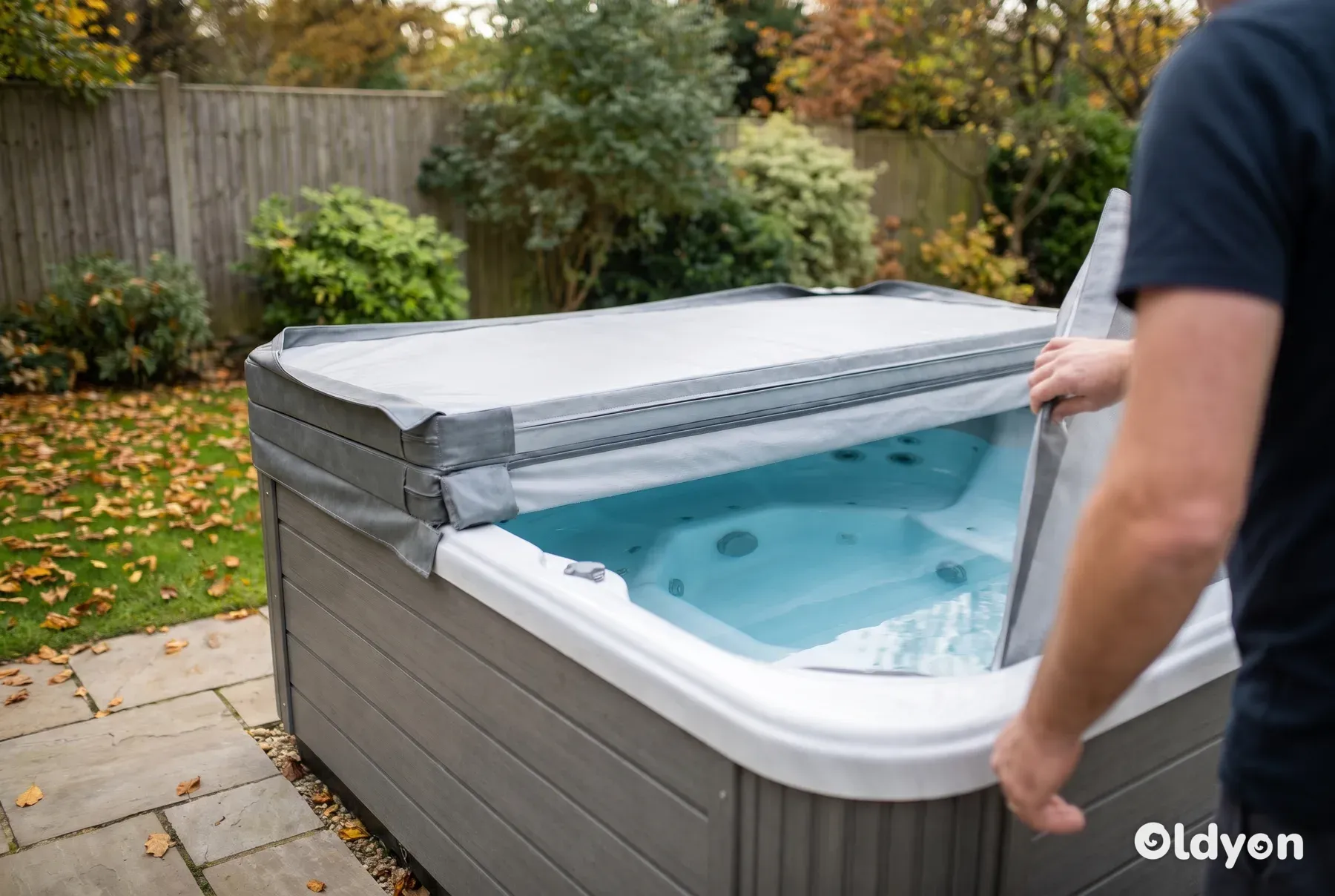
Yes. A well fitted cover keeps out leaves, pollen, insects, dust and rain, all of which add to the work your filter and sanitiser have to do. It also shields the water from sunlight, which breaks down chlorine quickly.
Close the cover whenever the tub is not in use, but leave it open after shocking for as long as the product label advises. Keep it fastened with its locking straps for safety, especially if children are around.
The underside of the cover needs attention too. Wipe it about once a month with a cleaner made for hot tub covers, rinse it, and let it air before closing. Grime on the underside can drip back into the water as condensation forms.
How do pollen, leaves and the seasons affect your water?
Each season brings a different threat to clear water. Adjusting your routine a little ahead of time is much easier than recovering a cloudy tub.
Spring: pollen and blossom
Pollen settles on the surface as a fine yellow or green film and collects at the waterline. It clogs filters quickly and uses up sanitiser.
- Keep the cover closed whenever you are not in the tub.
- Rinse filters twice a week when pollen counts are high.
- Skim the surface with a fine net before each soak.
- Wipe the waterline more often to stop a scum line forming.
- Check the pollen forecast from your national weather service and plan extra care on high days.
Summer: more soaking and stronger sun
Warm evenings bring more use, more guests and more sunscreen. Sanitiser is used up faster in sunshine and with more bathers, so test at least every other day and shock after busy sessions.
Ask everyone to shower off sunscreen before getting in. Keep the cover on during the day until you are ready to use the tub, so the sun does not break down your chlorine.
Autumn: leaves and tannins
Leaves are the biggest autumn threat. When they sit in water they release tannins, which can tint the water yellow or brown and stain the shell.
- Remove leaves from the water and the cover every day if trees are nearby.
- Empty the skimmer basket regularly.
- Brush leaves off the cover before you open it, so they do not fall in.
- Consider trimming branches that hang over the tub.
Winter: cold, rain and less use
Fewer bathers means less contamination, but the tub still needs care. Keep the filtration cycles running, because still water clouds faster and pipes in a stopped tub can freeze.
Rain that gets in dilutes sanitiser and shifts the balance, so test after storms. If you plan to shut the tub down for winter, follow your manufacturer's winterising steps, because water left in the pipes can freeze and crack them.
Many owners drain and refill before winter or in early spring. Before draining, use a pipe or line cleaner to purge biofilm from the plumbing, following the product directions, so it does not contaminate the fresh water. Our guide on how often to change hot tub water helps you time it.
Draining and refilling without carrying over biofilm
- Add a line or pipe purge product and run the jets for 30-60 minutes. Foam, flakes or discoloured water at this stage is biofilm being flushed out of the pipes, which is what you want.
- Switch off at the isolator, then drain the tub as your manual describes.
- Wipe the shell clean and rinse it, and clean or swap the filters.
- Refill with fresh water and switch the tub back on.
- Test and balance the new water from the start of the weekly routine, then add sanitiser, before anyone soaks.
What should you do if the water starts to turn cloudy?
Even with good habits, the water can dull after a busy weekend or a spell of hot weather. Acting at the first sign of haze is far easier than waiting.
Diagnose before you add any chemicals. Ask three questions in this order:
- Has the water been tested in the last 7 days? If not, test it, because a chemistry problem is the most common cause.
- Has the filter been cleaned in the last 2 weeks? If not, a dirty filter is the likely cause.
- Has there been heavy use, rain or new bathers recently? If so, the water probably needs a shock to deal with the extra contamination.
- Test the water and bring alkalinity, then pH, back into range.
- Rinse or swap the filter so it can catch what the treatment loosens.
- Shock the tub at the dose for your water volume and run the jets with the cover open.
- Wait for the time given on the label, then retest sanitiser before anyone gets in.
- If the water is still hazy after 24 hours, add a clarifier and keep the filtration running.
If the water looks milky only when the jets are on, tiny air bubbles are often the cause, and high dissolved solids make them linger. That is usually a sign that a full drain and refill is due.
For a full diagnosis of stubborn haze, including when draining is the better option, see our step by step guide to clearing cloudy hot tub water.
After a party, rain or heavy sunscreen use
- Skim off leaves, insects and other visible debris with a net.
- Shock with a chlorine shock, which is stronger than non-chlorine shock, at the dose for your water volume.
- Run the jets for about an hour with the cover off.
- Retest and balance the water before anyone soaks again.
When a clarifier helps
A clarifier makes tiny particles clump together so the filter can trap them. It works best when the water is balanced and sanitised but still slightly dull.
A clarifier is also useful straight after shocking, to clear any haze that remains, or after heavy bather use, to help the water recover faster. In both cases, check first that pH, alkalinity and sanitiser are already in range.
It does not fix low sanitiser or poor balance, and too much can make the water cloudier. Rinse the filter a day or two after using a clarifier, because it will be holding the clumped particles.
Does a tennis ball really work?
A clean tennis ball floating in the tub or sitting in the skimmer basket can soak up a small amount of surface oil. It is a cheap extra, not a solution on its own.
Replace the ball when it looks discoloured. Showering first removes far more oil than any ball, and enzymes and a clean filter do most of the work.
Use a new ball rather than one that has been used for sport, which may carry dirt or dye into the water. Rinse it every few uses and replace it every 2-3 months.
Ozone, UV and extra filtration
Some tubs have an ozonator or UV system, which supports the sanitiser and can reduce how much chemical you use. You still need sanitiser in the water, because ozone and UV only treat water as it passes through the equipment. Read what a hot tub ozonator does to see how it fits your routine.
Ozone destroys bacteria, viruses and organic waste before they can cloud the water. Many modern tubs have a port for an ozonator, so if you keep fighting cloudiness, ask a dealer whether one can be retrofitted to your tub.
UV-C systems destroy bacteria and algae as water flows through them. Like ozone, they work alongside your main sanitiser, not instead of it.
Filter socks and pre-filters can catch extra fine particles, but they can also reduce flow. Check that one suits your model before fitting it.
Can poorly kept water affect your health?
Warm water that is not properly sanitised can allow bacteria to grow. The most common problem is hot tub rash (folliculitis), an itchy, bumpy rash often linked to the bacterium Pseudomonas aeruginosa. The CDC's healthy swimming guidance explains how steady sanitiser and pH levels reduce the risk.
Hot tub rash usually appears 12-48 hours after a soak. Pseudomonas thrives in warm water when sanitiser falls below the recommended range, below about 3 ppm in most home guidance, which is one more reason to keep levels steady.
Mild hot tub rash often clears by itself without treatment in about 7 to 10 days, though it can sometimes take longer. Speak to a pharmacist or GP if the rash spreads, becomes painful, lasts longer than expected or comes with a fever, or if you feel unwell after using a hot tub.
A warm compress can ease discomfort while a mild rash clears. People with a weakened immune system can develop more serious complications and should seek medical advice early rather than waiting.
Never soak in water that looks cloudy or smells unusual. Shower after a soak as well as before, to rinse bacteria off your skin.
Poorly maintained hot tubs can also spread Legionella bacteria, which cause Legionnaires' disease. The HSE's legionella guidance is written for commercial and holiday let tubs in the UK, but its advice on sanitiser, filtration and cleaning is useful for home owners too.
Why short soaks are recommended
Many manufacturers suggest limiting a soak to around 15 to 20 minutes, and the water should never be hotter than 40°C (104°F). Hot water raises your body temperature and can cause dizziness or fainting, especially after drinking alcohol.
Get out straight away if you feel dizzy, sick or overheated. If you are pregnant, ask your midwife or GP before using a hot tub. If you have a heart condition or take medication that affects blood pressure, ask your GP first.
Children, pregnant women and people with heart conditions should limit time at maximum temperature to about 5 minutes, or avoid it altogether. Lowering the temperature to 36-38°C (97-100°F) allows longer, safer soaks.
Shorter soaks also help the water. Less time in the tub means less sweat and oil, so the sanitiser can keep up more easily.
What mistakes make clear water harder to keep?
- Treating only when the water looks bad, instead of testing every week.
- Adding several chemicals at once, so they react with each other or hide the real problem.
- Shocking without testing first. Over-shocking wastes product and can push chlorine above 10 ppm, which can make the tub unusable for a day or more. Shock also does nothing for cloudiness caused by a dirty filter or high pH.
- Skipping the shower, especially for guests and after sunscreen.
- Letting someone get in while wearing lotion, sunscreen or heavy cosmetics. This is much the same as pouring those products straight into the water, and a single heavily contaminated bather can use up all the sanitiser in a well-balanced tub in one session.
- Bringing food or drink into the tub. Spills add organic matter that feeds bacteria and uses up sanitiser.
- Rinsing filters but never soaking them, so oils build up deep in the pleats.
- Leaving the cover off during the day, which lets in sunlight, pollen and leaves.
- Wearing swimwear washed in detergent, which causes foam.
- Topping up for months without ever draining, until dissolved solids make balancing difficult. Drain and refill completely every 3-4 months. Once total dissolved solids reach roughly 1,500 ppm above your fill-water level, no amount of dosing keeps the water clear and only a refill fixes it.
- Setting the temperature above 40°C, which is unsafe and uses up sanitiser faster.
When a different sanitiser suits you better
If chlorine irritates your skin or you find it hard to keep steady, a bromine or salt water system may suit you better. A salt water system makes chlorine from dissolved salt, so you still test and balance the water. Drain and refill before switching, and check your manual first.
When the problem is in your water supply
If the water stays discoloured after repeated refills, high levels of iron, copper or manganese in your supply may be the cause. Standard strips do not measure these, but a professional water test can identify them and point you to the right treatment.
When to call a technician
Some problems are not about chemistry. Call a hot tub technician if the water stays cloudy after balancing, shocking and fitting a clean filter, if the pump or heater behaves oddly, or if you see leaks or error codes.
Persistent foaming, scaling or discolouration can point to a hardware fault, such as a failed jet seal or a corroded heater element, rather than a chemistry problem. Also call a technician for:
- Green or black discolouration that keeps coming back, which may mean algae or copper.
- A strong chemical smell that does not clear after shocking and airing the tub.
- Rashes that keep appearing in several bathers even though your readings are correct.
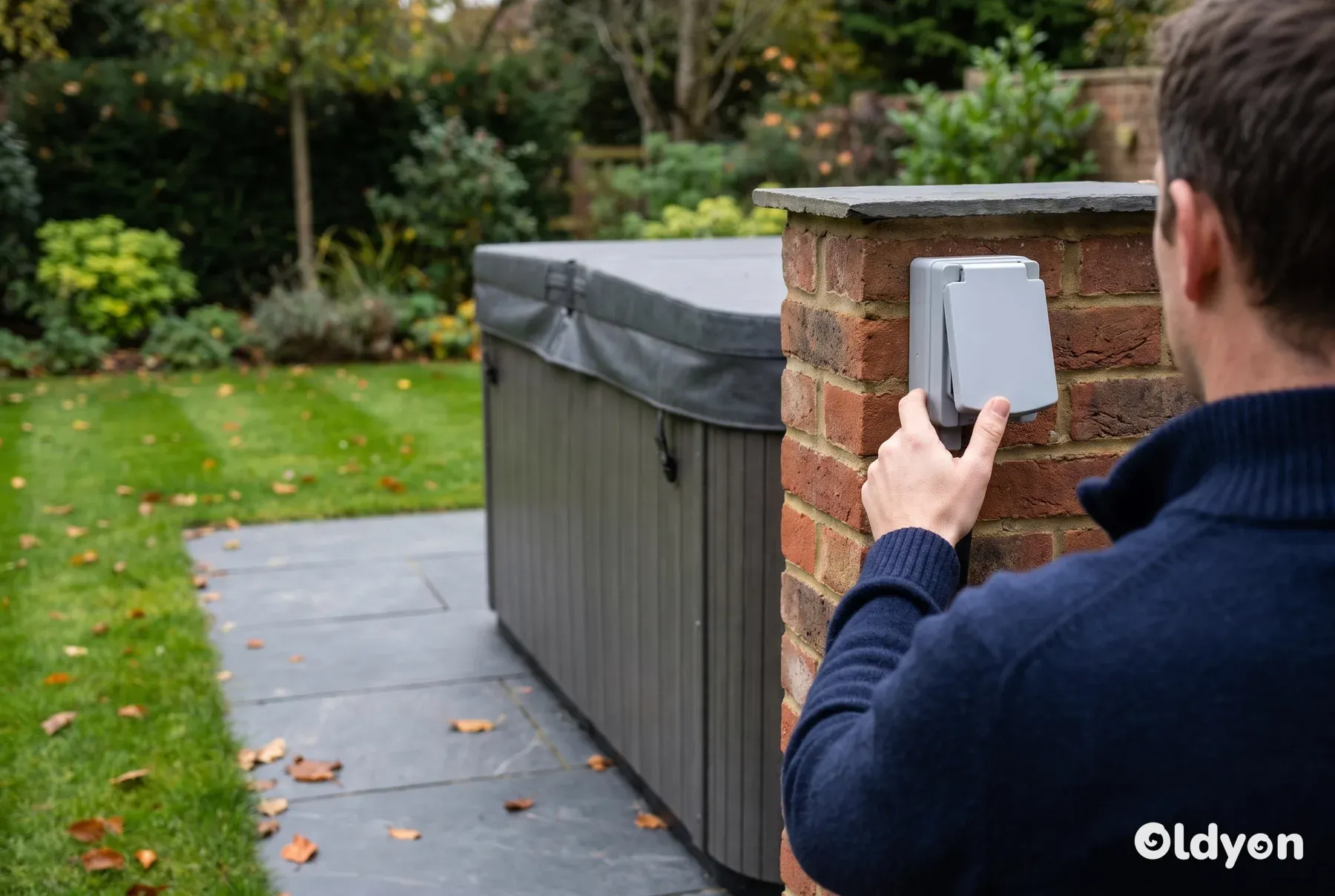
Before removing panels or touching any equipment, switch off at the isolator. Leave electrical work to a qualified professional.
Clear water all year: a summary
Clear water comes from steady habits, not rescue treatments. Shower first, test weekly, keep sanitiser steady, shock once a week, use enzymes, and rinse and rotate your filters.
Keep the cover closed, prepare for pollen in spring and leaves in autumn, and drain and refill on a regular schedule. A few minutes each week keeps your tub clean and inviting in every season.
Frequently asked questions
How long does it take for cloudy hot tub water to clear?
Mild haze caused by a dirty filter or low sanitiser usually clears within 24 to 48 hours once you balance the water, shock it and clean the filter, with the pump running. If it is still cloudy after two days, retest, check the filter for damage and consider a clarifier. Water that will not clear after that may need draining and refilling.
Can I use household bleach in my hot tub?
It is best not to. Household bleach can contain fragrances or other additives and is not designed for hot tub volumes, which makes it easy to overdose or underdose. Use chlorine or bromine products made for hot tubs, which give doses for your water volume, and follow your manufacturer's advice so you do not affect your warranty.
Why does my hot tub go cloudy straight after shocking?
Some cloudiness after shocking is normal. The shock breaks down organic waste, and the filter needs time to catch what is left. Run the pump with the cover open and check again after a few hours. If the haze lasts more than a day, test pH and alkalinity, because high readings often cause it, and rinse the filter.
Is chlorine or bromine better for keeping water clear?
Both keep water clear when held at 3-5 ppm with balanced pH. Chlorine works quickly and is easy to shock with, but sunlight breaks it down fast, so it suits tubs used only occasionally. Bromine stays active longer in hot water and many owners find it milder, so it suits daily use and sensitive skin. Choose one, and drain the tub before switching, following your manual.
Is chlorine or bromine cheaper to run?
Chlorine is usually the cheaper of the two sanitisers to run. Weigh that saving against what bromine offers: many owners find it milder on skin, and it stays active for longer in hot water, which makes steady levels easier with frequent use. Running costs depend on the products you choose, your water volume and how often you soak, so compare the dose each product needs for your tub.
Should I leave the pump running to keep the water clear?
Water needs to pass through the filter regularly to stay clear, but you do not need the jets on all day. Most tubs run automatic filtration cycles, so check your manual for the recommended cycle times. Lengthen them in summer, during pollen season or after heavy use, and always run the jets after adding chemicals.
How do I keep the water clear while I am on holiday?
Before you leave, balance the water, top up sanitiser, shock it and clean the filter. A floating dispenser or inline feeder can keep sanitiser topped up for about a week, depending on its size and setting. Lock the cover, and if you are away longer, ask someone to test the water or lower the temperature as your manual allows.
Filed under