How long does a hot tub take to heat up?
How long does a hot tub take to heat up? Learn degrees per hour by tub type, a simple estimate from litres and heater kW, and why winter slows inflatables.
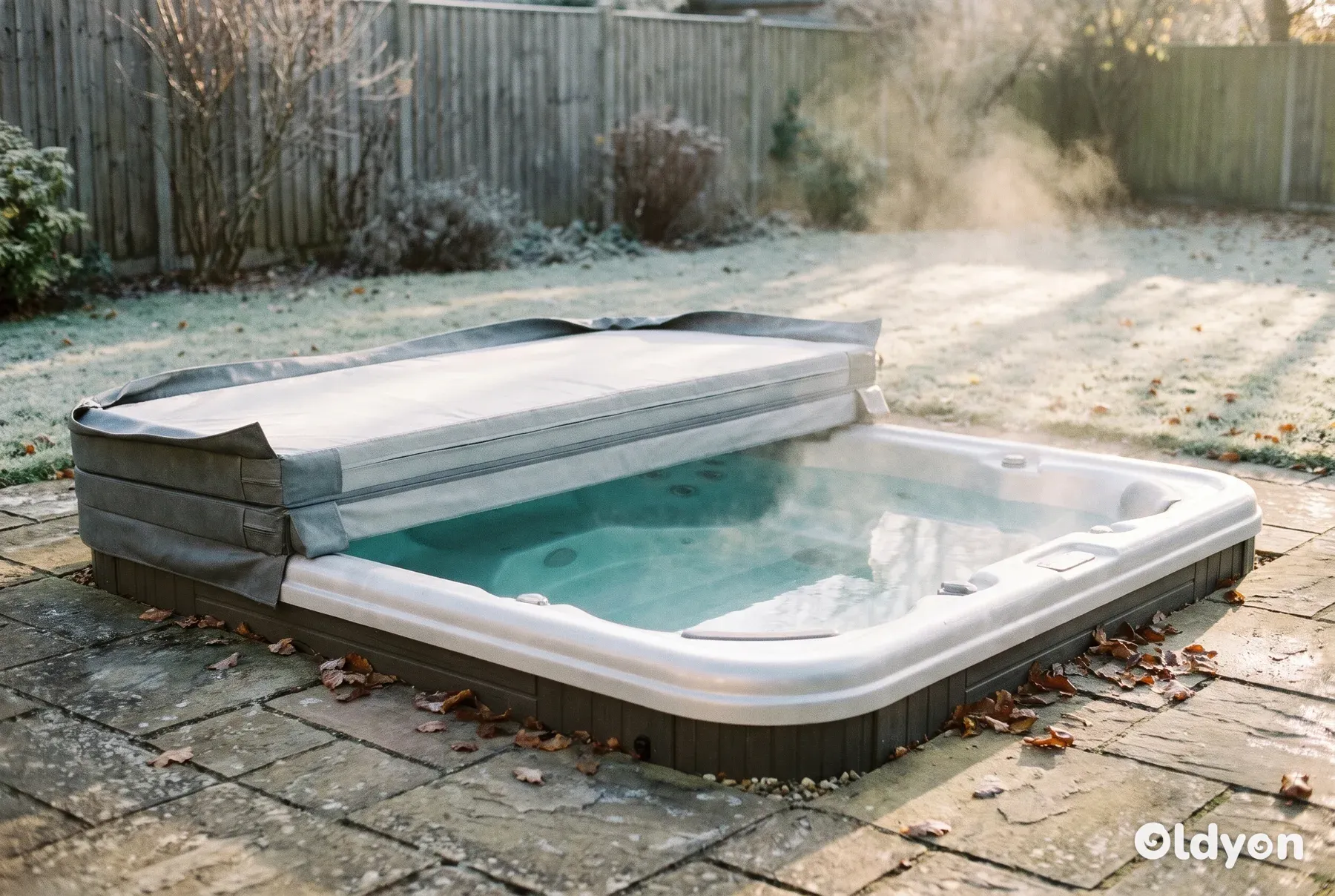
How long does a hot tub take to heat up? From a fresh cold fill, most hard-shell hot tubs need about 12 to 24 hours to reach 37-38°C (99-100°F). Inflatable hot tubs usually need 24 hours or more, and longer in cold weather. The exact time depends on your water volume, heater size and cover.
Below you will find typical heating rates in degrees per hour for each type of tub, a simple way to estimate the time for your own tub from its litres and heater kW, and the reasons inflatables struggle in winter. You will also find practical ways to shorten the wait and the signs that something is wrong.
How long does a hot tub take to heat up from a cold fill?
The starting point is your tap water. Mains water in the UK and northern Europe can be in single figures in winter and reaches the mid to high teens in late summer. Heating from 10°C (50°F) to 38°C (100°F) is a rise of 28°C, and that is a lot of energy for a domestic supply to deliver.
As a rough guide, a well-insulated hard-shell tub on a dedicated supply takes most of a day from a cold fill. A plug-and-play hard-shell tub usually takes longer, and an inflatable often takes a day and a half to two days. In winter, all of them need more time.
After that first fill, heating is much quicker because you are only adding a few degrees at a time. A good cover keeps the water close to its set temperature between uses, so most owners who leave the heater running find their tub ready whenever they want it.
Inflatables: heater size makes a big difference
Inflatable heating times depend heavily on heater output. As a rough guide, a model with a smaller heater of around 1.5 kW can take about 20-28 hours from a cold fill, while a 2.2 kW model may manage about 12-20 hours in mild weather, depending on its volume. In cold weather, add a quarter to a half again to any estimate.
The smallest inflatable hot tubs can have heaters as weak as about 1.1 kW, which is below the 1.5 kW figure above. These models heat more slowly still, so allow extra time from a cold fill and check the heater rating on the specification sheet before you plan your first soak.
Owners commonly report that a typical 2 kW bubble-type inflatable takes about 18-24 hours to heat from a cold fill, and that models with better-insulated walls take about 18-22 hours. Both figures assume the cover is on and the weather is mild. Your own manual will give the rate for your model.
Allow time for filling too
The clock starts before the heater does. A garden hose on good mains pressure can fill a 1,500-litre tub in roughly 30-45 minutes, but lower pressure or a narrow hose can take twice as long or more. To check your own supply, time how long your hose takes to fill a 10-litre bucket and scale up.
A full drain, clean and refill usually takes around 2-3 hours before heating can even start. If you plan to soak at the weekend, do the refill a day or two earlier.
That time breaks down roughly as follows: 30-60 minutes to drain the tub with a submersible pump, about 30 minutes to wipe and clean the shell, and 30-50 minutes to refill. Cleaning the filters and balancing the fresh water add a little more on top.
Fitting a pre-filter to the hose when you fill helps reduce metals and some minerals in the water. In hard water areas, high calcium can make the water cloudy and leave scale on the heater, which stresses the equipment over time. Aim for a calcium hardness of 150-250 ppm.
How many degrees per hour does a hot tub heat?
Most hot tubs gain between about 1°C and 2.5°C per hour while heating, as long as the cover is on and the weather is mild. Manufacturers quote different figures for different models, so check your manual for the rate your tub is designed to reach.
Tub type | Typical supply | Typical heater | Rough rise per hour |
|---|---|---|---|
Inflatable | 13 amp plug | 1.5-2.2 kW | About 1-1.5°C |
Plug-and-play hard-shell | 13 amp plug | 2-3 kW | About 1-2°C |
Hard-wired hard-shell | Dedicated circuit, often 32 amp | Around 3 kW | About 1.5-2.5°C |
Swim spa | Dedicated circuit | 3-6 kW or more | About 0.5-1°C |
These figures assume the cover is closed, the air controls are shut and the jets are not running on high speed. Wind, frost and an open lid can reduce them sharply. Swim spas gain fewer degrees per hour simply because they hold several times more water than a hot tub.
The heater element in a plug-and-play tub is often a similar size to one in a hard-wired tub. The difference is that a 13 amp tub has to share its limited power between the heater and the pumps, so the heater usually switches off when the jets run on high speed. Our guide to hot tub heaters, from element to heat pump explains how the different designs work.
How can you estimate the heating time for your own tub?
You can make a reasonable estimate with two numbers: how many litres your tub holds and the power of its heater in kilowatts (kW). Both are usually listed in the manual or on the specification sheet. If you are unsure of the volume, our guide to working out how many litres are in a hot tub shows you how.
The physics is simple. One kilowatt-hour of energy raises 1,000 litres of water by about 0.86°C. That gives a quick rule: the degrees gained per hour equal the heater kW multiplied by 860, divided by the number of litres.
- Find your heater power in kW and your water volume in litres.
- Multiply the heater kW by 860, then divide by the litres. This is your best-case rise in °C per hour.
- Subtract your starting water temperature from your target temperature to get the total rise you need.
- Divide the total rise by the rate from step 2. This is the best-case heating time in hours.
- Add a quarter to a half again to allow for heat lost through the cover, shell and pipework, and allow more in cold or windy weather.
Here is a worked example for a hard-shell tub holding 1,500 litres (about 400 US gallons) with a 3 kW heater. It gains about 3 × 860 ÷ 1,500 = 1.7°C per hour at best. Filling at 10°C and heating to 38°C is a 28°C rise, which takes about 16 hours in theory and roughly 20 to 24 hours in practice.
Now take an inflatable holding 900 litres with a 2 kW heater. It gains about 2 × 860 ÷ 900 = 1.9°C per hour in theory, so the same 28°C rise takes about 15 hours on paper. Inflatables lose heat much faster than hard-shell tubs, so 24 hours or more is realistic in spring or autumn, and it can take far longer in winter.
The same sum also tells you about energy. Heating 1,500 litres by 28°C needs roughly 49 kWh before any losses. Multiply that by the unit rate on your electricity bill to see what a cold fill costs you. Our article on how much electricity a hot tub uses covers day-to-day running costs.
Why do inflatable hot tubs heat so slowly in winter?
An inflatable hot tub works within tighter limits than a hard-shell tub. It runs from a 13 amp plug, its heater is modest, and on many models the heater does not run while the bubble blower is on. It then has to hold that heat with much less insulation.
- Thin walls: the PVC walls trap a layer of air, but this insulates far less than the foam used in most hard-shell cabinets.
- Ground contact: the floor sits directly on a patio or deck, which draws heat out of the water when the ground is cold.
- Lighter lid: an inflatable cover is thinner than a hard-shell lid and is more easily chilled or lifted by wind.
- Bubbles: the blower pushes outside air through the water, so on a cold day the water cools quickly while it runs.
- Small heater: in freezing weather, heat loss can come close to the heater's output, so the water rises very slowly or stops rising.
Many inflatable manufacturers set a minimum air temperature for use, and some advise against running the tub in freezing conditions. These limits differ between brands and models, so check your manual before you plan to use an inflatable through the winter.
Many inflatable makers recommend a minimum air temperature of about 4°C (40°F), and most inflatables are designed for three-season use rather than all year. Running one in freezing weather can damage the pump and heater, so in a hard frost it is often safer to drain and store the tub as the manual describes.
How to help an inflatable heat in cold weather
- Put an insulated ground mat or foam boards under the tub before you fill it.
- Add a floating thermal blanket on the water, under the lid.
- Place the tub out of the wind, or use a windbreak or a fitted surround.
- Keep the heater running through the cold months, instead of letting the water cool and reheating it for each use.
- Use the bubbles for short periods only, and keep the lid on whenever nobody is in the tub.
- Check that the lid straps are tight and the lid sits flat with no gaps at the edges.
- Start heating in the morning, when the air is warming, rather than in the evening.
- Plan the first fill for the day before you want to soak, so the tub has time to reach temperature.
- If you are not sure the tub can reach full temperature in cool weather, set the target a little lower, such as 39°C (102°F) instead of 40°C. It will then actually get there and still give a comfortable soak.
What slows hot tub heating down, and what speeds it up?
Most of the difference between a fast and a slow heat-up comes from heat loss, not from the heater. The heater adds a fixed amount of energy each hour. Anything that lets heat escape takes away from that amount.
- The cover: most heat leaves through the water surface, so a dry, well-fitting cover makes the biggest difference. A waterlogged cover is heavy and insulates poorly.
- Air temperature and wind: cold air and wind across the tub increase heat loss through the shell and cover.
- Starting temperature: a winter fill starts several degrees colder than a summer fill, which adds hours.
- Water volume: more litres need more energy for each degree of rise.
- Supply and heater size: a 13 amp tub that pauses its heater while the jets run heats more slowly whenever it is in use.
- Air controls and jets: open air controls pull cold air into the water, and jets running with the lid open throw heat away.
The cover is the single biggest factor in heating time. Keep it closed and strapped down for the whole heat-up, and close it again quickly each time you check the temperature.
How much difference does the cover make?
A good hard-shell cover usually has about 10-15 cm (4-6 inches) of foam, often tapered so rain runs off. A fitted cover in good condition cuts heat loss from the water surface dramatically compared with leaving the tub open.
A quality fitted cover is often quoted as cutting heat loss by as much as about 75% compared with an uncovered tub. The real figure depends on the cover's thickness and condition and on the weather, but it shows why the cover matters more than anything else.
Heating with the cover off can roughly double the time it takes to reach temperature. On a cold day, even 10 minutes with the lid open can lose heat that takes the heater half an hour or more to replace, and the effect is greatest on an inflatable.
A cover that has soaked up water insulates poorly, and the heater also has to warm that extra wet mass. To check yours:
- Lift the cover off the tub and feel its weight. A cover that is much heavier than when new has probably absorbed water.
- Unzip the vinyl jacket on one section, if the design allows, and look at the foam core.
- If the foam is dark, heavy or smells musty, it has absorbed water and the cover should be replaced.
Compared with a cracked or waterlogged cover, a fitted, undamaged cover typically saves roughly 1 to 3 hours of heating time on a hard-wired tub. That makes replacing a damaged cover one of the most worthwhile upgrades for faster heating, and it lowers running costs at the same time.
How much does the starting temperature matter?
More than many owners expect. Raising the fill temperature from about 13°C to 21°C (55°F to 70°F) removes 8°C from the rise. At 1.5-2.5°C per hour, that saves roughly 3 to 5 hours on a typical hard-wired tub.
Air temperature has a similar effect on every heat-up and reheat. A tub that heats in about 5 hours on a warm July day can take nearly twice as long in January, because it starts colder and loses more heat along the way.
Steps to heat a hot tub faster
For a full routine, see our guide on how to heat a hot tub faster. The basic steps after a fresh fill are below.
- Fill the tub, then fit the cover straight away and fasten the straps.
- Switch the heater on as soon as the tub is full, rather than waiting until the evening. Every hour of delay is an hour added to the wait.
- Close all the air controls on the topside panel.
- Set your target temperature and let the circulation pump and heater run without interruption.
- Leave the high-speed jets off on a 13 amp tub, unless your manual says the heater runs alongside them.
- Check progress no more than every few hours, and close the lid quickly each time.
Does a hot tub heat up faster with the jets on?
Usually not, and it is sometimes slower. The heater needs water flowing through it, but that normally comes from the circulation pump or a low-speed pump setting. On many 13 amp tubs and most inflatables, the heater switches off while the jets or bubbles run, so that the tub stays within its power limit.
On a hard-wired tub, the pumps do add a small amount of heat as they run, but only with the cover closed and the air controls shut. Jets running with the lid open lose far more heat than they add. Control systems differ between makers, so check your manual.
Can you fill a hot tub with warm water?
Some owners part-fill from a hot tap to shorten the wait. Some manufacturers allow this and others advise against it, particularly for inflatables, so check your manual first. Never fill with water hotter than 40°C (104°F), and remember that hot water from a household boiler also costs money to produce.
Does upgrading the electrical supply make a hot tub heat faster?
It can. A hard-wired tub on a dedicated circuit, often 32 amps in the UK, can run its heater and pumps at the same time, so it keeps heating while you use it. A 13 amp tub has to share its power, so the heater pauses when the jets run.
Changing the supply is only possible if the manufacturer designed the tub for it. Some hard-shell tubs can move from a 13 amp plug to a dedicated circuit with a settings change and new cable, while most inflatables cannot be converted at all. Ask the manufacturer before you plan any changes.
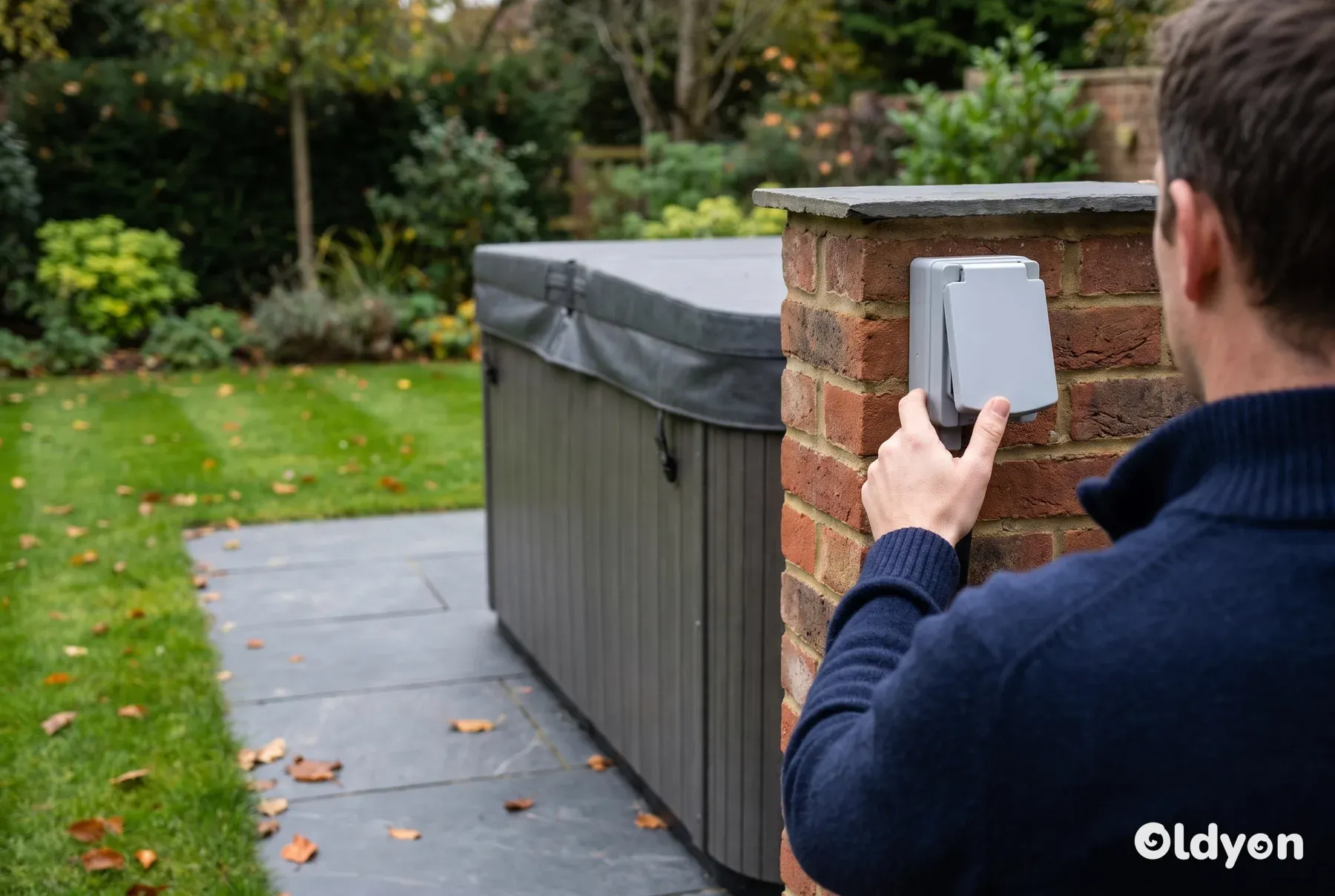
Hot tub wiring must be done by a registered electrician. In the UK, the installation must meet BS 7671 and have RCD protection, and in England and Wales a new circuit is notifiable under Part P of the Building Regulations. Other countries have their own rules. Never run a hot tub from an extension lead. The charity Electrical Safety First has clear guidance on safe electrics at home.
How long does it take to reheat a hot tub that is already warm?
Once the water is warm, heating is a short job. A soak or a cold top-up usually drops the temperature by a degree or two, and most hard-shell tubs recover that within an hour or two with the cover closed.
Heating from about 27°C (80°F) to 38°C (100°F) is an 11°C rise. A hard-shell tub gaining 1.5-2.5°C per hour takes roughly 4.5 to 7.5 hours. An inflatable gaining about 1°C per hour needs around 11 hours, and more when it is cold outside.
Whether to keep the heater running all the time or heat only before use depends on your insulation and how often you soak. A well-insulated hard-shell tub used several times a week is usually best kept at temperature. Inflatables are slow to reheat, so most owners keep them warm through the cooler months.
Between uses, many owners keep the water at a maintenance temperature of about 36-37°C (97-98°F). Raising it the last degree or so before a soak then takes minutes rather than hours, so the tub is always close to ready.
How hot should you set it?
Most people soak at 37-38°C. Never set the water hotter than 40°C (104°F). Use a lower temperature and shorter sessions for children, and follow your manufacturer's guidance on soak times, which many set at around 15 to 20 minutes at higher temperatures. Get out straight away if you feel dizzy, sick or too hot.
As a general guide, limit a soak at 40°C to about 15 minutes. At 38-39°C, healthy adults can usually manage up to around 30 minutes. Between sessions, get out for 10-15 minutes to cool down.
The reason for these limits is that your body cannot shed heat fast enough in very hot water. Your core temperature rises, which can lead to dizziness, nausea and heat exhaustion, and in extreme cases to heat stroke. Shorter soaks and cooler water keep your body temperature in a safe range.
Drink water before and during a soak, and avoid soaking alone if you are new to hot tubs. Do not stay in for hours. If you want a longer soak, lower the temperature to about 35-37°C and take regular breaks.
If you are pregnant, have a heart condition or take medicine that affects your blood pressure, speak to your GP, pharmacist or midwife before you use a hot tub. The NHS pregnancy pages are a useful place to start if you are expecting a baby.
People with diabetes or a heart or circulation condition should also check with their GP before using a hot tub. Whoever you are, get out and cool down if your skin becomes very flushed, or if you feel lightheaded or sick.
Before anyone gets in after a fresh fill, test and balance the water: free chlorine 3-5 ppm (or bromine 3-5 ppm), pH 7.2-7.6 and total alkalinity 80-120 ppm. Warm water that is not sanitised suits bacteria, which is why the HSE publishes guidance on controlling Legionella, including in hot tubs.
How long should you wait before getting in?
After a fresh fill, hold off until the chemistry is balanced, even if the water is already warm. Water with the wrong pH or sanitiser level can cause skin rashes, irritation and eye discomfort.
After adding chlorine, wait at least 20-30 minutes before getting in. After a shock dose, wait until free chlorine has fallen back to 5 ppm or below, which can take 1-4 hours. Always test with a strip before you get in, rather than relying on timing.
Why is my hot tub heating slower than it should?
If your tub is heating well below the rate you calculated, something other than the weather may be at fault. Look for these signs:
- The temperature rises a little and then stops, or only rises when the jets are off.
- The display shows a flow, pressure or heater error code.
- The filters are clogged, which reduces the flow of water through the heater.
- The water level is low, which can trigger a flow fault.
- The cover is waterlogged, cracked or no longer sealing at the edges.
- The heater rarely seems to come on, or the RCD trips when it does.
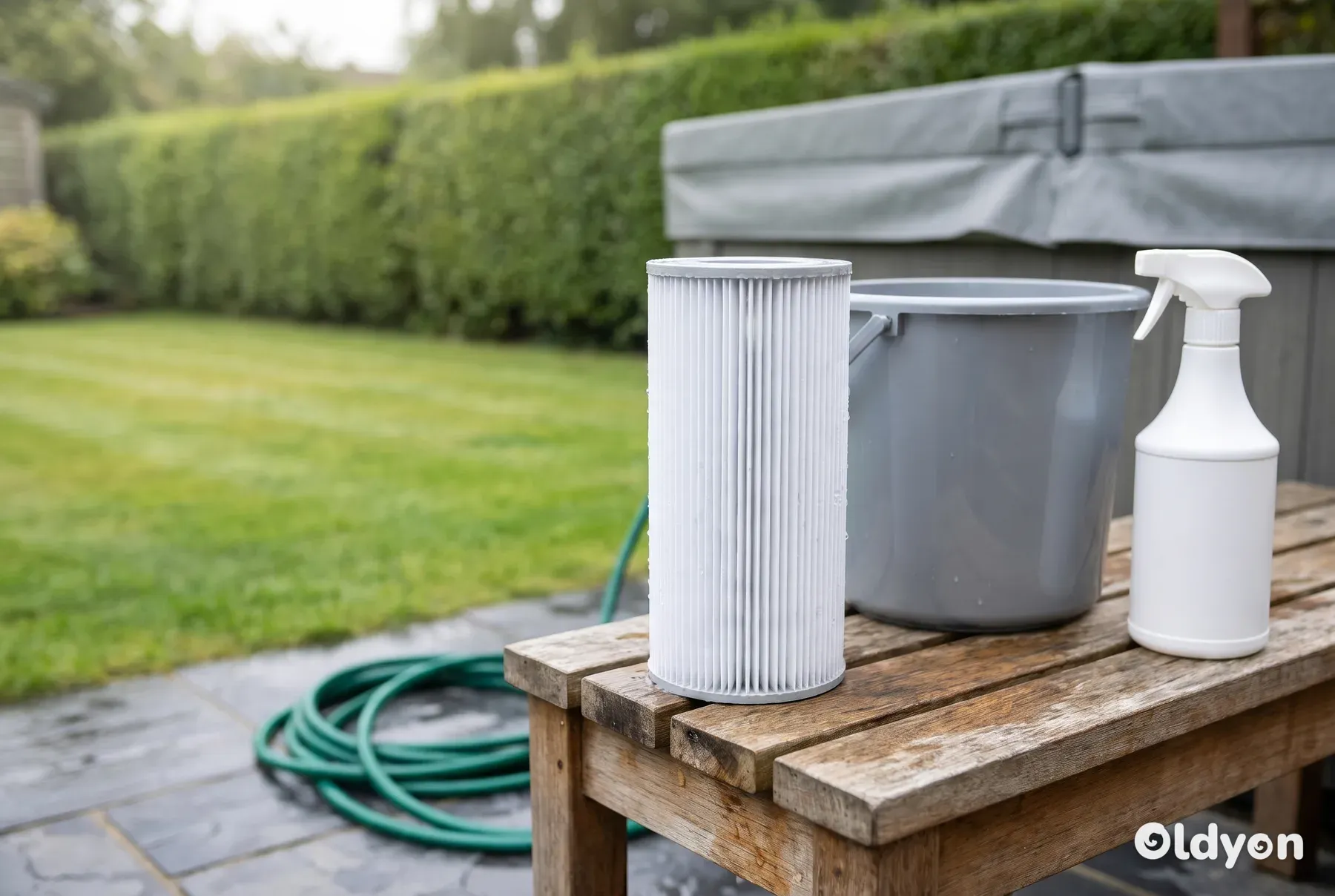
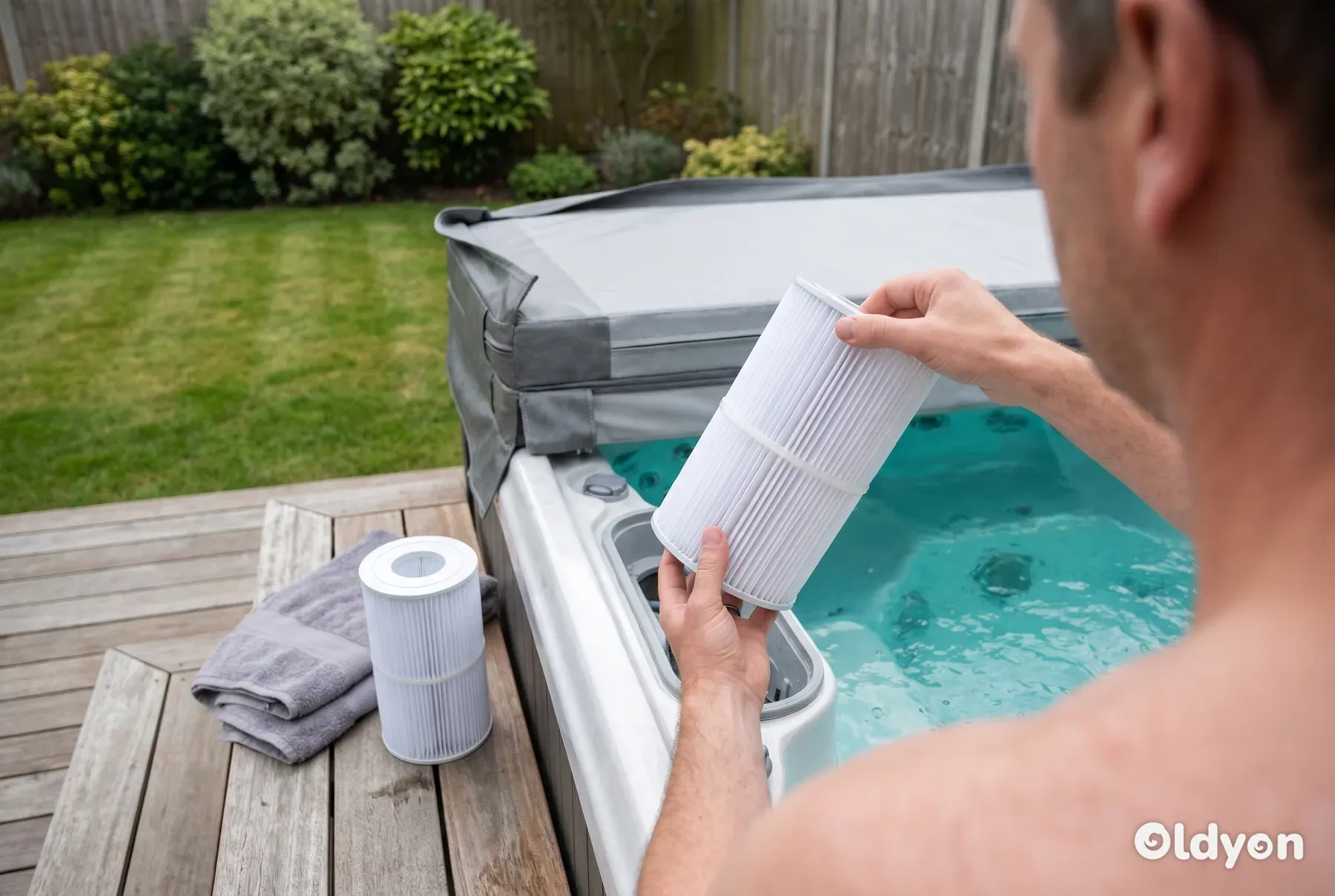
Check the filter first. A dirty filter is the most commonly overlooked cause of slow heating, and checking it costs nothing and takes about 5 minutes.
Start with the simple fixes: clean or replace the filter, top up the water and check the cover. If the problem continues, our guide on what to check when a hot tub is not heating takes you through the next steps. Before you open any panel, switch off at the isolator.
As a guide, if a hard-wired tub gains less than about 0.5°C per hour with the cover closed and the heater running, the heater element may be failing and should be checked.
Many control systems use short error codes, such as FLO for a flow problem and HH or OH for overheating. Codes differ between makers, so look yours up in the manual. If the tub shows a flow or overheat code, switch it off at the isolator, and if a clean filter and correct water level do not clear it, have a technician check it.
Call a qualified hot tub technician if you notice any of these:
- The water temperature does not rise at all after about 2 hours of running.
- You hear unusual noises from the pump or heater area.
- An overheat code appears, or a flow code keeps returning after you have cleaned the filter.
If the RCD trips, do not keep resetting it. Leave the tub switched off and call a qualified hot tub technician or a registered electrician to find the cause.
How often does a hot tub need maintenance?
Regular upkeep keeps water flowing freely through the heater, which keeps heating times short. A typical schedule looks like this, but follow your manual where it differs:
- Test the water and add sanitiser 2-3 times a week.
- Rinse the filters every 2 weeks.
- Deep clean the filters every 4-6 weeks.
- Wipe the waterline and shell once a month.
- Drain and refill every 3-4 months.
- Inspect the cover and seals every 6 months.
Of all these tasks, water testing is the one owners skip most often, and skipping it is behind most of the common problems with a hot tub, such as cloudy water, bad smells and skin irritation. A quick test takes only a couple of minutes each time, which makes it the cheapest way to avoid maintenance headaches later.
The pumps matter for heating too, because the heater relies on them for water flow. A well-maintained pump typically lasts around 5-10 years. Unbalanced pH, running on high speed all the time, debris clogging the impeller and repeated freeze-thaw cycles all shorten its life.
Watch for these signs that a pump is failing, and if you notice them, switch off at the isolator and call a technician:
- Grinding or humming noises from the pump.
- Weak jets, even with clean filters and the correct water level.
- The tub repeatedly tripping the RCD.
Hot tub heating times in short
From a cold fill, plan for most of a day with a hard-shell tub and a day and a half or more with an inflatable, with extra time in winter. Expect about 1-2.5°C per hour from most hot tubs, and less from a swim spa.
For your own tub, multiply the heater kW by 860 and divide by the litres to get a best-case rate, then allow extra for heat loss. Keep the cover on, close the air controls, leave the jets off while heating, and give an inflatable extra insulation in cold weather.
Frequently asked questions
How long does a hot tub take to heat up in winter?
Longer than in summer, for two reasons. Cold mains water means a bigger temperature rise, and cold air and wind take more heat away while the tub heats. A hard-shell tub may need a full day or more from a cold fill. An inflatable can take two days or more, and in freezing weather some will not reach full temperature at all.
How much heat should a hot tub lose overnight?
With the heater switched on and a good cover in place, the tub should hold its set temperature. If you switch the heater off, a well-insulated hard-shell tub may lose only a degree or two overnight, while an inflatable can lose several degrees on a cold night. Much larger losses usually point to a worn, wet or badly fitting cover.
Does a floating thermal blanket make a difference?
For many tubs, yes. A thermal blanket sits on the water under the main cover and reduces evaporation and heat loss from the surface. It helps most with inflatables and with older hard-shell covers. Cut it to fit the water surface, remove it before anyone gets in, and rinse it from time to time so it stays clean.
Can I use the hot tub before it reaches full temperature?
Yes, as long as the water is balanced and sanitised. Lukewarm water is not unsafe, it is simply less relaxing. Bear in mind that opening the lid and running the jets on a 13 amp tub will pause or slow the heating, so a short soak now may mean a longer wait for full temperature afterwards.
Why does my hot tub cool down when the jets are on?
On many 13 amp tubs and most inflatables, the heater switches off while the jets or bubbles run, because the supply cannot power both at once. With the lid open and air moving through the water, heat is lost quickly. This is normal for these tubs. A hard-wired tub on a dedicated circuit can usually heat and run its jets together.
Will a heat pump make my hot tub heat up faster?
Not always. A heat pump mainly reduces running costs, because it moves heat from the outside air instead of turning electricity directly into heat. How quickly it heats depends on its heat output in kW, and that output falls as the air gets colder. When you compare models, look at the output figure quoted for low air temperatures, not only the headline figure.
Filed under