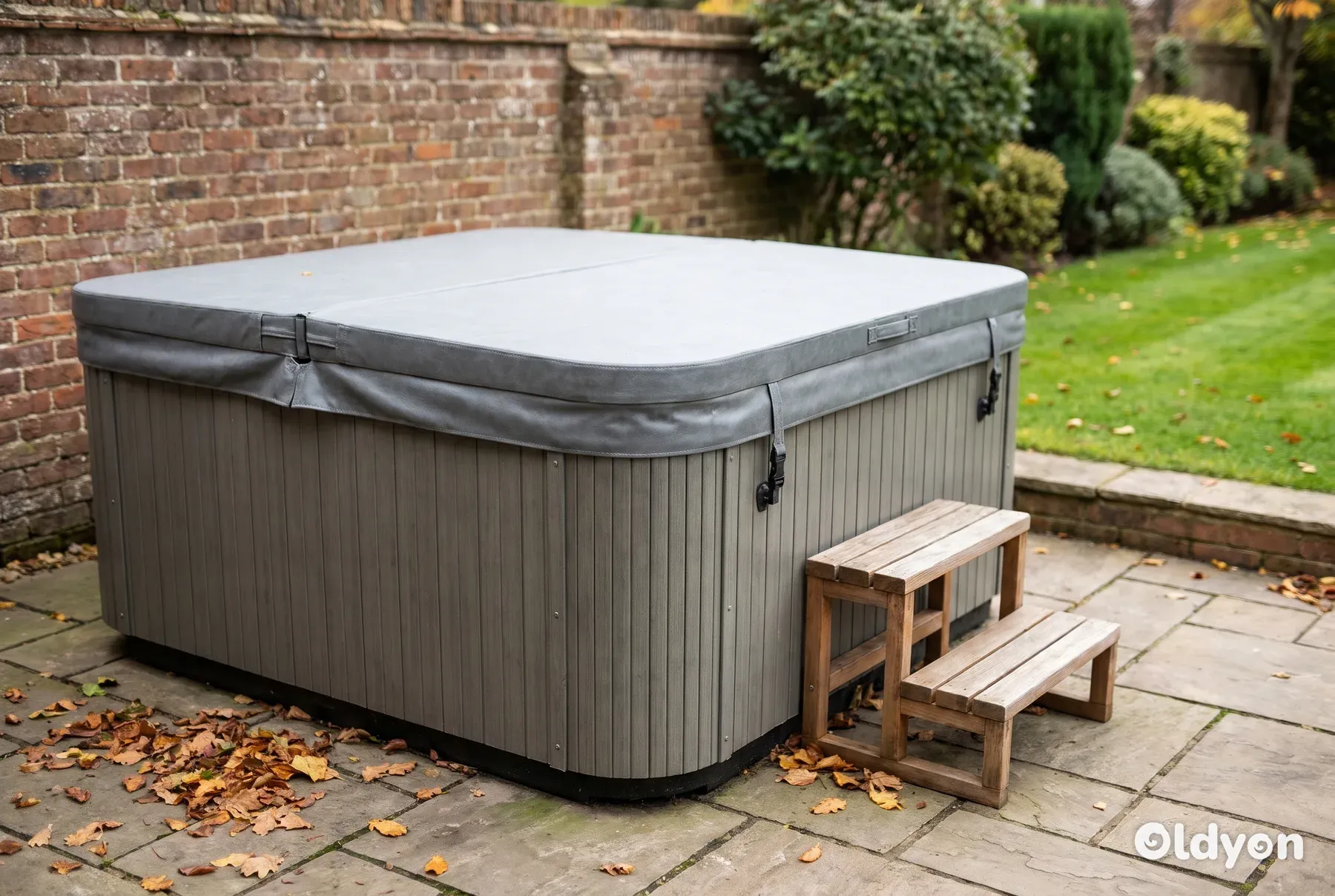
What makes a good hot tub for UK winters
Looking for the best hot tub for winter? Learn what matters in the UK: full foam insulation, cover quality, frost protection and 32 amp vs 13 amp heating.
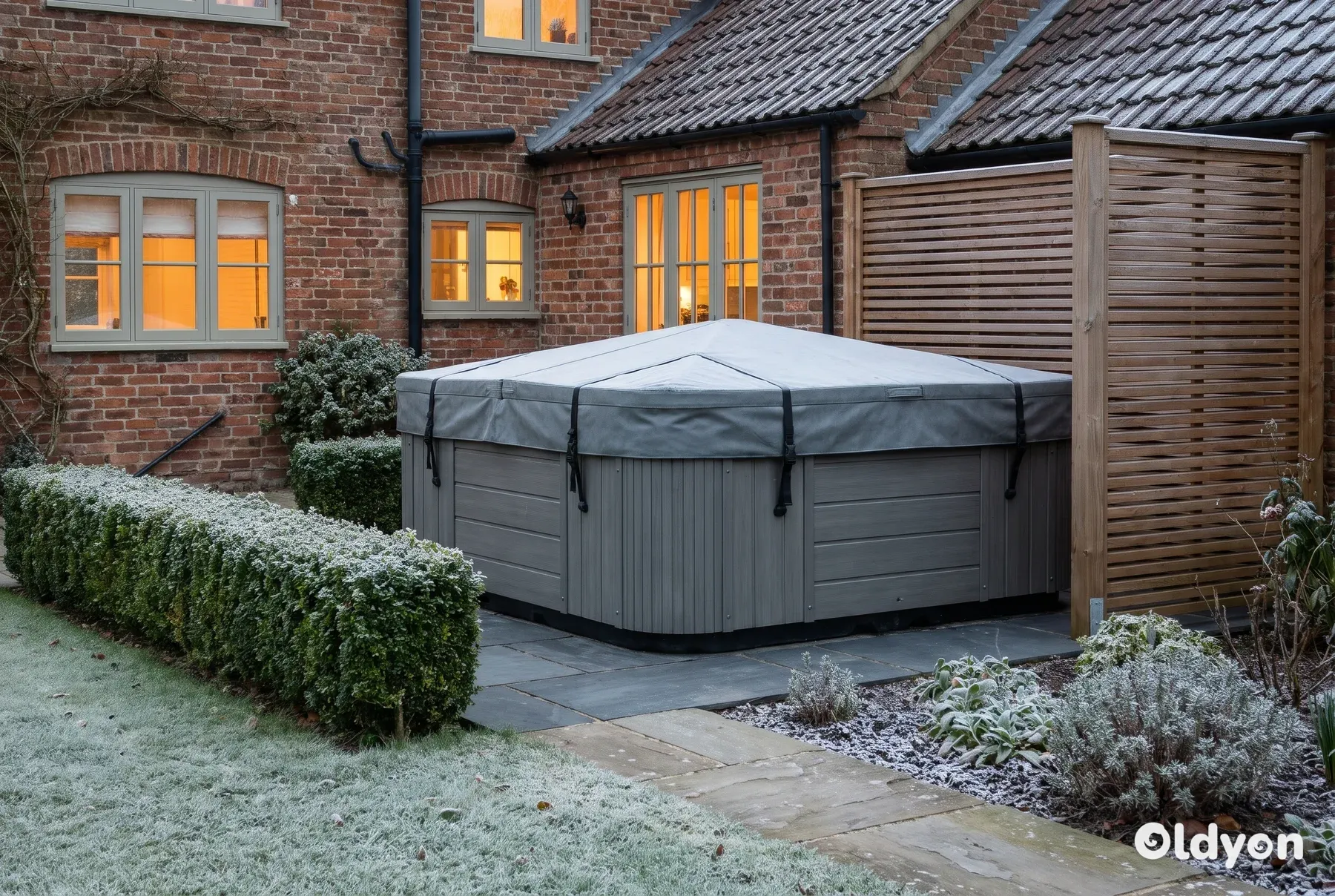
The best hot tub for winter in the UK is a hard-shell tub with full foam or well-sealed insulation, a thick tapered cover that seals tightly, automatic frost protection, and a heater that can keep running while the jets are on. That last point usually means a 32 amp supply. Inflatables can work in winter, but only within clear limits.
This guide explains each of those features, how to compare tubs on them, and what to check before you buy. It does not recommend models. Instead, it gives you the questions to ask, so you can judge any tub, new or used, on how well it will hold its heat from November to March.
What does a hot tub need to cope with a UK winter?
UK winters are rarely extreme, but they are long, damp and windy. A tub kept at 38°C (100°F) in a garden at 2°C (36°F) loses heat all day and all night. It loses it through the cover, the cabinet walls, the base, and the water surface every time you open the lid.
A good winter tub slows that heat loss and replaces lost heat quickly. Five features do most of the work:
- Insulation in the cabinet and under the shell
- An insulated, sealed base
- A thick, well-fitting cover
- A heater and electrical supply that can keep up in cold weather
- Automatic frost protection
Jets, lights and speakers do not keep water warm. When you compare tubs for winter use, look past those features and ask about the parts you cannot see.
Is full foam insulation better for a winter hot tub?
Insulation is the biggest difference between a tub that uses little electricity in January and one that runs its heater for hours. There are two main approaches. Both can work well if they are done properly.
Full foam insulation
In a full foam tub, the space between the shell and the cabinet is filled with expanding foam. The foam surrounds and supports the pipework, leaving very little air for heat to escape into. A well-made full foam tub holds its heat very well in cold weather.
The trade-off is access for repairs. If a pipe joint leaks, a technician has to cut through the foam to find it and then fill the gap again afterwards. This is routine work, but it takes longer and usually costs more than a repair in an open cabinet.
Perimeter and thermal lock insulation
Other tubs insulate the cabinet walls, the floor and the underside of the shell with foam panels or layers, but leave the inside of the cabinet open. Heat from the pumps warms the trapped air, which helps keep the pipework and water warm. Manufacturers use different names for this design, such as thermal lock.
This design makes repairs easier, and some technicians prefer it for that reason. However, it depends on the cabinet being well sealed. Gaps around panels, cable entries or the base let warm air out and cold air in.
Which type suits your location?
Perimeter insulation with an open cavity generally works well in mild winters, when daytime temperatures sit around 5-10°C (41-50°F). In long spells of freezing weather, full foam usually holds heat better. If your garden is exposed or you live in a colder part of the country, choose full foam.
Do not forget the base
A lot of heat escapes downwards, especially into a cold concrete slab. Look for a sealed, insulated base pan made from a durable plastic rather than an open timber frame. A solid base also keeps rodents out, which matters in winter when they look for warm places to nest.
How to compare insulation
- Ask what type of insulation the tub uses and exactly where it is: under the shell, on the cabinet walls and on the floor.
- Ask whether the underside of the shell is sprayed with foam, as well as any insulation on the cabinet.
- If the seller will remove a cabinet panel, look inside for gaps, loose foam or signs of damp.
- Ask for the tub's standby energy figure and how it was measured. Different makers test in different conditions, so compare these figures with care.
How good does a hot tub cover need to be for winter?
The cover is where most heat escapes, because warm air and steam rise. A cheap or waterlogged cover can undo the work of excellent cabinet insulation, so judge the cover as carefully as the tub itself.
A good winter cover has these features:
- A thickness of at least 10 cm (4 in) at the centre, tapering towards the edges so rain and snow run off
- Dense foam cores, each sealed inside a heat-welded plastic wrap so they do not absorb water
- A continuous seal along the central hinge, so warm air cannot escape where the two halves meet
- A snug fit, with a skirt that hangs over the edge of the tub and no visible gaps
- Strong, lockable straps that hold the cover down in high winds
- Outdoor-grade vinyl that resists sunlight and does not crack easily in the cold
A well-fitting hard cover with a foam core of at least 100 mm is often said to cut heat loss by as much as about 60%. Treat that as a general claim rather than a measured result for any one tub. The practical point is clear, though: a hard-shell tub with a poor cover can lose more heat than a well-covered inflatable.
Covers do not last forever. Over time the foam can take on water, which makes the cover heavy and far less effective. If a cover feels much heavier than when it was new, or sags in the middle, it is time to replace it. Our guide on how to choose a hot tub cover explains what to look for in detail.
A cover lifter is worth including in your budget. In winter you want the cover off for as short a time as possible. A lifter helps you open and close it quickly, without dragging it across the edge of the tub and damaging the seals.
32 amp or 13 amp: which works better in winter?
This is the most important question for winter use, and it is often misunderstood. The difference is not mainly about how hot the water can get. It is about whether the heater can keep running while the jets are on.
13 amp plug-and-play tubs
A 13 amp tub plugs into a standard outdoor socket with RCD protection. A UK 13 amp plug can supply roughly 3 kW (kilowatts) in total, so the tub has to share that power between its heater, its pumps and any air blower.
To stay within that limit, many 13 amp tubs switch the heater off while the high-speed jets run. In summer you barely notice this. In winter, with cold air moving across the water, the temperature can drop during a long soak with the jets on, and it then takes time to recover.
32 amp hard-wired tubs
A 32 amp tub is wired into its own dedicated circuit from your consumer unit. With more power available, the heater can usually run alongside the jets, so the water stays at temperature while you use it. Heaters on these tubs are commonly around 3 kW, but always check the specification, because designs vary and some larger tubs need a supply above 32 amps.
Feature | 13 amp plug-and-play | 32 amp hard-wired |
|---|---|---|
Installation | Outdoor socket with RCD protection | Dedicated circuit fitted by an electrician |
Heater with jets on | Often switches off | Usually keeps running |
Long winter soaks | Water may cool | Holds temperature better |
Heating from cold | Often slower | Usually faster |
Upfront cost | Lower | Higher, including electrical work |
A 13 amp tub can still be a sensible winter choice if you keep sessions shorter, use the jets on low speed, and choose a model with excellent insulation and a good cover. If you plan long soaks on cold evenings, a 32 amp tub is the better fit.
Electrical rules in the UK
Any new outdoor circuit for a hot tub must meet the UK wiring regulations, BS 7671, and have RCD protection. In England and Wales, adding a new circuit is notifiable work under Part P of the Building Regulations, so use a registered electrician who can certify the work. Scotland and Northern Ireland have their own building rules, and other European countries have their own standards.
For a 13 amp tub, use a weatherproof outdoor socket that an electrician has fitted or checked. The Electrical Safety First charity publishes clear guidance on using electricity safely outdoors.
Water and electricity are a dangerous combination. Never wire a hot tub yourself, never power one from an extension lead or cable reel, and always switch off at the isolator before you remove a panel or do any maintenance.
What frost protection should a winter hot tub have?
Frost is the biggest risk to a hot tub in a UK winter. If water freezes inside the pipes, pumps or heater, it expands and can crack fittings. This kind of damage is often expensive, and some warranties exclude it.
Most modern hard-shell tubs have an automatic freeze protection mode. When sensors detect that the water or equipment is getting too cold, the control system runs the pumps and heater to keep water moving and above freezing. When you compare tubs, look for these points:
- Automatic freeze protection that still works when the tub is in economy or sleep mode
- Insulated pipework and an enclosed equipment area, so the pumps are not exposed to the weather
- A heater powerful enough to keep up with the tub's size in cold, windy weather
- A clear section in the manual explaining what the tub does in frost and what you need to do
- Drain points that are easy to reach, in case you ever need to empty the tub in cold weather
- Clear warranty terms on frost damage
Freeze protection only works while the tub has power. A tripped RCD or a long power cut on a frosty night is the real danger, so it helps to know in advance what to do.
What to do if the power goes off in freezing weather
- Check the RCD and the isolator first. If the RCD has tripped and will not reset, do not keep trying. Call an electrician.
- Keep the cover closed and strapped down to hold in as much heat as possible.
- For extra insulation, lay a heavy blanket over the closed cover. Keep it away from vents and the equipment area.
- Check the water temperature every few hours. A full tub of warm water holds a lot of heat, so the main body of water rarely freezes quickly.
- If the power is likely to stay off for a long time in a hard frost, contact your dealer or a hot tub technician for advice before you try to drain anything.
- When the power returns, check that the tub restarts, the pumps run and the water is heating before you leave it.
If you go away in winter, leave the tub running at a slightly lower temperature rather than switching it off, and ask a neighbour to check it after any power cut. Keep sanitiser levels in range too, because warm water left untreated can grow harmful bacteria, including Legionella. The Health and Safety Executive has guidance on Legionella risks, including in spa pools.
Can an inflatable hot tub cope with a UK winter?
Inflatable tubs are popular because they are affordable and easy to set up, but they are designed mainly for mild weather. Their walls are largely air held in by thin PVC, and most models have a heater designed for a 13 amp supply.
That creates clear limits in winter:
- Many manufacturers set a minimum air temperature for using or heating the tub, often a few degrees above freezing. Check your manual for the exact figure.
- Heat escapes through the walls and the thin lid much faster than through a well-insulated hard shell.
- The heater usually cannot run at the same time as the bubbles, so the water cools quickly once you start.
- The pump and heater unit sits outside the tub, exposed to wind, rain and frost.
- PVC becomes stiffer in the cold and is more likely to crack or puncture.
Most inflatables use a separate heater and pump unit that connects to the tub through hoses. This design is generally less energy efficient than the integrated pump and heater systems in premium hard-shell tubs, where the equipment sits inside an insulated cabinet, so it adds to your daily running costs in winter.
The external unit does have one practical advantage. You can inspect it, clean it and have it serviced or replaced without draining and deflating the tub.
The ground is often a bigger problem than the air. Cold concrete, paving slabs or decking pull heat out through the base of an inflatable faster than cold air takes it through the sides. An insulated mat underneath is one of the cheapest and most effective upgrades you can make.
Before you buy any inflatable for outdoor winter use, confirm that it has built-in freeze protection. Without it, a spell of sustained sub-zero weather can damage the pump and plumbing. If the product details do not mention freeze protection clearly, assume the tub does not have it.
You can improve an inflatable with an insulated ground mat, a floating thermal blanket, a windbreak and a weather cover for the pump unit. Some newer models also include freeze protection. Even so, many inflatables struggle to stay hot during a cold, windy spell, and running costs rise sharply.
If you already own one, our guide to using an inflatable hot tub in winter explains how to keep it running or store it safely. For a closer look at the conditions in which any tub starts to struggle, see what temperature is too cold for a hot tub.
How to choose the best hot tub for winter: a buyer's checklist
Take this list with you when you speak to sellers or look at a used tub. A good seller will answer each point clearly. Vague answers about insulation or frost protection are a warning sign.
- What type of insulation does the tub have, and where is it?
- Is the base sealed and insulated?
- How thick is the cover at the centre and at the edge, and are the foam cores sealed against water?
- Does the tub need a 13 amp or a 32 amp supply, and can the heater run while the jets are on?
- What is the heater's power in kilowatts?
- Does it have automatic freeze protection, and does it work in economy mode?
- What does the warranty say about frost damage?
- Are spare parts and local service engineers available in winter?
Hard shell or inflatable: which suits you?
Start with how often you will use the tub and how exposed your garden is. If you plan to use it daily through the winter in an open, windy garden, prioritise a full-foam hard-shell tub. If you will use it occasionally in a sheltered spot, an inflatable can work, as long as you accept higher running costs.
Where you live matters too. In colder parts of the UK, such as Scotland, northern England and Wales, or if you want to use the tub all year, a full-foam hard-shell tub is the safer choice. An inflatable suits milder areas, a sheltered garden, occasional use or a budget under about £1,500.
Portability is a real point in favour of an inflatable. You can drain it, deflate it and store it in a garage or shed over winter, or take it with you if you move home. A hard-shell tub is a permanent installation on a prepared base, and moving one usually means hiring specialists.
Think about lifespan as well as the purchase price. A hard-shell tub is typically expected to last about 10-20 years, while an inflatable usually lasts roughly 3-7 years. An inflatable costs far less to buy, but you may replace it several times over the life of one hard-shell tub.
Price bands
As a broad guide, inflatable tubs range from a few hundred pounds to over a thousand pounds. Hard-shell 13 amp plug-and-play tubs usually start at a few thousand pounds. Acrylic 32 amp tubs range from the mid thousands to well over £10,000, depending on size, build quality and brand.
For winter use, money is better spent on insulation, the cover and the electrical supply than on extra jets or lighting. A mid-priced tub with excellent insulation and a strong cover can cost less to run than an expensive tub that is poorly sealed.
Mistakes to avoid
- Judging a tub by its number of jets and features rather than how well it keeps its heat
- Buying a 13 amp tub for long winter soaks without understanding how the heater shares power
- Accepting a thin or flat cover to save money
- Forgetting to budget for the base, the electrician and a cover lifter
- Placing the tub far from the house, so you face a long, cold walk on a path that may be icy
- Putting the tub where it takes the full force of the wind
Where you put the tub matters too
A sheltered spot close to the back door makes a big difference in winter. A fence, hedge or screen on the windy side reduces heat loss from the cover and the water surface. Plan a firm, non-slip path and some outdoor lighting, because steps and paving can be icy after dark.
How much does a hot tub cost to run in winter?
Running costs rise in winter because the heater works harder to replace lost heat. How much they rise depends on the tub's insulation and cover, your local weather, how often you use it and your electricity tariff. Any single figure you see quoted is only an estimate for one set of conditions.
Typical winter energy use
These rough daily figures are often quoted for winter use. Treat them as estimates, not measured results, and multiply by the unit rate on your own bill to get a cost:
- Full-foam hard-shell tub at 38°C: about 5-8 kWh a day
- Inflatable at 40°C (104°F) without a thermal cover: about 12-18 kWh a day
- Inflatable with a thermal cover and an insulated ground mat: about 8-12 kWh a day
Adding a thermal cover and a ground insulation mat to an inflatable is reported to cut its running cost by about 20-40%. That is a worthwhile saving, but even a well-wrapped inflatable cannot match a foam-filled hard shell.
What those figures mean in pounds
The examples below use a unit rate of about 24.5p per kWh. This is only an example, so check the rate on your own bill and adjust the figures up or down to match it. Monthly figures assume about 30 days of winter heating.
UK electricity unit rates change regularly, so this example rate will date. For a current figure, check the latest Ofgem energy price cap, which sets the maximum unit rate for standard variable tariffs. If you are on a fixed tariff, use the unit rate shown on your latest bill instead.
- Full-foam hard-shell tub at 38°C: roughly £1.23-£1.96 a day, or about £37-£59 a month
- Inflatable at 40°C with no thermal cover: roughly £2.94-£4.41 a day, or about £88-£132 a month
- Inflatable with a thermal cover and an insulated ground mat: roughly £1.96-£2.94 a day, or about £59-£88 a month
Over a five-month winter from November to March, about 150 days, those daily costs add up. At the same example rate, an uncovered inflatable could use roughly £445-£665 of electricity, and around £600-£660 towards the top of that range. A well-insulated hard-shell tub would use roughly £185-£295. Comparing the higher inflatable figures with the hard shell, the gap can be more than £400 in a single winter.
Over about five years, that difference can cover most of the higher purchase price of a hard-shell tub. Put another way, choosing a cheap inflatable to save around £500 when you buy can lead to a similar extra energy cost every year, if you keep it heated all winter.
Poor insulation is the main reason owners see a sharp rise in winter bills. Some owners report paying £100-£150 more a month when a poorly insulated tub stays plugged in and heated all winter. If you plan to run a tub constantly, expect this and budget for it before you buy.
Working out your own costs
To work out your own winter running costs, follow these steps:
- If your tub's control system or app reports energy use, record the figure. If not, take a reading from your household electricity meter at the same time each day for a typical winter week.
- Work out how many kilowatt hours (kWh) the tub has used over the week. With a household meter, compare against a similar week before the tub was installed, or with it switched off, to separate out its share.
- Multiply the tub's weekly kWh by the unit rate shown on your electricity bill.
- Repeat the process in a mild month to see how much extra the winter adds.
Our guide to hot tub running costs in the UK explains the calculation in more detail, with the factors that push costs up or down.
What temperature to keep it at between uses
If you use the tub daily, keep it at about 37-38°C (99-100°F). Large drops and reheats between daily sessions tend to cost more than holding a steady temperature. If you use it fewer than twice a week, dropping to around 30°C (86°F) between sessions is a reasonable compromise. Allow enough time to reheat before you want to use it.
Ways to keep winter bills down
- Keep the cover closed and strapped down whenever the tub is not in use.
- Use a floating thermal blanket on the water, under the cover.
- Shelter the tub from the wind with a screen, fence or hedge.
- If you will not use the tub for a few days, lower the set temperature by a degree or two rather than switching it off.
- Keep filters clean so the pumps and heater can work efficiently.
- If you have an off-peak tariff and your tub allows it, schedule heating cycles for the cheaper hours.
- Replace a cover that has become heavy or waterlogged.
Some owners add an air source heat pump to heat the water more efficiently. This can lower costs, but a heat pump's efficiency falls as the outside temperature drops, so check its performance figures at cold air temperatures before you buy. For more ideas, see how to choose an energy efficient hot tub.
Manufacturers' figures suggest a heat pump can use roughly 50-75% less heating energy than a standard resistive heater, with a payback period of around two to four years for daily users. These figures depend on the weather and how you use the tub. The tub also needs compatible plumbing, so ask your dealer or a technician before you buy one.
Summary
The best hot tub for a UK winter is one that keeps its heat and protects itself from frost. Look for full foam or well-sealed insulation, an insulated base, a thick tapered cover with a hinge seal, and automatic freeze protection that works in every mode.
If you want long soaks on cold nights, choose a 32 amp tub installed by a registered electrician, so the heater can run while the jets are on. A 13 amp tub or an inflatable can work in winter, but within clear limits, so match the tub to how you actually plan to use it.
Frequently asked questions
What temperature should I keep my hot tub at in winter?
Most owners keep the water between 37°C and 39°C when they plan to use it, and it should never go above 40°C (104°F). Between sessions, you can lower it by a degree or two to save energy. Avoid switching the tub off in frosty weather, because reheating cold water takes a long time and the tub needs power to protect itself from frost.
Why are some hot tubs so much cheaper than others?
Lower prices usually come from simpler construction: less insulation, a thinner cover, a 13 amp heater that shares power with the jets, and less durable cabinet and base materials. Warranty length and access to local service also vary. A cheaper tub can be fine in summer, but in winter the savings may be lost through higher running costs and water that cools during use.
How long should I stay in a hot tub on a cold evening?
Many manufacturers suggest around 15-20 minutes at a time at higher temperatures, followed by a break. Cold air on your face can hide how warm your body is getting. Get out straight away if you feel dizzy, sick or light-headed. Children, pregnant women and people with heart conditions overheat more easily, so follow medical advice on soaking times. If you take medicine that affects blood pressure, speak to your GP, pharmacist or midwife first.
Why does soaking for too long matter more in winter?
Staying for a long time in water above about 38°C raises your core body temperature, and if it rises too far you can develop heat exhaustion. The NHS lists signs such as dizziness, headache, feeling sick and heavy sweating. In winter, cold air on your face feels refreshing, so overheating is harder to notice. If you feel unwell, get out, cool down and drink water. Call 999 if you do not feel better after 30 minutes.
Is a hot tub safe if I have peripheral neuropathy?
Take extra care. Peripheral neuropathy can reduce feeling in your hands and feet, which makes it harder to notice that water is dangerously hot. Check with your GP before using a hot tub, test the water temperature with a thermometer rather than your hand, and never go above 40°C. The NHS explains the condition and how it affects sensation.
Can a hot tub help with pain or blocked sinuses in winter?
Warm water hydrotherapy may help some people with chronic pain and blood flow, but a possible benefit does not override your own risk factors. Breathing steam in cold air may give some people temporary sinus relief, although there is no clinical agreement that it helps. If you have neuropathy, circulation problems or heart disease, check with your GP before you use a hot tub.
How can I avoid hot tub rash in winter?
Hot tub rash (folliculitis) is usually caused by Pseudomonas aeruginosa bacteria, which grow in warm water when sanitiser levels fall. The risk does not drop in winter. Keep free chlorine or bromine at 3-5 ppm and pH at 7.2-7.6, including in weeks when you do not use the tub. Shower before and after bathing. The CDC has more on hot tub hygiene. See a pharmacist or GP if a rash spreads or does not settle.
How often should I test the water in winter?
Test at least twice a week in winter. Cold conditions can shift the chemical balance quickly, and a tub that sits covered and unused still needs sanitiser to stay safe. Keep testing in weeks when you barely use it. Aim for free chlorine or bromine at 3-5 ppm, pH at 7.2-7.6, total alkalinity at 80-120 ppm and calcium hardness at 150-250 ppm, and follow your manual where it differs.
Should I shock the water after every soak in winter?
Yes, many manufacturers recommend a shock dose (an oxidiser) after each use, on top of testing at least twice a week. Bathers leave sweat, skin oils and cosmetics in the water, and these use up sanitiser and let bacteria multiply in warm water. Shocking breaks this waste down so your chlorine or bromine keeps working. Use the dose on the product label and follow your manual if it differs.
Should I drain my hot tub for the winter?
If you have a hard-shell tub and plan to use it in winter, no: keep it running, treated and covered. If you will not use it for several months, a technician can winterise it by draining it fully, clearing water from the pipes and pumps, and leaving the drains open. Partial draining is risky, because water left in the pipework can freeze and crack it.
Is a used hot tub a good choice for winter?
It can be, if you check it carefully. Look at the cover's weight and condition, ask to see inside the cabinet for damp or damaged insulation, and confirm what electrical supply the tub needs. If possible, see it filled and heated before you pay, and note how quickly it reaches temperature. Budget for a new cover if the old one feels heavy.
Filed under