Hot tub defoamer and when to use it
Learn how a hot tub defoamer works, when to use it, why it only hides the cause of foam, and how to avoid the residue and clogged filters it can leave.
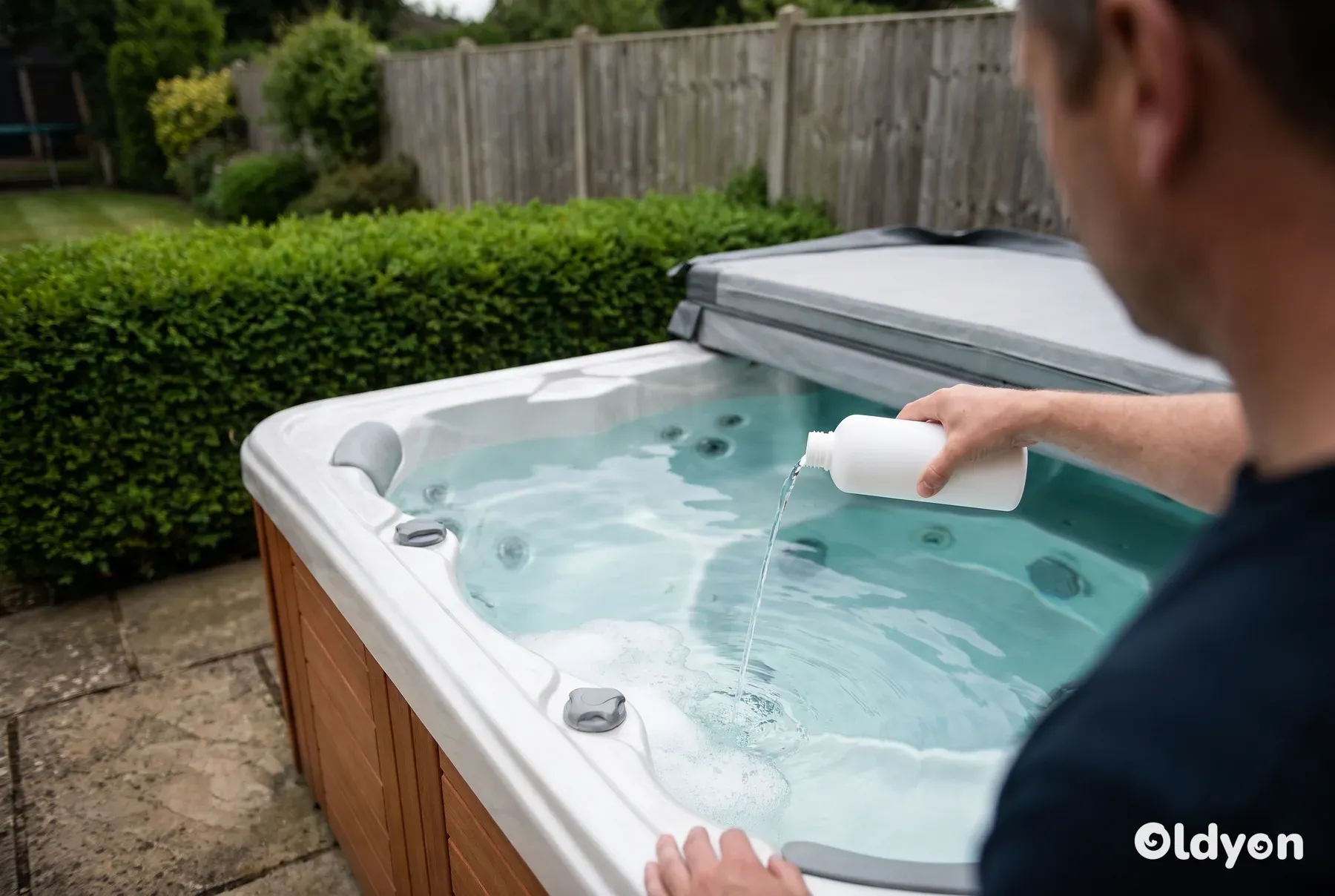
A hot tub defoamer is a liquid that collapses surface foam within minutes by breaking the thin film around each bubble. Use it when you need the tub usable quickly, such as before guests arrive, but treat it as a temporary fix. It does nothing about whatever is causing the foam in the first place.
The cause is usually something in the water: soap, lotion, body oils, detergent from swimwear, soft water, or water that has been in the tub too long. This guide explains how antifoam works, what it can leave behind in your filter, and how to choose and use one sensibly.
How does antifoam work?
Foam forms when something in the water stabilises bubbles. The jets and air blower push air into the water, and dissolved soaps, oils and proteins wrap each bubble in a thin, stretchy film that does not pop easily.
Most spa defoamers are based on silicone, usually a type called dimethicone (polydimethylsiloxane), mixed into water as an emulsion. The silicone spreads across the bubble film very quickly, thins it at one point and makes it burst. Because a tiny amount spreads a long way, only a small dose is needed.
Some products are silicone-free and use other surface-active ingredients instead. They work on the same principle of thinning the bubble walls, although they may act more slowly or need a larger dose. The label or the safety data sheet will tell you which type you have.
The important point is that a defoamer acts on the bubbles, not on the substances that made them. The soap, oil and dissolved solids are all still in the water after the foam has gone.
Why is antifoam a stopgap and not a cure?
Foam is a symptom. It tells you the water is carrying more organic waste or dissolved material than your sanitiser and filter can deal with. Removing the foam hides that warning without changing the water.
Once the defoamer has been used up or trapped in the filter, the foam usually returns, often the next time the jets run. If you keep dosing, you add more product to water that is already overloaded.
Hiding the foam can also hide a hygiene problem. Foamy water that is left untreated and badly balanced, especially with low sanitiser, can encourage bacteria to grow and can lead to skin problems such as rashes and irritation. Persistent foam is a reason to fix the water chemistry, not only to make the surface look clear.
If you or anyone else develops an itchy rash, red bumps or sore skin after using the tub, stop using it, shower, and correct the water before anyone gets in again. If the rash does not settle within a few days, or you feel unwell, speak to a pharmacist or your GP.
These are the common causes to check. There is more detail in our guide to what causes hot tub foam and how to prevent it.
- Residue from shampoo, shower gel, moisturiser, sun cream, make-up or hair products
- Sweat, which adds organic waste to the water in the same way as body oils and also uses up sanitiser
- Laundry detergent left in swimwear and towels
- Low sanitiser levels, so organic waste is not being broken down
- Low calcium hardness, because soft water tends to foam more easily
- High total dissolved solids in water that is due for a change
- A dirty, greasy or worn filter cartridge
- Bubble bath, bath oils or bath bombs added to the water
Sweat is easy to overlook because you cannot see it. Warm water makes everyone sweat, so even bathers who shower first add some waste during a long soak, and that waste takes sanitiser to break down. Shorter sessions and a shower before you get in both reduce it.
The last cause is more common than you might expect, and it can take a full drain to clear. Our article on why you should never put bubble bath in a hot tub explains what bath products do to the water and the equipment.
What residue can defoamer leave behind?
Silicone does not dissolve in water, and chlorine or bromine do not break it down in any useful time. After it has burst the bubbles, it stays in the water as tiny droplets until the filter catches it or the tub is drained.
Filter clogging
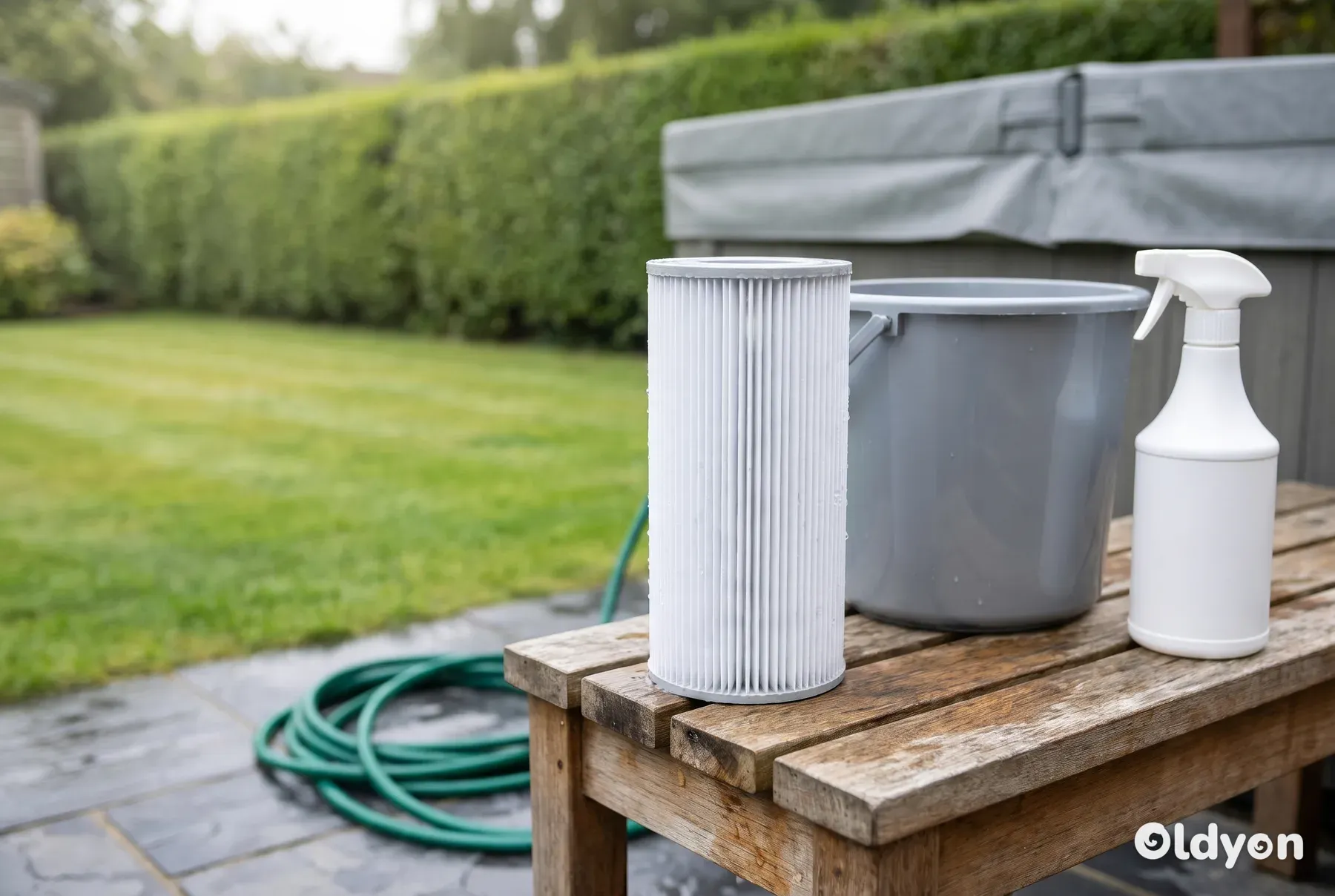
Your filter cartridge is designed to trap particles, and it traps silicone droplets too. Over time the silicone, together with body oils, can coat the pleats with a greasy film that a hose rinse does not remove. A coated filter lets less water through, so both circulation and sanitising suffer.
This creates a cycle: weaker filtration, more organic waste, more foam and then more defoamer. If you use antifoam regularly, plan to soak the filter in a proper filter cleaner more often and expect to replace the cartridge sooner.
Waterline ring and slippery surfaces
Silicone and oils tend to collect at the surface and stick to the shell at the waterline. You may see a greasy band that holds dirt, or notice a slick feel on seats and steps. Wipe it away with a cleaner made for hot tub shells, not a household product.
Cloudy or oily-looking water
Too much defoamer can leave the water slightly hazy or give it a sheen that you can see in sunlight. The answer is not more chemicals. Stop adding defoamer, clean the filter, and if the problem continues, drain and refill.
These signs suggest you are relying on defoamer too much:
- Foam returns within a day of each dose
- The filter feels slimy or greasy even after rinsing
- A sticky ring forms at the waterline
- The water looks dull or has a sheen on the surface
- You buy defoamer more often than you buy sanitiser
When should you use a hot tub defoamer?
Antifoam is useful when you need the tub usable today and cannot fix the cause straight away. These are typical situations:
- Guests are arriving and a layer of foam has appeared
- You have shocked the water and are waiting for it to clear the organic waste
- Foam appeared after a busy evening and you plan to drain within a few days
- You have just refilled and suspect cleaning residue is still in the pipes
Skip it when the foam is light and disappears on its own once the jets stop. In that case, testing the water, shocking and rinsing the filter is usually enough. If you are reaching for the bottle every week, the water needs attention, not more defoamer.
Also hold off if the water is cloudy, smells musty or smells strongly of chlorine, or if the sanitiser reading is close to zero. These point to a sanitising problem, and nobody should use the tub until the levels are back in range.
How do you use antifoam without overdoing it?
- Test the water first. Note the free chlorine or bromine, pH and total alkalinity, so you know whether the foam has a chemical cause.
- Read the label for the dose per volume of water, and check your tub's capacity in the manual. Many hot tubs hold roughly 1,000 to 1,500 litres (about 260 to 400 US gallons), but sizes vary widely.
- Check whether the product is a concentrate. Some defoamers must be diluted before use, and skipping the dilution step or getting it wrong leads to underdosing or overdosing. Follow the label's dilution instructions exactly.
- Start with the smallest dose the label allows. You can add a little more later, but you cannot take it out.
- With the cover open and the pumps running, add the product as the label directs, usually straight onto the foam.
- Keep the pumps and jets running for at least five minutes after dosing so the product spreads through all the water. Watch the surface: most foam collapses quickly.
- If some foam remains, add a second small dose rather than one large one.
- Rinse the filter within a day or two, and write down the date so you can see how often you are dosing.
As a rough guide, spa defoamers are typically dosed at about 30 to 90 ml (roughly 1 to 3 fluid ounces) per application for a standard-sized hot tub, with the jets running. The dose on your bottle should fall somewhere in that range. If the label asks for far more, check whether the dose is based on a much larger volume of water, such as a swimming pool, before you pour.
Repeat a dose only when foam actually returns and you need the tub, not on a weekly timetable. Regular dosing just adds more residue for the filter to catch.
Never mix defoamer with other chemicals in a measuring cup, and never add two products at the same time. Add one, let it circulate, then add the next. Keep bottles closed, upright and out of reach of children. If any gets into eyes or is swallowed, follow the first-aid advice on the label and contact NHS 111 or your GP.
What should you look for when buying antifoam?
You do not need a premium product. Spa defoamers are simple, and only a few differences really matter when you compare them.
Silicone or silicone-free
Silicone products are the most common and usually work fastest at low doses. Silicone-free products avoid leaving a silicone film on the filter, which some owners prefer, but they may need more product per dose. Neither type fixes the cause, so choose based on whether speed or lower residue matters more to you.
Compatibility with your sanitiser and system
Check that the label says the product is suitable for hot tubs and for your sanitiser, whether that is chlorine, bromine or another system. If your tub uses a mineral cartridge, ozone or UV, read the manufacturer's guidance, because some recommend particular products. Avoid swimming pool antifoams unless the label also covers spas, since pool doses assume far more water.
Compatibility is usually stated system by system, so look for your own system named on the label. This matters most if you use a saltwater system, which makes chlorine from dissolved salt, or a biguanide system, which is a non-chlorine, non-bromine sanitiser. Biguanide in particular reacts badly with many products made for chlorine, so if the label does not mention your system, choose one that does.
If you own an inflatable hot tub, check that the label states the defoamer is safe for use in inflatable spas. Inflatable tubs usually hold less water and have smaller filters, and the manufacturer's manual may list products to avoid.
Concentration and dose
A stronger product means a smaller dose, which sounds efficient but makes overdosing easier in a small tub. Look for a clear dose per 1,000 litres or a similar metric unit. Take care with products dosed per gallon, because an imperial gallon and a US gallon are different sizes.
Combination products
Some defoamers also claim to condition or soften the water. These extra ingredients stay in the water and add to the total dissolved solids over time. If your total dissolved solids reading is already high, test it more often after using a combination product, and plan a water change sooner if the reading keeps rising.
Bottle size and storage
A small bottle lasts a long time if you only use defoamer occasionally. Large bottles cost less per millilitre, but the emulsion can separate or spoil before you finish it, especially if it freezes. Store it indoors, shake it before use and check for a use-by or batch date.
To compare bottles, work out how many doses each one gives by dividing its volume by the label dose. For example, a 16 oz (about 475 ml) bottle dosed at 1 to 3 oz (about 30 to 90 ml) gives roughly 5 to 16 treatments. If you expect to use defoamer only a few times a year, a bottle of that size will probably last until its use-by date.
Price bands
Most spa defoamers sit in a low price band, roughly £5 to £20 for a typical bottle, with larger sizes costing more. The difference in price mostly reflects bottle size, brand and concentration rather than how well the product works. A more expensive bottle will not remove the cause of the foam any better.
Clear safety information
A reputable product states the type of active ingredient, the dose, first-aid advice and where to find the safety data sheet. If a label gives none of this information, choose a different product.
Newer or less established brands
If you are weighing up a newer or less established brand, read recent customer reviews and check the maker's track record with pool and spa chemicals before you buy. A product with little history gives you less evidence that it works. Look for reviews from hot tub owners that mention whether the foam came back and whether they noticed residue or a clogged filter.
The table below compares a defoamer with the treatments that deal with the cause.
Option | How it works | Residue risk | Best for |
|---|---|---|---|
Silicone defoamer | Thins and bursts bubble film | Can coat filter and waterline | Fast fix before using the tub |
Silicone-free defoamer | Other ingredients thin bubble film | Less film on the filter | Owners avoiding silicone |
Combination defoamer | Bursts bubbles and conditions water | Adds dissolved solids over time | Hard water, with regular TDS testing |
Shock and filter clean | Breaks down and removes organic waste | None from a defoamer | Foam caused by bather waste |
Drain and refill | Removes everything dissolved | None | Old water or foam that keeps returning |
Which mistakes make foam worse?
- Using defoamer every week instead of finding the cause
- Pouring in a large dose in the hope that it works better
- Buying the cheapest unlabelled antifoam instead of a product made for spas
- Using washing-up liquid, household cleaners or bubble bath in or on the tub
- Forgetting to rinse or clean the filter after dosing
- Adding defoamer to cloudy water with a low sanitiser reading and then getting in
- Using a pool product with a dose meant for far more water
- Using a concentrate without diluting it as the label directs
- Mixing chemicals together before adding them
- Getting in without showering first
A poorly formulated or unsuitable defoamer may simply fail to work, and some can even make foaming worse. A product made and labelled for spas, with a clear dose and safety information, is a safer choice than an unlabelled bottle bought only on price.
How do you stop the foam coming back?
The lasting fix is to reduce what goes into the water and make sure the tub can deal with what does. Our guide on how to get rid of hot tub foam covers the full method. These are the main steps:
- Test and balance the water: pH 7.2-7.6, total alkalinity 80-120 ppm and calcium hardness 150-250 ppm.
- Keep sanitiser in range: free chlorine 3-5 ppm or bromine 3-5 ppm. Some manufacturers give slightly different targets, so check your manual.
- Shock the water once a week as a routine habit, and again after heavy use, following the product label. Regular shocking stops organic waste from building up to the point where it causes foam.
- Rinse the filter regularly, soak it in filter cleaner on a schedule and replace it when it is worn.
- Shower without soap or cosmetics before getting in, and rinse swimwear in clean water instead of washing it with detergent every time.
- Drain and refill on a regular schedule.
Fresh water is often the quickest route out of a foam problem, because it removes everything that has built up. Our article on how often to change hot tub water explains how to work out the right interval for your tub and how many people use it.
Showering before you get in is one of the simplest ways to reduce the waste that causes foam. The Pool Water Treatment Advisory Group recommends showering before bathing for the same reason in pools and spas.
If paying guests use your hot tub, for example at a holiday let, the Health and Safety Executive's legionella guidance applies to spa pools. Good sanitising, filtration and water changes matter far more than any foam product.
Summary: what antifoam can and cannot do
A defoamer bursts bubbles. It does not clean the water. Use it occasionally, in small doses, when you need the tub usable quickly.
Every dose leaves something for the filter to catch, so clean the filter afterwards. If you find yourself dosing often, fix the cause instead: balance the water, keep sanitiser in range, shock weekly, look after the filter, shower first and change the water on time.
Frequently asked questions
How often should I use a hot tub defoamer?
Only occasionally, when foam appears and you need the tub soon. There is no fixed schedule, and routine dosing is not recommended. If you need defoamer more than once or twice between water changes, the water has a problem that antifoam cannot solve. Test the water, shock it, clean the filter, and consider draining and refilling.
Can I use washing-up liquid to clean my hot tub?
No. Washing-up liquid is designed to make foam, and even a small amount left on the shell or in the pipes can cause heavy foaming after you refill. Use a cleaner made for hot tub shells, and rinse the empty tub thoroughly with clean water before refilling. The same applies to household sprays and bathroom cleaners.
Is it safe to get in after adding defoamer?
Products made for hot tubs are designed to be used in water that people bathe in, but follow the label for any waiting time before getting in. Let the water circulate first and check your sanitiser level. If your skin becomes itchy or red, get out, shower, and speak to a pharmacist if the irritation continues.
Will defoamer change my water test readings?
A spa defoamer should not change pH or sanitiser levels much on its own. However, the cause of the foam often does, because bather waste uses up sanitiser. Test before you dose and again a few hours later. If your sanitiser is low, correct that first, as foam combined with low sanitiser means the water is not being kept clean.
Why does a new or freshly filled hot tub foam?
Foam after a refill usually comes from residue in the pipework, such as cleaning products or old build-up that the fresh water has loosened. Very soft fill water can also foam more. Before your next drain, use a pipe flush product made for hot tubs, then refill, and check that calcium hardness is in the 150-250 ppm range.
Does defoamer remove scum or a greasy waterline?
No. Defoamer only bursts bubbles, and the silicone in many products can add to a greasy ring. Wipe the waterline with a hot tub shell cleaner, and clean the filter to remove trapped oils. Products made to break down oils, such as enzyme treatments for spas, can help, but showering before use is the most effective prevention.
Filed under