Is a 2 person inflatable hot tub right for you?
Is a 2 person inflatable hot tub right for you? Compare comfort, heating, durability and running costs against a small hard shell tub before you buy.
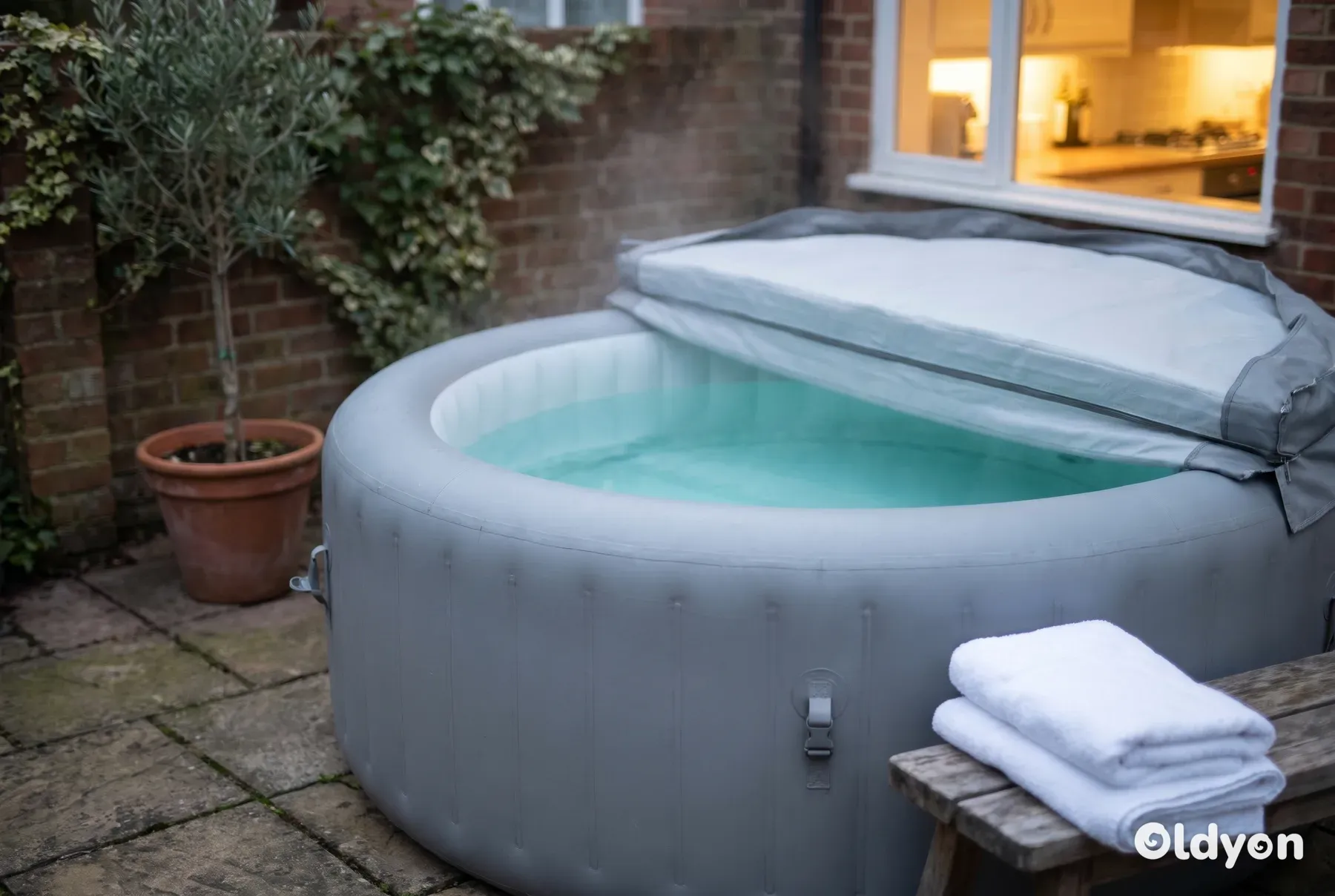
A 2 person inflatable hot tub is right for you if you want warm water and bubbles on a small budget, have limited space, and mainly use it in the milder months. If you want firm seats, strong massage jets and reliable winter use for many years, a small hard shell tub usually suits you better.
The two options look similar in photos, but they behave very differently once they are full of water in a British garden. Below, you will find how they compare on comfort, heating, durability and cost, plus the checks to make before you spend any money.
What is a 2 person inflatable hot tub, and who is it for?
A two person inflatable is a compact tub with soft walls made from PVC or a stronger laminated material, often with a drop-stitch construction that keeps the walls rigid when inflated. The pump, heater and blower sit in one control unit that plugs into a standard 13 amp socket. Most small models hold somewhere around 500 to 800 litres (about 130 to 210 US gallons), so check the exact figure for any tub you consider.
Round two person inflatables are typically about 195 to 205 cm (roughly 77 to 80 inches) across. Measure your patio or deck against the diameter of the model you will actually get, and leave extra room around it for the control unit, the cover and getting in and out safely.
Setting one up is simple. Most take about 20 to 30 minutes with no tools, and the air pump, usually built into the control unit, inflates and deflates the walls within minutes. You can place it on any flat, firm outdoor surface, such as a patio or a solid deck under a canopy, as long as the surface can carry the weight (see the section on power and placement below).
These tubs suit renters, people trying a hot tub for the first time, and anyone with a small patio. You can deflate and store most of them, and you can take them with you when you move house. If you are still deciding between sizes and types for two people, our guide to choosing a 2 person hot tub covers the wider picture.
They are less suited to people who want a hot tub ready every evening all year, or who want proper hydrotherapy. Those needs point towards a hard shell, and the gap becomes clearer the closer you look at comfort and heating.
How does a small inflatable compare with a small hard shell tub?
The table below gives a general picture. Individual models vary, so treat it as a starting point and compare the specifications of any tub you are considering.
Feature | 2 person inflatable | Small hard shell |
|---|---|---|
Seating | Sit on the inflatable floor | Moulded seats, sometimes a lounger |
Massage | Air bubbles, some add water jets | Directed water jets |
Heating in cold weather | Slow, may struggle | Steadier with better insulation |
Typical lifespan | A few seasons with care | Many years with care |
Power | 13 amp plug | 13 amp plug or hardwired supply |
Setup | About 20 to 30 minutes, no tools | Delivery, positioning, sometimes an electrician |
Installation cost | None | Socket upgrade, or a few hundred pounds if hardwired |
Purchase cost | A few hundred pounds | Usually several thousand pounds |
Plug-in hard shell tubs are made in two main ways: an acrylic shell over a supporting frame, or rotomoulded plastic, where the tub is moulded as a single piece. Both types can run from a standard 13 amp household socket, so neither needs an electrician to install a new hardwired circuit, as long as your outdoor socket is suitable.
For a full side by side look at every size, not only two seat models, read our article on inflatable vs hard shell hot tubs, compared honestly.
How comfortable is a two person inflatable?
In most inflatables you sit on the floor of the tub with the water around chest height. Some people find this relaxing, but there is no back support beyond the soft wall, and taller users may find the water too shallow to cover their shoulders. Booster cushions and inflatable headrests help, but they do not turn a floor seat into a moulded seat.
The massage is usually a ring of air bubbles from the floor. The bubbles feel pleasant and lively, but they do not target your back or neck the way water jets do. A few inflatables offer water jets as well, which feel stronger but add cost and another part to maintain.
Shape makes a real difference for two people. Many inflatables are oval, and about 190 cm by 120 cm (75 by 47 inches) is a common size. An oval lets two people sit facing each other with their legs side by side, while in a round tub of similar area you tend to end up sitting at an angle to each other.
A small hard shell tub has shaped seats at a fixed height, with jets placed at back and shoulder level. Two people can sit facing each other or side by side without sliding around. If comfort for two adults matters most to you, our guide to choosing a hot tub for couples looks at layouts in more detail.
Jets on a small hard shell
For massage, jet placement and adjustability matter more than the number of jets. A tub with fewer adjustable, directional jets can massage your whole body better than one with many fixed, low-pressure nozzles. Look for dedicated jets at shoulder, lower back and calf height in the seats you will actually use.
The power supply affects massage as well as heating speed. Plug-in hard shells typically have about 20 to 30 jets, while hardwired models often have 40 or more, because a stronger supply can run more pump power. Well placed jets on a plug-in tub can still feel good, but expect a gentler overall massage than on most hardwired tubs.
Look at the jet faces too. Stainless steel jet faces tend to resist chalky marks and discolouration outdoors better than plastic ones, so they keep looking clean for longer.
Check the space inside
Space is the other comfort question. A tub sold as two person often fits two adults with little room to stretch out. Check the internal diameter, not the outside measurement, because inflatable walls can be thick and take up a lot of space.
Two adults sitting facing each other need roughly 190 cm (75 inches) of internal length to stretch their legs, and many tubs sold as two person do not have it. Compare the interior dimensions of each tub rather than relying on the advertised number of people.
Check the wall height as well as the footprint. A typical 2 person oval inflatable stands about 63 cm (25 inches) tall. That height decides how deep you sit in the water and how high you have to step to climb in, so a sturdy step beside the tub can make getting in and out safer.
Comfort extras
Some tubs add extras such as colour-changing LED lighting, a waterfall feature, waterproof headrests or an integrated side table for drinks and phones. These can make a soak more pleasant, but they add to the price and some add parts that can fail. Decide which ones you would really use before you compare models.
How well does a 2 person inflatable hot tub heat up and hold its warmth?
Inflatables heat slowly because the heater runs from a 13 amp plug, and the soft walls let heat escape faster than a fully insulated hard shell. Manufacturers often quote a heating rate of roughly 1 to 2°C (about 2 to 4°F) per hour in mild conditions, but this varies with the model, the air temperature and the wind. Expect a fresh fill to take many hours, sometimes most of a day, to reach temperature.
On many inflatables, the heater and the bubbles cannot run at the same time, because together they would draw too much power from one socket. This means the water cools while you use the bubbles, which you will notice most on cold evenings. Check the manual to see how your chosen model handles this.
Some inflatables use a PTC (positive temperature coefficient) heater, which draws less current as the water gets closer to the set temperature. This lets a heater of around 1,350 W run from a normal household socket without tripping it. The trade-off is lower heating power, so check the heater rating and type in the manual.
Many inflatable manuals also give a minimum air temperature for safe use, often a few degrees above freezing. Below that, the pump and pipes can be at risk, and the heater may not keep up. A small hard shell tub, with foam insulation and a rigid fitted cover, usually copes much better with a British winter.
Plug-in or hardwired hard shell?
A plug-in hard shell on a 13 amp supply heats noticeably more slowly than a hardwired one. A hardwired supply allows a stronger heater, so the tub heats up in hours rather than most of a day, and it often supports more jets. If you want to use the tub all year in a cold or exposed area, hardwired is usually the better choice.
Quoted heat-up times differ a lot by type. As a general guide, a hardwired hard shell typically heats a fresh fill in about 4 to 6 hours, a plug-in hard shell in about 12 to 18 hours, and an inflatable in about 12 to 24 hours. Your own times depend on the starting water temperature, the weather and the model, so check the manual.
Slow-heating plug-in tubs, inflatable or hard shell, work best when you leave them at temperature rather than heating them only when you want a soak. Do not expect to come home on a cold evening, switch on a cold tub and use it the same night.
Insulation and covers
On a hard shell, full-foam insulation, where foam fills the whole cabinet, keeps heat in far better than partial foam. Some manufacturers state it can cut running costs by roughly a third to a half compared with partial foam, though real savings depend on your climate and use. Ask the maker for the insulation specifications, because insulation on the shell wall and the skirt matters as much as the cover.
Heavy insulation, with foam in the tub wall, in the skirt and in the cover, adds to the purchase price. That extra cost only pays off if you will run the tub through a cold winter. In a mild climate, or if you will drain the tub for winter, a cheaper tub with lighter insulation does the same job.
A good cover has a high-density foam core that tapers from about 10 cm (4 inches) thick in the middle to about 5 cm (2 inches) at the edges, so rain runs off. It holds heat much better than a thin vinyl cover. A poor cover can add noticeably to your monthly running costs, and a replacement usually costs a few hundred pounds, so judge the cover before you buy.
As a rough guide, a thin or worn cover that lets heat escape can add roughly £12 to £20 a month to running costs. Over a few years, that extra spending can match the price difference of a better cover, which is why a good cover is worth paying for up front.
Features that help an inflatable
When comparing inflatables, look for models with insulated walls and an insulated cover built in, rather than relying on extra blankets added later. One manufacturer claims this design makes its tubs up to about 40% more energy efficient than similar tubs. Treat that figure as the maker's own claim, but the feature itself is worth looking for.
Some control features make a real difference to how well an inflatable copes and how much it costs to run:
- Automatic freeze protection, which runs the heater and pump when the water gets too cold.
- A scheduling or power-saving timer, so the heater runs at the times that suit you and your tariff. Some models let you set it well in advance, in one case up to about 40 days ahead, so you can plan the water temperature around when you will be away or at home.
- A thermostat that reliably holds the set temperature.
- An automatic child lock on the control panel.
- A filter-change reminder after a set number of running hours, typically 120 to 168 on the models that have one.
You can help an inflatable hold its heat in a few simple ways:
- Always put the cover on and strap it down after use.
- Use an insulated ground mat under the tub, not bare paving.
- Place the tub out of the wind, for example beside a fence or wall.
- Add a floating thermal blanket under the cover if the manufacturer allows it.
- Keep the water no hotter than 40°C (104°F), which also saves energy.
How long does an inflatable hot tub last?
With good care, many owners get a few seasons from an inflatable, but there is no reliable single figure because use, weather and build quality vary so much. Laminated or drop-stitch walls generally last longer than thin single layer PVC. Sunlight, sharp objects, pets and pressure changes between hot days and cold nights all shorten the life of the material.
The control unit is often the first thing to fail, not the tub itself. Before you buy, check whether spare parts such as pumps, heaters and filter housings are sold separately, and what the warranty covers. A short warranty on the pump is a sign to look more closely.
A hard shell tub is built from acrylic or a similar rigid material over a frame, with plumbing and equipment that can be repaired by a technician. With regular care, these tubs usually last many years. That longer life is a large part of why they cost more.
To get the most from an inflatable, follow these habits:
- Keep the tub on a smooth, level surface free from stones and roots.
- Use a ground mat under the tub. As well as improving insulation, it protects the tub floor from wear, adds cushioning and helps stop the tub creeping across the surface.
- Check the inflation pressure regularly, as warm and cold air change it.
- Keep the cover on when not in use to protect the walls from sunlight.
- Use the puncture repair kit early, before a small leak spreads.
- Drain, clean and dry the tub fully before storing it for winter.
What does a small hot tub really cost to buy and run?
A two person inflatable usually costs a few hundred pounds to buy, while a small hard shell tub is usually several thousand pounds. The purchase price is only part of the cost. You also need to budget for electricity, water treatment chemicals, replacement filters and, for inflatables, an eventual replacement tub or control unit.
Installation costs differ by type too. An inflatable needs no installation. A plug-in hard shell may need only an outdoor socket upgrade, while a hardwired tub needs an electrician, which typically adds a few hundred pounds on top of the price of the tub.
Running costs depend on your electricity tariff, the weather, how often you use the tub and how well it keeps its heat. Because inflatables lose heat faster, they can cost more to run in cold months than you might expect from their size. Hard shells use more power during the initial heat-up, but good insulation often reduces the energy needed to keep them warm.
Insulation has a large effect on the monthly bill. A well insulated hard shell is typically much cheaper to keep warm each month than a poorly insulated or older tub, which can cost roughly double to run. When you shop, ask for monthly running cost estimates and compare them on the same basis, such as the same water temperature and time of year.
As a rough guide, a well insulated tub costs about £15 to £40 a month in electricity, while a poorly insulated or older tub costs about £40 to £80 a month or more. These are approximate figures, so check them against current UK tariffs and your own pattern of use.
On a hard shell, a dual-speed pump helps keep costs down. It runs the daily filtration on a low, cheaper setting and saves the high speed for the jets, which lowers the yearly electricity bill compared with a single-speed pump doing everything at full power.
You can estimate the heating cost for any tub using the information on its rating label:
- Find the heater power in kilowatts (kW) on the rating label or in the manual.
- Find the price per kilowatt hour (kWh) on your electricity bill.
- Estimate how many hours a day the heater will run. This will be more in winter than in summer.
- Multiply the heater power by the hours. For example, a 2 kW heater running for 4 hours uses 8 kWh.
- Multiply the kWh by your unit price to get a daily cost.
- Add a smaller amount for the filter pump and the bubbles, then repeat the sum for a cold month and a warm month.
Some smart plugs and energy monitors show real usage, which is more accurate than any estimate. Check that any plug you use is rated for the load and suitable for outdoor use, and never place it in a way that breaks the manufacturer's instructions.
Budget for the extras
Electricity is not the only ongoing cost. Plan for these as well:
- Water chemicals every month, including sanitiser, pH adjusters and test strips. For a two person tub, these typically cost roughly £15 to £40 a month.
- At least one replacement filter a year, often more on an inflatable. A year's replacement filters typically cost roughly £40 to £120.
- A one-off set of accessories at setup, such as a cover lifter, steps, a ground mat and test strips. Together these typically cost roughly £120 to £300.
All of these figures are approximate and vary by tub, supplier and how often you use it, so check current prices before you set your budget.
Look at the cost over five years
Judge each option over about five years. Add the purchase price, installation, electricity, chemicals, accessories and maintenance. Over that period, an inflatable's chemicals, filters and replacement parts or tubs can close much of the gap with an entry-level hard shell, so the cheapest tub to buy is not always the cheapest to own.
As an approximate guide, a five-year total cost of ownership, covering purchase, installation, energy, chemicals, accessories and maintenance, looks like this:
- Inflatable: about £2,800 to £4,300.
- Plug-in hard shell: about £4,800 to £8,000.
- Hardwired luxury tub: about £8,000 to £14,000.
How often you will use it matters just as much. As a rough rule, a tub tends to be worth buying if you will use it about three or four times a week. Owners who soak less than twice a week often feel the money was not justified, while frequent users bring the cost of each soak down a lot.
For frequent users, the cost of each soak falls to a few pounds once the monthly running costs are spread over regular use. For example, a tub costing £40 a month to run and used four times a week works out at roughly £2 to £3 a soak in running costs. That is why heavy use makes a tub better value.
Regular soaking is commonly said to help with relaxation, sleep and easing tired muscles, which is part of why frequent users feel a tub is good value. Any benefit depends on how often you actually use it, and a hot tub is not a treatment for any medical condition.
What do you need for power and placement?
An inflatable plugs into a standard 13 amp socket, and most come with a residual current device built into the lead. The socket should still be outdoor rated and protected by an RCD, as the UK wiring regulations (BS 7671) require for most outdoor sockets. If you do not have a suitable socket, have one fitted by a registered electrician.
A plug-in tub should ideally have its own circuit, not one shared with other appliances. The heater and pump together draw most of what a 13 amp supply can provide, so sharing the circuit makes tripping and overheating more likely. A registered electrician can tell you whether your existing circuit is suitable.
A small hard shell may be plug-and-play on a 13 amp socket, or it may need a dedicated hardwired supply. A new circuit is normally notifiable work under Part P of the Building Regulations in England and Wales, so a registered electrician should install and certify it. Other countries have their own rules, so check local requirements if you live outside the UK. The charity Electrical Safety First has clear guidance on outdoor electrics.
Never run a hot tub from an extension lead or a cable reel unless the manufacturer specifically allows it. Keep the plug and socket away from splashes, and always switch off at the isolator or socket before any maintenance.
Placement matters as much as power. Water weighs about 1 kg per litre, so a 700 litre tub holds roughly 700 kg of water before anyone gets in. Place it on a firm, level base such as paving or a concrete pad, and get a structural check before putting any tub on decking, a balcony or a roof terrace. Our guide to fitting a hot tub into a small garden covers access, privacy and drainage.
On a small balcony or in a tight space, the realistic choices are an inflatable or a plug-in hard shell, and only after a structural check confirms the load is safe. A hardwired tub suits a larger patio and year-round use, where there is room for the tub, the cable route and access for the electrician.
Is water care different in a small tub?
The chemistry is the same, but a small volume of water changes quickly. Two people in 600 litres add a lot of sweat, skin oils and cosmetics for that amount of water, so sanitiser levels can drop fast. Test before every use, and add chemicals in small amounts.
Widely accepted targets for hot tub water are:
- Free chlorine: 3-5 ppm, or bromine: 3-5 ppm
- pH: 7.2-7.6
- Total alkalinity: 80-120 ppm
- Calcium hardness: 150-250 ppm
Some inflatable manufacturers recommend slightly different ranges, so check your manual and follow it where it differs. The Pool Water Treatment Advisory Group (PWTAG) publishes guidance on water treatment, and the Health and Safety Executive explains the risks of poorly maintained water in its pages on Legionnaires' disease.
Some inflatables include a built-in or floating chemical dispenser that releases chlorine gradually and evenly. This makes sanitiser dosing easier for new owners. You still need to test the water and adjust the dispenser setting to keep free chlorine within range.
On mid-priced and higher hard shells, an ozonator is a worthwhile upgrade. It injects ozone into the water to help sanitise it, and manufacturers often say it can cut chlorine or bromine use by up to about half. That lowers chemical costs and can mean less skin irritation if you soak several times a week, but you still need to keep sanitiser within range.
Inflatables have small filter cartridges, so rinse them often and replace them when they no longer come clean. Having two filters helps: you can clean one properly and let it dry while the other runs, instead of putting a wet filter straight back or soaking one overnight while the tub sits without filtration.
On some inflatables, the control panel sounds an alarm and shows an error code when the filter is no longer working properly, for example when it is clogged and water flow drops. This is separate from the hours-based reminder. If you see it, switch off, then clean or replace the cartridge, and check your manual for what the code means.
Keep sessions short, especially at higher temperatures. Get out if you feel dizzy, sick or too hot, and speak to your GP before using a hot tub if you have a heart condition, high or low blood pressure, or another medical condition. If you are pregnant, speak to your midwife first.
What should you check before you buy?
Use this checklist when comparing two person tubs of either type. A tub that fails on several points is unlikely to make you happy for long.
- Internal length or diameter and water depth, not only the outside size.
- Wall material: laminated or drop-stitch construction is usually tougher than thin PVC.
- Heater power and whether the heater runs while the bubbles are on.
- Minimum air temperature stated in the manual for safe use.
- Cover quality: a firm, insulated cover with secure straps or locks.
- Warranty length on the tub and, separately, on the pump and heater.
- Availability of spare parts and replacement filters in the UK.
- Noise from the pump, especially if neighbours are close.
- Child safety features such as lockable cover clips.
- What comes in the box with an inflatable: spare filter cartridges, a ground sheet, a repair kit, an inflation hose, a drain fitting, child-safety keys and a cover all add real value at a low price.
- Filter covers, which should also come in the box with an inflatable alongside the spare cartridges, so check they are included.
- Small fittings that are easy to lose or overlook, such as spare air valve caps, a spanner for the water inlet and outlet fittings, and a printed instruction manual.
Common mistakes include buying the largest tub that fits the space without checking the base, expecting fast heating in winter, and choosing on price alone. A very cheap inflatable with no clear warranty or spare parts can cost more over time than a better built one. For more detail on judging inflatables, see our guide on how to choose the best inflatable hot tub.
Where should you buy a two person hot tub?
Compare buying channels before you commit, because each suits a different kind of tub:
- Large retailers: low prices and easy returns, but a small range, no local service and often weaker warranty support.
- Online sellers: a wide choice, but usually kerbside delivery with no installation, so you move and set up the tub yourself. Detailed customer reviews from other owners are a useful way to judge how reliable a tub is in real use before you order.
- Specialist local dealers: higher prices, but more help before and after the sale.
Online and big-retailer purchases suit inflatables and plug-in tubs costing up to about £1,600. A hardwired tub should be bought through an authorised dealer, because the electrical installation has to be coordinated with the delivery and positioning of the tub.
Kerbside delivery matters most for a hard shell, which is heavy and needs several people or lifting equipment to move from the kerb to your garden. Warranty service on higher-end tubs bought online can also mean shipping the tub or its parts back to the seller, so factor in that cost and effort before you order.
A dealer's higher price often covers delivery, lifting equipment, help with installation, a local service engineer and handling of manufacturer warranty claims. Over several years, avoiding a single paid service call can make the dealer purchase cheaper overall. For an expensive hard shell, a dealer is usually the lower-risk choice.
A local authorised dealer typically charges about £150 to £600 more than a big retailer. That premium often includes a service warranty of around two years, alongside delivery, installation help and a local engineer. A single paid service call typically costs roughly £120 to £280, so one call can wipe out the saving from buying a cheaper tub with no local service.
When you speak to a dealer, ask these questions:
- Are you an authorised dealer for this brand? Authorised status is what gives you a local service engineer and proper warranty backing.
- Can I do a wet test, sitting in the tub with water in it before I buy?
- Is the model in stock, and if not, how long is the wait?
- Does delivery include positioning and installation?
- For a hardwired tub, will you coordinate the electrical work with a registered electrician?
So, is a 2 person inflatable hot tub right for you?
Choose an inflatable if your budget is limited, you rent or may move soon, your space is tight, and you are happy to use the tub mostly from spring to autumn. Accept that the seating is basic, heating is slow, and you will probably replace the tub or its pump within a few seasons.
Choose a small hard shell if you want to use the tub all year, value proper seats and water jets, and plan to stay in your home for years. The higher price buys better insulation, more comfort and a longer working life. Whichever you choose, plan the power, the base and the water care before the tub arrives.
Frequently asked questions
Can you use a 2 person inflatable hot tub in winter?
Sometimes, but check the manual first. Many inflatables state a minimum air temperature for safe use, often a few degrees above freezing, and the heater may not keep the water warm on very cold nights. If you do use one in winter, keep the cover on, use a thick ground mat and shelter the tub from wind. If frost is likely and you will not use it, drain and store it.
Can I leave an inflatable hot tub up all year?
Some manufacturers allow year-round use and others recommend packing the tub away in cold months, so follow your manual. Leaving a tub up through winter means higher electricity use and more risk of frost damage to the pump. If you leave it running, keep the water treated and circulating. If you pack it away, clean and dry it fully first to prevent mould and damage to the material.
How often should I change the water in a small hot tub?
There is no single rule, because it depends on how often you use the tub and how well you keep the chemistry balanced. Many manufacturers suggest a full drain and refill somewhere between every few weeks and every few months. Small tubs often need changing more often, because two bathers affect a small volume of water quickly. Change it sooner if the water stays cloudy or foamy after treatment.
Can I put a two person inflatable on decking or a balcony?
Only after a structural check. Water weighs about 1 kg per litre, so even a small tub full of water can weigh several hundred kilograms before two adults get in. That load sits on a small area. Ask a structural engineer or a qualified builder to confirm your decking or balcony can carry it. Many flats also have lease rules about heavy items on balconies, so check those too.
Which hot tubs should you stay away from?
Be cautious of any tub with no clear warranty, no UK spare parts, no stated heater power or no manual you can read before buying. Very thin single layer walls, flimsy covers without straps, and vague claims about winter performance are other warning signs. A tub that seems far cheaper than similar models often saves money on materials or the pump, and those parts are the first to fail.
How can you spot an unreliable hot tub seller?
Be wary of an unverified or generic marketplace seller with no clear company details, and of any brand with no service network near you, because repairs then become difficult. Check the insulation as well: single-layer walls or partial foam lose heat quickly. A price far below comparable established brands, for example around 40% or more cheaper, usually means savings on materials, insulation or the pump.
Are heavily discounted hot tubs worth the risk?
Usually not. Heavily discounted tubs from makers you cannot verify often use single-layer or partial insulation and low-grade pumps. Owner reports commonly describe these pumps failing within roughly 18 to 36 months, often just after a short warranty ends. Without a service network or spare parts, a failed pump can mean replacing the whole unit, so the saving disappears quickly.
Why do people put tennis balls in a hot tub?
Some owners float a clean tennis ball in the water or place one in the filter area, hoping its fibres will absorb body oils and lotions. There is little reliable evidence that it helps much, and the fibres can shed into the water. It is not a substitute for proper sanitiser levels and regular filter cleaning. If you have oily scum, rinse the filter more often and ask bathers to shower first.
Filed under