Choosing a 7 person hot tub
7 person hot tub UK guide: compare lounger and all-seat layouts, plan a 32 amp supply and delivery access, estimate running costs and check you need 7 seats.
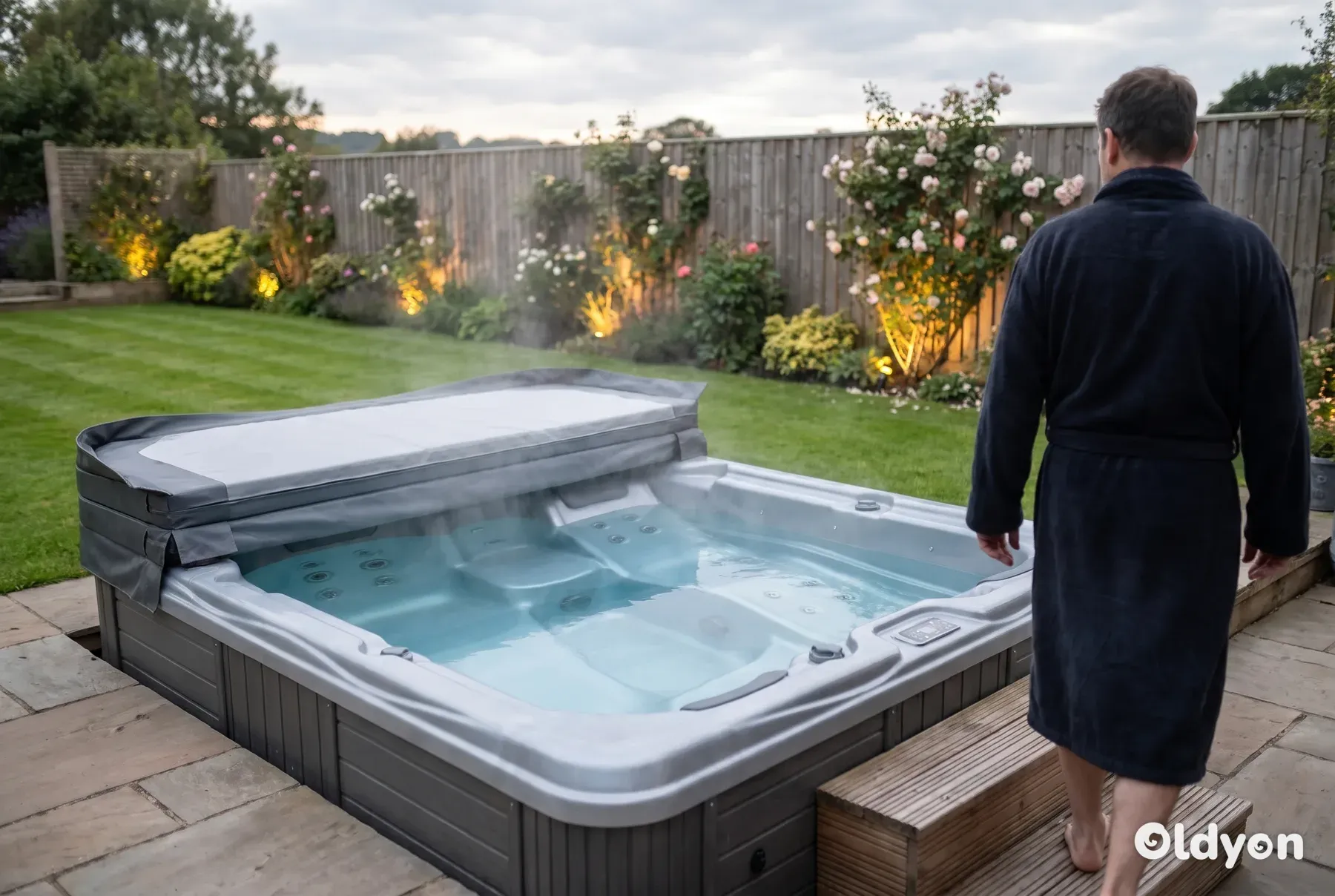
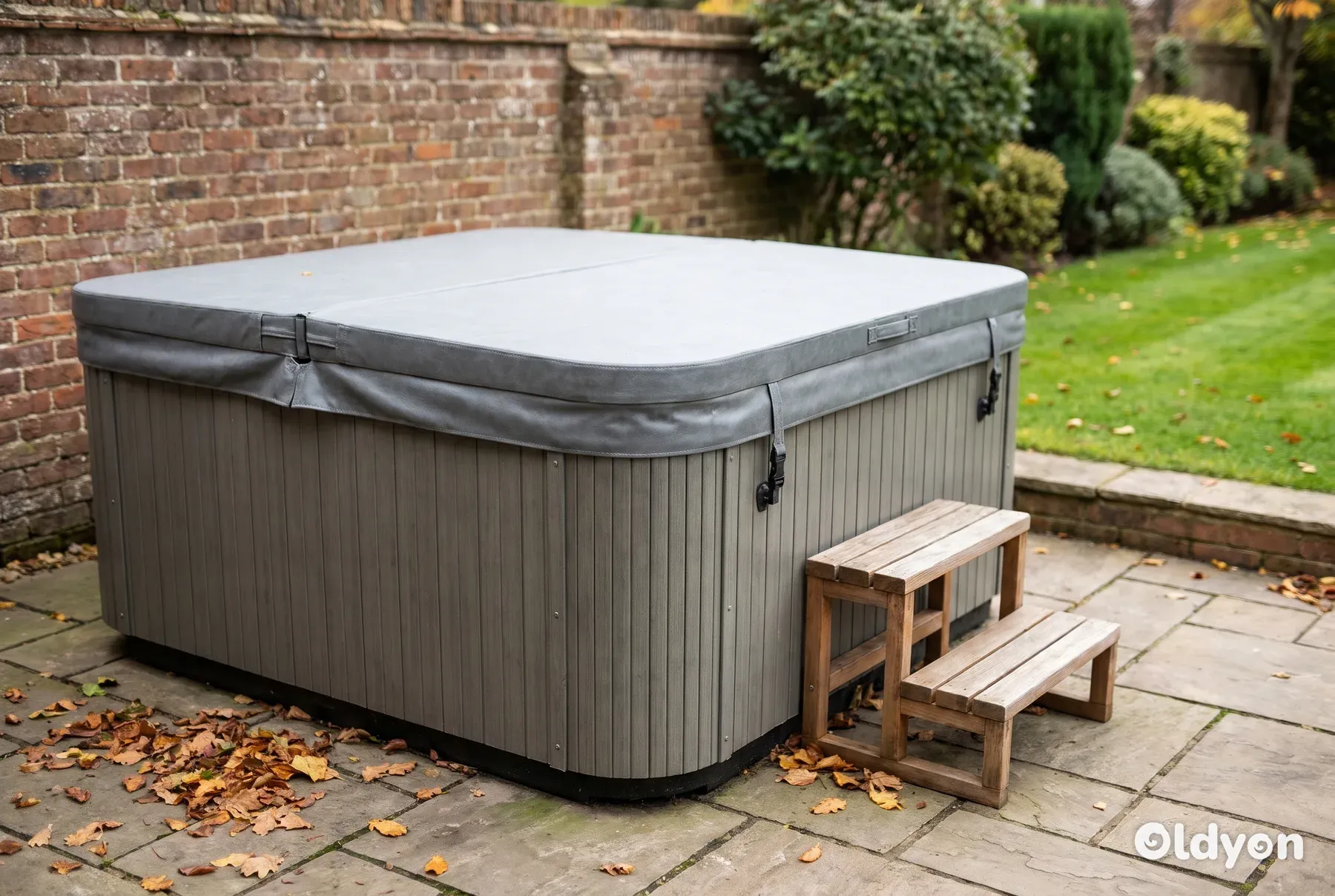
In most cases, a 7 person hot tub UK homes can take is a square acrylic spa of about 2.1 to 2.3 metres (7 to 7.5 feet) per side, wired to a dedicated 32 amp supply. Choose between a lounger and an all-seat layout, check the delivery route and be honest about how often seven people will use it.
This guide works through each of those decisions in the order a technician would check them on a site visit, from who will sit in the tub to what it costs to keep hot. If you are still unsure about size, it helps to compare a 6 person hot tub as well.
Do you really need seven seats?
The seat count on a specification sheet includes every moulded position, including corner seats and the lounger, with people sitting close together. In everyday use, many owners find a seven seat tub comfortable for four or five adults, with room to stretch their legs and move between jets.
That makes this size a sensible choice for a family of four or five who like having friends round, or a household with teenagers who are already adult sized. If it will usually be two or three of you, a smaller tub heats faster, uses fewer chemicals and takes up less of the garden.
Before you decide, answer these questions honestly:
- How many people will use it on a normal weekday evening, not on the busiest weekend of the year?
- Are any users tall, and will they need extra leg room in the footwell?
- Will young children use it, and would a shallower seat suit them?
- Do you have the space and budget for a larger base, a bigger cover and a cover lifter?
If you regularly host larger groups, look at hot tubs for eight to ten people rather than squeezing extra guests into seven seats. An overcrowded tub is less comfortable and harder to keep clean.
Lounger or all-seat layout: which suits you?
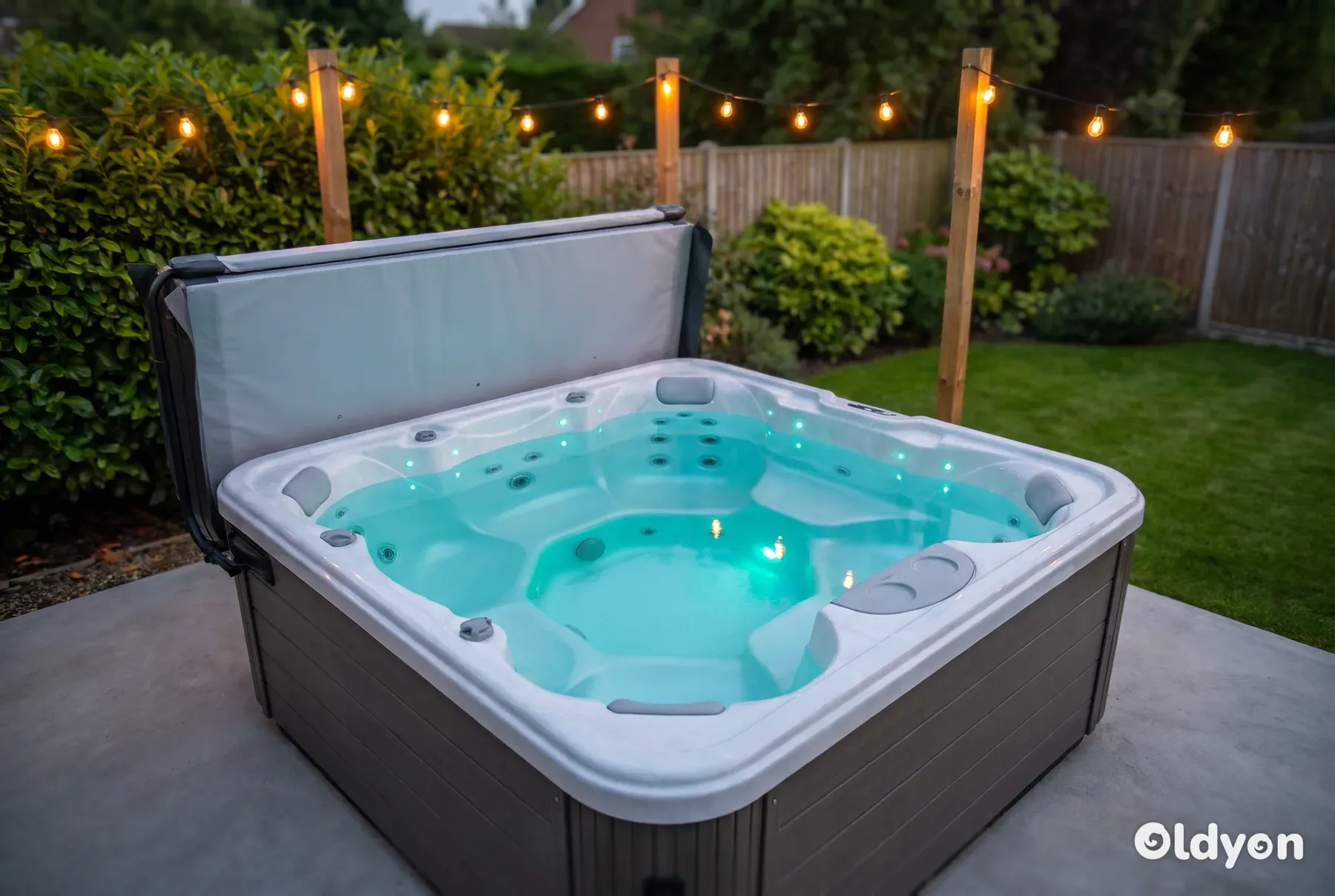
A lounger is a reclined seat where one person lies almost flat, with jets along the back, calves and feet. It takes up roughly the space of two upright seats, so a tub with a lounger usually seats fewer people upright than an all-seat tub of the same size.
When a lounger makes sense
- One or two people use the tub most often and want a long, full body massage.
- The main users are of average height or taller, so their feet reach the end of the lounger.
- You value relaxing on your own over seating the most guests.
Shorter users can float up out of a lounger because their feet do not reach the end. Some loungers have a foot stop or arm rests to help with this, so try one in water if you can.
When an all-seat layout makes sense
- Groups use the tub together and want to face each other to talk.
- You want seats at different depths, including a higher cool-down seat and a deep seat that covers the shoulders.
- Children and adults often share the tub.
All-seat tubs usually have a larger open footwell, so legs are less crowded when everyone sits at once. The trade-off is that nobody can lie fully stretched out.
The most reliable check is a wet test at a showroom, where you sit in a filled, heated tub. Sit in every seat, check whether the jets reach the right part of your back and see whether your feet clash with other people's.
What size is a 7 person hot tub in a UK garden?
Most seven seat acrylic tubs are square, roughly 2.1 to 2.3 metres on each side and around 90 cm (35 inches) deep. They often hold between 1,300 and 1,700 litres (about 340 to 450 US gallons). Measurements vary between manufacturers, so always check the specification sheet for the model you are considering.
Inflatable seven seaters are usually round. A common size is about 216 cm (85 inches) across and 71 cm (28 inches) deep, a footprint that fits in many UK gardens. Everyone faces the centre, which makes conversation easy.
Weight matters as much as footprint. Water weighs about 1 kg per litre, so a 1,500 litre tub carries about 1.5 tonnes of water before you add the shell and the people. Full and in use, a seven seater can easily weigh more than 2 tonnes (about 4,400 lb).
That load needs a level, solid base. A reinforced concrete slab, commonly at least 100 mm (4 inches) thick, or a purpose-made base system is the usual choice. If you plan to put the tub on decking or a raised terrace, ask a structural engineer to check the design first.
Leave space around the tub for the cover lifter, the steps and a service panel that a technician can open. Our guide to hot tub dimensions and the space you need explains clearances in more detail.
Why does a 7 person hot tub need a 32 amp supply?
Larger acrylic tubs run a heater, often around 3 kW, plus one or more jet pumps and a circulation pump. On a 32 amp supply, the heater can usually keep running while the jets are on, so the water stays hot through a long session with several people.
Some tubs are sold as 13 amp plug-in models. These typically switch the heater off while the jets run on high, so the water cools during use. With seven people lifting the cover and moving the water, that drop is noticeable. Some seven seat tubs can be set up for either supply, so check the manual for what your model needs.
What a UK installation involves
- A registered electrician surveys the route from your consumer unit to the tub and calculates the cable size needed for that distance.
- They run a dedicated circuit, usually in armoured cable buried at a safe depth or fixed securely along walls.
- The circuit is protected by a 30 mA RCD, as required by BS 7671 (the UK wiring regulations), often as an RCBO in the consumer unit.
- A rotary isolator is fitted near the tub, within sight but out of reach of anyone in the water, commonly at least 2 metres (about 6.5 feet) away.
- The electrician tests the circuit, issues a certificate and, in England and Wales, notifies the work under Part P of the Building Regulations.
Scotland and Northern Ireland have their own building rules, and other European countries have their own wiring standards, so use a qualified local electrician wherever you live. You can read the official Part P guidance on GOV.UK and practical advice from the charity Electrical Safety First.
Never power a hot tub through an extension lead or adapter, and never connect a 32 amp tub yourself. Before opening any panel or removing the filters on a hardwired tub, switch off at the isolator.
For cable sizes, isolator positions and what to ask your electrician, see our guide to hot tub electrical requirements in the UK.
Can the hot tub actually reach your garden?
Delivery access catches out more buyers than any other step. A seven seat tub is too wide to carry flat through most side gates, so it usually travels on its edge on a trolley or skate. The narrowest point of the route must be wider than the tub's depth, plus room for the trolley and the people moving it.
Measure the full delivery route before you order and send the measurements to the supplier. Ask them for the minimum width and height their delivery team needs.
Check each of these along the route:
- The narrowest width of gates, side passages and alleys, including posts, hinges and downpipes.
- Overhead obstacles, such as a porch roof, gutters, a boiler flue or low branches.
- Corners, where a tub more than 2 metres long on its side has to turn.
- Steps, slopes and soft ground, such as a lawn after rain.
- Bins, sheds and parked cars that will need moving on the day.
If there is no route around the side, a crane can lift the tub over the house. Crane hire, permission to use the road and a lift plan all add cost and need booking well in advance. Sometimes removing a fence panel or a short section of wall is simpler and cheaper.
Our article on hot tub installation cost in the UK covers groundwork, electrics and crane lifts together, so you can budget for the whole job.
Acrylic, rotomoulded or inflatable: which type suits seven people?
Tubs sold as seven seaters come in all three main types, but they suit different buyers. The table below is a broad comparison, and individual models vary.
Type | Usual power supply | Insulation | Rough price band |
|---|---|---|---|
Acrylic | 32 amp, some 13 amp | Good to very good | About £6,000 to £15,000 or more |
Rotomoulded plastic | Often 13 amp plug-in | Moderate | About £3,000 to £7,000 |
Inflatable | 13 amp plug-in | Basic | Usually under £1,000 |
Inflatable tubs labelled for seven people usually have a flat floor with no moulded seats. In practice, seven adults sit shoulder to shoulder, and the small heater often struggles in cold weather. They suit occasional summer use more than use all year round.
Acrylic tubs cost more at the start but tend to hold heat better, last longer and offer proper seat layouts, including loungers. If you plan to use the tub through a British winter, insulation quality will affect your bills more than almost anything else.
Rigid portable tubs: the middle option
A rigid portable above-ground tub, often made from rotomoulded plastic, sits between an inflatable and a permanent acrylic tub. It has a solid shell, moulded seats and real water jets, so it feels more like a permanent tub than an inflatable does.
Because it does not need a concrete base or specialist contractors in the same way, you can reposition it in the garden or take it with you when you move. It still needs firm, level ground that can carry its full weight, so check the manual for the base it needs.
How long does each type last?
Acrylic shells are typically expected to last about 10 to 20 years with sensible care. Inflatable tubs usually last about 3 to 5 years, even with careful use. For regular users, acrylic usually works out cheaper for each year of use.
An acrylic shell resists cracking, fading in sunlight and surface wear. An inflatable is exposed to punctures, damage from UV light and general wear on its seams and liner, which is why it needs replacing sooner.
An inflatable is simpler to set up on the first day, because you only need level ground, a plug socket and a hose. After that, it generally needs more frequent upkeep than acrylic: checking air pressure, inspecting seams for slow leaks, patching small punctures and protecting the liner from sun and frost.
Do not judge on purchase price alone. Once you count replacing an inflatable every few years, the cost gap between an inflatable and an acrylic tub over about five years becomes much narrower than the price labels suggest.
What to look for in an inflatable
If you do choose an inflatable, its construction affects both running cost and lifespan. Check the product details for these features:
- Insulated walls and an insulated floor mat, which reduce heat loss.
- A thermal cover that fits snugly and fastens down.
- A multi-layer, puncture-resistant outer skin.
- Fabric internal beams or drop-stitch construction, which hold air pressure and keep the walls stable when people lean on them.
- A built-in or floating chemical dispenser for sanitiser tablets.
Many inflatables come with a built-in or floating chemical dispenser that releases chlorine slowly and evenly into the water. This can make routine sanitising easier for first-time owners. You still need to test the water regularly and adjust the dispenser setting, because seven people in the tub use up sanitiser quickly.
Air bubbles or water jets?
Inflatable tubs use air jets, which some brands call AirJets. They push air through small holes in the wall, giving a gentle bubble massage all over the body rather than pressure on one area.
Acrylic tubs use pressurised water jets that can be aimed at the back, shoulders and calves. If you want a hot tub for a physical reason, such as back pain, joint stiffness or recovery after exercise, water jets are more effective. Air bubbles help you relax, but they do not work on specific muscle groups.
Some acrylic tubs also have a separate air blower alongside the water pumps. You can switch it on when you want it, and it adds an all-over bubble massage on top of the directed water jets. A blower is one more part to run and service, so check whether it comes as standard or as an extra.
Jet count and pumps
A higher jet count does not automatically mean a better massage. A smaller number of well-placed water jets aimed at the shoulders, lower back and calves can work your muscles better than a large number of diffuse air jets.
Larger tubs often have two or more jet pumps. With several pumps, pressure stays more consistent when every jet is running at once, so each seat gets a firmer, more thorough massage than on a single-pump tub of the same size.
The trade-off is that every extra pump is another part that can need servicing or replacing. Ask how many pumps the tub has, which seats each one feeds and what the warranty says about pump repairs.
Comfort and entertainment extras
Headrests, colour LED lighting and built-in Bluetooth audio are worth comparing between models, especially in a tub that seven people will share. Check that headrests sit at a comfortable height in each seat and can be removed for cleaning.
Each extra is another component that could need servicing, such as a failed light, a faulty speaker or a worn headrest. Ask whether these parts are covered by the same warranty as the pumps and heater, and whether replacements are easy to get.
Setting up, storing and winter use
An inflatable needs inflating before first use. If you do not use it over winter, you drain, deflate, dry and store it, then inflate and refill it the following season. That is more work every year than a permanent tub.
Some inflatable tubs have a frost-protection function that heats the water automatically in cold weather to protect the pump and liner. Look for this feature if you plan to use the tub or keep it filled through winter.
A permanent acrylic tub needs a solid base and a fixed electrical supply. That makes it unsuitable for renters, or for anyone without a suitable base who may want to move the tub later.
A simple way to decide
If you want to test hot tub ownership before committing, start with a portable inflatable. If you are installing permanently and will use the tub regularly for years, choose acrylic.
Common mistakes at this stage include choosing on jet count alone, ignoring the cover quality and buying from a seller with no local service support. Ask who will repair the tub, how quickly and where the spare parts come from.
Also check exactly what the price includes. Many acrylic tubs charge extra for entry steps, and some list the insulated cover or the ozonator as options. If steps are not included, you will need to buy them as soon as the tub arrives, so add them to your budget from the start.
What does a 7 person hot tub cost to run?
Running cost depends on insulation, cover quality, the set temperature, the weather, how often you use the tub and what you pay per kWh. Because so many things vary, any single figure quoted for a typical tub is only a rough guide.
As a rough guide, a UK hot tub often costs about £30 to £100 a month to run. Where yours falls in that range depends mainly on insulation, how well the cover fits, how often you use the tub and your tariff.
Inflatable tubs generally sit at the high end of that range. Their thin walls lose heat faster, so the heater works harder and runs for longer. A well-insulated acrylic tub with a good cover usually costs less each month.
You can work out your own estimate. A 3 kW heater running for one hour uses 3 kWh, so at an example tariff of 25p per kWh, that hour costs 75p. Jet pumps, the circulation pump and any ozone system add to this total.
Most of the heater's work replaces heat lost through the cover and cabinet, and that loss rises as the air gets colder. Expect your bills to be noticeably higher in winter than in summer.
For independent comparisons, the UK consumer organisation Which? publishes testing of hot tub running costs and brand reliability. Its results are a useful cross-check against manufacturers' own figures before you buy, though full access usually needs a subscription.
How to keep running costs down
- Choose full foam or well designed layered insulation, and ask how the base of the cabinet is sealed.
- Use a thick, tapered cover that seals tightly, and replace it when it becomes waterlogged and heavy.
- Keep the cover closed whenever nobody is in the tub.
- Shelter the tub from wind with a screen, fence or gazebo.
- Run filtration cycles in your tariff's cheaper hours if the control system allows it.
- Lower the set temperature by a few degrees during short breaks rather than switching off and reheating from cold.
If your tub has app or timer control, schedule heating for an off-peak overnight tariff window. On a tariff with cheaper night rates, this can meaningfully cut your monthly electricity spend.
A larger tub also means more water to heat after every refill and more chemicals each week. These costs grow with water volume, which is another reason to buy the size you will actually use.
How do you keep a large hot tub trouble-free?
Owners often ask which kind of hot tub causes the fewest problems. In practice, reliability comes from good insulation, an equipment bay that is easy to reach, a supplier who stocks spare parts and a local technician who can service the tub. Fewer extras, such as lighting and audio, also means fewer parts that can fail.
The most trouble-free combination is an acrylic shell, an ozonator and a well-fitting insulating cover. The cover cuts the number of heating cycles and keeps leaves and dirt out of the water.
A built-in ozonator reduces how much chlorine or bromine you need. That lowers chemical costs, makes water care simpler and is gentler on skin. You still need some sanitiser, so keep testing as normal.
Ozone sanitation works by feeding a small amount of ozone gas into the water as it circulates. Ozone breaks down bacteria and organic waste, so the chlorine or bromine has less work to do. Manufacturers commonly say an ozonator can cut sanitiser use by as much as about half, which over time means lower chemical spend and less skin irritation. Results vary with use, so keep testing and follow your manual.
Check the warranty too. A shell warranty of at least five years is a reasonable baseline sign of reliability, and premium makers often offer five to ten years. Read the separate terms for equipment and plumbing as well.
Seven people in the water add sweat, skin oils and cosmetics quickly. Test the water at least two or three times a week and after every busy session. Keep it within these widely used ranges:
- Free chlorine: 3-5 ppm, or bromine: 3-5 ppm
- pH: 7.2-7.6
- Total alkalinity: 80-120 ppm
- Calcium hardness: 150-250 ppm
- Water temperature: no hotter than 40°C (104°F)
Some manufacturers recommend slightly different ranges, especially for calcium hardness, so check your manual and follow it where it differs. The Pool Water Treatment Advisory Group (PWTAG) publishes professional guidance on spa water treatment.
In the UK, the Health and Safety Executive publishes guidance called HSG282 on controlling legionella and other infectious agents in spa pool systems. It is written mainly for spas at work and in holiday lets, but its principles of good filtration, disinfection and cleaning are worth following at home too.
A simple weekly routine
- Test the water with strips or a liquid test kit and write down the results.
- Adjust total alkalinity first, then pH, then the sanitiser level.
- Switch off at the isolator, then rinse the filter cartridges with a garden hose.
- Wipe the waterline and check the cover for tears or damaged seams.
- Remind everyone to shower before using the tub.
Once you are familiar with it, this routine of testing, rinsing filters and adjusting chemicals takes under about 30 minutes a week.
Monthly and quarterly jobs
- Once a month, switch off at the isolator, take out the filter cartridges and clean them thoroughly with a filter cleaner rather than only rinsing them.
- Every three to four months, or sooner with heavy use, drain the tub as your manual describes.
- While it is empty, clean the shell with a cleaner made for hot tubs and rinse it well.
- Refill, balance the water and add sanitiser before anyone uses the tub.
Many manufacturers suggest draining and refilling every three to four months, or sooner with heavy use. Supervise children at all times, keep the temperature lower for them and lock the cover when the tub is not in use.
Never use the hot tub alone. After every heavy-use session, such as an evening with every seat full, shock-dose the water following the product instructions.
Can a hot tub help with arthritis or sciatica?
Many people find warm water and jets soothing for stiff joints and tired muscles, and that is one reason some buyers want a lounger. However, a hot tub is not a medical treatment, and nobody can promise it will help a particular condition.
There are sensible reasons why warm water can ease discomfort in the short term. Warmth increases circulation to stiff joints, and buoyancy takes some of the load off the joints and spine. This can make arthritis or sciatica feel easier for a while, but it does not treat the cause.
The charity Versus Arthritis says warm-water hydrotherapy at about 33 to 36°C can relieve pain, relax muscles and improve range of movement. That is cooler than a typical hot tub setting, so consider lowering the temperature if you use the tub for this reason.
For arthritis, an acrylic tub with directable water jets and adjustable temperature suits better than an inflatable. The jets can be aimed at affected joints, and the water temperature stays steadier.
For psoriatic arthritis, heat is recognised as one way to help manage pain and improve joint function. It does not treat the condition itself, and hot water can affect skin with active psoriasis, so check with your rheumatologist or GP before using a hot tub regularly.
For sciatica, the NHS suggests heat, such as warm packs, to soothe pain and relax tight lower-back muscles. A hot tub gives similar heat but does not treat the underlying cause, so get a proper diagnosis from a GP or physiotherapist.
If you have arthritis, psoriatic arthritis, sciatica or another long-term condition, speak to your GP or physiotherapist before regular use. The NHS arthritis pages explain the treatments and self-care options available.
- Get out and cool down if you feel dizzy, faint, sick or unusually short of breath.
- Ask your GP or pharmacist first if you have heart disease or blood pressure problems, or take medicines that affect blood pressure or heat tolerance.
- If you are pregnant, ask your midwife or GP before using a hot tub.
- Do not use a hot tub after drinking alcohol.
- With back pain, seek urgent medical help for numbness around the genitals or bottom, loss of bladder or bowel control, or weakness in both legs, as the NHS advises for sciatica.
Manufacturers commonly suggest sessions of around 15 to 20 minutes at the highest temperatures. Check your manual, and use a lower temperature if you want to stay in longer.
Choosing a 7 person hot tub: summary
A seven seat tub suits households where four or five people use it regularly and more join at weekends. Choose between a lounger and an all-seat layout by sitting in both, and plan for a 32 amp supply fitted by a registered electrician.
Measure the delivery route before you order, prepare a solid, level base and choose insulation and a cover that keep winter bills sensible. After that, a short water care routine two or three times a week keeps the tub clean and comfortable.
Frequently asked questions
How many adults actually fit in a 7 person hot tub?
Seven adults can fit, but they will be sitting close with legs crossing in the footwell. For regular use, most owners find four or five adults comfortable, with room to move between seats and jets. If the tub has a lounger, count that space as one person. Sit in the tub at a showroom with your family to see how it feels before you decide.
Is a 7 person hot tub worth it over a 6 person model?
It depends on how often you fill every seat. The extra seat usually brings a slightly larger footprint, more water to heat and more chemicals each week. The gain is more leg room and often a wider choice of seat depths. If six seats would only be full a few times a year, the smaller tub is usually the better value.
Can I put a 7 person hot tub on decking?
Only if the decking is designed for the load. A full seven seater with people inside can weigh more than 2 tonnes, concentrated on a small area. Ask the manufacturer for the load per square metre, then have a structural engineer check the joists, posts and footings. Many owners build a concrete pad and fit the decking around the tub instead.
How long does a 7 person hot tub take to heat from cold?
It varies with the heater size, the starting water temperature, the weather and the insulation. Filling with cold tap water in winter takes longer than in summer. Many large tubs need most of a day, and sometimes longer, to reach full temperature. Keep the cover on and closed throughout, and check your manual for the manufacturer's own guidance.
Do I need planning permission for a hot tub in the UK?
A hot tub in a back garden does not usually need planning permission. Rules can be different for listed buildings, conservation areas, flats and large permanent structures such as a covered hot tub building. If you are unsure, check with your local planning authority before installing. Remember that the electrical work still needs to meet building regulations.
What is the best hot tub brand?
There is no single best brand for everyone. Established manufacturers usually offer clear warranties, published specifications and a dealer network, which matters more than a famous name. Choose a tub with a local dealer who stocks spare parts and can send a technician, a written warranty covering the shell, plumbing and equipment, and full specifications for insulation and power.
Filed under